


Please enjoy this sneak peak from Wayfare Issue 7: TRUST, featuring many women’s voices among its beautiful essays. Issue 7 will make a perfect Mother’s Day gift! Give a gift subscription now for 20% off and we’ll send your loved one Issue 7 and every subsequent print issue for a 12-month period. Email info@faithmatters.org if you have any questions about your gift subscription.

As I made my way into the house today from the garage, I had to squeeze past the large bin of basketballs, roller-blades, skateboards, and other sports gear that has lurked in the corner for years. I keep putting off hauling these things to the thrift store, thinking my grown sons will want them sometime. But I need to take the stuff away. The abandoned equipment looks lonely; it makes me sad.
I am empty nesting. Technically, the “empty” in this phrase fits me more in terms of my emotions than as a description of my exact family situation—I’ve got a young adult son living in the basement, but he is pretty independent from us socially and emotionally. The other children are out on their own, away at college or married.
When my youngest left home a couple of years ago, it took me a few weeks to recognize that my physical symptoms were related to depression. Depression: a pressing down; lowering; sinking. This definition from Merriam-Webster describes my heaviness that fall. I didn’t tie the heaviness to the fact that my boy was no longer at home because it had never occurred to me that his leaving would take such a toll. For one thing, he had been an especially busy high school senior, and we had gotten used to not seeing him around much. I had assumed that his sleeping at the MTC instead of in his rumpled bed upstairs wouldn’t make much difference. But I hadn’t realized until he was gone how much of my attention before he left had been taken by his needs—what and when he would eat and how to shop for it, how to allocate the use of cars to get him to his various practices, how and where to vacation. Though he was rarely home, he took a lot of my attention. Once he was gone, I wasn’t sure what to do with the new mental space.
But the other reason that my depression surprised me was that, when he was young, I had spent so much time looking forward to his leaving. This is embarrassing to admit—what kind of mother counts the days until her children grow up and leave home? For several years, I had been that kind of mother.
I’m not saying I didn’t enjoy my children. There had been many moments of joy. How I adored their pink little bodies getting out of the bath and into thick towels and zippered pajamas. I loved rocking them drowsy, singing hymn after hymn. As they grew, I loved their zany costumes, the mouth-generated sounds of light sabers and trucks, the zing of nerf bullets passing my ear. And then, there were the books. I can’t imagine a much greater joy than the one I had reading to them—as toddlers on my lap, as schoolchildren drifting off blearily to Charlotte’s Web. Even as teenagers, they allowed me to read to them, and I chose longer, more complex books than the fantasy escapes they chose for themselves so that we could talk together about science, history, and complicated moral situations. I have many fond memories of parenting my children in my home; it’s been the adventure of my life and I know how blessed I am to have been allowed to participate in it.
But there were days—many days, mostly when the children were babies and toddlers—when the exhaustion and boredom of being home all day and up nursing at night made me so miserable that I would count the weeks, months, and years until I could be free like my mother-in-law who I watched run out to her car and hop in, carrying no diaper bags, to do whatever errands she wanted to do. Or, even better, like my husband, who I watched leave every morning for a job that required his specific talents and skills and for which his patients thanked him with notes and gifts. I loved my young children, but I had no talent for or interest in preschool crafts and imaginative play. I made lists of activities I could do to fill the time—visiting a pet store, a park, an elderly neighbor. One desperate afternoon I took my little ones to a fabric store, not because I could sew or had any money for crafts but just to let them see and touch something different, and to let myself get some air.
I felt, sometimes, as if young motherhood sucked my soul. I felt I was being broken into too many pieces. But I had heard a prophet tell me to give up my ambitions—yes, even my interests, even those tied to the talents given to me by God, the ones mentioned in my patriarchal blessing—in order to be home with my children. And so I did my duty. But I cried with envy as my husband left each morning to attend his graduate school, and then I turned from his goodbye kiss back into our small, dark apartment to change diapers and spoon cereal.
So now I’m here, where I had dreamed back then of someday being, with all the time I want to pursue my own talents and interests. I can pull back into me those parts of myself I had divided out into keeping track of everyone else; I can be whole.
Why, then, do I feel empty?
When Jesus was on the cross, he looked down at his mother. Knowing the emptiness she was facing, he turned to his friend John (whom some say might have been his brother) and told him to behold his mother.
This scene fills me with longing; I want to feel the Lord beholding me. I want Him to acknowledge my emptiness.
He also instructed Mary to behold her son.
What would Jesus direct my sight to now?
I am awaiting grandchildren; I know they will help fill my emptiness. But I know that it is dangerous to give my grandchildren and their parents the responsibility of filling me emotionally. I must find ways to be whole without them.
I have found work that I love, work that uses my talents and exhausts me in a good way each day. But having entered the workforce late after staying home with my young children, I am not as advanced in my career as the men and women who began their careers young. I am limited in what I can do. My husband hasn’t felt anywhere near as empty as I in this stage; I think this is because while I was pouring myself into the children’s lives all those years, he was investing in his career. I’m not saying he was an emotionally distant father, but rather that he had something else that took most of his time and attention, and that thing hasn’t changed for him now that the children have gone. If I had been working all along, building my own career, this change wouldn’t feel so momentous, would it? Would it feel like less of a loss?
I look around me now and see other women my age struggling as the children in whom they have invested their lives are leaving home. Making things even more difficult for many is the fact that some of our children are leaving the Church. Some of them are even distancing themselves from us emotionally, choosing not to continue relationships with us. What a devastating chasm these situations create for the mothers who invested years in caring for their children, making motherhood their primary focus, their primary identity.
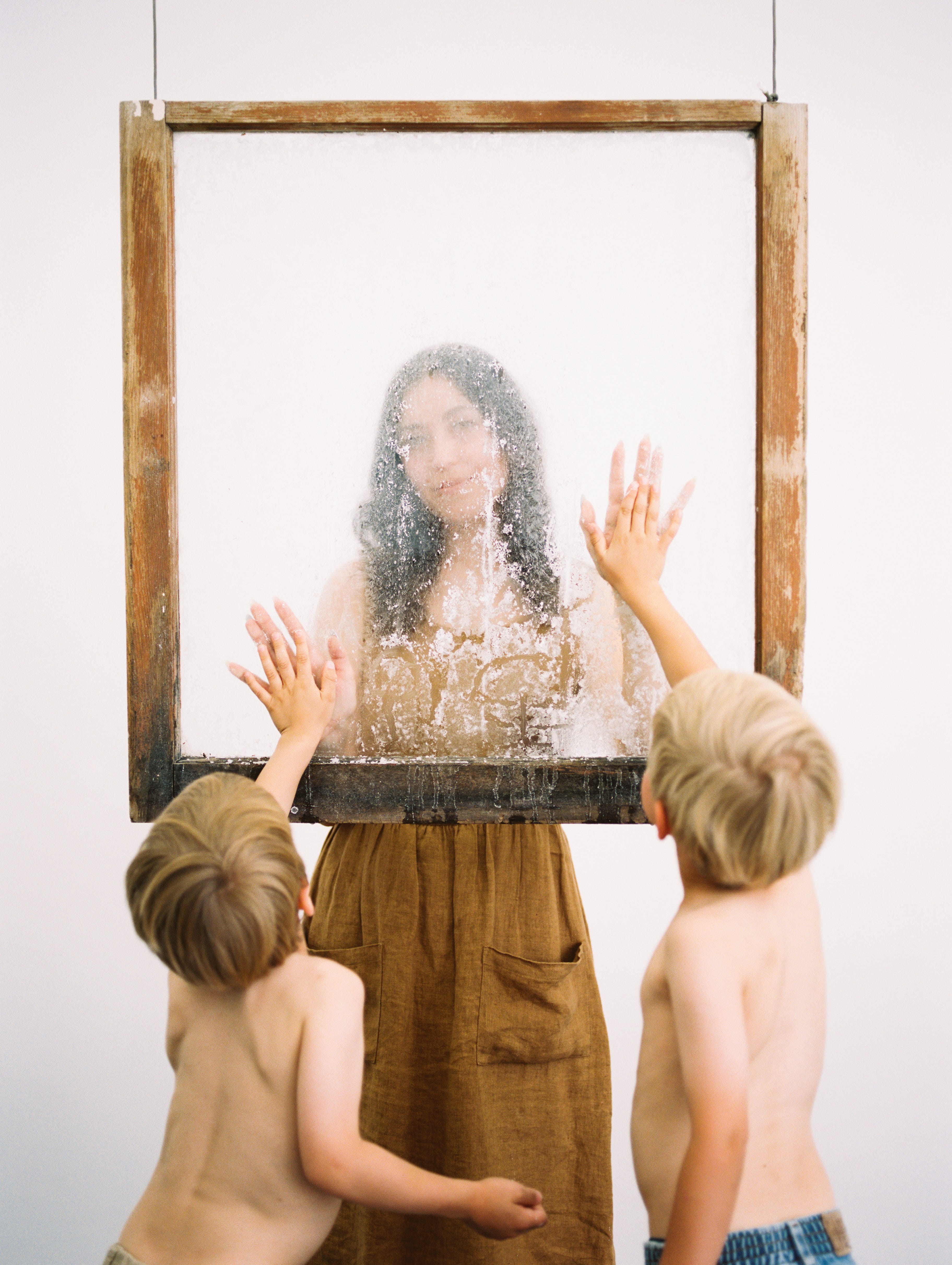
During a time when one of my teenagers made it clear that he hated us, I spent hours and hours on my knees, and reading parenting books, and seeking answers in the temple. On Sunday mornings, I let the rest of the family leave for church while I sat on the stairs outside my son’s bedroom. I wouldn’t force him to attend with us, and I had learned it wouldn’t help to try to guilt him into coming, but I wanted him to know I was still there, and wouldn’t abandon him even as he chose a different direction. During those years, I was never sure of anything, constantly harrowed by my own weaknesses, which I believed must have contributed to his contempt.
We tell parents that “no other success can compensate for failure in the home,” but parents don’t have complete control over how their children “turn out.” What, then, is the definition of failure?
One day during this difficult time with my son, my husband and I took a hike together in the mountains where we found ourselves once again discussing our fears about the situation, reviewing again all the things we’d tried and the ways we continued to bumble. And then, in a pause as I stopped again to catch my breath, something happened. A thought like a voice said to me clearly and so emphatically that I believed it, deeply and resoundingly: “Your son has his own story. As for you and your parenting, your offering is acceptable to me.”
I knew then that my child was no longer my business, and that God was gently taking him from my hands, asking me to cease fretting and let go. As my children move away from me, I remember that my heart has been righteous in its yearnings, and I repeat these words to myself.
Paid subscribers can read the remainder of the essay here.
Darlene Young has published numerous essays as well as three poetry collections (most recently, Count Me In, Signature 2024). A recipient of the Smith-Pettit Foundation Award for Outstanding Contribution to Mormon Letters, she teaches writing at Brigham Young University. Her work has been noted in Best American Essays and nominated for Pushcart Prizes. She lives in South Jordan, Utah. Find more about her at darlene-young.com.
Photos by Michelle Watkins (@michellewatkinsphoto).


Thank you, Darlene, for expressing so well the loneliness that we don't talk about. There's also a sense of betrayal (unless you are given a revelation) when husbands and children leave even after being promised they'd be protected if wives and mothers put absolutely everything on the altar. I'm glad that's not being taught in the same way now. Maybe this is the only way I can, in a microscopic way, understand the Atonement. But I don't always succeed at processing it well. Just knowing that I'm not alone helps. And when it's your voice, one I trust and love and admire, it helps tremendously.
Thank you--this resonated with me deeply. I felt like I lost myself in young motherhood, drowning in everyone's needs. And then, after I got my bearings, I lost myself yet again as my children left home very close together and then my oldest died. The empty nesting grief is real, but so are the wonder and small-manna-joys that come with reinventing yourself in this new stage. Believe that the pangs of emptiness will someday be quieted! I'll sit with you in the heartache in the meantime!