


I. A Familiar Sunday
During sacrament meeting last week, I found myself unexpectedly moved by a verse from Will L. Thompson’s hymn:
“Do something more
Than dream of your mansion above.
Doing good is a pleasure, a joy beyond measure,
A blessing of duty and love.”
As the congregation sang, I felt a tightening beneath my ribs followed by a quiet gathering of attention. Reality pressed close. The chapel became thick with presence.
I was filled with awe—and gratitude.
I had felt that abiding immanence before—on long runs in wide and wordless places—but never in the repetition of sacrament hour, never among others. Something in the familiar rhythm opened slightly, and what was ordinary began to feel quietly revelatory.
Having been baptized only months earlier—on May 11, 2024—I was still learning how a sense of covenant belonging rearranges one’s inner architecture.
What settled on me that morning had a name I had not spoken in years: kabōd, the weight of divine presence.

II. The Weight in Glory
In the Jewish scriptures, kabōd ( כָּבוֹד) shares its root with kāvēd (כָּבֵד), the liver—regarded in antiquity as the body’s heaviest organ. From this sense of anatomical weight, the word expands to signify heaviness, mass, and eventually the dense, felt substance of divine presence pressing upon the world.1
But as the term traveled across languages and time, its meaning changed.
In the Septuagint, kabōd becomes doxa (δόξα) in Greek and later gloria in Latin—reframing divine presence not as weight but radiance, not as proximity but as splendor.2
But the Restoration reclaims the weight of glory within a radically intra-ordinary reality—one that sacramentalizes the mundane rather than escaping it.
Per Joseph Smith, “All spirit is matter, but it is more fine or pure” (Doctrine and Covenants 131:7)—stark non-dual ontology articulated in a nineteenth-century idiom.3
Spirit made wholly real and matter made really whole.
They are not divided into higher and lower orders of being—they are one consecrated reality.
If spirit is matter more fine or pure, its distinction is one of degree rather than kind. Fineness implies greater subtlety; purity implies coherence unimpeded. Refinement, then, is not reduction but intensification: a heightened degree of relational capacity sustained within the luminous order of glory.
Smith then boldly expands glory’s polyvalent nature, identifying it as “intelligence”—a move reminiscent of Carl Sagan’s observation that “we are a way for the universe to know itself.”4
What Sagan gestures cosmically, Restoration scripture names intimately: The light that fills the immensity of space is the light that enlightens our eyes, animates our senses and quickeneth our understanding.5
And if existence itself is a gift—as Adam Miller states—then glory is that gift awakened.
Through those sentient eyes, scripture speaks of glory’s many experiential modes: a weight we can feel, a light we can see, and a power that quietly changes whatever it touches.6
And here—in its plurality—glory restored reveals its essential character: It never exists alone.
In John’s Gospel, glory is not withheld but extended: “The glory which thou gavest me I have given them; that they may be one” (John 17:22).
Glory is not divine ornament but the medium through which unity becomes possible.
III. The Space Between
There is a coherence that holds without pressing, a way things belong before they know their own names—felt not as brilliance, but as balance.
Glory abides here—where spirit and matter meet in degrees, and either-or falls silent before the symphony of both-and.
It is the quiet grammar by which reality speaks and is known. Like grammar, it is not learned so much as awakened to. Long before a child understands its rules, those rules are already at work—ordering breath into sound, sound into meaning. The same grammar that holds a child’s first halting words also holds Shakespeare’s soliloquies. What changes is capacity.7
An analogue appears in what Alfred North Whitehead calls creativity, “the universal of universals characterizing ultimate matter of fact,” by which “the many become one and are increased by one”—an advance rooted in relational becoming rather than external command.
So too with glory—the many gathering into one, ever deepening by degree.
It coheres but never commands, rendering reality intelligible long before intelligence is organized into awareness.
Awareness ripens into fruit; fruit into agency; and with agency, freedom—the risk without which love is not yet real.
And in Christ, love is at-one with grief, sealed by a hope beyond loss.
IV. The Widow
As a physician assistant trained in emergency medicine, I have spent years meeting people on the worst days of their lives. The stories that change me are rarely the dramatic ones. Instead, they are the quiet moments of recognized meaning, when patients teach me what I would otherwise never know.
One such moment came with a mother who has never left me.
She was in her forties, visibly grieving, composed yet hollowed, bringing her four-year-old to the ER for chest pain.
His tests were normal.
He was fine.
She was not.
Months earlier, her husband, only fifty, had died suddenly of an aortic dissection. She had rushed him to the ER but left to arrange childcare.
He died before she returned.
She had moved to California with her children to be near family, carrying widowhood and catastrophe.
In the sterile ER light, she showed me pictures—her husband, their father, a life upended.
I broke—then opened—and finally sobbed with her.
The pain in that room was vast, but not despair. It was the holy weight of love refusing to vanish. Her lament did not need words to be understood.
She wore a small cross. I asked if she had a church. She did—a nondenominational church that she had recently started attending.
I told her, gently, “I’m a Latter-day Saint.”
She smiled.
Back in Arizona, her neighbor had been a bishop.
The ward had cared for her after the death—meals, moving help, presence.
There was a weight to their kindness—creative, steady, and communal—a glory that doesn’t blind but binds; not brilliance but bearing.
It was glory made tangible—the divine weight of a community’s lament carried in casseroles and boxes, in the quiet fulfillment of covenant: to mourn with those who mourn, and to comfort those who stand in need of comfort. The many, gathered in grief, became one.
She hugged me before she left.
For a moment, the world seemed to contract around a shared center.
The room grew heavy with that same weight, the gravity of grief, joy enough to make strangers kin.
Presence gathered.
Faith embodied.
And the Church became as true as the gospel.
The Book of Mormon also portrays this illuminated solidarity most vividly in 3 Nephi 17, where Christ’s shared weeping becomes the medium through which glory descends. Presence becomes communion, grief becomes luminous, and the divine is revealed not in spectacle but in tears (see 3 Nephi 17:5–23).
Through tears, a line from Orson Pratt surfaced gently in my mind—wherever wisdom, knowledge, love, and truth dwell, there dwells God in all his glory.8
In that ER room, the texture was the same. Glory was not something withheld for another world, nor confined to temples or visions. It was the recognizable residue of God’s own character, and wherever that character appears, God is already present.
I felt a quiet reverence settle over us.
Awe—then gratitude followed.

V. The Glassblower
That night after my shift, a simple image appeared on my screen: three jars of increasing size, each holding the same dark knot.9

It stopped me.
Grief shifts—but its center of mass remains. We grow around what we cannot lay down.
The next morning I recalled a quote from psychologist and theologian Gerald May:
“Grief is neither a disorder nor a healing process; it is a sign of health itself, a whole and natural gesture of love . . . . No matter how much it hurts . . . grief can be an end in itself, a pure expression of love.”10
What followed surprised me.
As I gazed in quiet contemplation, something in the sketch began to change, though nothing otherworldly had intruded.
Reality became intra-ordinary, softening into something luminous.
The jar lines thickened into presence, molten residue at its edges, softened by heat, faintly aglow.
The knot inside had not diminished, yet the vessel seemed newly capable of bearing it.
A figure materialized—a glassblower—
and with him the sense that lament, when held in love, becomes workable matter.
Not erased.
Not resolved.
But warmed, opened, and capable of shape.
I saw him bending over the furnace, gathering what once felt rigid and dark, touching it to flame, then exhaling the original grace of life into what had been cold and unworkable.
Heat, breath, and turning—nothing more—yet together they were capable of transforming what seemed shattered into something strong and translucent, able to bear light.
And in that softening, I again recognized what I had felt that morning in sacrament meeting.
Kabōd—
the unfolding shape of glory.
I was again struck with awe—
and the deep gratitude that follows in its wake.
Jason Lomheim is a happily married father of two and a recent convert, baptized on May 11, 2024. His work explores the challenges of discipleship, theological questions, and the luminous moments of inspiration that mark his faith journey.
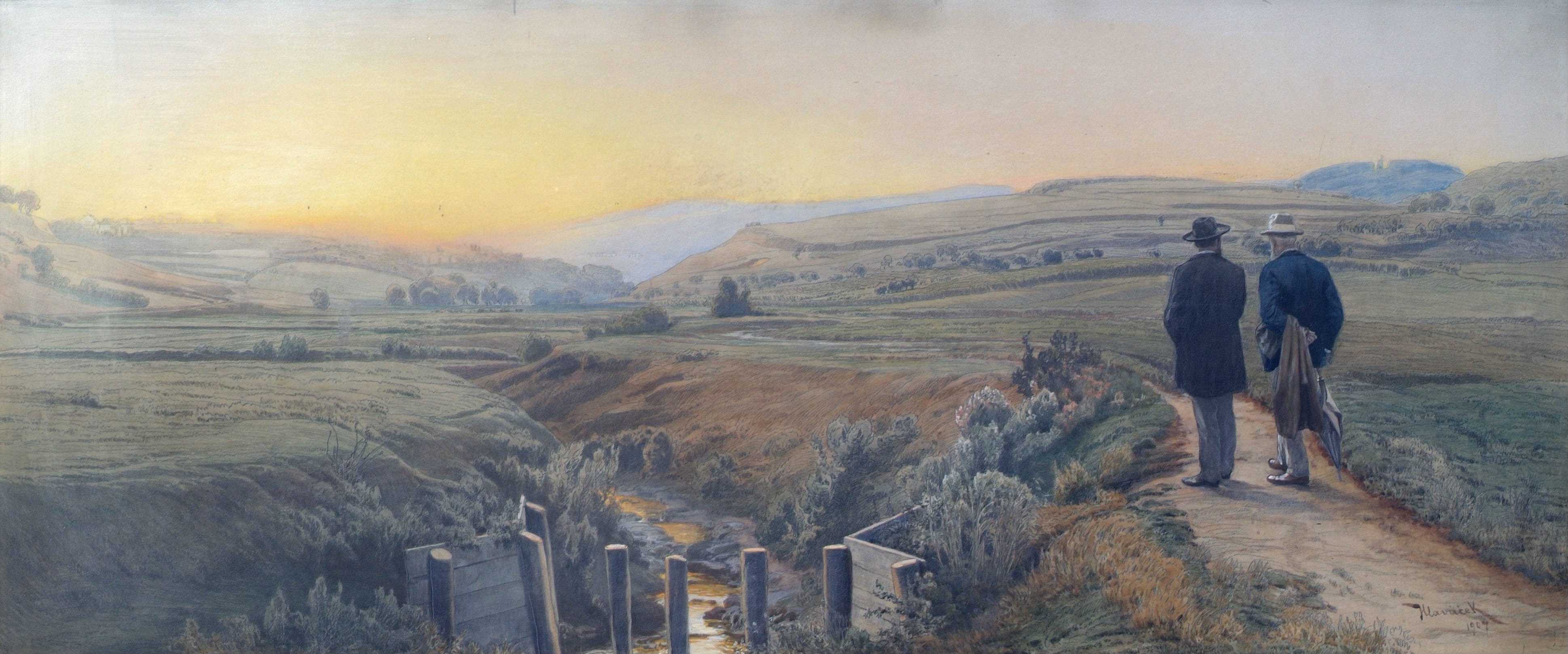
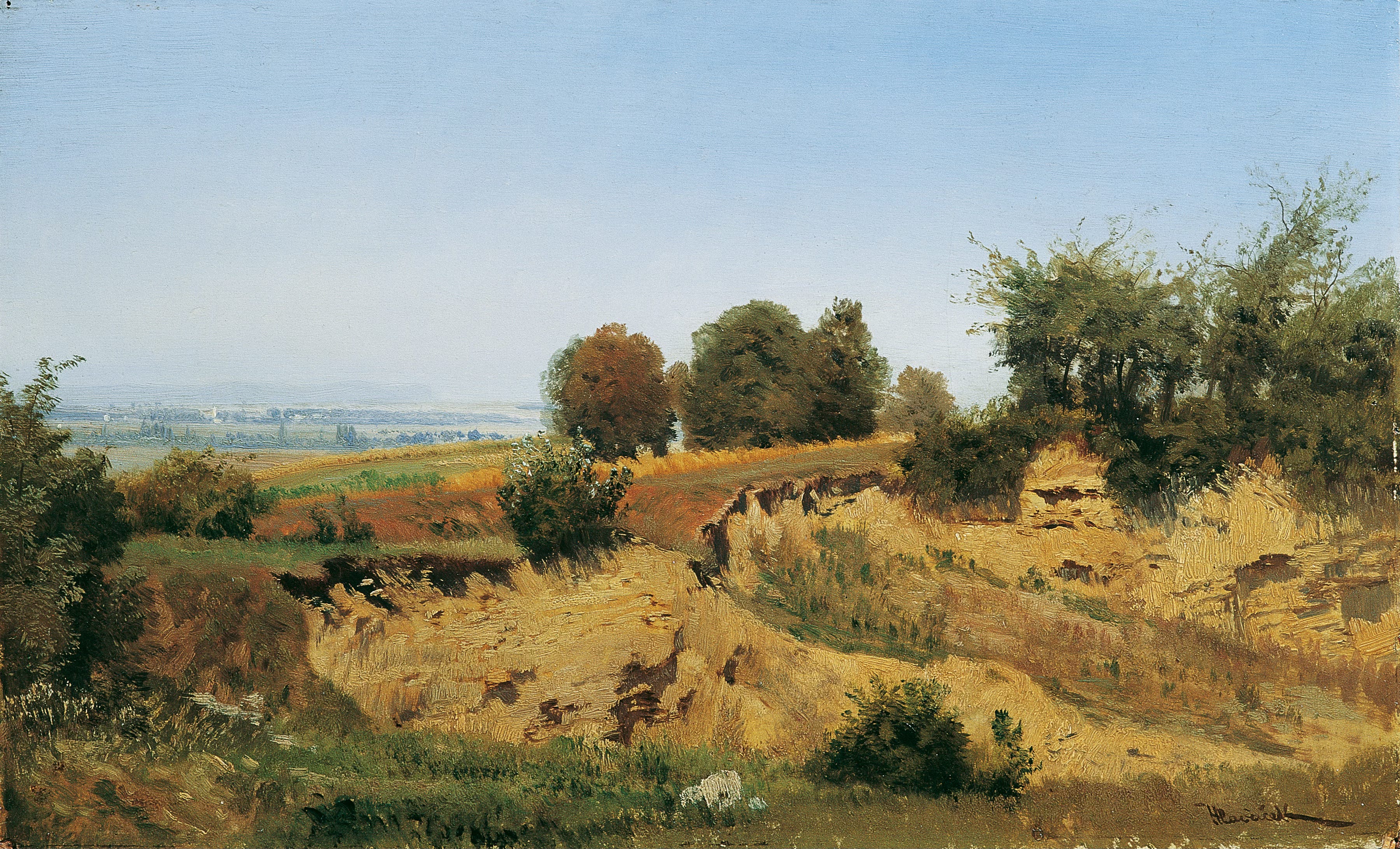
Art by Anton Hlávacek (1842–1926).
See Exodus 40:34–35; 1 Kings 8:10–11; Ezekiel 10:3–4; and Isaiah 6:3–4 (KJV).
Francis Brown, Samuel R. Driver, and Charles A. Briggs, The Brown–Driver–Briggs Hebrew and English Lexicon (Hendrickson, 1996), s.v. “כָּבֵד”; Ernest Klein, A Comprehensive Etymological Dictionary of the Hebrew Language for Readers of English (Carta, 1987), s.v. “כָּבֵד”; A Greek–English Lexicon, rev. Henry Stuart Jones (Clarendon Press, 1996), s.v. “δόξα”; Charlton T. Lewis and Charles Short, A Latin Dictionary (Clarendon Press, 1879), s.v. “gloria.”
Doctrine and Covenants 131:7–8; Terryl L. Givens, Wrestling the Angel: The Foundations of Mormon Thought: Cosmos, God, Humanity (Oxford University Press, 2015), 126–29, 209–12.
Carl Sagan, Cosmos: A Personal Voyage, episode 1, “The Shores of the Cosmic Ocean” (PBS, 1980).
2 Peter 1:4; Proverbs 20:27; Doctrine and Covenants 88:7–13; John 17:22.
See Moses 7:16–17, 28–33, 37, 40–41, 48–49; Ezekiel 1:28; Isaiah 6:1–8; Exodus 40:34–35; 1 Kings 8:10–11; Habakkuk 3:3–4, 16; 2 Corinthians 3:7–18; 1 Kings 19:11–13; Psalm 34:18; Isaiah 57:15; John 17:22; 3 Nephi 17:5–23; Ether 12:27; Doctrine and Covenants 121:7–8.
For a fuller systematic treatment of glory as a relational and developmental ontology, see Jason Lomheim, The Shape of Glory (manuscript, available from the author upon request).
Orson Pratt, “Pre-Existence of Man,” The Seer 1, no. 2 (February 1853): 28–34.
The illustration and poem can be found in Aliza Grace, The Female Embodiment (pub. by author, 2022). See also Lois Tonkin, “Growing Around Grief,” summarized in Winston’s Wish, “Growing Around Grief (Version B).”
Gerald G. May, quoted in Ira Byock, Dying Well: Peace and Possibilities at the End of Life (Riverhead Books, 1997), 170.
