


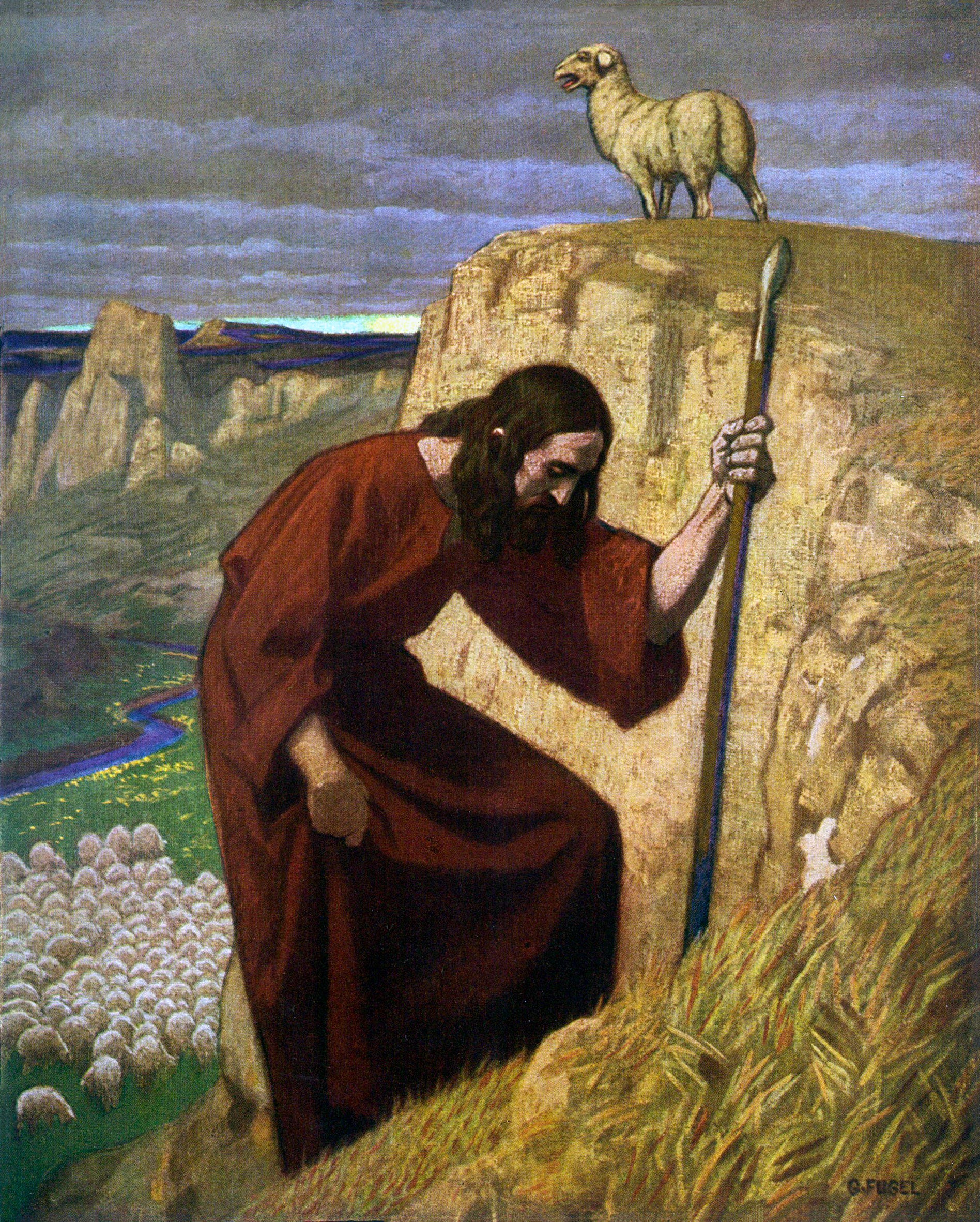
“Which one of you, having a hundred sheep and losing one of them, does not leave the ninety-nine in the wilderness and go after the one that is lost until he finds it?” —Luke 15:4
A single sheep wanders far from its flock, lost. The shepherd leaves the ninety-nine others exposed and unattended to go after it. When he finds the stray sheep, he brings it home and rejoices.
The point of this biblical parable seems simple: Every member of the flock is important, and the good shepherd seeks what is lost. But who in their right mind risks ninety-nine to save one? What if a pack of wolves had arrived after the shepherd left and decimated the flock? And what’s so compelling about the flock, anyway? Maybe the stray sheep lacked gregarious instinct and, like Fungie the dolphin, would have been happy in a different home.
Over the past decade, I’ve thought about this parable many times. I’m a Christian, and I value its traditional theological meaning. But I began to wonder whether it also teaches something true about human nature: the unseen dynamics between individuals and groups, and the tension between belonging and becoming oneself.
We live in groups and in relation to them. They shape us, and we, in turn, shape them. Much of what happens in the charged space between the one and the many—the self and the family, the individual and the crowd—remains unseen.
These relationships run so deep that we seldom step back to see them clearly. We don’t recognize the unspoken rules that govern our connection to groups until we cross them. The US military’s tradition of “no soldier left behind,” codified in the Army Ranger Creed and echoed across all branches, shows the power of making expectations explicit. If you’re left behind in battle, you know someone is coming for you.
Most communities leave the nature of relationships ambiguous. We only discover the truth in moments of testing, when something disrupts the status quo: when a teammate refuses to go along, a member questions direction, or rules are broken.
Our communities—those we’re born into, those we join, those we interact with from a distance, and those we resist—shape who we become, and how we can shape them. We can reclaim freedom and responsibility in those communities—an effort that, if practiced at scale, will reshape the character of our society.
How to Leave a Tribe
In the past few decades, hundreds of books and essays have been written about how to find your tribe. Humans have strong tribal instincts, and they aren’t going away. But in a world of increasing uncertainty, tribes can move from healthy to harmful with startling speed. The deeper skill today is not finding a tribe but knowing when and how to leave one—and gaining the ability to belong without disappearing.
Each of us is torn between belonging and differentiation, and few ever learn to manage that tension. We might not even realize it exists. Once we become aware of the tension and learn to navigate it, we can live with far more freedom—and far more integrity—than ever.
Hidden social forces shape our relationship to groups. The education system doesn’t help children see these forces, even though they play a defining role in adolescence. Families try to prepare children to be confident and self-possessed, but the world incentivizes conformity. They’re left to face a landscape of social contagion and peer pressure—anxious, imitative, and uncharted—without a map. We often lack one ourselves.
Social contagion has been exacerbated by technology. It has now spilled over into everything from politics to markets, workplaces, and friendships. Resisting this current requires clear eyes, a fresh mindset, and the disciplined development of inner muscles. It’s the first step toward a self that is not given to you, but forged—and fully alive.
The Unspoken Precondition
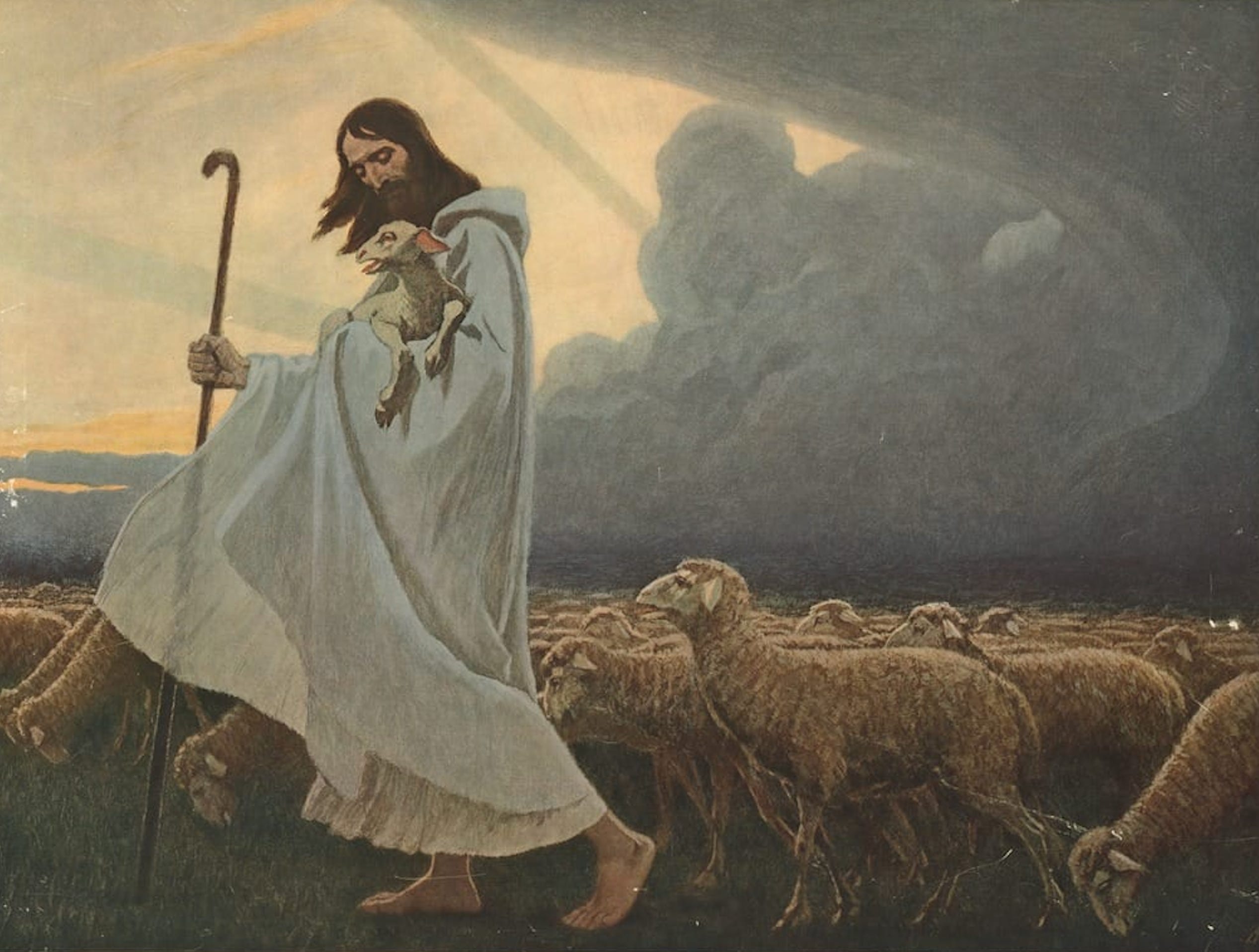
It took me fifteen years to see what was hiding in plain sight: In the parable of the lost sheep, the shepherd does not choose between belonging and differentiation. He wants to bring the one lost sheep back into the fold, but he knows and cares for each of the other ninety-nine individually.
When we hear this story, we instinctively identify with the one who is lost. In that sheep we recognize our own struggle for differentiation: the desire to become an individual without losing our place in the fold.
Something is overlooked in the parable, though: The freedom of the sheep to stray, even though dangerous, is the unspoken precondition of the entire story. Without the freedom to leave, our relationship to communities becomes sterile, even deadening.

Identity is shaped in reaction to others—and toward something essential: the heart of the shepherd.
The shepherd doesn’t resolve the tension between the individual and the community. He moves inside it. He doesn’t choose the one over the ninety-nine; he refuses the false choice altogether. Seeking the lost sheep is an act of love—one that honors a life capable of wandering on its own. Returning it to the flock is likewise an act of love: A community isn’t whole when even one of its members is missing.
Integrating these truths is lifelong work. When we do, we’re no longer pulled apart by the forces of isolation on one side and totalizing tribalism on the other. We begin to inhabit communities that can stretch to include difference without collapsing, and to form selves that can stand apart without severing connection. That tension—rightly held—is the foundation of real freedom.
The tension between individuality and belonging has animated thinkers from Plato and Aristotle to Tocqueville, Marx, Nietzsche, Max Weber, Émile Durkheim, David Riesman, Robert Nisbet, and Wendell Berry. Today that ancient conversation unfolds under new conditions: technologies those thinkers could never have imagined, the growing sense that liberal democracy is faltering, and uncertainty about how artificial intelligence will reshape our social fabric. Social stability now sits on a knife’s edge.
In an era of social contagion, living a meaningful life demands the cultivation of what Murray Bowen called the solid self.
The Pseudo-Self Versus the Solid Self
Most of us live from a negotiable version of ourselves. We negotiate who we are in real time to avoid the anxiety that would be provoked if we disrupted the default emotional system of the group—a system we are usually only subconsciously aware of.
This malleable self, which is captive to what others want or expect, is the pseudo-self. If you grew up in a family that was conflict avoidant, you likely have a pseudo-self that is skilled at doing or saying whatever gets a group back to emotional equilibrium whenever there is a disturbance. “The pseudo-self is acquired from others,” Bowen wrote, “and it is negotiable in relationship with others.” That negotiability means that it’s particularly susceptible to social contagion.
In contrast, the solid self is not negotiable in every interaction. It is the level of self that is not dependent on social expectations, allowing a person to be part of a group without fusing with it. A solid self can communicate what they believe and stand for, or what they will or will not do, without engaging in social calculus. The solid self is capable of change—solid does not mean rigid—but the change happens intentionally, and more gradually, than changes in the pseudo-self.
We all possess degrees of a pseudo- and solid self, and they are not fixed. Forging a solid self is difficult, though, and the obstacles to doing so are multiplying: education built on conformity, technology designed to remove social friction, and politics that rewards allegiance over integrity. Together these forces make it harder to become a person who can stand firm without withdrawing and belong without losing themselves.
You have probably met someone with a solid self. You may have encountered them in a stressful social situation when others get triggered or upset, but they remain unalarmed. Or you may have encountered them in a group setting in which they state a differing opinion without feeling the need to apologize for it or hedge it. Or they are simply the people who make it possible for you to be yourself, because you sense they do not require your conformity. Unfortunately, these people are rare.
If we continue down our current path toward systemic conformity, the future will be dominated by pliable selves—shaped not by conviction but convenience, ready to bend with every social current. But I’m optimistic that we can build more places and practices that cultivate the solid self. This has to happen at both the individual and societal levels if anything is going to change at scale.
The headwinds are real: Powerful institutions form pseudo-selves by rewarding compliance and punishing conscience. Still, the choice remains stark. Either we become solid or we perish as shadows of one another.
Luke Burgis is the director of The Cluny Institute and a professor at The Catholic University of America, where he studies the invisible forces that shape human behavior. He is the author of Wanting: The Power of Mimetic Desire in Everyday Life. He lives in Washington, D.C., and Michigan with his wife, Claire, and their children.
This essay is an excerpt from Luke’s new book The One and the Ninety-Nine: Forging Identity in the Age of Social Contagion.
Art by Gebhard Fugel.
HEAR LUKE BURGIS SPEAK ABOUT THESE THEMES AT THE WAYFARE FESTIVAL ON JULY 11TH

KEEP READING


Abigail in Between

I find it hard to forgive. I hold grudges and harbor unkind feelings for far too long. I even do this vicariously. If I think someone has harmed a member of my family or someone I love, they are moved onto the proverbial naughty list. No presents for them. I am easily offended. …
The Prodigal Cat

We knew moving the cats across the country was going to be difficult—a huge investment of time and money, but we couldn’t find any way around the fact that we loved these particular cats and we wanted them with us.

This piece challenges me as a proud educator in a public school. Burgis reminds me that, if left unchecked, the drift towards conformity can blind me into thinking that I have succeeded through cranking out students with the same skills and knowledge. I presume he is referring to common core standards, although he may be alluding to something else.
I have long told my students and colleagues that I think of myself as a bricoleur, and that I hope they come to think of themselves in the same way: problem solvers who look at their own unique repertoire of tools and building materials, constantly be on the prowl for better ways and better supplies. Unafraid to approach new problems, and with a clear sense of self as they face new horizons.