


FEATURED ESSAYS
Divine Pathos

“The spirit of the prophet, the message of the prophet is very much alive. He combined a very deep love, very powerful dissent, painful rebuke, with unwavering hope. The prophet is a witness to that great mystery, or to what I would call meaning beyond the mystery, namely, God could still be alive.”
Translating the Flesh

In the celestial room of the Provo Temple, heat coursed through my body. My skin throbbed, my intestines boiled, my bones sang a dissonant note. I had reached out to God in prayer, silently asking about a small decision, expecting to feel peace as I had so many times in the temple. Instead, it felt as though I’d touched a hot stove, my nerve endings vibrating.
Continue scrolling to read “To Enliven the Soul” by Zachary McLeod Hutchins, included in full below.

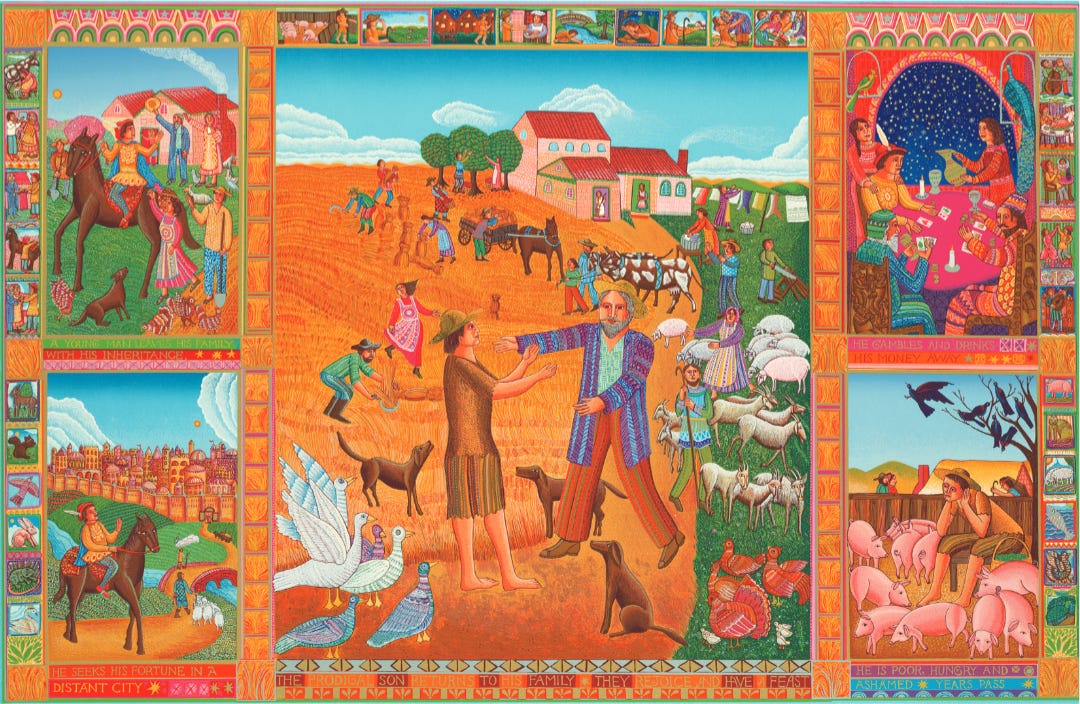
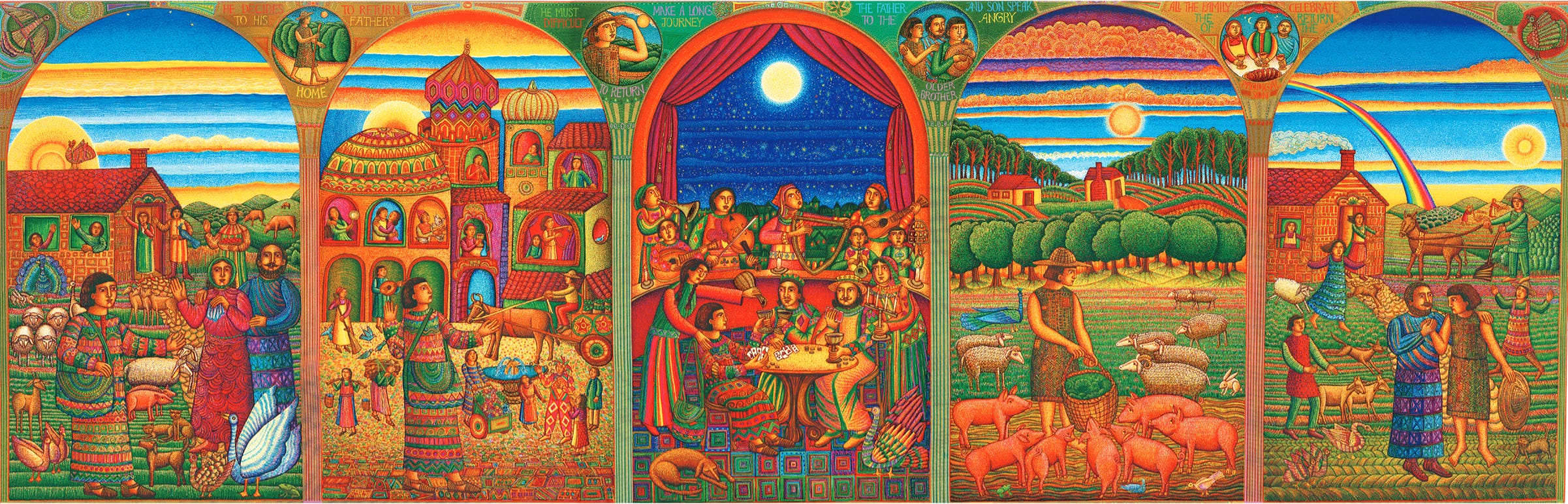
The teachings and parables of Jesus Christ often revolved around the pleasures of feasting and celebration. In his parable of the prodigal son, for example, Jesus describes a young man who “took his journey into a far country, and there wasted his substance with riotous living” (Luke 15:13). This prodigal’s search for pleasure is excessive, carrying him far from home, where he wastes the inheritance his father bestowed on him. But when he comes to himself and returns to his father in humility, seeking only to be “as one of thy hired servants,” the father responds by throwing a party (v. 19). He instructs servants to bring “the best robe, and put it on him; and put a ring on his hand, and shoes on his feet: and bring hither the fatted calf, and kill it; and let us eat, and be merry” (vv. 22–23). Although a love of pleasure and dissipation might be construed as the reason for his reduction to poverty, the father’s response is not to shield his son from fine food and drink and clothes but to welcome him home with a banquet and music and dancing. In response, the prodigal’s older brother refuses to participate in the festivities, complaining to the father that, despite his diligent labors, “thou never gavest me a kid, that I might make merry with my friends: but as soon as this thy son was come, which hath devoured thy living with harlots, thou hast killed for him the fatted calf” (vv. 29–30). The older brother objects to the music and the dancing and the fine clothes and the rich food, particularly because he has never sought pleasure for himself and because a pursuit of pleasure represents all that he despises in the younger son. Yet the father insists, “It was meet that we should make merry, and be glad” (v. 32). In his teachings, as well as in his lived experience, the Savior defended pleasure against the censures of the self-righteous.
Centuries of commentary, and the popular title ascribed to this story, invite us to poor or partial readings of the parable. Introducing the story, Jesus declares, “A certain man had two sons,” and yet we commonly refer to this as the parable of the prodigal son—ignoring or effacing the existence of a second son (Luke 15:11). A better title would be the parable of the two sons, or, more descriptively, the parable of the prodigal son and the abstemious son, the prodigal son and the puritanical son. We readily recognize the nature of the prodigal’s error; he cared too much for pleasure and sought it at the expense of all else, until he was impoverished and estranged from all who loved him. When wise commentators redirect our attention to the elder son, they often characterize his failure as envy or pride. Elder Jeffrey R. Holland, for example, said of this older son that “he has, as yet, been unable to break out of the prison of himself. He is haunted by the green-eyed monster of jealousy.” The older brother is envious, as Sarah came to be envious of Hagar, but envy is not the older brother’s defining characteristic. Both the parable’s opening and its action indicate that the brothers are, in literary terms, foils: they represent opposed values.
Readers recognizing that the younger son is a spendthrift who “wasted his substance” should also recognize that the older son is a skinflint who never allowed himself or others to enjoy the fruits of their labor. Each is prone to extreme behavior and represents one half of the dual temptations memorialized by William Shakespeare: “Thus do I pine and surfeit day by day, / Or gluttoning on all, or all away.” While the younger brother indulges in a surfeit of pleasure, the older brother lives in a state of repression and self-denial—“all away”—even as he pines and yearns for a taste of the good life he sees the younger son enjoying. To call this story the parable of the prodigal son is to ignore the older son’s extreme and dangerous suppression of the desires that the younger brother too freely gratifies before making his penitent return to a delighted father.
The older brother is a diligent worker and obedient son, but he is also a self-made martyr, unwilling to acknowledge or take responsibility for his own desires. When the father invites him to celebrate his younger brother’s return, the older son complains, “Lo, these many years do I serve thee, neither transgressed I at any time thy commandment: and yet thou never gavest me a kid, that I might make merry with my friends” (Luke 15:29). In blaming his father, this older son throws the onus for his own joyless life onto another. Though he knows, from experience, that the father granted his younger brother’s extravagant request for his inheritance—half the estate, even before their father had passed—the older son never voiced his own more modest desires or asked the father for permission to slaughter a goat and hold a banquet for his friends. The older son blames his father for the frustrated, pent-up life he’s lived, but the father reminds his firstborn that “all that I have is thine” (v. 31). This declaration of joint stewardship might strike the reader as a belated revelation that the older son should have been informed of sooner. But it is a reminder, not a revelation; when the prodigal asks for his inheritance, the father “divided unto them his living” (v. 12). In other words, the puritanical older son and the prodigal younger son—the two of them—were given a portion of the father’s property at the same time. The older son had always known he was free to slaughter a kid and make merry with his friends, but he never acted on those impulses. He preferred to hold a grudge against his father and to view himself as a virtuous victim rather than enjoy a modest pleasure and lose track of the bright line that distinguished his self-denying identity from his brother’s self-indulgent identity.
The older son’s behavior recalls Elder Dieter F. Uchtdorf’s allegory of the cruise ship. He describes a man eager to sail the Mediterranean Sea and visit the cities of Rome, Athens, and Istanbul who
saved every penny until he had enough for his passage. Since money was tight, he brought an extra suitcase filled with cans of beans, boxes of crackers, and bags of powdered lemonade, and that is what he lived on every day.
He would have loved to take part in the many activities offered on the ship—working out in the gym, playing miniature golf, and swimming in the pool. He envied those who went to movies, shows, and cultural presentations. And, oh, how he yearned for only a taste of the amazing food he saw on the ship—every meal appeared to be a feast! But the man wanted to spend so very little money that he didn’t participate in any of these. He was able to see the cities he had longed to visit, but for the most part of the journey, he stayed in his cabin and ate only his humble food.
On the last day of the cruise, a crew member asked him which of the farewell parties he would be attending. It was then that the man learned that not only the farewell party but almost everything on board the cruise ship—the food, the entertainment, all the activities—had been included in the price of his ticket. Too late the man realized that he had been living far beneath his privileges.
Like the parable of the two sons, Uchtdorf’s story clearly suggests that we might mistakenly pass through mortality without enjoying all that the Father has given us, including the pleasures of food and drink, and not just the more refined or intellectual appreciations of passing through the world’s great cities and learning of their histories and cultures. Both stories warn that a fear of pleasure—that it might cost too much; that it might overwhelm our senses; that it might lead to debauched and riotous living—might lead us to reject or misuse our rightful inheritance.
The younger son’s prodigality is clearly condemned by the parable and so, I would argue, is the older son’s immoderate suppression of appetite and pleasure. They represent contrasting extremes we should shun while striving for a more temperate middle ground. Better for the younger son if he had exercised a modicum of self-restraint; better for the older son if he had made space in his life for modest pleasures and resisted the siren song of martyrdom. Alma repeatedly exhorted that we should be “temperate in all things” (Alma 7:23, 38:10), and Paul similarly taught, “every man that striveth for the mastery is temperate in all things” (1 Cor. 9:25). Both sons stray from the ideal of temperance and moderation. Their contrasting examples of excess should caution us equally against extremes of indulgence and extremes of suppression.
Both the Savior’s life and his parable of the prodigal and puritanical sons suggest a need for moderation in our relationship to desire and pleasure. He fasted for forty days in the wilderness and demonstrated his capacity for self-denial in the service of a higher cause. Yet when his mother asked for wine, Jesus provided a vintage of the highest quality, and when he was invited to feast in the company of sinners, Jesus gracefully accepted the pleasures offered him, whether the kisses and caresses of a woman seeking forgiveness or the extravagant application of precious, perfumed ointment to his head and feet. Jesus is our Exemplar, both in his ability to forgo pleasures when they would distract him from the higher mission to which he had been called, and in his ready willingness to receive, enjoy, and share the pleasures of this mortal creation. His teachings, as well as his life, are reminders that “to every thing there is a season, and a time to every purpose under the heaven”: a time to feast and a time to fast; a time to break the alabaster box of precious ointment and a time to forgo its use so that the proceeds might be sold for the poor; a time to embrace and a time to refrain from embracing; a time to kill the kid and make merry with your friends and a time to refrain from riotous living (Eccl. 3:1).
This is a lightly edited excerpt from the book Shall I Have Pleasure? An Answer for Sarah (Greg Kofford Books, 2025).
Zachary McLeod Hutchins writes about the restored gospel of Jesus Christ in Fort Collins, Colorado, where he lives with a wife and children who deserve better.
Artwork by John August Swanson.


