


The following piece responds to Tyler Johnson’s parable, “The Keepers of the Well.”
In Tyler’s parable, a desert city has forgotten that its existence depends on a well and its life-giving waters. The well’s guardian instructs his daughters in how to tend the well and keep its waters pure; he teaches them about the oracle with second sight who found the well, around which a cathedral and eventually their city was built.
Despite their family’s charge to look after the well, each daughter chooses her own path. The first daughter finds her place in life among the city’s merchants and material splendors. The second daughter, weary with the city’s pride and opulence, leaves the city and finds a new well of water. The third daughter attempts the same feat but is not led to water and finds only heat, sand, and scorching sun. The fourth daughter remains in the city and carries on the work of her father.
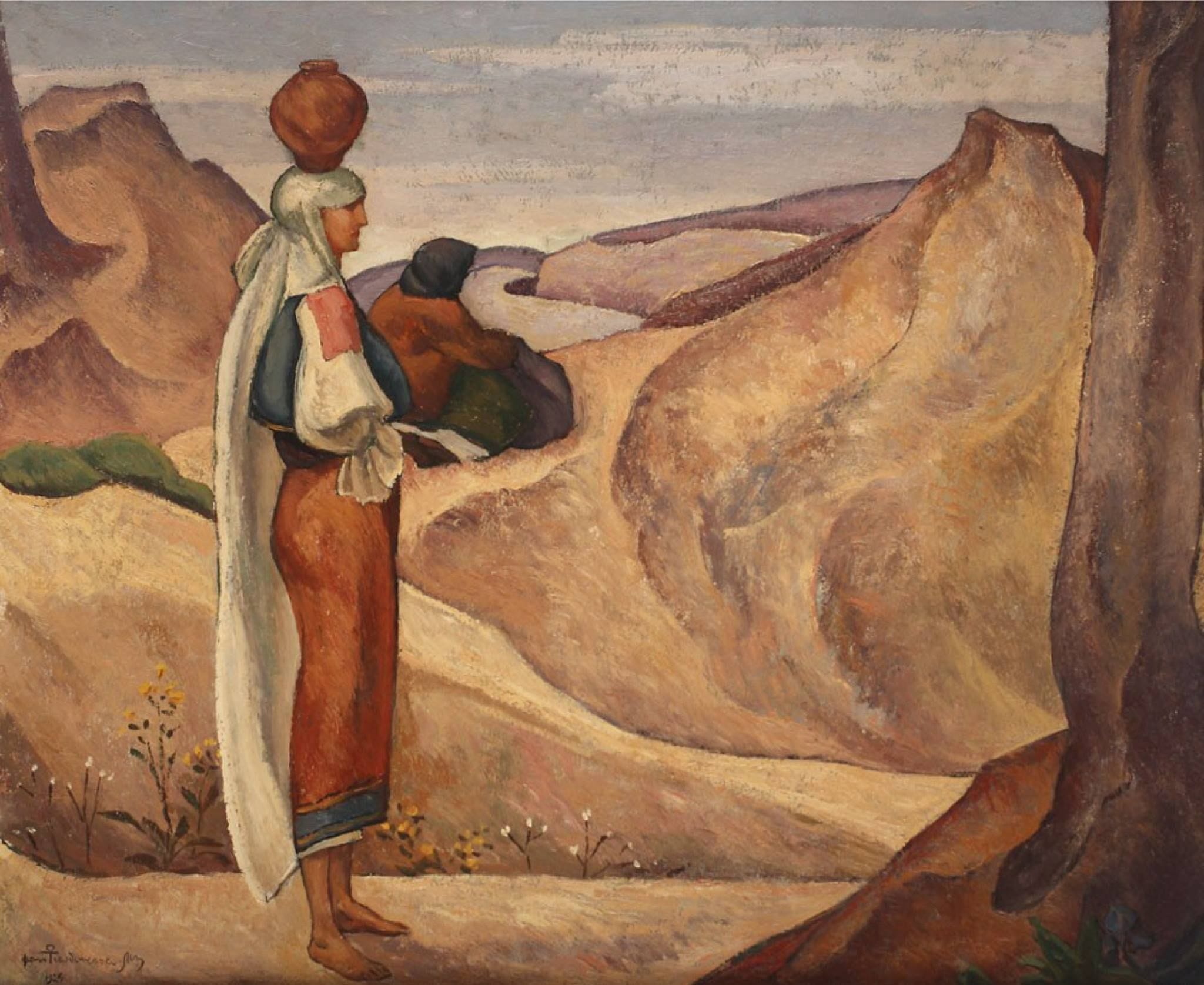
I am weary. A private, permeating loneliness is my constant companion, though I am rarely alone. With the citizens of my city, I enjoy a life of luxurious ease and comfort. I dress in fine linens. I enjoy walks through the gardens and visits to the grand cathedral, with its ornate carvings and beautiful furnishings. I bustle about the shining city, often accepting invitations to attend extravagant celebrations: feasts of rich, flavorful delicacies and banquets laden with excess. Laughing and chattering, we exchange superficial pleasantries and toast to freedom and prosperity while quietly seeking to outperform each other. Wealth, as any law-abiding citizen knows, is a symbol of divine favor, and when one is favored, there is no need to look beyond.
Yet the unabating loneliness claws at me. I am bewildered by disillusionment. Piety feels counterfeit when prosperity is worshipped. Have we forgotten the living water—the source of life—which sustains our every breath? How can a city dedicated to the water grow so prideful and indifferent? The smiling, grinding pursuit of flawlessness is becoming deafening. Optimize. Maximize. Produce. Perform. Clanging cymbals, tinkling brass. I know it is my responsibility to tend to the well, but the clattering cacophony is causing me to go mad. Clanging cymbals, tinkling brass.
I wake one night, parched. A whisper of a breeze passes through my window, carrying a voice, which speaks inside my body. “Go,” it says. “It is time.” I don’t think it; I simply receive it. Rising from bed, I tuck an apple and some soft cheese into my satchel and give my sleeping father a tender kiss. I pray that he will understand.
At the city’s final gate, I turn and look back. I hesitate for a moment, torn between the pull of familiar safety and the beckoning of a call. Again, the clear and gentle voice on the breeze speaks. “A magnificent refuge is inside you. Be bold. Be humble. Put away the incense and forget the incantations they taught you. Ask no permission from the authorities. Slip away. Close your eyes and follow your breath to the still place.”
The dark desert greets me first with silence, cool and sweet. Then, soft sounds of the creatures who carve their existence in this barren place fill the air like a layered symphony of coos, chirps and clicks. For the first time in a very long time, I am not lonely. As the dawn breaks, I savor the dry air and the warm early sun on my face. I cry. Wordless prayers expose my wide-open, listening heart, and for a time, I move lightly, gently, filled with a quiet sense of wonder.
But there is deception in the desert’s early tenderness, and within hours of sunrise, a cruel, hot wind picks up, swirling and flinging sharp, red dust that cakes my mouth and burns my eyes. I stagger for hours without a sense of direction, perhaps only stumbling in a frenzied circle. My skin cracks and blisters and my eyes blaze. Doubt and shame begin to build within me and then crash over me like angry waves. What have I done? I have left behind everything that kept me safe and worthy: my community, my rituals, my identity, my role. And for what? In a tailspin, existential pain roars through me, wordless and bottomless.
At last, I surrender to the desert’s ferocity, collapsing face down in the scorching sand. The blazing sun burns through me. I lack the strength and the will to move.
When I awake, many hours have passed. The sun has slipped behind the horizon, and the fading light is dim but soft. All is quiet and the dust storm has stilled. I slowly sit up and look around. I touch my ragged clothing, torn from the desert’s havoc, and wipe away strands of matted, sand-filled hair from my eyes. Shivering, I gasp and choke, spitting clay-colored sand. I’m so thirsty. I let out a cough and a small, anguished cry.
Then, to my astonishment, I notice tiny tendrils of mist, rising and bending into the dark, dry air. Slowly at first and then with growing awe, I press my fingers into the fine, red-gold grains of sand. As I dig and burrow, salt cakes my forehead and the cracks in my hands begin to split. I am tempted to relent in my exhaustion, but a quiet force within me calls me to persist. I begin to sense that I am not alone. A gentle presence works alongside me, and I perceive with second sight that I am joined by my ancestors: women who have wandered in ages past from dune to dune in search of water. Silently, we excavate together, as moist sand becomes a trickle and then, at last, a shimmering pool of bubbling, resplendent, living water.
I recognize now the voice which beckoned me from my sleep in the city: it is the voice of the women-spirits who came before me. They speak to me in perfect gentleness and love. “You are called and anointed. You will bring respite, healing and wisdom to this parched land. Rise up and be blessed.” Wordless sermons of light fill the air as the women-spirits sing. I open my hands to the cool, clean water and receive it in great gulps. As it pours down my face and washes over my body, I utter a single, fervent whisper: “yes.”
“Surely the Lord is in this place, and I did not know it” Genesis 28:16.
Jenny Richards holds a Master of Theological Studies degree from the Franciscan School of Theology and a Master of Music from Juilliard. She is currently a student at Duke Divinity School. Jenny’s loves include her family, the piano, and inflatable dinosaur costumes.
Art by Ion Theodorescu-Scion (1882–1939)

