



“The spirit of the prophet, the message of the prophet is very much alive. He combined a very deep love, very powerful dissent, painful rebuke, with unwavering hope. The prophet is a witness to that great mystery, or to what I would call meaning beyond the mystery, namely, God could still be alive.” —Abraham Joshua Heschel
Pete Davis and Elias Crim co-host the podcast The Lost Prophets. In the introduction to the series, they make the following observation:
Here in the mid-2020s, we are lost in the woods. Most of us don’t feel like we are members of the places in which we reside, nor co-creators of the structures we inhabit, and as a result, loneliness and cynicism and unease abound.
How do we build community in the modern world? How should we relate to nature and to one another? Where to now?
Many of the questions that we’re asking today were also asked in the mid-twentieth century, when there was an explosion of reflection about big questions and visions. It was an era of prophecy.
In the inaugural episode of The Lost Prophets, Elias and Pete invite Rabbi Shai Held to reflect on the wisdom and insights of Abraham Joshua Heschel.
LOST PROPHETS: Abraham Joshua Heschel is a wonderfully improbable prophet; a big, bearded, funny-looking man, a very unlikely public intellectual with a theatrical manner. During his life in the mid-twentieth century, he addressed the American public, saying that what we need at this moment is personal transcendence and piety; the way to correct the secular age is through prayer, belief, righteous deeds, and practice.
Who would have believed he would find a big audience, or that he would have intersected with Martin Luther King Jr. and the black theology of liberation in its early stages in order to energize both communities with a shared vision of liberation? What an unlikely but wonderful story.
Heschel came from a Hasidic community in Poland in the early 1900s that inculcated within him a deep sense of reverence and piety. As a university student in Berlin, Heschel concerned himself with how to be holy, a distinction from the question that occupied his professors of how to be ethical or good.
In 1939 he got a life-saving invitation to come to the US to be a professor. He lost three of his sisters in the Holocaust, two in the camps, and one in a bombing. Heschel often said, quoting the Bible, that he was a brand plucked from the fire of an altar of Satan. He experienced his rescue from the Nazis as a miracle.
Heschel spent the rest of his life wrestling with the question of how Germany, once a beacon of scientific inquiry in cosmopolitan modern culture, could have descended into the depths of brutality. His question was, could Judaism and religion in general offer the key toward preventing a recurrence?
Heschel’s commitment to the idea of the Sabbath illustrates how he believed Judaism could cure the ills of our modern world. In his book The Sabbath, Heschel writes, “[G]allantly, ceaselessly, quietly, man must fight for inner liberty to remain independent of the enslavement of the material world. . . This is our constant problem—how to live with people and remain free, how to live with things and remain independent.”
Heschel held another very deep and simple theological idea, which is that God is not an unmoved mover. He cares about people. He has feelings, a divine pathos.
The prophets are a witness to God’s divine pathos. They bear testimony to God’s concern for human beings; like God, “the prophet’s ear perceives the silent sigh.”
To help us interpret Abraham Heschel’s legacy, we have invited Rabbi Shai Held. Rabbi Held is a philosopher, theologian, and Bible scholar, and President, Dean, and Chair in Jewish Thought at the Hadar Institute. He’s the author of Abraham Joshua Heschel, The Call of Transcendence.
Tell us about Heschel’s beginnings in the golden age of Ashkenazi Judaism. In Jewish culture, there’s a kind of halo around this period of time.
RABBI SHAI HELD: After the Shoah, after the Holocaust, there’s a fairly romanticized view of Eastern European Jewish piety, and yet it’s worth noting that Heschel, as a young boy, was very eager to get out. He wanted to go to university. He wanted to learn Polish, which was against his family’s wishes. I’m being completely speculative, but I would say that as a child in a Hasidic milieu, I think Heschel felt both incredible gratitude for the living sense of God that that community had, and a little bit suffocated by the ways that it was very enclosed and rejecting of the modern world. After the Holocaust and then in America, where Heschel found that American Jews were very secularized, the idea of a community where God is as real as your right hand became ever more attractive to him and eventually became his idea that there was something here that could potentially be an important corrective to modernity and secularism.
For Heschel, the covenant becomes the fundamental category. That is, a God who summons us, and then more radically, a God who needs us—always, always a relationship. To borrow a phrase from Martin Buber, there is always a between.
But for Heschel, there is an asymmetry between humans and God. So he’ll say our goal is not to be in conversation with God, but it’s to be a thought in the mind of God.
That leads into the philosophical notion of personalism, shared by a number of different figures as disparate as John Paul II and Martin Luther King Jr. What is this notion that they shared around the human person?
Personalism is a very fancy way of taking seriously the claim that a human being is created in the image of God. Personalism is a claim about immeasurable dignity, and the claim that God is invested in a person such that what one does to a person one does to God. And so there is nothing more sacred in the world than a human person. Ultimately the theology that takes the God of the Bible seriously, according to Heschel, can’t but be preoccupied with the irreducible dignity of the human person.
But in the wake of the Holocaust and the bombing of Hiroshima and Nagasaki, you have this sense that humanity has gone astray and is in danger of destroying itself and the very world in which it was placed. At the time all these thinkers have a sense of moral emergency that they believe is rooted in a spiritual emergency, a more fundamental spiritual failure. Heschel talks about two paths laid out for a person. One is the way of wonder, which is what he endorses, which is about appreciation. A sense of gratitude and indebtedness, where the animating question is, how can I repay? How can I serve? And there’s the way of expediency that I think he was tempted to call the way of modernity. The question that expediency asks the world is “how can I use this?” Expediency is about the accumulation of information. He senses that mankind will not perish for want of information, but only for want of appreciation.
What a quote for our time. The way of expediency is about control through information. Big data—take note.
Exactly.
Talk about the relationship between Heschel’s activism and his faith.
I think Heschel would have sworn up and down that his political activism grew out of his faith and was never prior to it. It was through his revision of his dissertation on the prophets that he came to realize that if Amos were alive, he wouldn’t be writing footnotes to the book of Amos. He’d be engaged in the struggle for civil rights. So there is a way in which the piety is always first. Heschel says something like, I don’t care about social justice. I care about God, and God cares about social justice. Piety is not a kind of decorative thing, it’s everything to him. In terms of societies, Heschel believes that morality will not survive without God. I say that in terms of societies, because I think Heschel was aware there were lots of people who were atheists who did wonderful things. And of course conversely people who describe themselves as theists who did horrible things. But he really did believe that a sense of human dignity, the personalism, depended on the God who created us and endowed us with dignity and value. So, you can’t really tease apart the morality from the religion, but you certainly should not think the religion is ever window dressing for the morality.
I’m the son of a Jewish father and a Catholic mother, and so I noticed the Catholic-Jewish overlap. What would you say—is that just a coincidence?
It’s not a coincidence, but I think Heschel would totally turn your question around and say what you’re pointing to is the way that Christianity is a daughter religion of Judaism. It inherited the Hebrew Bible from us. I think he would have said the incarnation is about taking the idea of divine pathos just a little bit too far.
I was speaking to a group of fifth-year rabbinical students at one of the major American Jewish seminaries. And I said at one point, Jewish theology rests on the claim that God loves us and invites us to love God back. And a rabbinical student said, I’m sorry, but that just sounds Christian to me. And I said, it’s so funny that you say that because I was literally quoting the Jewish morning liturgy, which says, “With vast love have you loved us.” And then it quotes Deuteronomy saying, “You shall love the Lord your God forever, with all your heart and with all your being and with all your might.” That is, God loves us and invites us to love God back. That’s the structure of daily prayer.
I want to help Jews reclaim love. And I also want to help Christians fundamentally re-understand from the ground up what Judaism is.
We acknowledge that our use of the word prophet probably differs from your own, and certainly Heschel’s. Do you have any reflections on Heschel’s thoughts about prophets, and even your own?
It’s an important question. I’ll say that for Heschel, prophecy was an event in which God reached out to particular people in a particular time and place. Prophecy does not refer to a given political slant, even if it’s rooted in faith. So I think that when certain people, Jews and Christians, describe their politics as “prophetic,” I think Heschel would have had real misgivings about that. Because we’re not prophets. In Heschel’s famous interview with Carl Stern on PBS, near the end of his life, Stern asks him, “Are you a prophet?” And Heschel says, “I can’t accept that compliment. At best, I am a descendant of prophets. Indeed, the Talmud says that all of Israel are descendants of prophets.”
Heschel saw himself not as a prophet, but as a prophet of the prophets. That is to say, the prophets saw their goal as mediating the word of God to the people. And Heschel saw his role as mediating the word of the prophets to the people.
That’s one of the big takeaways of our conversation today. Heschel wanted us to know the message of the prophets, that if you assert your desires, attempt to control, you will eventually develop a callousness that prevents you not only from seeing injustice in your society, but also prevents you from connecting with God. But in the practice of humble piety and reverence, we can break through that callousness and eventually connect to God and connect to divine pathos that shows us how to love others.
How can we say all this in a word? For Heschel, the word is wonder—gratefulness, surprise, appreciation for the gift of life. He once said in an interview, “I have one talent. And that is the capacity to be tremendously surprised, surprised at life.” What is more surprising than the endless newness of our relationship with God and with each other?
This interview is a short excerpt from episode 1 of The Lost Prophets podcast. Learn more at lostprophets.org.
Pete Davis is a writer and advocate in Baltimore. He is the codirector of Join or Die, a film about community in America, author of Dedicated: The Case for Commitment in an Age of Infinite Browsing, and director of the Democracy Policy Network.
Elias Crim is a civic entrepreneur, the founder of Solidarity Hall, co-founder of the Social Cooperative Academy, and cohost of Lost Prophets podcast.
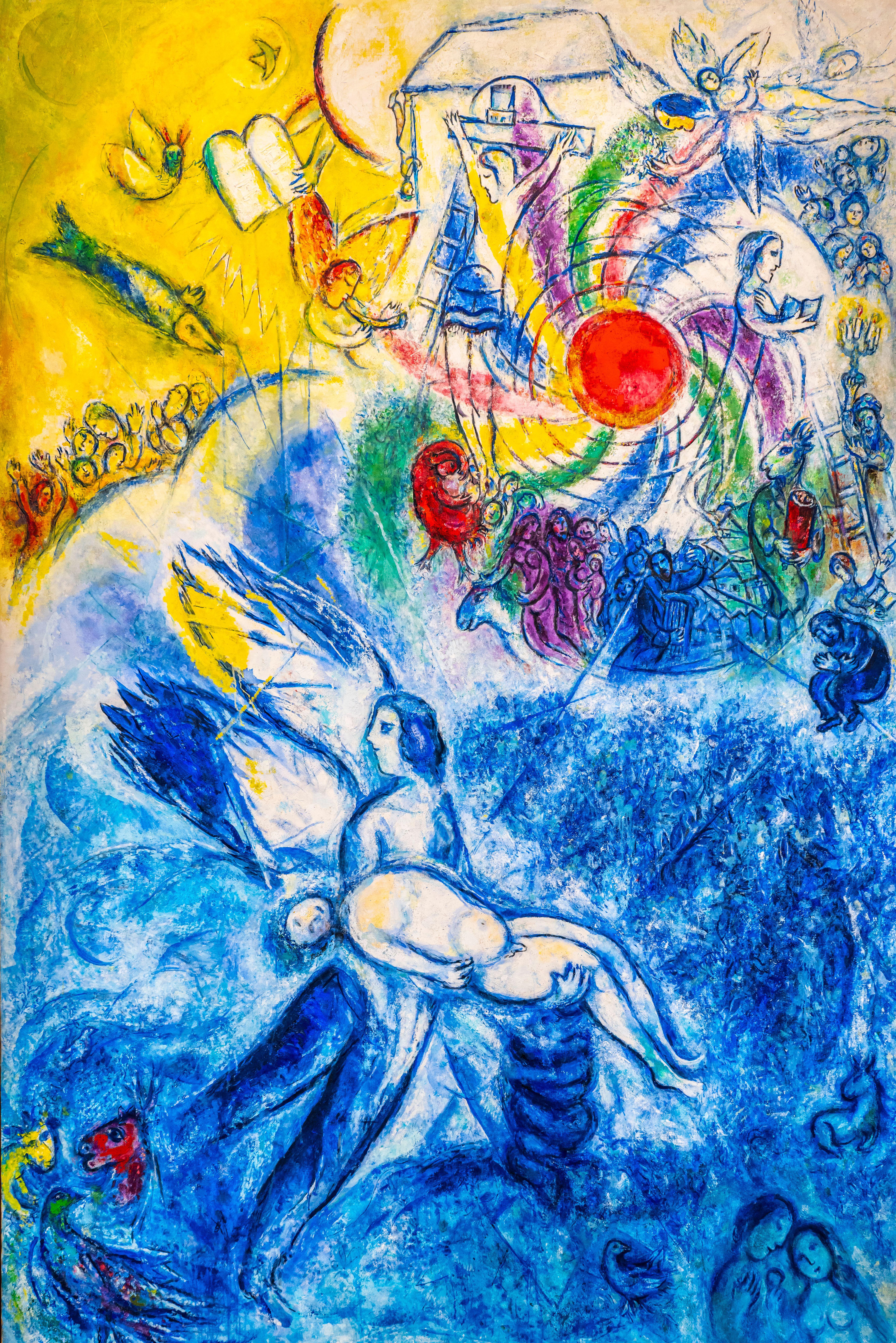
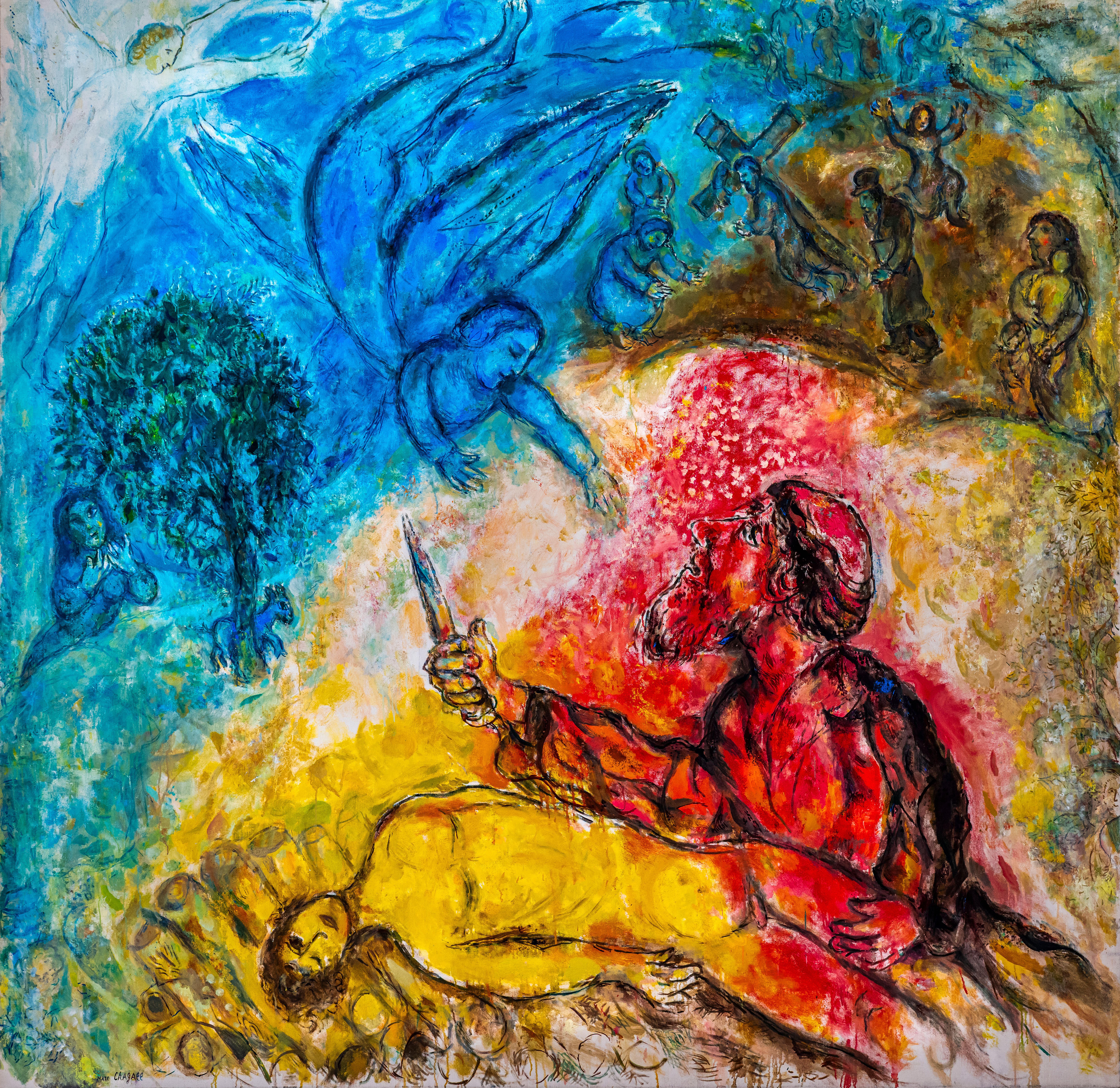
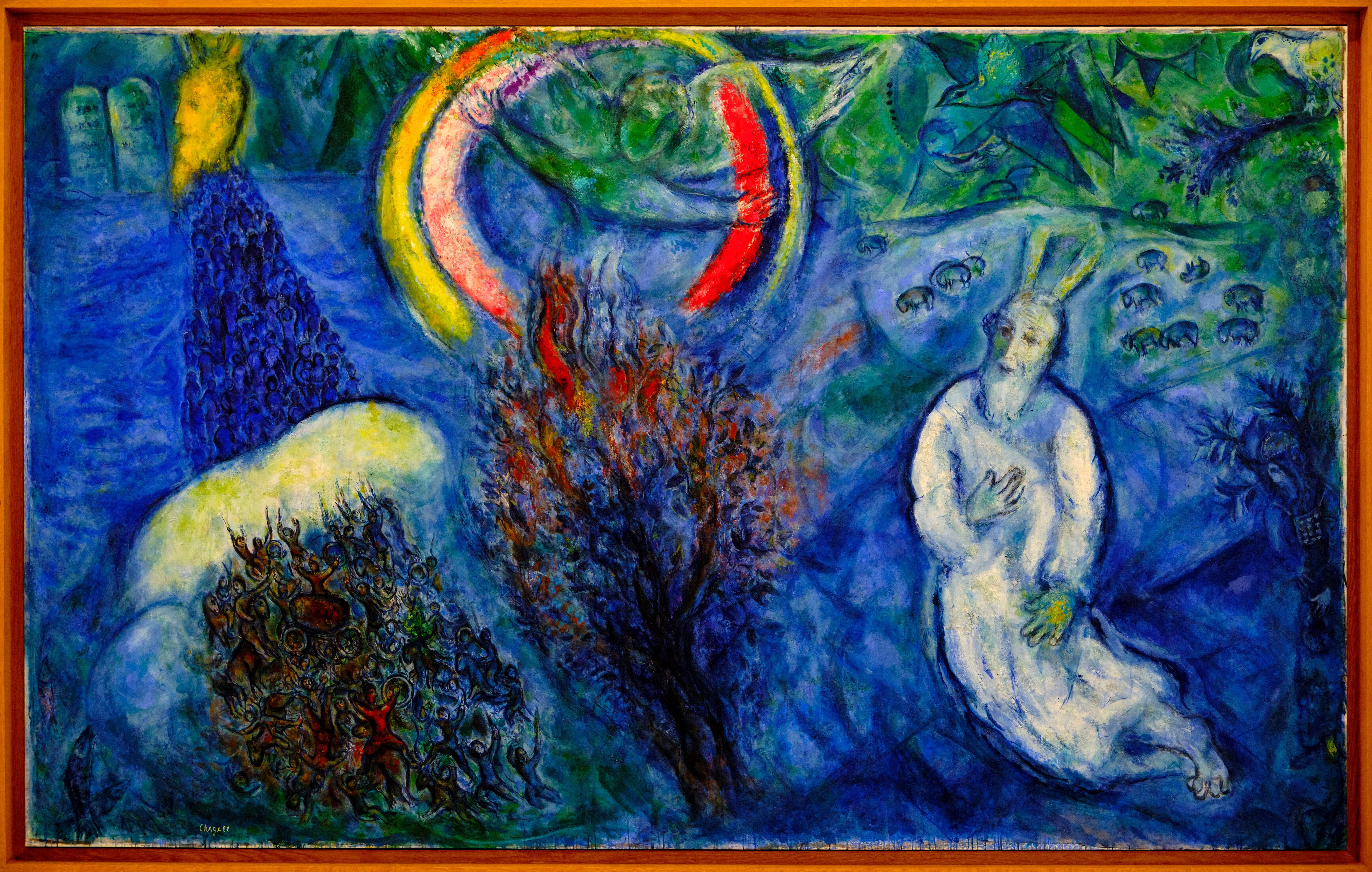
Art by Mark Chagall.

