


In a ward history, it is traditional to note what occurred, rather than what did not occur. However, seeing as the summer of 2026 was the first time in twelve years without any mishaps, I believe it should be noted. At the young men and young women’s camps, there were no ER visits, no bears, no food poisoning, no official warnings by the state police, and no wanton loss of tent or bicycle. Is it possible that this is because no member of the Hastings family attended either camp in any capacity?
As the ward historian, it is not within my purview to speculate on either correlation or causation.
(I must admit, though, that I do wonder why the Hastings are always given positions of responsibility when they are so prone to wreaking havoc.)
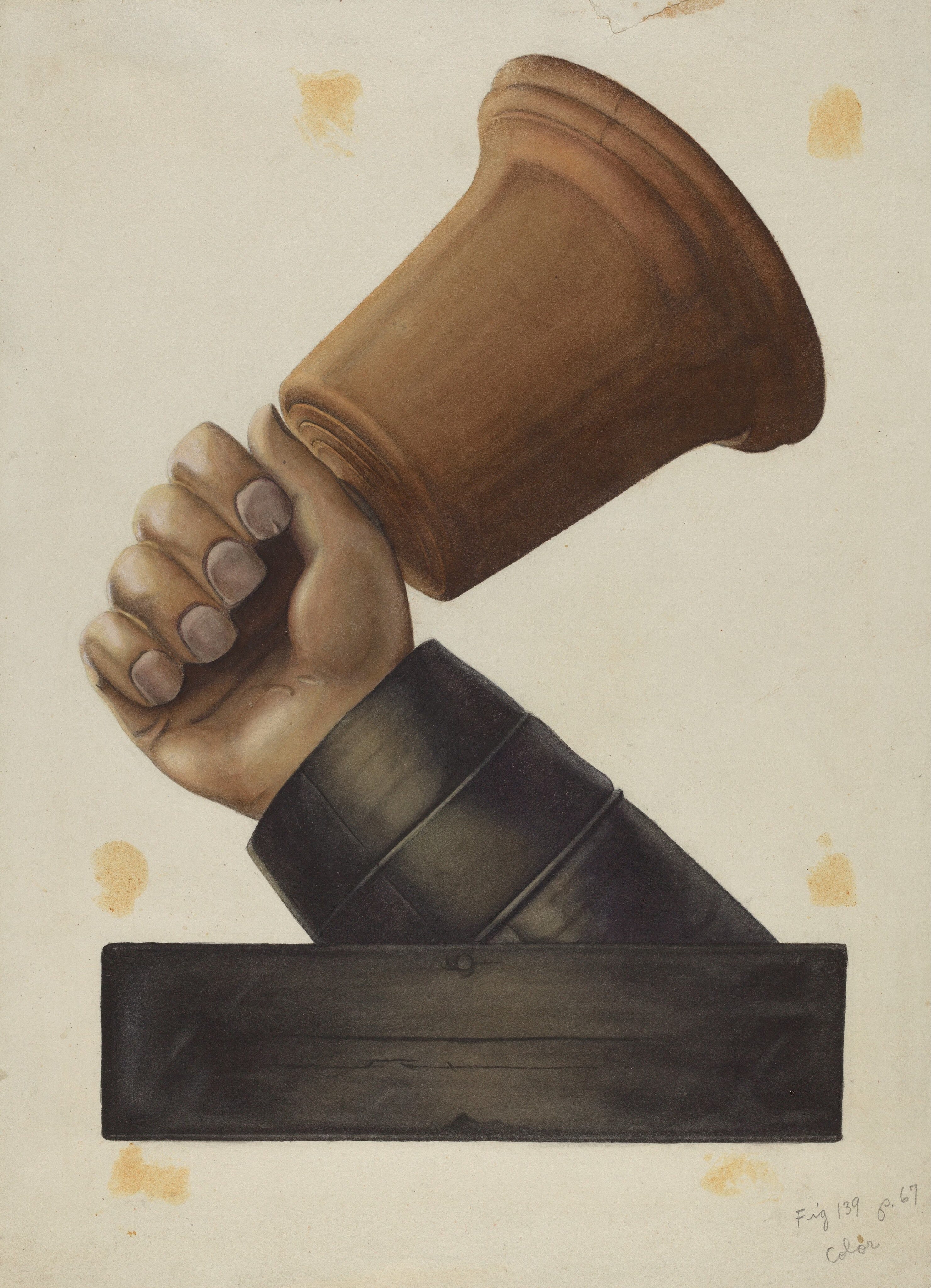
Unfortunately, mishaps would soon begin again for our ward—and they began in force in September 2026, with a broken church bell.
But first, a little context. At the very end of March, Church headquarters announced that beginning in September, the church schedule would be changing. During second hour, instead of attending either Sunday School or a gendered class (Young Men’s, Young Women’s, Relief Society, or elders quorum), everyone would attend both. There would be five minutes to get from sacrament meeting to Sunday School, exactly twenty-five minutes in Sunday School, a precise five-minute passing time, then twenty-five minutes in the final class.
When this change was announced, it threw members of our ward into crisis. The next Sunday was testimony meeting, and in between testimonies of Jesus and testimonies of Michigan’s NCAA Final Four victory with tangential gospel connections, multiple people shared their stress about the transition. Brother Bott stood up and said that if Rip Van Winkle went to sleep twenty years ago and woke up today, he wouldn’t recognize the Church, what with sleeveless garments, changes to the temple ceremony, and high priests having to meet with the elders quorum (something he is still bitter about, having been ordained a high priest one week after the change and so never getting access to an exclusive Sunday meeting). Sister Byers said she wasn’t sure we would have time for in-depth discussions in Sunday School if we only had twenty-five minutes. Then Sister Hastings stood up and said that we should actually just go back to the three-hour church schedule, which got a chorus of groans—as a ward, we might struggle with change, but everyone embraced two-hour church.
After a few more pulpit expressions of stress, Bishop shared several Facebook posts from members of the other ward that meets in our building—the Rutleg 1st Ward. On the multi-ward Facebook page, their ward complained that the September schedule change would be difficult because of the transitions. (They asked, “Have you ever seen a 35-year-old woman get from the chapel to the Relief Society room in 5 minutes?” Honestly, it’s a fair question.) As always, all it takes to unify our ward is mentioning the 1st Ward. As the 2nd Ward, we unanimously decided that we would set an example for the 1st Ward in sustaining the prophet and magnifying the new schedule. Also, Primary had been doing this for years—if four-year-olds can do it, how hard could it be?
Unfortunately, this involved putting new wine in old bottles (an expression that is not Word of Wisdom–friendly, but was said by Jesus, so is allowed).
Take, for example, the average Sunday in Young Women’s. Sacrament meeting inevitably finishes late, at 10:05. The young women start trickling in at about 10:12. The first leader arrives at 10:15. By 10:17, the young women are there. By 10:22, all the Young Women leaders become unlost (including Sister Hastings, who is an advisor but due to the food poisoning incidents is no longer allowed at girl’s camp). Then there’s finding someone to pray, choosing a song, and voting on whether it’s a cappella or the untunable piano. Sometimes an expedition is sent to the chapel for hymn books. They pass around the question box, get blankets, and repeat the theme twice (in English and Spanish). There are also announcements—if you don’t announce the weekly activity verbally, with an excited tone of voice, no one comes, despite endless reminder texts. By then it’s 10:45 a.m., leaving fifteen minutes for a lesson. I’ve heard—though I have not been able to confirm it through independent sources—that once they didn’t manage to start the lesson until 10:53 a.m. Unfortunately, this cannot be blamed entirely on Sister Hastings.
Needless to say, twenty-five minutes per class meant we had to train. And train we did. In addition to watching the Church’s videos and doing the prescribed fifth Sunday lesson, we held firesides and did a practice run on the last Saturday in August. We were completely prepared.
However, we forgot about Brother Underwood.
When Brother Underwood isn’t busy arguing that the local Protestant megachurch is the great and abominable church, he serves as the ward librarian and bell ringer. Bell ringer should be a simple calling: You press a button five minutes before church is over and a buzz rings throughout the building, signaling that it is time to think about closing prayers and lunch. At least, that’s what’s supposed to happen.
Sometimes he plays the bell like a foghorn for an excruciating thirty seconds. Other times, he taps a doctrinal mastery scripture in Morse code. Once, when the stake president was teaching a fifth Sunday lesson, Brother Underwood did six five-second blasts, followed by thirty seconds of silence (the stake president, lulled away into carnal security, started talking again), a twenty-second peal, four seconds of silence, then ten quick taps.
It is a truth universally acknowledged that some callings should not be magnified.
There is wild speculation in the ward as to why he chooses to do this.
Is this a call for help? some folks whisper. Or worse, a call for attention?
Sister Hastings takes the bell-ringing as a personal affront. (However, Brother Underwood began ringing the bell long before the Hastings moved here from Ohio.) Once, Sister Hastings confronted Brother Underwood about his bell-ringing, complaining that it is disruptive. He shot back that her kids are way more disruptive than the bells have ever been. As ward historian, I should not take sides on these things, but I fear I must side with Brother Underwood: As a whole, the Hasting clan is much more disruptive than Brother Underwood.
While others speculate about the cause of the incessant bell-ringing, I know the truth. There are people like the Hastings who are always given great responsibilities. And then there are people like Brother Underwood who only receive callings requiring very little responsibility, callings that would not be missed if everyone just stopped doing them. Now, most people have short stints in these callings, but some people get stuck in this track. It becomes a sort of label: We don’t trust you to do anything else, or we think other people would do a better job than you at anything that’s actually important, so you get to spend an eternity as the bell ringer, the emergency preparedness specialist, or the ward historian.
Yes, I am well aware that I am on this track. I have now been the ward historian for twelve years—I’m on my third bishopric. I also know that no one in the ward reads these yearly histories. I post a link to them on the multi-ward Facebook page every year, and four years ago, my son (who really should get around to having children of his own) helped me set up tracking on the link, so I know that on average, two people read it per year. One of them is my sister. But the yearly histories are also sent to Church headquarters and probably put in a vault somewhere—hopefully the bomb-shelter one for family history that can withstand anything. I have to believe that someday, someone will benefit from the history of the Rutleg 2nd Ward, so I write the very best, well-researched, impartial accounts that I can.
Because of the skills I have developed as the ward historian, unlike everyone else, who just speculates on Brother Underwood’s motivations, I actually asked him.
For Brother Underwood, at first ringing the bells creatively was a way to dare the bishopric to release him and give him another calling. But then he started to enjoy it. He made the decision, as I have, that if ringing bells is what others have decided he can contribute to building up the kingdom, then gosh darn it, he will ring those bells.
Honestly, my heart swells as I write these words. But now, back to 2026.
Despite Brother Underwood’s flagrant ten-year pattern of calling magnification, none of us considered him in our 2026 planning.
On our first Sunday with the new schedule, he rang the bell at 10:05, signaling that Sunday School should start. Unfortunately, the loud, buzzing, piercing bell came during the middle of Brother Bott’s opening prayer in the adult Sunday School class, and Brother Bott lost his balance, knocking over (and shattering) a dozen glass bottles full of various materials which Sister Byers had brought for an object lesson.
At 10:25, Brother Underwood held the bell button down for the next five minutes to make sure that we all vacated Sunday School by 10:30. Many people vacated the building.
During the final class, he rang the bell at the start but not near the end (we think Bishop distracted him). To make up for it, after church he played “Come, Come Ye Saints,” though it’s hard to be sure because the church bell only has one note.
Apparently, Sunday went much better for the Rutleg 1st Ward, despite their March murmurings and the fact that they didn’t practice at all.
As a fellow church member who is kept away from callings of responsibility, I’ve always felt a little defensive of Brother Underwood. However, his behavior on this particular Sunday was too much for even me, and I officially joined Team Stop Ringing the Church Bell.
The next week, we arrived at church to discover that our prayers had been answered: The bell was broken. Clearly, it was a miracle wrought from on high. Second hour went beautifully, with the exception of Brother Underwood weeping noisily in the hallway. I stood next to him for a moment, but I didn’t know what to say or do to help him feel better. I ended up giving him a bag of fruit snacks which I keep in my purse in case I run into any noisy toddlers. He accepted the bag, but it didn’t seem to help him feel better. I suppose there’s a reason I have never been called as the compassionate service leader.
On week three, the bell was still broken, but Brother Underwood decided that even if he could not perform the letter of his calling, he could still perform the spirit of it.
He visited every single class and interrupted the teachers to declare (sometimes with a lengthy speech) that there were five minutes left. The catch: Brother Underwood can only be in one room at a time, yet he insisted that there were five minutes left whether the teacher actually had two minutes or ten minutes. Time began to have no meaning, and some of us glimpsed the experience of living on Kolob when Earth is rolled together as a scroll.
After church, Sister Hastings declared, “I think I miss the church bell.”
We all mumbled our agreement.
“Maybe I shouldn’t have broken it,” she added.
I think we should all appreciate the fact that we can once again blame the Hastings (and, by extension, their home state of Ohio) for all of our problems.
It’s been months, and we still don’t have a working church bell. Brother Underwood visits every class at random times, declaring that there are five minutes left. Most teachers have learned to cut him off, thank him, and shoo him out the door so the interruption takes twenty seconds instead of a minute.
My favorite week, though, was when I subbed for the four-year-old Primary class.
(Yes, they do let me sub in Primary. I am one of the only prospective substitutes who has actually completed the child and youth protection training, and since teachers are always absent, they are forced to ask me for help. I’m hoping that someday they’ll actually ask me to teach a lesson rather than just be the second living, breathing adult in the classroom.)
Anyways, I was subbing the four-year-old Primary class. It was about three minutes until church would be over, and the kids were scribbling with crayons on paper. And then, Brother Underwood entered the room.
Before he could say anything, the youngest Hasting kid yelled, at the top of his lungs, “FIVE MINUTES LEFT!”
Brother Underwood smiled—a full, heartfelt smile. He left without a single word.
Katherine Cowley is the Mary Higgins Clark Award nominated author of The Secret Life of Miss Mary Bennet. She has also published two other novels and numerous short stories, as well as the nonfiction book Write with Jane Austen: Masterclasses with the Master Storyteller. She lives in Kalamazoo, Michigan with her husband and three daughters.
Art by an anonymous American (1935–1942).

As a former ward historian, I love this!!
As a big fan of the minor ward calling genre, I really appreciated this story’s ability to see both the humor and humanity in how those of us with minor (there are no callings too small in the kingdom) callings can still magnify our callings in the most unlikely ways. Very creative and LOL funny.