


In 1950, cybernetics pioneer Norbert Wiener published The Human Use of Human Beings, in which he warned of a future in which “communication machines” have a “tremendous possibility of replacing human behavior.”
“That we shall have to change many details of our mode of life in the face of the new machines is certain,” he wrote, “but these machines are secondary in all matters of value that concern us to the proper evaluation of human beings for their own sake and to their employment as human beings, and not as second-rate surrogates for possible machines of the future.”
Seventy-five years later, we seem to have accepted a “second-rate surrogate” future as the inescapable reality. A narrative in Silicon Valley, parroted by industry leaders and billboards alike, is that humans will inevitably be made obsolete by machines that are more intelligent, more efficient, more productive, perhaps more creative than we are. Not only will people be automated out of work, they say, but the highest imaginable end for humans—if we evade AI-driven human extinction—is a future in which we live in passive, consumptive abundance, surrounded by material wealth but deprived of meaningful purpose and action. Geoffrey Hinton, the “godfather of AI,” even stated that “it’s quite conceivable that humanity is just a passing phase in the evolution of intelligence.”
That we feel our humanity is threatened by increasingly capable calculation machines reveals our impoverished view of what it means to be human. Though our worth is inherent and inextinguishable, we conflate our value with our intelligence, creativity, or achievements.
Increasingly advanced AI is widely considered a threat to our humanity, but it merely reveals that we’ve already been dehumanizing ourselves. By seeing ourselves as interchangeable instruments whose value is economically determined, rather than moral beings who are ends in ourselves, we begin to view ourselves as resources that can be standardized, optimized, used, and discarded, where failure to constantly “upgrade” or “upskill” means obsolescence. Think of how companies often refer to people as “human capital” or “human resources”: a set of skills and knowledge to be deployed just like any other asset; a nameless, faceless, fungible unit in a money-making machine.
So we spend our lives trying to make ourselves more useful, productive instruments: pursuing higher education not for intellectual formation but to acquire marketable skills; cultivating relationships to assuage our loneliness or expand our “network”; viewing rest and leisure as means of recovery from and preparation for more work, rather than a human necessity. In this instrumental view of humanity, anything that performs our functions faster, more efficiently, more intelligently will replace us: whether a language model that can solve calculations and generate text, or a bot that can dispense compliments on demand.
In a world with ever-more capable machines, the risk we face is believing ourselves second-rate cogs and relinquishing the moral, intellectual, relational growth that is core to our flourishing. This growth happens by facing the challenges and conundrums that arise in our lives—sometimes with the assistance of technology, sometimes without—rather than relying on technologies to act on our behalf. The purpose of our actions is not just the final output, but how we are changed in the process.
Our lives are not merely a series of tasks to complete as quickly and efficiently as possible, but “to become what one is,” as Nietzsche once wrote. It is a process of unfolding: trying, observing, failing, learning, and trying again, toward greater challenges and higher ends. Unfolding is not the same as reaching one’s full potential, which is a similarly instrumental, goal-oriented view. This potential-oriented view falsely assumes the existence of an ultimate, optimized final product that one can achieve if one envisions it from the starting point and systematically aims toward it. Living a full life is something more fluid, more poetic: becoming ourselves through the countless actions, decisions, and encounters of every day; evolving with one’s experiences. It is a continual dialogue with the world and others in it.
Choosing to honor our humanity isn’t a matter of embracing AI or rejecting it. It is something more fundamental: considering our individual development as whole human beings as the proper end, and assessing whether the systems we are creating and participating in—technological, educational, vocational, or otherwise—support or impede this.
Our goal should be to create the conditions in which every person has greater freedom to experiment, greater opportunity to contribute, greater capacity to love, greater ability to unfold. A world that does not confine or manipulate the individual, but gives her the spaciousness needed to evolve and grow, is one that honors our humanity.
What does this mean for how we choose to live? It means tuning one’s sense of what is true and turning toward it, rather than defaulting to what is convenient or standard. It means considering the decisions we make with an eye toward the type of person we wish to become, and assessing whether our actions move us closer. It means refusing to blindly adopt the easy answers, whether imposed by an authority figure or fed by an AI. And it means remembering and asserting that every human being has innate worth and inviolable value, even when others suggest otherwise.
We are not only just minds in bodies, but souls: utterly inimitable, with strange depths and unknown potentialities, an alchemy of hopes and fears, sorrows and joys. To discover and nurture this is the joy and meaning of our lives.
What makes our lives worth living is the act of living. Life should be a dance with reality—nimble, graceful, fluid—in which both we and the world continually respond to each other and evolve. Participating in this unmappable dance—rather than outsourcing it to a machine simply because it can do it “better,” or following another’s choreography—allows us to become ourselves. That is the human use of human beings: giving every person the chance to dance, to unfold, to be constantly surprised and delighted by who we can become. And no machine, no matter how intelligent, can do that for us.
Ashley Zhang writes Soft Power, a Substack exploring what human flourishing looks like in a world with AI. She works as a Storyteller at the AI company Imbue, helping shape cultural narratives around technology’s role in our lives.
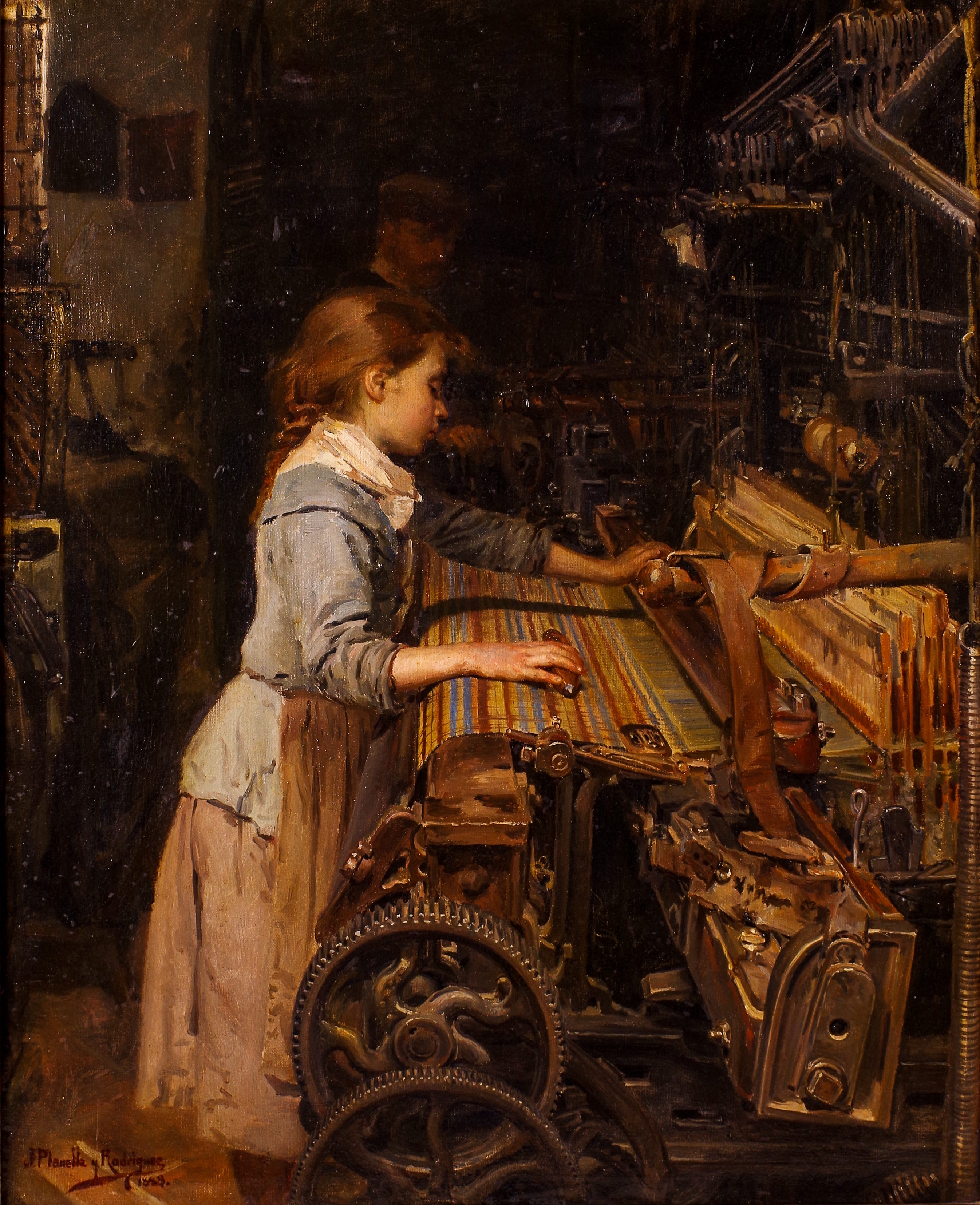
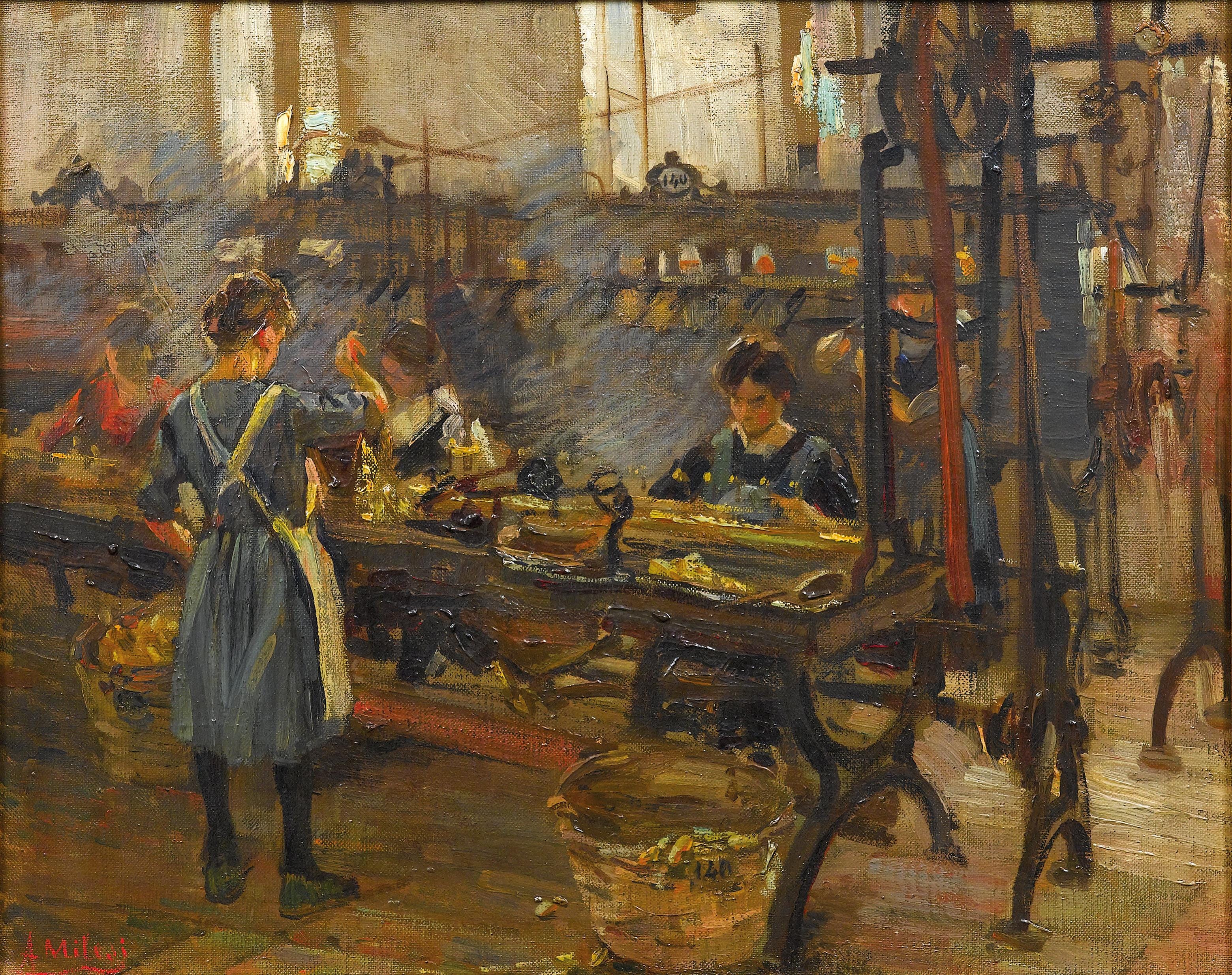
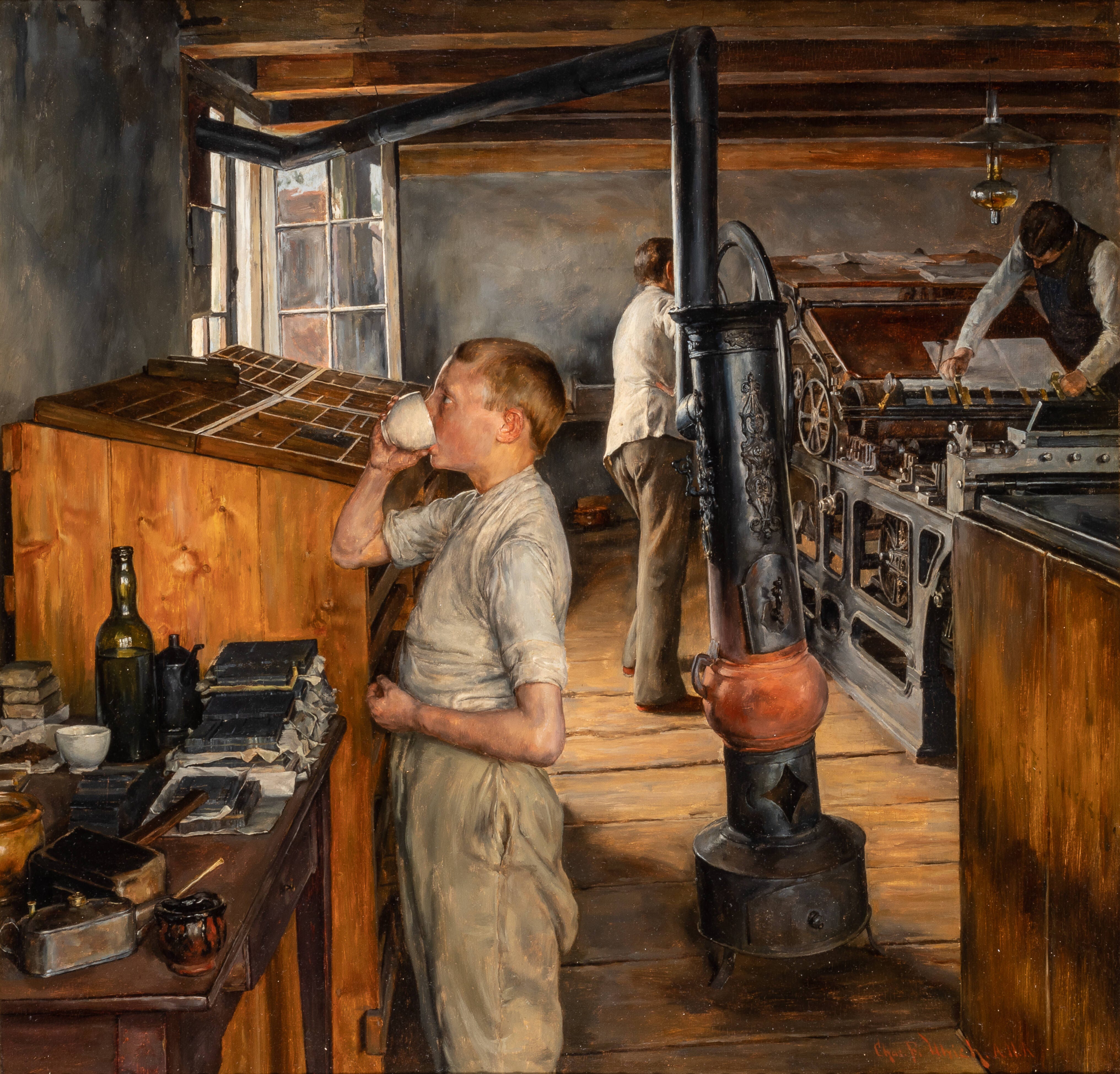
The Little Weaver (c. 1889) by Joan Planella i Rodríguez (1849-1910); The Spinners by Alessandro Milesi (1856-1945); The Village Printing Shop by Charles Frederic Ulrich (1858-1908).


.jpg)
Love this! As machines grow more capable, we humans are forced to focus on our humanity: Love, Joy, Relationship, Creation! Bless you for saying it so eloquently ❤️