

Tell us a little about your background.
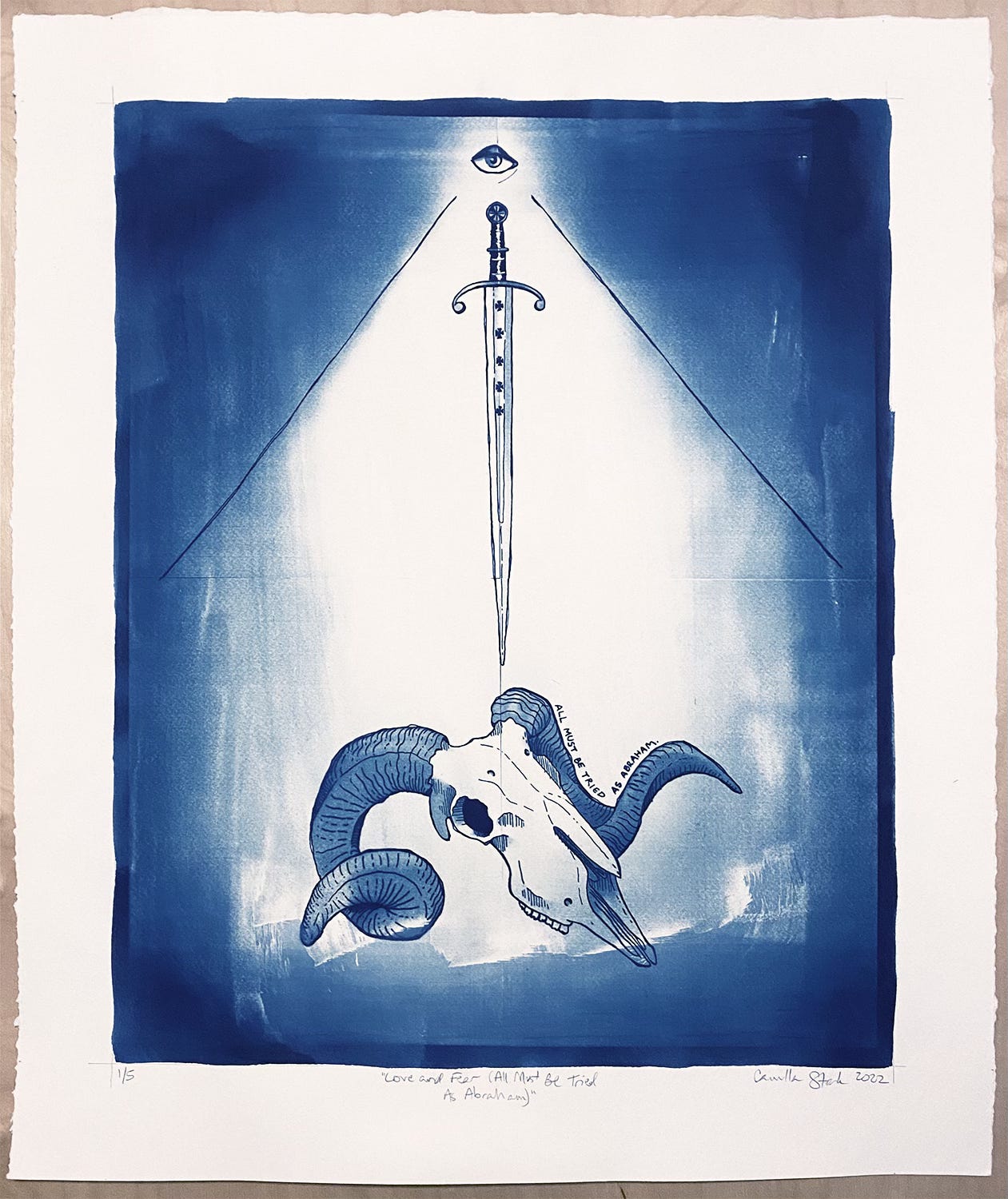
I am an artist and designer. I do user experience design professionally, but my true vocation is making LDS-focused art exploring my spirituality, the Church, and the culture around it. I also help run an art collective called “The ARCH-HIVE,” which is a community for LDS creatives to directly explore the complexities of lived religion, as well as Utah, the American West—all that sort of aesthetic.
Personally, I work with many mediums. I’ve worked with ink drawing, block printing, cyanotype, embroidery, digital art, and I’m about to get into piecework with fabric. I’m also the author of a self-published graphic novel, The Desert Prophet. But even though I like to play around in many different mediums, the themes in my artwork are very consistent. I work with themes of duality: light and dark, life and death, and love and fear. These themes are important to me because for many years I struggled with obsessive compulsive disorder, specifically scrupulosity, which is OCD manifesting in religious practice and thinking. This scrupulosity put me in a very black-and-white, all-or-nothing type of mindset, and one way I fight back against that tendency is to really embrace duality and the necessity of the coexistence of both sides.
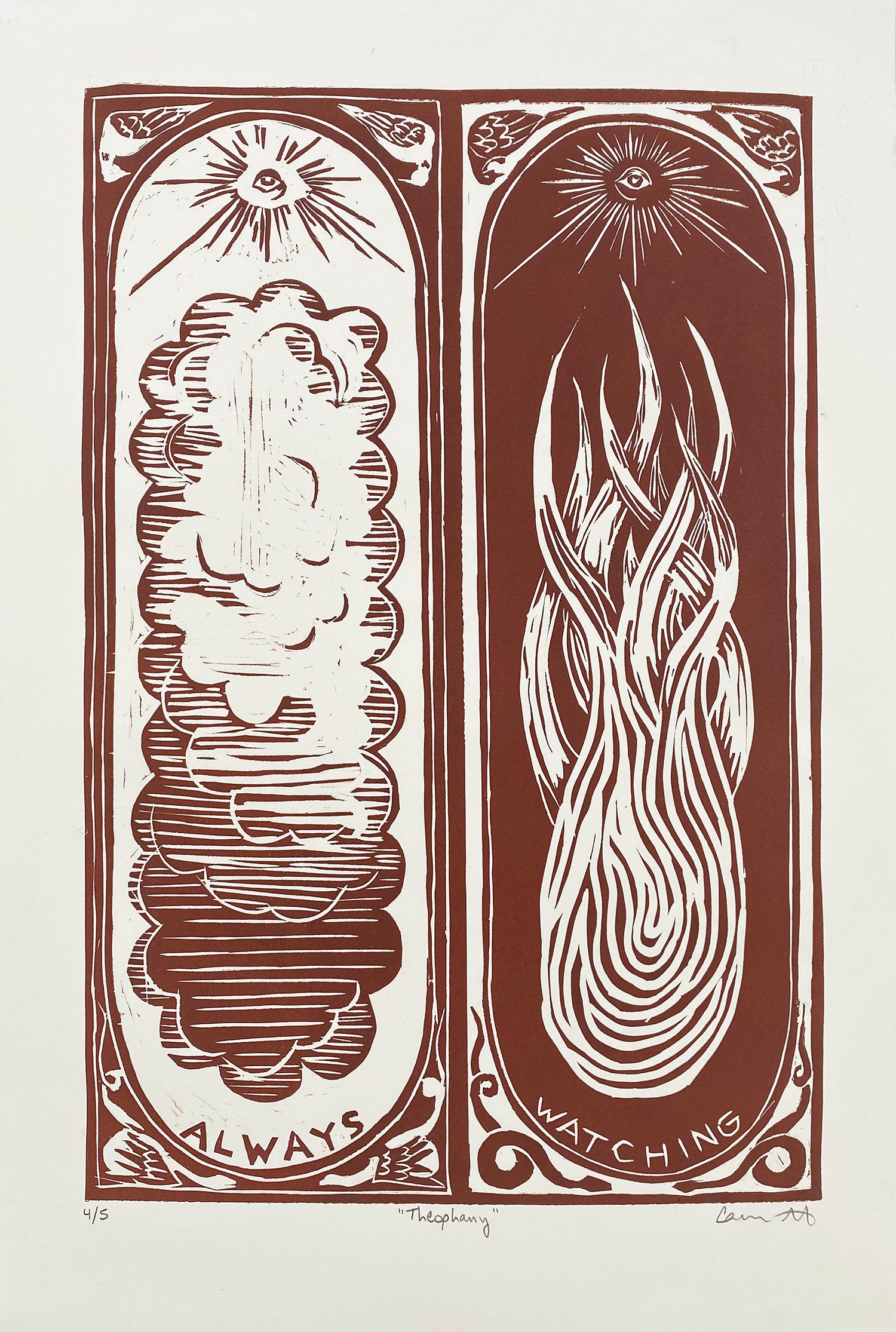
You’ve made some stunning artwork about your experiences with scrupulosity. But today we’re here to talk about your new graphic novel, The Desert Prophet. Can you tell us a little bit about the book and what inspired you to write it?
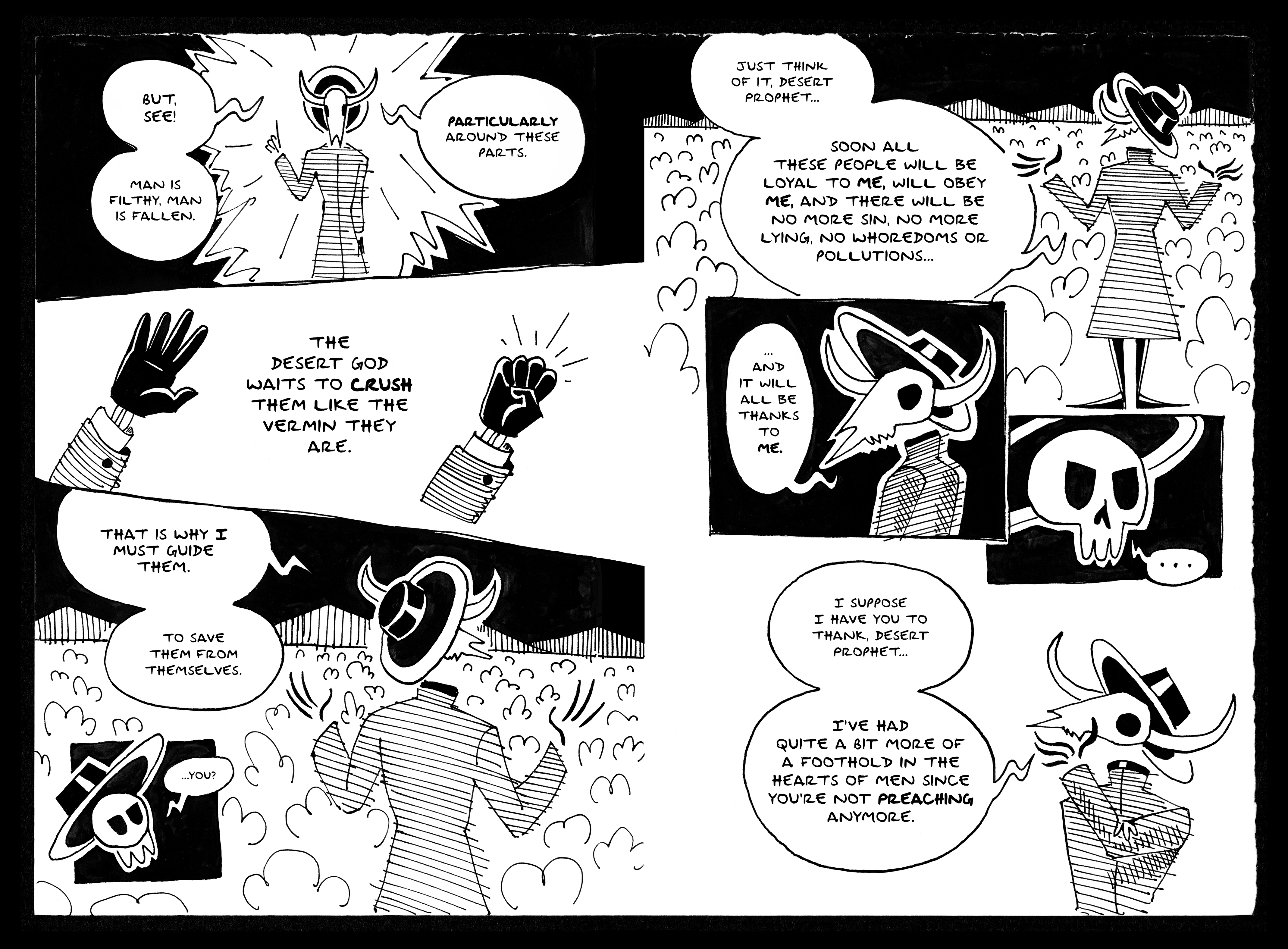
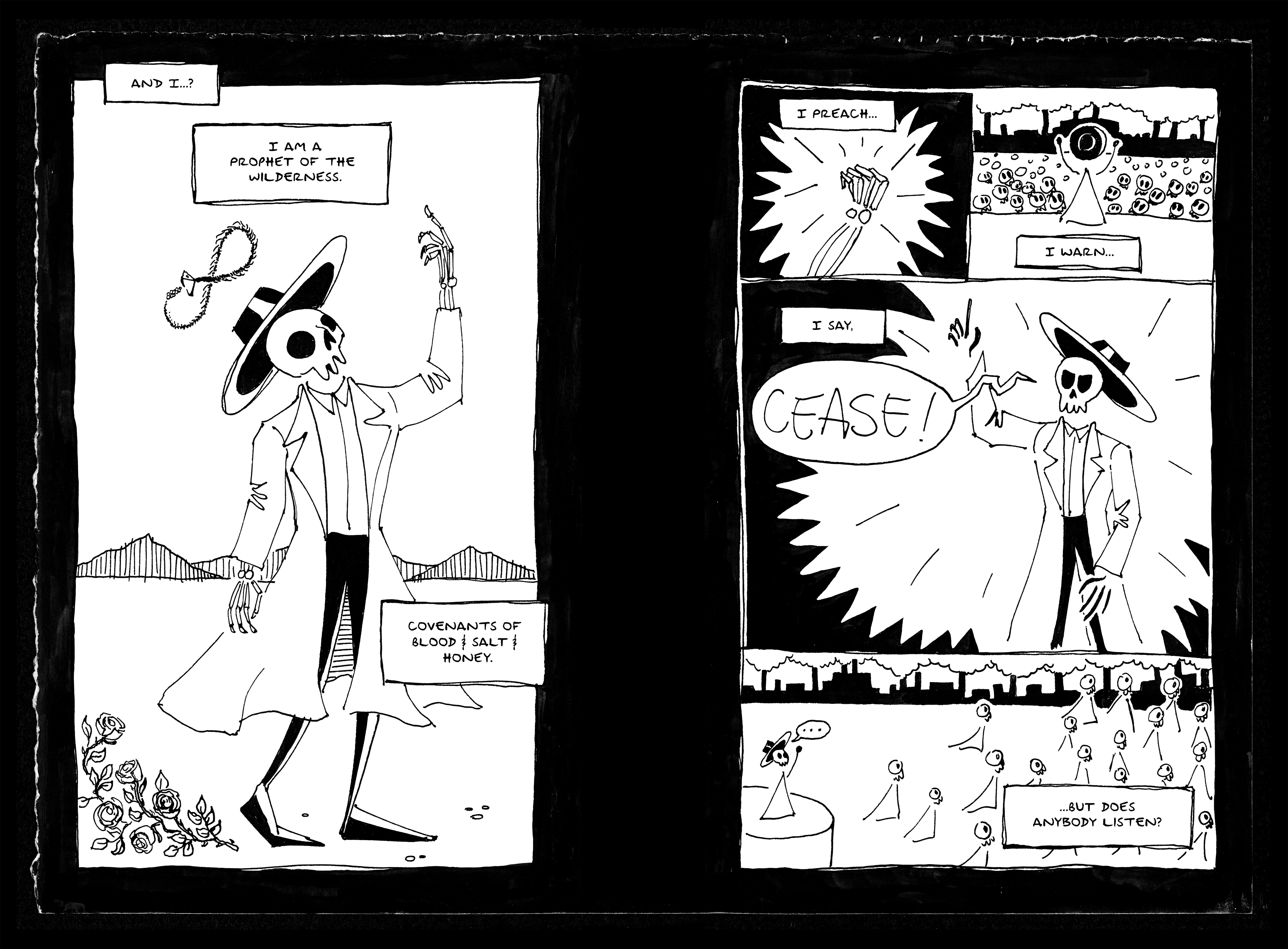
The Desert Prophet is a climate parable about a disillusioned apocalyptic prophet who is trying to save the world. No one is listening to their warnings, so they kind of decide to give up. The Desert Prophet forsakes their prophetic mantle, resigns the calling, and then the Desert God calls the Desert Prophet to cross the desert and climb the mountain to meet with the Desert God. Along the way, the Desert Prophet meets all these different desert spirits—some are good, some are bad—each responding to the end of the world in their own way.
This book is kind of unique for me. Usually my art ideas come to me in a flash, very clear, fully formed, and I just execute them. But Desert Prophet started out in some unexpected places and I had to really work through them to get to its final form.
First, when I was in high school, I took an environmental science class, just to fill a credit. I was a total climate change skeptic at the time and I spent the whole class arguing with the teacher. But finally, the science just convinced me. I learned so much in that class, and I also spent a lot of time thinking about the Doctrine and Covenants, and how we are commanded to be wise stewards of the earth. Then in college, even though I majored in design, I took quite a few biology and environmental science classes that really helped me better understand how and why we should be taking care of our planet.
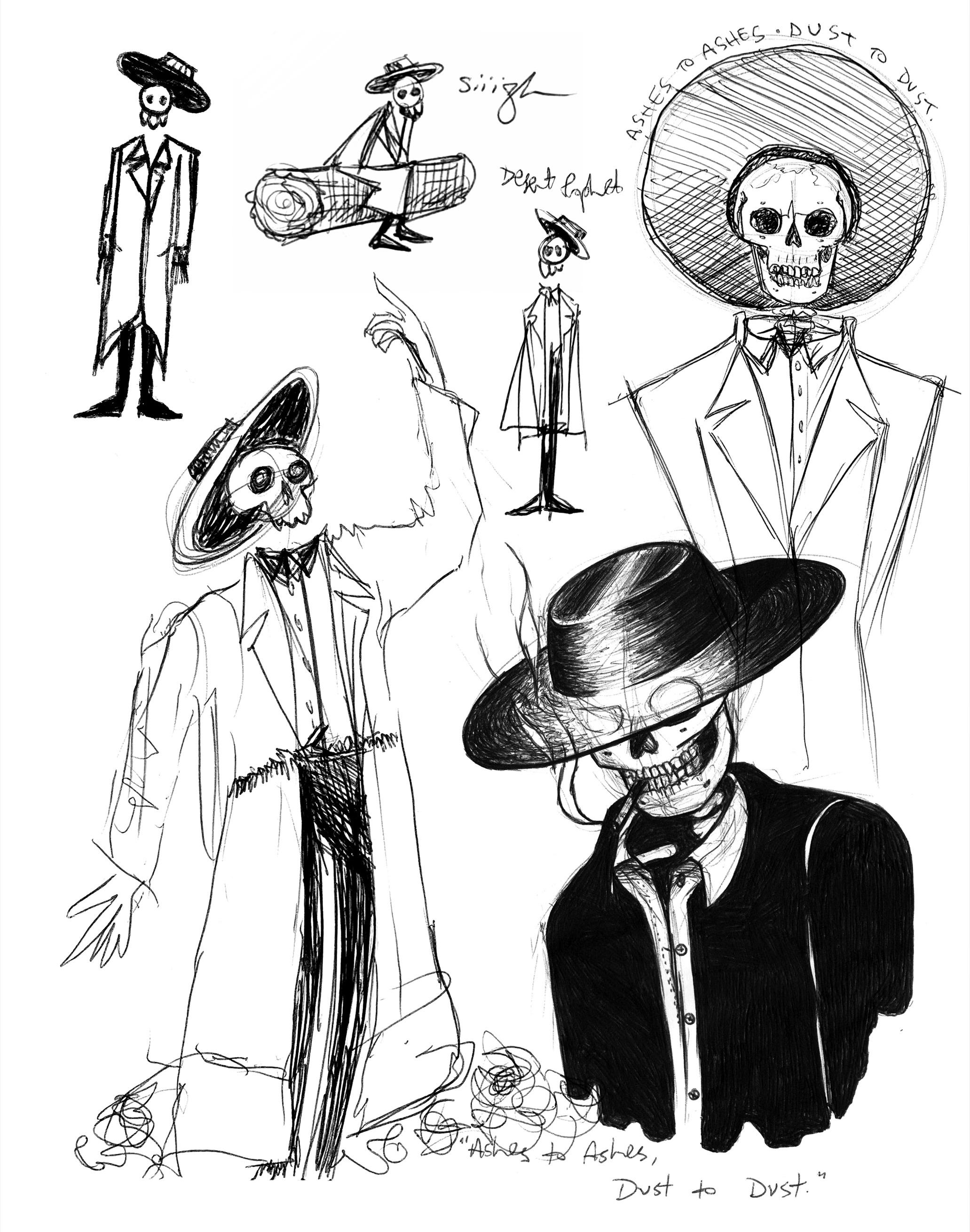
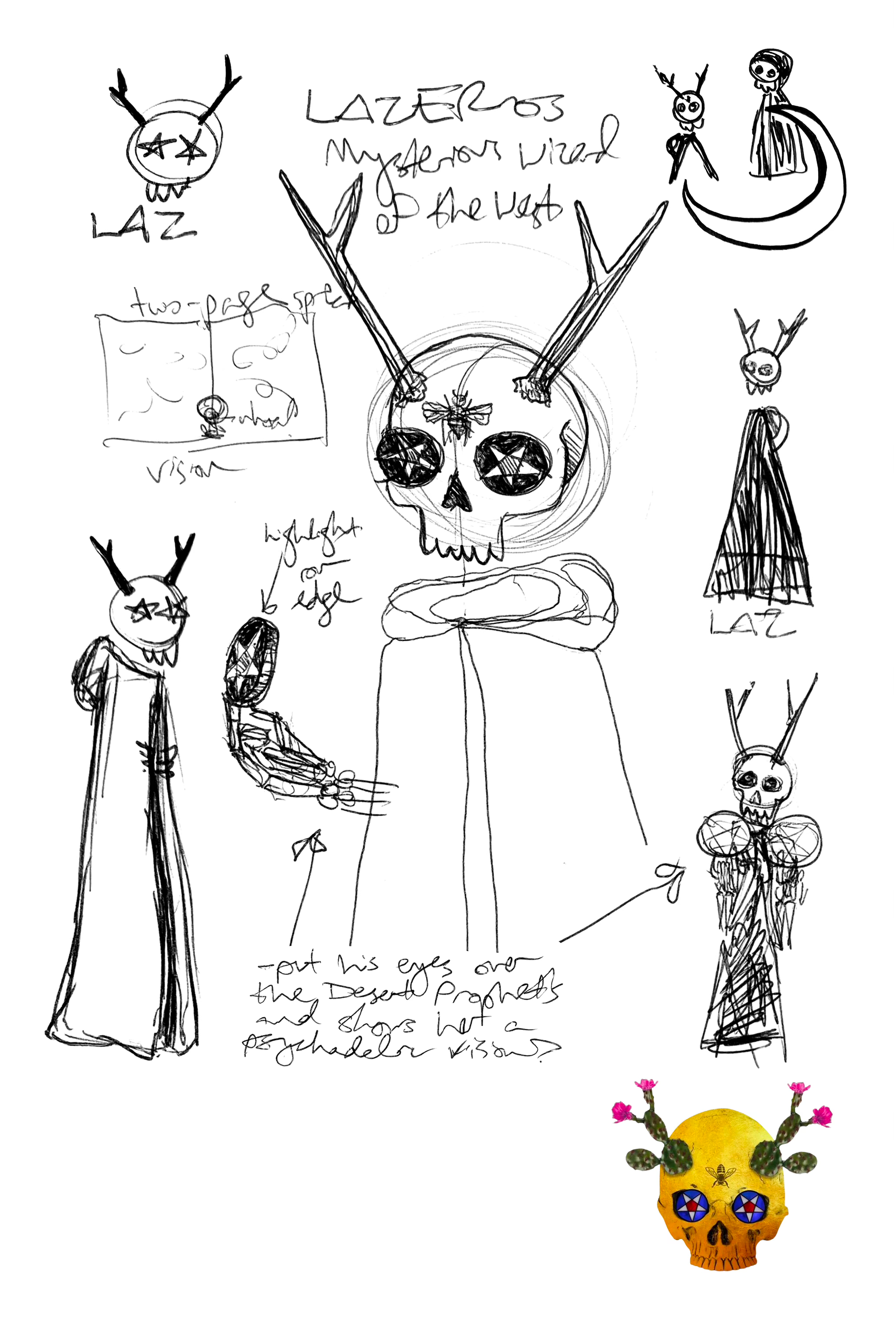
Jumping forward a bit, when I started The ARCH-HIVE with the anonymous Mormon pop artist LAZERos, he had this idea that we should each have an alter ego in this art community. I really went all in on this idea, and I created this alter ego called “The Desert Prophet,” which was this apocalyptic poet prophet, in the vein of Isaiah, whose specific apocalypse that they’re warning against is climate change.
Then, a little later, I had a friend who was writing a graphic novel, and I started to think that maybe I could write a graphic novel, too. It only took me a few months to write the story, so I thought it would be a fun little project that would maybe take a year. It actually took me six years to design and ink everything, and then get everything ready for publication.
You talked about duality in your work, but one of the things that stands out to me in this book, and in all of your artwork, is your use of images of death. Skeletons, deserts, coffins—why do you think these images speak to you?
It’s very much a kind of memento mori—“remember you must die”—which is a very common motif throughout art history and in religious art in general. Like, the Catholics have a lot of really interesting death-related art with their relics and catacomb saints, where they put jewels all over the bodies of these saints. Skulls, rotting fruit, hourglasses, are all imagery used as reminders that our time here is limited. I think that keeps us really humble and aware of our place in the cosmos. We are here, alive now, but we will die and meet our Maker and our actions will be judged.
I also just really love esoteric and occult imagery; things like the all-seeing eye or the ouroboros (the snake swallowing its own tail). I think it ties back into my scrupulosity. Growing up, we were discouraged at church from engaging in tarot or fortune-telling, which I took to mean anything esoteric was off the table. Then I learned more and discovered that Joseph Smith was a Freemason, which also uses a lot of this imagery. I’ve also recently been learning about Christian Hermeticism, which goes along with Joseph Smith’s teaching that we can seek out truth and knowledge wherever it may be. I find these tensions very interesting—things that are normally seen as taboo, but actually, when you look closer, you can find truth that glorifies God and lifts mankind.
As I was reading the book, I noticed so much mysticism, especially as references to the early Church and the temple.
Yeah. Mysticism means “direct experience with the divine,” and I think that direct experience felt much more prevalent in the early Church than it is now. I think today our worship has become less and less embodied—especially in the temple. It’s much less participatory and embodied that it was even a few years ago. But we live in these physical bodies, and God has a physical body. I think it’s really important for us to have an embodied faith.
We’re so digital today, so disconnected from our physical bodies. I think in the book, the Desert Prophet does directly experience the divine by physically crossing the desert, climbing the mountain, and being in the presence of the Desert God. That’s something I wish we had more of in our day-to-day worship and institutional worship. But a lot of this physical faith in the book does refer back to the symbols of the temple. Like how the Desert Prophet crosses the lone and dreary world to climb the mountain and speak with God. And some of the language that the Desert God uses mirrors the repetition in the temple language. But these are all purposefully subtle. I don’t want to explain everything. It’s just the kind of thing you’ll notice if you’ve been initiated into the mysteries.
Obviously this book begins in a very hopeless place, when the Desert Prophet gives up on their preaching and walks away from civilization. Would you say that this is a hopeful book?
That’s a tricky question. Essentially, the overall message of the graphic novel is one of personal responsibility, that even if our actions don’t ultimately matter, even if we don’t stop climate change, even if the world is doomed, what we choose to do in the time of our life and with our resources really matters. I really think it matters morally, for our own souls, and for everyone around us.
Back in 2015, when I was in college, I did an internship in Paris with this charity organization called Les Petits Frères des Pauvres, which means “The Little Brothers of the Poor.” I was working with Alzheimer’s patients, visiting them once a week in their homes. Studies show that more human interaction can slow the progression of the disease, but also, these people were just lonely and we were a friendly face to check in on them and talk to them. There was a whole range of severity with these patients. One woman in particular was my favorite. She lived in a care home and was at a very advanced stage of her illness. She had no idea what was going on and just kept asking us the same questions over and over. On one of these visits, I started to feel kind of annoyed at these repeated questions, and I thought to myself, I could be rude to her. I could be mean to her and wouldn’t even matter, because she has no memory of anything that’s happened. Of course, I immediately knew that that wasn’t actually true, because even if she didn’t remember us after our visits, she seemed happier and lighter, and I knew that we’d made a positive impact on her. If we were rude to her, she might not remember it, but it would still impact her. And also, I knew that after this life, I would see her again, and she would know exactly how I treated her.
That experience really stuck with me, and it’s kind of helped shape one of my life philosophies, which is that the most important thing we can do is to not become paralyzed by despair. Whether it’s climate change, personal tragedies, the potential AI apocalypse—even if we have no actual control, using our agency and choosing to take positive action is the most essential thing we can do.
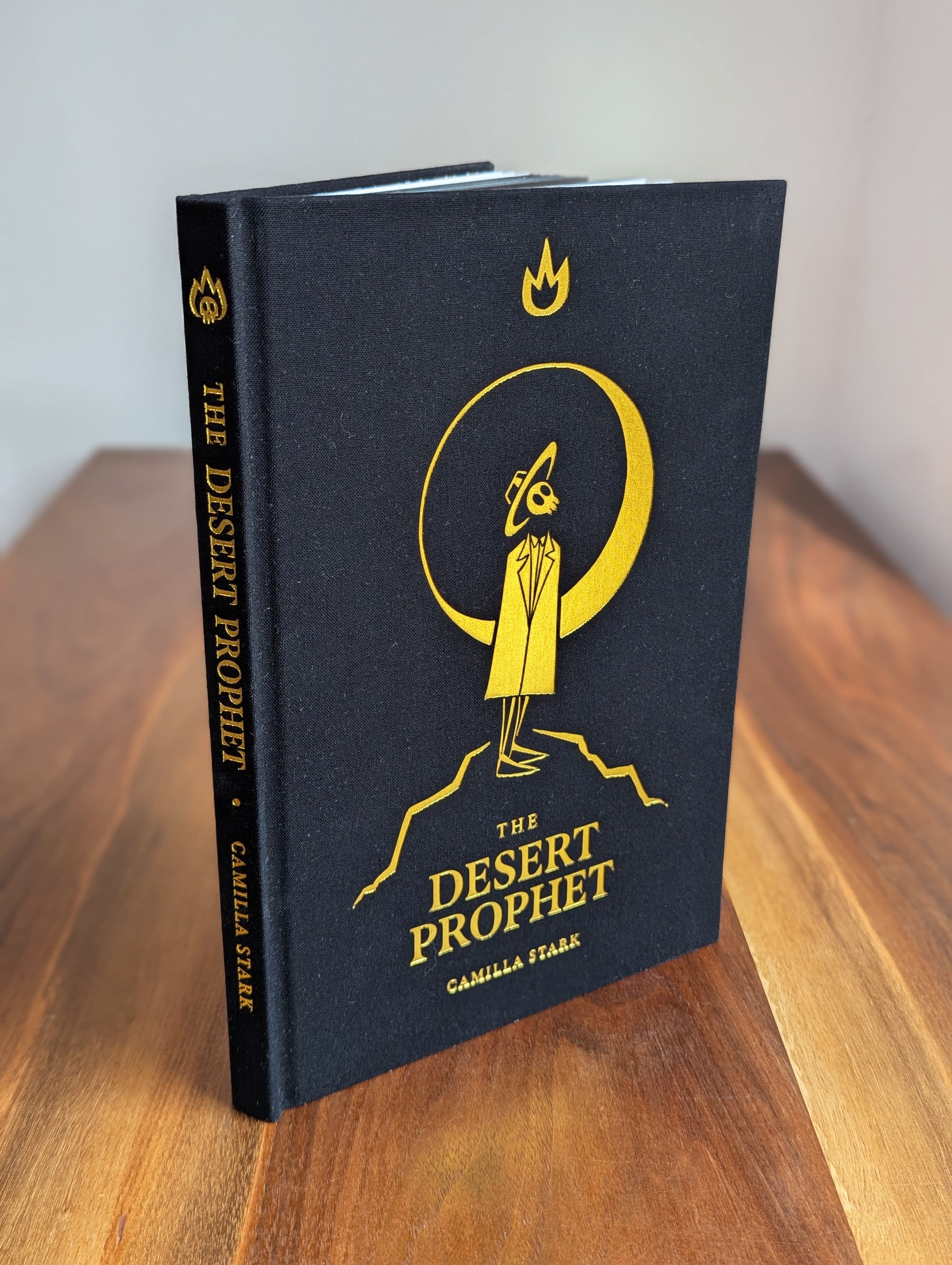
Learn more about The Desert Prophet and purchase your copy at desertprophet.com.
Read an excerpt from The Desert Prophet, published in Wayfare issue 6:
