


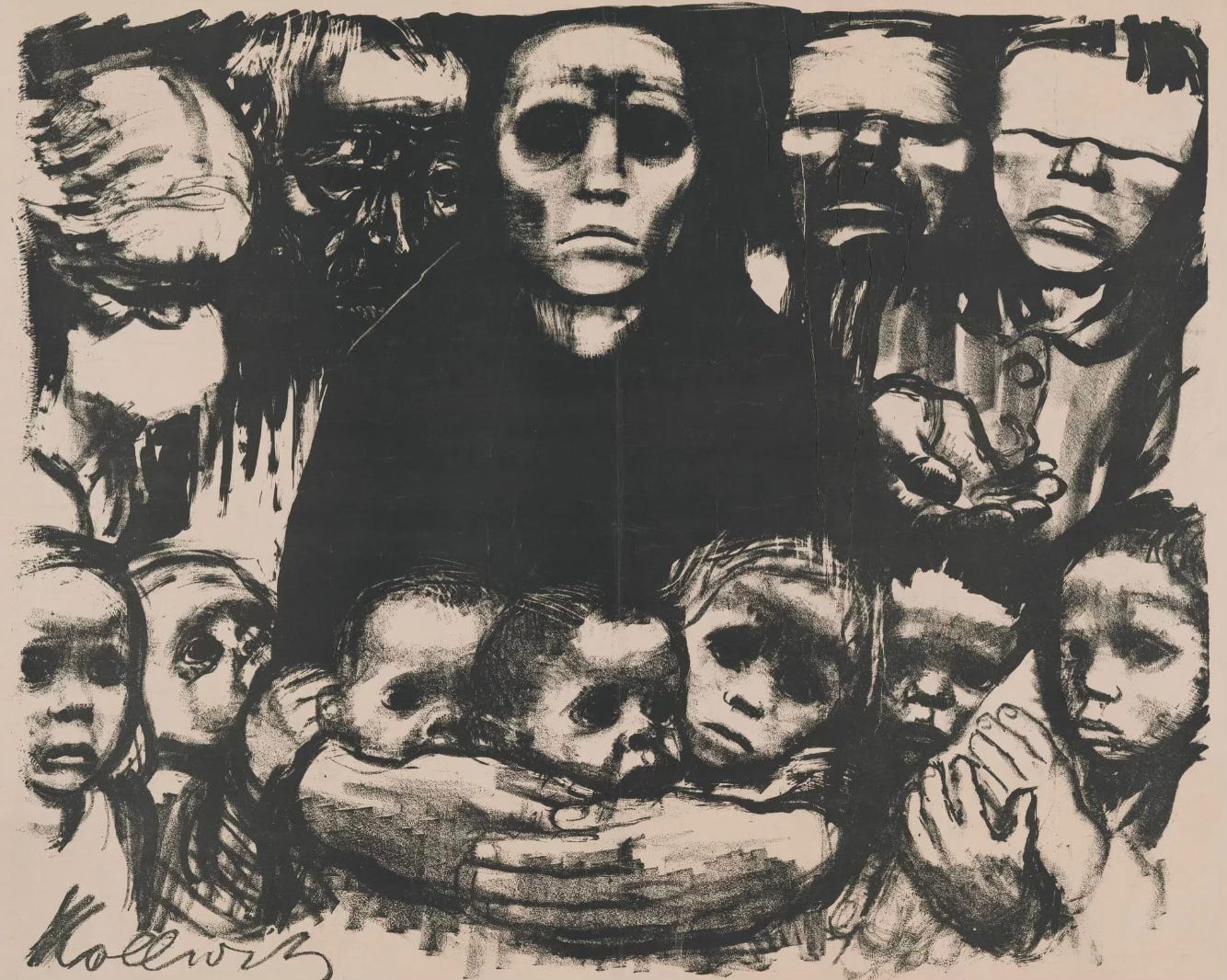
“How lonely sits the city
    that once was full of people!” (Lamentations 1:1; NRSVUE used throughout)
A ruined cityscape is a desolating sight. Its razed buildings and its vacant, mangled thoroughfares summon the ghosts of a vanished human commerce. How wasted and barren, how bereft the streets.
Our collective memory holds grim pictures of ruined cities: London and Dresden in black-and-white rubble, Hiroshima silent and leveled, Chernobyl abandoned to a poisoned forest. NYC on 9/11, littered with the paper remains of Wall Street. Gaza, buried in concrete and twisted rebar.
Lamentations belongs to this fearsome company as the Bible’s primary literature of destruction and grief. It speaks from the point of view of Jerusalem itself in the wake of the Babylonian conquest, a wrecked city mourning for its kidnapped and murdered inhabitants. Over five highly structured poems, Lamentations memorializes the catastrophe of the temple’s desecration in shocking scenes of violence and violation. Where the faithful once moved in procession toward the temple with festive psalms, the implacable nations now march with fierce clamor (Lamentations 2:7). With caustic irony, the poem imagines an anti-worship that un-dedicates the temple.
By the time a reader of the Christian Bible reaches the famous opening line of Lamentations (“How lonely sits the city”), they have encountered the destruction of Jerusalem in three historical narratives (2 Kings, 2 Chronicles, and Jeremiah 52), two major prophets (Isaiah and Jeremiah), at least three psalms of lament (Psalms 74, 79, and 137), and the overarching framework of covenantal blessings and curses that warns of Judah’s punishment from Deuteronomy onward (Deuteronomy 28 and 31). When we arrive at Lamentations, the destruction of 587 BC is hardly breaking news. But reading the grief and outrage that throbs in these ancient poems is like looking into an open wound that still weeps blood.
In spite of its despair, the poetry of Lamentations is so arresting that it has become a universal vehicle for the sorrows of the world. Ironically, its bitter parody of worship has been reincorporated into genuine worship. In Judaism, Lamentations is read from the floor of a darkened synagogue on Tisha B’Av, the saddest day of the year, to commemorate the destruction of both temples. After the Holocaust, and again after October 7, 2023, its words took on a terrible new poignancy:
The Lord has rejected
    all my warriors in the midst of me;
he proclaimed a time against me
    to crush my young men;
the Lord has trodden as in a winepress
    the virgin daughter Judah.

For these things I weep;
    my eyes flow with tears;
for a comforter is far from me,
    one to revive my courage;
my children are desolate,
    for the enemy has prevailed. (Lamentations 1:15–16)
Christians, for their part, have found in Lamentations a text equal to the grief of Golgotha. In traditional tenebrae services of Holy Week, selections from Lamentations are recited to evoke the suffering of Christ and the grief of the Church. Lamentations 1:12 is read as the words of Jesus on the cross:
Is it nothing to you, all you who pass by?
    Look and see
if there is any sorrow like my sorrow,
    which was brought upon me,
which the Lord inflicted
    on the day of his fierce anger.
Our own faith community recently marked one year since four of our own were killed on a Sunday morning in Grand Blanc, Michigan. Latter-day Saint leaders no longer commonly offer public lament; they wisely focus on resilience and consolation in Christ. But I can imagine a private gathering in which the bereaved ward family might read together Jerusalem’s words of baffled devastation:
The elders of daughter Zion
    sit on the ground in silence;
they have thrown dust on their heads;
    they put on sackcloth;
the young women of Jerusalem
    have bowed their heads to the ground. . . .

You invited my enemies from all around
    as if for a day of festival;
and on the day of the anger of the Lord,
    no one escaped or survived;
those whom I bore and reared,
    my enemy has destroyed. (Lamentations 2: 10, 22)
Communal lament helps survivors come to terms with the catastrophes of history and the tragedies of their individual lives. Weeping together helps a community purge and process the despair of loss. The raw grief of Lamentations, which over the course of its five chapters stubbornly refuses to countenance any settled comfort, can nevertheless be a source of healing for wounded readers. Among the several ironies of Lamentations, this at last is a gracious one.
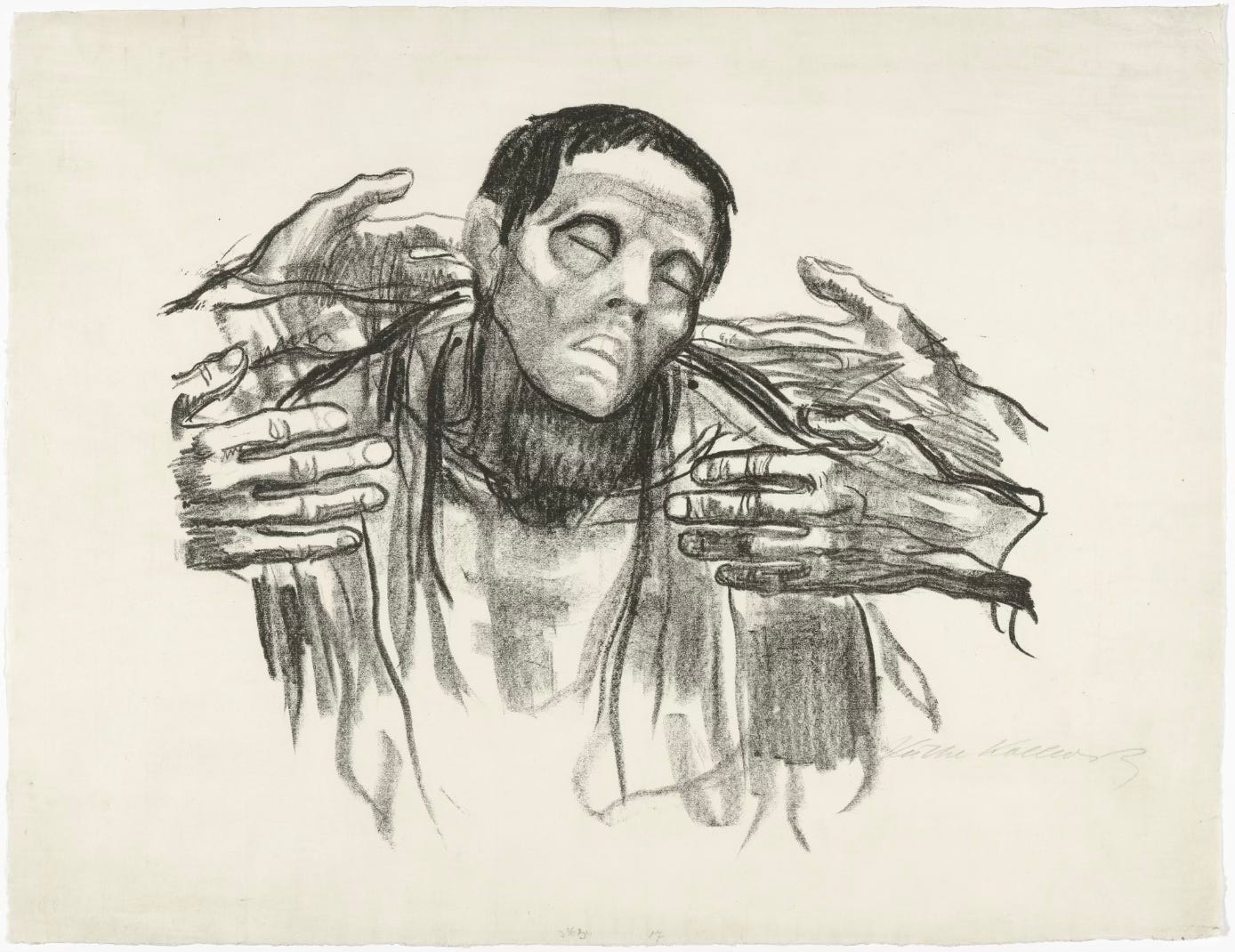
One way literature gentles grief is by submitting overwhelming emotion to the discipline of literary form. Its five poems are Hebrew acrostics, each line beginning with successive letters of the Hebrew alphabet, as if to express the comprehensiveness of the people’s grief from beginning to end, aleph to tav. Beyond this formal device, the poet of Lamentations creates three unforgettable characters who speak for Israel. In chapter 1, Daughter Zion appears as an abandoned mother whose children were killed and kidnapped before her eyes; she herself was sexually violated and left exposed and discarded in the street. Despite her shame, she does not hide or crawl away to die alone. On the contrary, she stridently importunes the Lord to witness her suffering and to respond with aid. In the floods of horror that surround her, she wants to live, and she will not cease to seek life from God. Daughter Zion’s desperate thirst for life moves me deeply.
Lamentations 3 introduces a second character, a shattered Man whose once-powerful body was broken by enemies. He expresses Israel’s pain in a masculine voice, offering a song of lament in the shape we recognize from Psalms and Jeremiah. He begins with vivid description of his body’s ruin, bones crushed and teeth ground into gravel, and then turns from lament to praise in the famous lines:
Yet this I call to mind
    and therefore I have hope:
Because of the Lord’s great love we are not consumed,
    for his compassions never fail.
They are new every morning;
    great is your faithfulness. (Lamentations 3:21–23)
The Man is resolute and firm of mind. His patience and self-discipline, his submission and silence in the face of God’s chastisement—so different from the importunate Daughter Zion—also move me deeply:
Let him sit alone in silence,
    for the Lord has laid it on him.
Let him bury his face in the dust—
    there may yet be hope.
Let him offer his cheek to one who would strike him,
    and let him be filled with disgrace. (Lamentations 3:28–30)
But there is a third character who moves me most of all, the Child. The children of Zion appear throughout the five poems as figures of absolute innocence, emaciated and defenseless. Lamentations 2 is the most harrowing treatment, showing starving children collapsing in the street and perishing in their mothers’ arms:
My eyes are spent with weeping;
    my stomach churns;
my bile is poured out on the ground
    because of the destruction of my people,
because infants and babes faint
    in the streets of the city.
They cry to their mothers,
    “Where is bread and wine?”
as they faint like the wounded
    in the streets of the city,
as their life is poured out
    on their mothers’ bosoms. (Lamentations 2:11–12)
Though it is almost too painful to read, the image itself is carefully constructed. The Child cries out weakly for nourishment and collapses into her mother’s lap. But her mother cannot provide. Instead, where milk should pour from the mother’s breast, the child pours out the last of her sole and precious life. The Child does not deserve chastisement and cannot be culpable for covenant betrayal. Unlike Daughter Zion and the stoic Man, the child does not know how to importune or submit to God. She has no part in the clash of empires that piles wreckage on the shores of history.
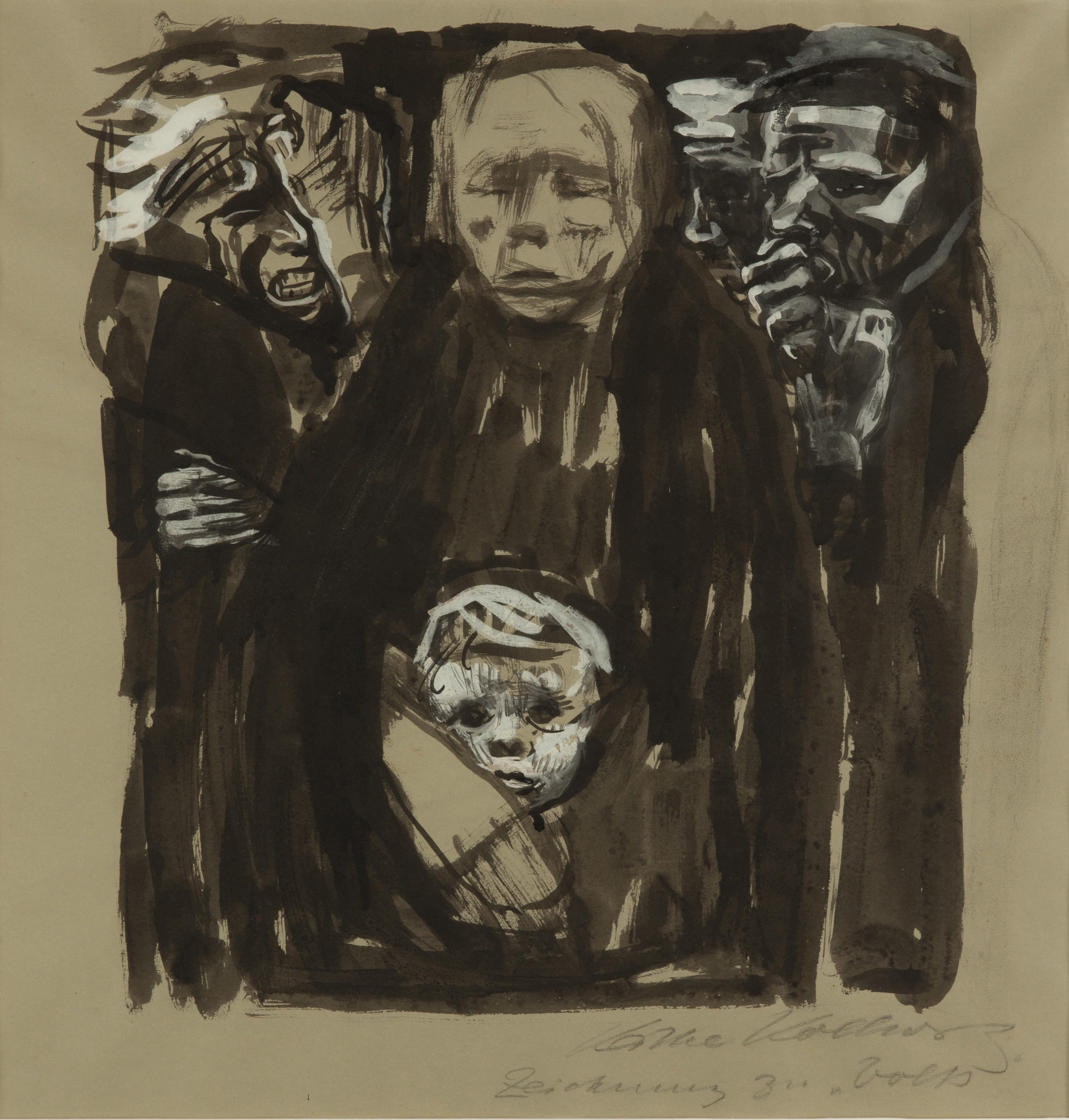
I think it is natural for collective memory to personify a devastated city. I see London after the Blitz, and New York City on 9/11, as heroic wounded rescuers pushing through smoking debris, risking their own lives to recover the wounded and dead. I see Hiroshima as a young woman cruelly scarred and desperately shielding her unborn child from radiation. I see Gaza as a child pulled from the rubble of a hospital, wrapped in a torn sheet.
I turn away from these thoughts. But Lamentations is beyond denial and beyond avoidance. Its poet is stronger than I am, forced by their people’s suffering to confront the universal suffering of Woman, Man, and Child. They ate the fruit of the tree of knowledge of good and evil. We tremble to know that they knew it.
Rosalynde F. Welch is associate director and a research fellow at BYU’s Neal A. Maxwell Institute for Religious Scholarship. A graduate of Brigham Young University and the University of California, San Diego, she is a scholar of Latter-day Saint scripture, theology, and literature and the author of Ether: A Brief Theological Introduction.
Art by Käthe Kollwitz (1867–1945).
Thank you for reading Wayfare Theology. If you no longer wish to receive these items in your inbox, click manage subscription under your profile and turn off notifications for this section.
The Old Testament Reflections series is published in collaboration with the Maxwell Institute.


