


Adapted from Seven Songs: Signs of Christ in the Old Testament (Deseret Book, 2025). Shared by permission from the publisher.
Isaiah 60 is a song of homecoming. After the catastrophe of the scattering, which saw Israel’s children and household flung in disarray among the nations, this poem, one of the finest in the Hebrew Bible, depicts Israel’s restoration as a great flow of creation—camels and ships, gold and silver, rams and doves, juniper and fir and cypress, and wave after wave of human peoples stretching as far as the eye can see—streaming “in triumphal procession” back to the holy city of Zion (Isaiah 60:11, NIV).
For all its epic sweep, this poem is rooted in the story of a family reunion. Strip out the extravagant imagery, and its core is surprisingly intimate. After years wandering in faraway lands, a family of lost children is finally brought home. They arrive at dawn. Their steps quicken as they near the city gates, and they begin to run at the sight of their mother just beyond. Lady Zion has not forgotten her children. She rises, straining to make out their faces, dark against the rising sun. They come to her now, their arms heavy with gifts. Her years of poverty are over, and their years of wandering, too. They are reunited and home: “Lift up thine eyes round about, and see: all they gather themselves together, they come to thee” (Isaiah 60:4, KJV and hereafter).
Homecoming is an all-purpose archetype for the (re)turning points in every life shared with Christ. Repentance is homecoming: The prodigal son who “was lost, and is found” returns from a distant country to the arms of his loving father (Luke 15:32). Conversion is homecoming: As Paul put it, “Now in Christ Jesus ye who sometimes were far off are made nigh by the blood of Christ. . . . Now therefore ye are . . . of the household of God” (Ephesians 2:13, 19). Death is homecoming: Alma taught his own prodigal son, Corianton, that “the spirits of all men, as soon as they are departed from this mortal body . . . are taken home to that God who gave them life” (Alma 40:11). Salvation is homecoming: King Benjamin turns the mind of the people to the happiness of those who “are received into heaven, that thereby they may dwell with God in a state of never-ending happiness” (Mosiah 2:41).
The lost are found. The far are brought near. The estranged are taken home. The pilgrims are received. Again and again, prophets turn to the biblical promise of the gathering of Israel to express the hopes of those who follow Christ. And no Hebrew prophet wrote more powerfully of the gathering than Isaiah. Isaiah managed to create, not just here but across the entire collection of poems contained in the book named for him, an incredibly compelling religious template for love, loss, and reunion. Who can fail to be moved by the story of a mother who loses and then finds her children? Who can resist the promise that “thy sons shall come from far, and thy daughters shall be nursed at thy side” (Isaiah 60:4)? The gathering of Israel is, for both Jews and Christians, the central emotional and theological framework for understanding the Messiah’s redemptive work in drawing all people to himself.
But who is going home? In the book of Exodus, we see that God’s aim is not only to bring us home to him but also to build a home for himself among us: “And the Lord spake unto Moses, saying, Speak unto the children of Israel . . . . And let them make me a sanctuary; that I may dwell among them” (Exodus 25:1, 8). God’s purpose for creation is to make it possible for us to return, wiser and better, to our true home in the presence of God, yes. But God also desires to, himself, come home to us.
And so the homecoming in Isaiah 60, we can now see, is a two-way homecoming: God receives creation to himself, and creation receives God to itself. The children of Israel stream to Zion, trailing in their wake the abundance of creation to lay at the altar of the temple. And when they arrive there, they find that the Lord, too, has come home to meet them in the sanctuary: “All the flocks of Kedar shall be gathered together unto thee, the rams of Nebaioth shall minister unto thee: they shall come up with acceptance on mine altar, and I will glorify the house of my glory” (Isaiah 60:7). The presence of the Lord in his house is signaled by glory, the brilliant light that radiates from his habitation. We see the relationship between light, glory, and divine presence laid out in the parallel structure of verse 19: “The Lord shall be unto thee an everlasting light, and thy God thy glory” (Isaiah 60:19). Where glory is, there God is also—and glory is everywhere in Isaiah 60. The poem begins with the light of the Lord dawning over Zion: “Arise, shine; for thy light is come, and the glory of the Lord is risen upon thee” (Isaiah 60:1). By the end of the poem, the light of the Lord has taken up its place in the sanctuary of the temple and Zion is illuminated from within by a light so brilliant that it eclipses the sun and the moon: “Thy sun shall no more go down; neither shall thy moon withdraw itself: for the Lord shall be thine everlasting light” (Isaiah 60:20). In Zion, God is no absentee landlord, but the on-site, on-call, hands-on resident Lord of creation.
Isaiah paints a masterful word picture of the future homecoming of Christ and humanity, when they will at last receive one another fully in the temple of renewed creation. As Latter-day Saints, we look forward to the Savior’s second coming—his homecoming, as Isaiah has taught us to see it—in the fulness of his glory. But when we focus exclusively on the comings of Christ that still remain in the future, we risk missing his many homecomings in the past and present. Indeed, we may miss the reality that the entire history of Christ’s dealings with humanity is one long series of homecomings.
Consider these seven snapshots from scripture. Each is a homecoming of God.
“And they heard the voice of the Lord God walking in the garden in the cool of the day” (Genesis 3:8): God visited Adam and Eve in the garden at the beginning of time.
“And the veil was taken from off the eyes of the brother of Jared, and he saw the finger of the Lord” (Ether 3:6): God came to a Jaredite prophet when the world of men was new.
“And let them make me a sanctuary; that I may dwell among them” (Exodus 25:8): God traveled in a tent through an ancient wilderness.
“The Word was made flesh and dwelt among us” (John 1:14): God indwelt a tabernacle of flesh as a first-century Judean artisan.
“And as he prayed, the fashion of his countenance was altered, and his raiment was white and glistering” (Luke 9:29): God uncovered his glory on a mountaintop at the meridian of time.
“Know ye not that ye are the temple of God, and that the Spirit of God dwelleth in you?” (1 Corinthians 3:16): God came again into the world at the birth of his church.
“We saw the Lord standing upon the breastwork of the pulpit, before us” (Doctrine and Covenants 110:2): God moved into the home lovingly erected as a modern witness to his presence in the world.
String together these snapshots of seven homecomings into a moving picture. Now splice this film montage-style into Isaiah’s poem: Picture, in quick succession, the Lord coming home in glory to his garden, his mountain, his tent, his body, his Church, his temple, his city. Picture all of creation, all of history, every dispensation and every visitation, as the occasion of God’s homecoming celebrated in Isaiah 60: “Arise, shine; for thy light is come, and the glory of the Lord is risen upon thee.” Now dissolve these flashing scenes slowly into a single image of Jesus Christ, the Son of God.
The world is God’s home, and Christ is God’s homecoming.
To my mind, there is no greater modern witness of divine homecoming than the Restoration. The revelations of our founding prophet, the sacred cosmos and loving Father that become visible in them, the beauty of our temple practices, and the consecrated efforts of our community straining toward Zion—all of these testify to me that what John the Baptist announced has come to pass: The kingdom of heaven has come near (see Matthew 3:2). The realized hope of Israel’s prophets is underway; God’s home of justice, peace, and joy is coming into being; and the New Jerusalem as the temple-world of God is rising in our midst.
Rosalynde F. Welch is associate director and a research fellow at BYU’s Neal A. Maxwell Institute for Religious Scholarship. A graduate of Brigham Young University and the University of California, San Diego, she is a scholar of Latter-day Saint scripture, theology, and literature and the author of Ether: A Brief Theological Introduction.
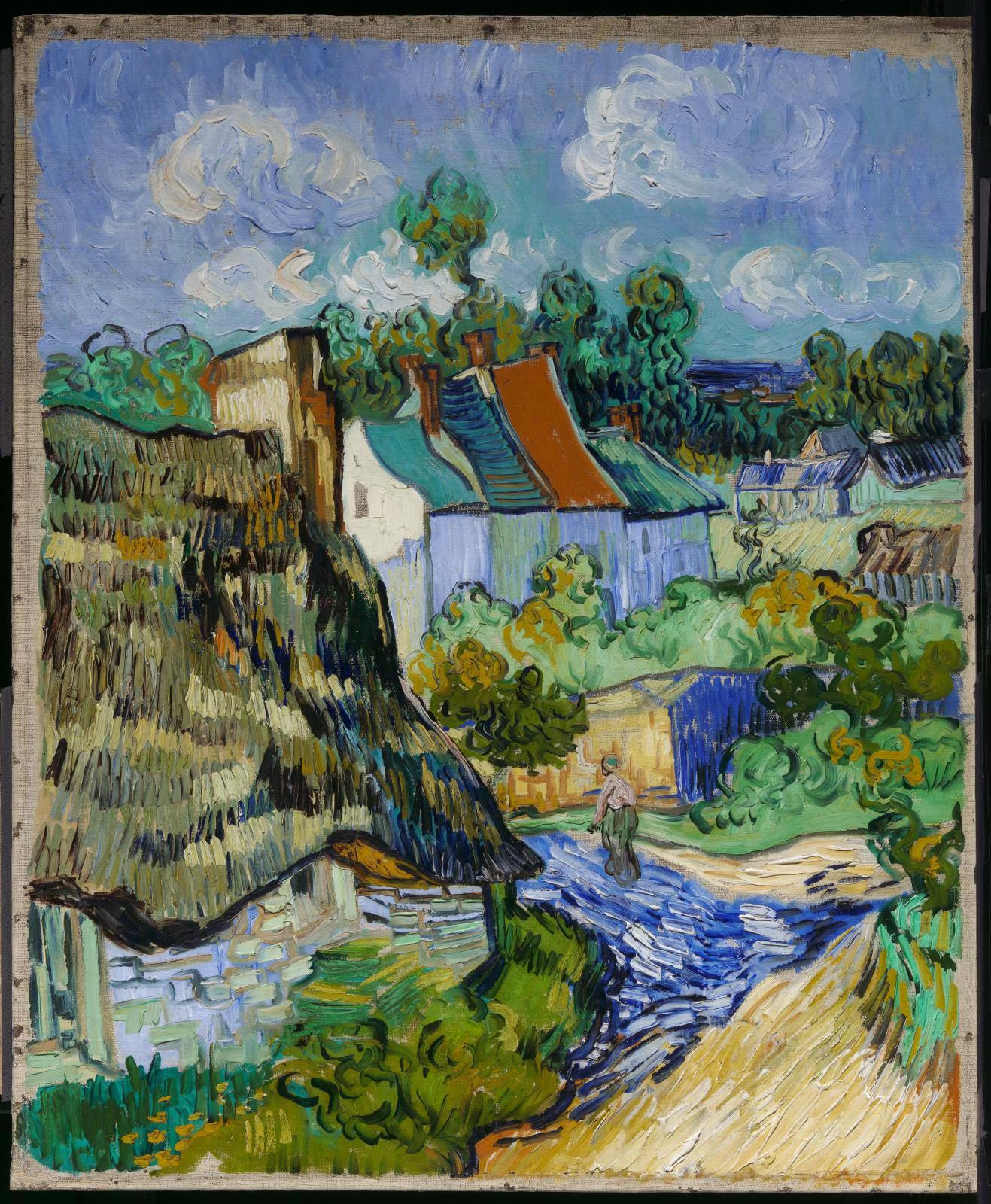
Art by Vincent van Gogh (1853–1890).
Thank you for reading Wayfare Theology. If you no longer wish to receive these items in your inbox, click manage subscription under your profile and turn off notifications for this section.
The Old Testament Reflections series is published in collaboration with the Maxwell Institute. Click the links below to read more!


