


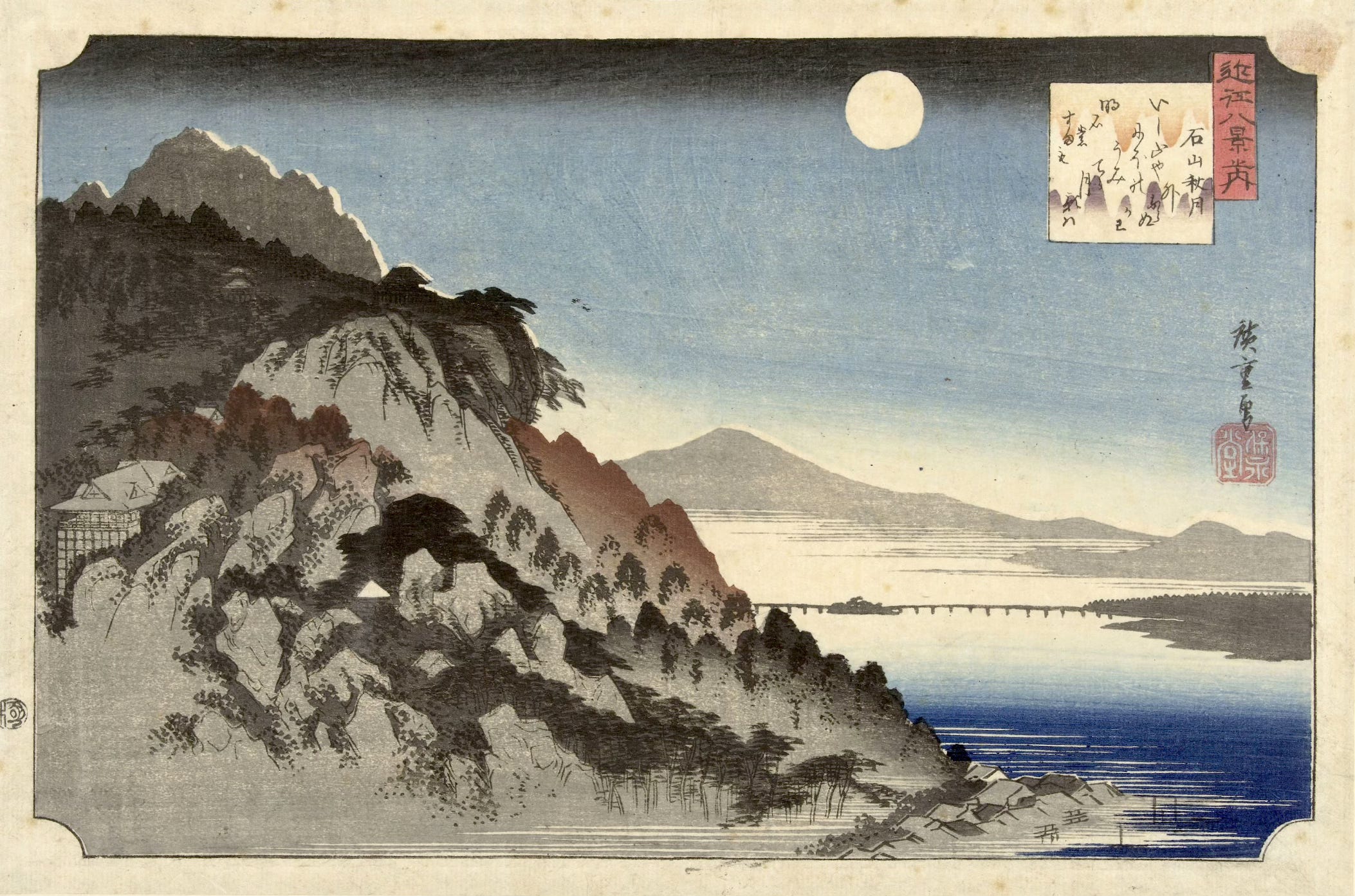
There’s an oft-invoked Zen Buddhist parable about a finger pointing at the moon. You’re supposed to follow the finger and fix your attention on the moon. If you instead focus on the finger, you’re missing the point. Or, maybe, caring too much about the point.
When it comes to religious texts, we talk about the literal meaning and the deeper symbolic meaning. But sometimes we make the mistake of assuming that the deeper meaning is just a “truer” interpretation of what the original author really meant.
You can read the Bible, for instance, literally. In doing so, you may accept it at face value and say that it aligns with your specific religious beliefs, or you can have the exact opposite reaction, launching into a tirade about historical and scientific inaccuracies. In both cases, you’re too focused on the finger to see the moon.
Taken one step further, you might understand that many of the stories in the Bible can be read symbolically or metaphorically. But even then, you’re still focused on the finger—you’re just looking at the finger from a different angle or a closer perspective.
The point of the Zen parable (or at least one point of the Zen parable) is that a religious text isn’t all about figuring out what the author meant, a task that may very well be impossible anyway. That’s not what the “deeper meaning” of a text is. The deeper meaning is the part that you co-create with the words on the page.
I would go so far as to add that the most important part of religion is not about the meaning of the words you read on the page or the ones you hear in the pews, or the art, or the music, or the rituals, or anything else. It’s about what those things are trying to point you toward. It lies beyond reason and cleverness and even language itself—beyond all the tools of your surface-level consciousness. It’s the thing that stands a chance of fundamentally changing you in some genuine, enduring way.
The Explanatory Story
This parable has been at the forefront of my mind lately as I’ve been rereading the story of one of my own life experiences.
When I was finishing up high school at the age of seventeen, I was a bit of a STEM prodigy. I was ready to dedicate my life to science. I couldn’t see myself doing anything else.
With no mountains left to climb in the STEM curriculum, and a good deal of free time on my hands as a senior, I read a novel that changed all of that in nearly an instant: Aldous Huxley’s Brave New World.
Brave New World is, in part, a cautionary tale about blind faith in science gone too far. More broadly speaking, it is the story of a few central characters slowly waking up to the realization that the seemingly utopian society in which they live depends upon a carefully manufactured state of collective blissful ignorance. Everyone is happy, but only because of a gargantuan amount of state-sponsored psychological manipulation, the tools of which turned out to be quite prescient: an audiovisual landscape oversaturated with advertisements equating sex with happiness and success, a miracle drug with sedative properties, and so on. What is excised from this society is everything that has been so historically central to humanity: art, creativity, even love. And, perhaps most of all, religion and spirituality.
In other words, the very things I had been neglecting in my young life by being so hyper-focused on the sciences. As Mustafa Mond, the man pulling the societal strings in Brave New World, puts it,
[God] manifests himself as an absence; as though he weren’t there at all. . . . Call it the fault of civilization. God isn’t compatible with machinery and scientific medicine and universal happiness. You must make your choice. Our civilization has chosen machinery and medicine and happiness.
As I read the book as a teenager, this insight was a wake-up call to me on two levels. From a zoomed-out perspective, the novel caused me to question the extent to which this blunt statement from Mustafa Mond held true more than eighty years after the novel’s publication.
On a more personal level, it shined a spotlight on the same question as it pertained to me individually. And the answer to this second part of the question was a resounding, Yes. Yes I have been neglecting the many other dimensions of the human experience, including the arts and spirituality.
But this is just one half of the story. The finger-pointing half.
It’s one thing to come to an intellectual realization about some unquestioned assumptions you’ve been making and quite another to have an illusory shell so thoroughly shattered that you can never go back to who you were before.
Mystical (Re)reading
“Mystical experience” wasn’t in my lexicon at the time. But after so many years of studying religion, this is the term that I think best fits my experience with Brave New World. It was a noetic experience of deep, ineffable insight marked by the feeling of communion with something foreign and, possibly, transcendent.
I had never experienced anything like it before and have only had faint approximations of this experience with books since.
When I finished the novel, I was lying in bed in a kind of super-charged daze that would blossom into a full-blown altered state of consciousness over the course of the next couple of days. I didn’t understand what was happening. Perhaps more importantly, I couldn’t understand how a book could do this to me—how words could do this to me. I still don’t fully understand it.
In some sense, this echoed a scene from the novel in which one of the central characters, John, first gets his hands on Hamlet as an adolescent, and is struck by the power of words to stir and give form to one’s deepest thoughts and feelings—in this case, his feelings toward his step-father.
“Remorseless, treacherous, lecherous, kindless villain,” recites John, as he reads from Hamlet. “What did the words exactly mean? He only half knew. But their magic was strong and went on rumbling in his head, and somehow it was as though he had never really hated Pope before; never really hated him because he had never been able to say how much he hated him. But now he had these words, these words like drums and singing and magic.”
Though my own reading experience had nothing to do with hate, it did share this same underlying epiphanic moment of encountering and recognizing the magical conjuring power of words.
Since the day I finished reading Brave New World for the first time, reading and writing have become spiritual practices for me, in the sense that spiritual practices reshape consciousness in a profound way that allows us to more directly catch a glimpse of something transcendent. But they are also necessary, if imperfect, tools for giving form to the transcendent.
Somewhat ironically, or fittingly, the two or three experiences I’ve had in my life that I’d describe as mystical or religious experiences could all be described with those dismissive words from Mustafa Mond: “[God] manifests himself as an absence; as though he weren’t there at all.”
In my case, though, there’s nothing dismissive about this. To the extent that I’ve experienced something transcendent, it’s always been characterized by absence or silence. The finger points me in the right direction before falling away, revealing the moon. But instead of the dazzling bright white full moon, it’s the pregnant nothingness of a new moon.
Brave New World revealed to me the individual psychological and societal dressings with which I had been identifying. But reading the book also triggered something else—some kind of mystical experience that stripped away all of those layers so that something new could flow through. It’s something that is wordless on its own, but which, through words, can be given a shape that can make it discernible and possibly even accessible to others.
In other words, the book reprogrammed me into a finger pointer. I can’t get away from writing. Or religion. I’ve tried. The moon keeps calling me back.
The Superstory
To be clear, this is how I read that experience now. It’s very different from the way I had been reading that experience for most of my adult life.
This alternate understanding of my experience with Brave New World is what my college professor and mentor Jeffrey J. Kripal would refer to as a “superstory.” It is a story that is being reread through the lens of what he calls “the superhumanities.”
“The superhumanities” refers to the comparative study of “super” (i.e., transcendent) human experiences through an open-minded empirical approach that treats these things as real, significant, and important, rather than shrugging them off as mere psychological aberrations or meaningless coincidences.
Those super experiences include religious and mystical experiences, other altered states of consciousness, and paranormal phenomena—all surprisingly common and recurring experiences that pop up all over the material that gets studied academically in the humanities (not just religious studies), if only one is perceptive enough to recognize them as such.
It’s not that I never entertained the possibility that my experience with Brave New World may have been “mystical” or “spiritual” or “transcendent” or “super” in one way or another. I’ve entertained that thought a lot, especially since Jeff has written so much about how reading and writing can be and often are mystical experiences, and how these “super” experiences often behave like texts or stories. Jeff even writes about how essentially all of his books have been written directly out of a single “super” experience of his own.
But I’ve explained away that particular interpretation of my experience in all sorts of ways because, despite how true it felt, it just didn’t make sense. It didn’t make sense that a book could “reprogram” me. It didn’t make sense that a book which had very little to do with religion could ignite in me such an intense interest in religion. And it really didn’t make sense to think that a book could make me a religious or spiritual person.
I’ve explained it away by dismissing it as nothing more than wishful thinking: I want to believe I had some sort of mystical experience because it would make me feel like a special little snowflake.
I’ve also explained it away by pointing to the fact that my symptoms of bipolar disorder began right around the same time as the Brave New World reading experience: This “reprogramming” was caused by the onset of mental illness and not any kind of mystical reading experience.
Then, of course, there’s the most obvious and simplest dismissal of all: “You were a seventeen-year-old who read a novel that exposed you to a bunch of new philosophical and psychological ideas; it amplified the voice of the angsty existential teenager that surfaces in all of us around that time in our lives. You’re not a prophet. Get over yourself.”
To reread my experience through the lens of the superhumanities does not involve a rejection of any of these quite reasonable objections to the “mystical experience” hypothesis. What it involves is what Jeff calls “both-and thinking.”
What I experienced when I read Brave New World definitely had both a physical component and a psychological one—the physiological shifts of chemical imbalance associated with the onset of bipolar disorder and the psychological shifts associated with an adolescent’s first realization that the world may not be as it seems, along with a corresponding introspective shift.
It’s clear that the mental illness and adolescent psychological factors triggered an experience. Together, they were the psychophysical finger pointing at the moon. They were not the moon itself. They were the “both,” not the “and.”
The triggers cracked me open, so to speak, allowing something else to flow through, the mysterious something that goes by many names—God, the spiritual, the transcendent—and which is the monistic ground from which all things both material and mental spring forth; it is the “and” of the “both-and.”
Choosing Which Story To Live In
To tie things back to the start of this essay, asking whether my experience with Brave New World was just a pedestrian, garden-variety book-reading experience or something approximating a mystical experience strikes me as akin to searching for the “true” meaning of a text. We can never know the truth in that sense. It is mere explanation-seeking. It doesn’t really take us anywhere new.
The deeper meaning of the text that is this story of mine is something that must be co-created. I am both a character and a reader of this story. And (the “and” of the “both-and” in this case) I am its coauthor. Rereading it allows me to re-author it. Re-authoring it means fundamentally altering what happens to me as the character in it.
If I continue reading this story in a way that dismisses it as spiritually insignificant, I will continue to coauthor and live in a spiritually insignificant story. That’s not great for someone who just can’t seem to stop swimming around in and writing about religion.
It’s also a tad depressing. And I know I’m not the only one who’s been trapped in such a story.
If I reread the story in a way that embraces its spiritual significance—as something that did not just make me “interested” in religion as an outside observer, but personally invested in it as an active participant with something real and valuable to explore and express (even if I still don’t know what exactly is trying to be expressed through me and my writing)—then I can more fully embrace every dimension of who I am and what I feel called to do.
In that, there is peace, purpose, liberation, and meaning, all of which help me to sleep at night and get out of bed in the morning.
And who wouldn’t want to be a character in that story?
Allen Simon has a master’s degree from Harvard Divinity School and writes avidly on Substack. He works as a freelance writer and consultant based in Boston, where he also enjoys playing ice hockey and making visual art.
Art by Utagawa Hiroshige (1797–1858).
Beautiful thinking. "Both-and" makes me think of two things: first, God, however you perceive or think of God, is simply bigger than I can imagine and encompasses so much more than I realize; and second, transcendental experience arises from the lived, bodily experience but is never fully separated from it. LDS theology talks about the soul being the spirit and body together, and so spiritual experience is always and necessarily tied into bodily experience, not something that escapes the flesh but lifts it together.