


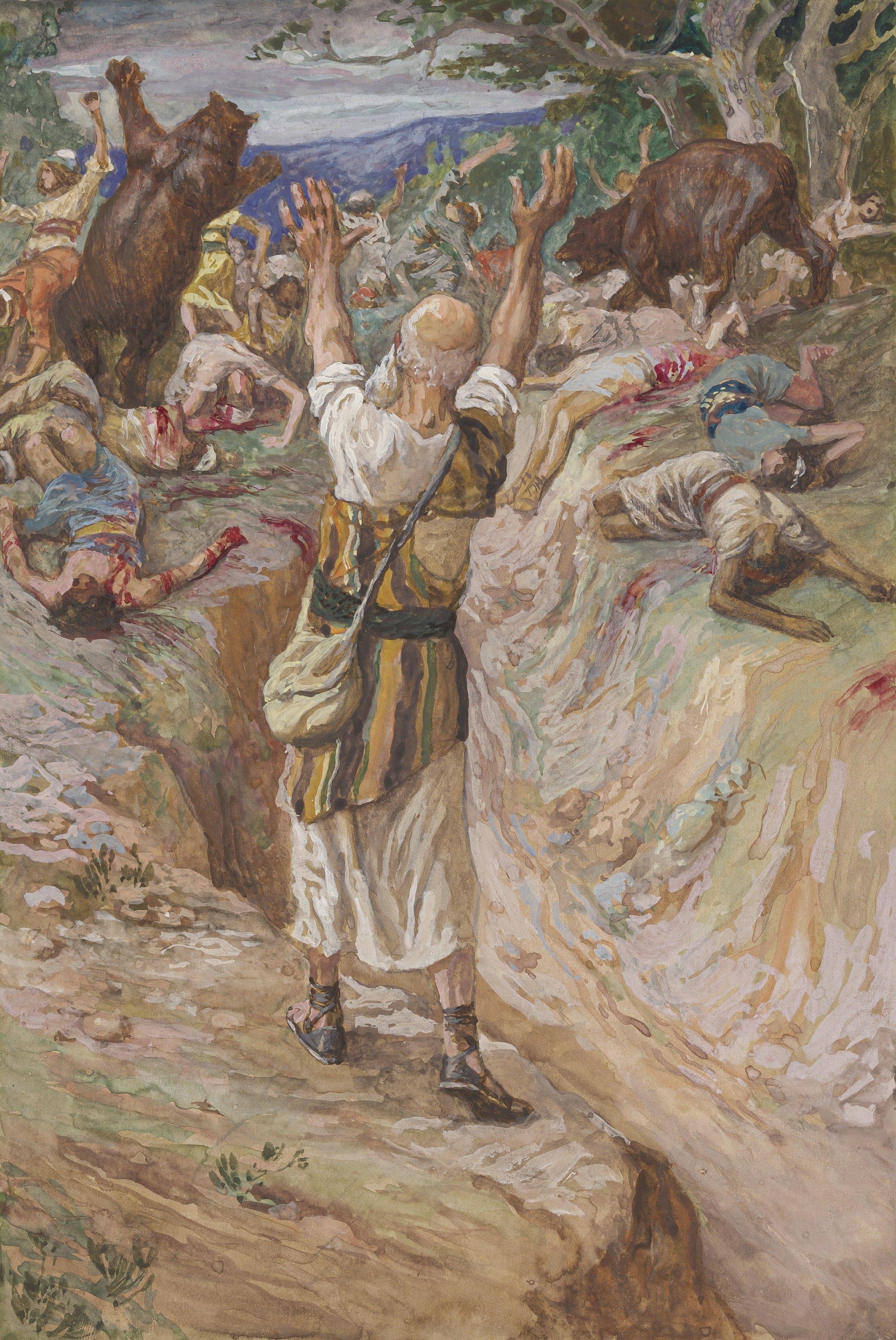
How shall we construe the reports of Elisha’s dramatic miracles?
How might such accounts figure into our faith and our lives before God?
Our English term “prophet” descends from an old Greek translation, centuries before the time of Christ, of a yet older Hebrew term. We might take these Hebrew origins for granted, but they are worth noting. Most ancient cultures have produced seers, soothsayers, oracles, or shamans, some of whom may have been God’s messengers, for God sends out his word to all the nations of the earth (2 Nephi 29:7). However, it is specifically the prophets of the Hebrew Bible who serve as the prototype for God’s subsequent spokespeople in western civilization’s predominant religions: Judaism, Islam, and Christianity. They were also the prototype for the founding prophet of the Restoration, Joseph Smith.
Scripture portrays these biblical prophets as sometimes foretelling the future or working other wonders, but their primary role was to translate God’s mind, heart, and will to a people—wonder enough by itself. According to one celebrated analyst, a Hebrew prophet’s fundamental experience was “a communion with the divine consciousness which comes about through the prophet’s reflection of, or participation in, the divine pathos.”
If a prophet’s central task is to proclaim God’s mind and heart, our portrait of the prophet Elisha is striking by contrast, for it includes little of his teachings. Instead, the record of his days reads as a collection of miracle stories attributed to the prophet—more than two dozen such stories, in rapid sequence, in just chapters 2–7. Some of these miracles echo those performed by his predecessor, Elijah, such as Elisha striking the river Jordan with Elijah’s inherited cloak, causing the waters to part so he can cross (2 Kings 2:14). Others prefigure miracles later attributed to Jesus: feeding a multitude with little food (2 Kings 4:42–44), healing a leper (2 Kings 5:1–14), even raising a child from the dead (2 Kings 4:18–37).
Some of Elisha’s wonders are well-known among Latter-day Saints because of our attraction to simple lessons learned (the cure of Naaman’s leprosy by washing seven times in the Jordan River; 2 Kings 5:1–14). Others are remote to us and seem almost as either the practice of magic (Elisha causes a borrowed iron axe head to float to the water’s surface so it can be retrieved; 2 Kings 6:1–7) or similar to medieval faith in the healing power of relics (as when, even after Elisha’s death, a dead man is restored to life the moment his body touches Elisha’s bones in the tomb; 2 Kings 13:20–21). One miracle in particular is infamous among some audiences, who complain of the depiction of the prophet as petty, or his God as merciless, when Elisha, in the name of God, curses youths who mock his bald head, resulting in two bears emerging from the woods to maul dozens of the young people (2 Kings 2:23–24). As a cluster, the miracles establish Elisha as empowered to see into the future, to curse or heal and resurrect, to control nature, and to determine the fate of armies, among other matters. That is a lot of power.
How are we to assess these stories? And what place ought such accounts hold in our own faith and religious lives?
Depending on what we mean by “miracles,” Latter-day Saints are apt to make room for them in some form, as they are presented profusely in all four standard scriptural works. Christianity itself, of course, presents itself as based in part on Christ’s Resurrection. And the Restoration emerged as “a marvelous work and a wonder” through revelation, which is to say: the extraordinary, the miraculous.
We do well, nonetheless, not to approach miracles blithely. Jesus told (doubting) Thomas to “be not faithless, but believing” (John 20:27). However, I do not imagine the Lord was praising gullibility. It would seem more likely he was counseling Thomas to be open-minded and -hearted toward awe, toward divine action, to trust principles and people who had shown themselves trustworthy, perhaps by a process like that sketched in Alma 32. There is nothing worthy to be gained, and something precious to be lost, by investing uncritically in superstition and error. Healthy and life-sustaining faith can be damaged, for example, when trust in a friend or a tenet proves misplaced. People are inclined to resentment, a sense of betrayal, or humiliation at having invested, often deeply, in something later shown to be errant. And if one thing is shown to be hollow, we may naturally be led to suspect related things. Overconfidence in everyday miracles can be dangerous for another reason too. One person’s exuberance over prompt divine help in recovering lost keys sometimes leaves neighbors at a loss when their prayers have gone unanswered for their sibling’s relief from cancer.
Our immediate topic—miracles and Elisha’s miracles in particular—is, of course, too large for our interests. In another setting, we might enter a long conversation with philosopher David Hume1 about the plausibility of miracles. Or we might consider all that the prophets have pronounced on the topic. Given our modest space and purposes here, however, let us be content to pose to ourselves a few questions (in italics), in eight areas below, that might promote reflection and discussion.
1.
What is a miracle? The skeptical Hume thought of a miracle as a violation of the laws of nature—and believed any report of a miracle was more likely to be error or deceit on the part of a witness than a genuine breach of such laws. But what are these “laws of nature”? Who gets to define them? Do they change across time?
President Spencer W. Kimball wrote of “the miracle of forgiveness.” Asked in 2012 by the press if young women might sometime join young men in leaving on their missions by age 18, Elder Jeffrey R. Holland replied, “One miracle at a time.” President Russell M. Nelson urged us “to expect miracles.” Orson Pratt and other early leaders held that “miracles” did not break natural law but were merely divine control over laws we do not yet understand (and current notions in quantum physics might be put in conversation with the assertion). Finally, again, the author of 2 Kings writes forthrightly of Elisha’s many startling supernatural acts.
In light of these varying usages of the term and of your own experience, what does “miracle” mean to you? How might your understanding bear on how you strive to live gospel precepts? How might it bear on how we read 2 Kings 2–7?
2.
Laman and Lemuel famously witnessed supernatural beings and events which did not change their hearts and behavior in the long term. So also with the Hebrews released from bondage under Moses’ leadership. What do these instances imply about the role of miracles here on earth? Are they important for faith?
3.
Have you personally ever witnessed a miracle? If so, what effect has that had on your spiritual life and your lived experience? Has that effect changed over time? Has it affected anyone with whom you have shared the story?
4.
Might miracles ever backfire, prompting us to think of God as “a vending machine of blessings” rather than prompting us to learn or to experience God’s love or more actively to help build Zion?
5.
Are some miracles better discerned over time and in hindsight rather than instantly as they occur?
6.
Might there be a key for us in John 6 to discern the ultimate purpose of miracles? In this chapter, Jesus fed a multitude with a pair of fish and a few small barley loaves, but declined to repeat the feat the following day, offering instead his bread of life sermon, which caused many disciples to turn away from him.
7.
Might there be an additional key in Mark 2? In this chapter, Jesus is shown challenging those religious authorities who accused him of blasphemy by saying to them: “Which is easier: to say to the paralytic, ‘Your sins are forgiven,’ or to say, ‘Rise, take up your bed and walk’?” (Mark 2:9)
8.
My own experience will vary from yours, but I personally have not witnessed a miracle resembling the dramatic ones associated with Elisha. I have participated in blessing those who were ill, but I do not know whether to ascribe their recovery—where there was recovery—to the blessing, to medical care, or to natural processes.
On the other hand, I have experienced prompts to action, while listening in meditation and prayer, that later proved important.
I have over decades felt beckoned by the divine: to “Come, follow me”; to respond to the implicit invitation of life; to love; to relieve suffering; to follow the Light.
I have found myself or others in difficult straits, followed by a sense of inconvenient obligation by way of scripture that has come to my mind: “Who knows but that you have come to your position for such a time as this?” (Esther 4:14)
Only weeks ago, I prayed one morning while weeping and reading and listening to the lyrics of “Bring Him Home”2 (from the musical stage play, “Les Miserables”):
he’s like the son I might have known
if God had granted me a son
. . . then found myself not thirty minutes later—still moist-eyed, still humming and murmuring these lyrics while I drove to the car wash—only to enter the lot, begin to vacuum my floormats, be tapped on the shoulder, and look around and up into the soulful eyes of a new friend in need: a previously friendless young graduate student from Kenya. Like the son I might have known—and do.
Did these things occur by happenstance? Are they products of my own imagination? Or do they carry the scent of providence and miracle?
Does it matter that I do not know? Does it matter that I am comfortable in not knowing? Is it enough that I simply make room for the possibilities, carrying on in faith?
Philip Barlow served as the Maxwell Institute’s associate director and is a Neal A. Maxwell Research Associate. Having previously served as the Leonard J. Arrington Chair of Mormon History & Culture at Utah State University, his teaching engages religion and human suffering, religion and the concept of “time,” American religious history, and Restoration movements.
Art by James Jacques Joseph Tissot (1836–1902) and Michel Simonidy (1870–1933).
The Old Testament Reflections series is published in collaboration with the Maxwell Institute: https://mi.byu.edu/old-testament-reflections.
Thank you for reading Wayfare Theology. If you no longer wish to receive these items in your inbox, click manage subscription under your profile and turn off notifications for this section.
KEEP READING


Hume’s famous “On Miracles” is a common touchstone for skeptics and their respondents in philosophical circles. It appeared in 1748 as Section X (10) of the philosopher’s treatise: An Enquiry Concerning Human Understanding.
Claude-Michel Schönberg and Herbert Kretzmer, “Bring Him Home,” from Les Misérables.

Philip, your exploration of the prophetic burden as a difficult, often silent duty resonates deeply with this story I wrote regarding the moral weight of an attorney trying—and failing—to find a 'miraculous' outcome in a system that has grown cold If you have time let me know what you think. And yes in 1992 I was a Nevada State deputy public defender.
The Calling
Bishop Riley sent for Eli, Sunday after sacrament meeting. He said the young boy was lost. That the state would bury him. Eli knew the Young family; he knew the Mormons of Ely. He would see him that day.
Eli went to the jail.
The room was small. The light was flat. The boy sat across from him. Young. His hands on the table.
"The bishop sent me," Eli said.
The boy nodded. He did not look up. "My taillight worked," he said.
"Tell me."
The boy told him about the stop. He told him about the light. He said he was coming home to change.
On Monday, Eli arrived at the office and met chief deputy, defender McGuire. A heavy man breathing through his mouth, eating a candy bar.
"That the Young kid?" the deputy said.
"Yes."
"Good family. Shame."
"His taillight worked."
"Maybe. Don’t matter now. He had the weed. That’s what they see. Good luck to you."
Eli then told McGuire that Bishop Riley asked him to see the boy at the jail.
"You are both LDS," the chief said.
"Yes."
"Is that a conflict?"
"I do not think so."
"The family knows you. The church knows you. You are not a stranger. But the law must see a stranger. Be sure you are his lawyer, not his brother."
"I am his lawyer."
"See that you are."
Eli took the case. He filed a motion to suppress. At the hearing, the arresting officer looked at the floor. He said the light was broken. The court reporter and the bailiff believed it worked. The judge denied the motion. After, Eli cut a deal with the prosecutor: twelve to thirty months for the boy.
He had already resigned, though it was not effective until the new year. He had resigned because of another case—a kid he’d kept out of prison. The next morning, he wrote his resignation on a legal pad and left it on his desk.
At sentencing, he argued that Alma was a good young man coming home to change his life. That the drugs did not represent him. That his family and his church could rehabilitate him. That marijuana did not merit prison. That his chances were better with them. Better at home.
The judge gave twelve to thirty months. His heart sank. He had convinced the bailiff. He had convinced the court reporter. He had convinced the cop. But he had not convinced the judge.
After, the deputy, McGuire, spoke to him in the hallway: "Best defense argument I’ve ever heard."
Later, Bishop Riley met with him again in his office. The light was low.
"You did what you could for Alma," Riley said. "The world is hardening. Even here."
"I resigned," Eli said. "Effective the new year."
"I heard. The other matter. The Thorne boy."
"He was my client. I got him probation."
"I know. And you carry the weight of what he did. You must not."
"He was my client."
Bishop Riley leaned forward, his hands flat on the desk. "Listen to me.
You argued for a chance. That was your duty. The judge granted it. That was his. The boy made his choice in that warehouse. That was his. You do not own his sin. Those deaths are not on your hands."
Eli looked at the floor. "The dead call out to me."
"The feeling is a lie. The church will miss your service. But the Lord needs good men. Even the fallow ones. Especially the fallow ones. But you must not carry a weight that is not yours to carry."
Eli did not answer. He was still seeing the other boy. The one who had put five bullets in the back of five heads