


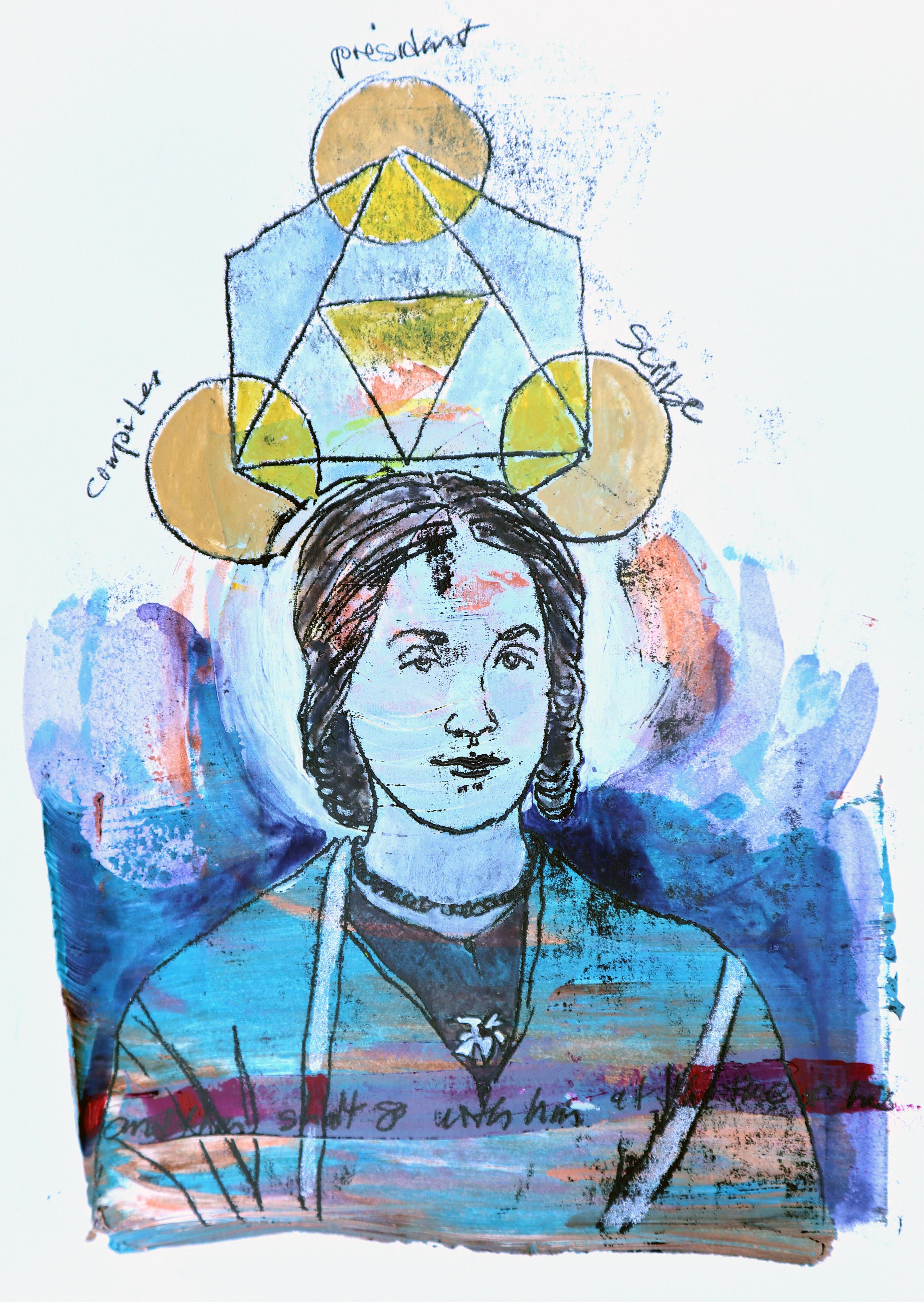
This week marks 222 years since the birth of Emma Hale Smith on July 10, 1804. Emma was a pivotal figure in the early history of The Church of Jesus Christ of Latter-day Saints. From helping to retrieve the golden plates, to acting as the first scribe in the process of translating the Book of Mormon, to compiling the faith’s first hymnal, to serving as the inaugural president of the Relief Society, Emma’s contributions to the Restoration were undeniably significant. But she hasn’t always been given the respect or understanding she deserves. Over the years, she has been alternately revered and reviled, memorialized and maligned, celebrated and condemned. Because of her resistance to polygamy and her refusal to move west with the Saints after the deaths of Joseph and Hyrum, she was dismissed by Brigham Young and other early Church leaders as an apostate.
Largely as a result of the research and writings of historians like Linda King Newell, Valeen Tippetts Avery, and Jennifer Reeder, Emma has come to be viewed with much more nuance and compassion and is now almost universally regarded as a sympathetic and even admirable figure by members of the Church.
Today, in honor of the birth, life, and contributions of this remarkable woman, Wayfare is pleased to offer you a series of three papers on Emma Hale Smith.
The first, authored by historian Jennifer Reeder, examines the “connections, complementary natures, and divine assignments of Eve and Emma” and concludes that, ultimately, both [women] are “archetypes connecting God and his children from beginning to end.”
In the second paper, Donald Bradley makes the case that Emma was a true “partner in ministry with Joseph” from the beginning, arguing that Doctrine and Covenants Section 25 offers “a restoration vision of partnership in ministry.”
The third paper, by Maxine Hanks, explores the context and significance of the word “ordain” in Section 25 and argues that it “established a foundation of real ordination for women in 1830.”
Archetype, partner in ministry, ordained leader. We invite you to consider each of these perspectives, the way they honor Emma, and how they might invite us to reimagine the place of women in the Church, past, present, and future.
The “Mother of All Living” and the “Elect Lady”

“Mother of all living” and “Elect Lady” are compelling titles for two significant women whose memories have been both tainted and celebrated in Latter-day Saint memory, identity, history, and scripture. Eve and Emma were named by their husbands: Adam called his wife the “mother of all living” at the bidding of Elohim (Genesis 3:20; Moses 4:26), and Jose…
Restoring the Elect Lady

Who among the figures of the early Restoration went to the Hill Cumorah on September 22, 1827, to retrieve the golden plates? Who was called by revelation to produce a book under heavenly direction? Who was further commanded to minister to the Church and to expound the scriptures, with the promise “it shall be given thee” what to teach?1
One answer to these questions is, of course, Joseph Smith. Another equally correct answer is his wife, Emma Hale Smith.
"Thou Shalt Be Ordained"

In discussions regarding the status of women and their relationship to priesthood in the Church of Jesus Christ of Latter-day Saints, the term “ordain” has sometimes been a flashpoint. After all, longstanding Church policy stresses that women “are not ordained . . . to priesthood office.”
Recommended additional reading:
Mormon Enigma, by Linda King Newell and Valeen Tippitts Avery, University of Illinois Press, 1994.
First: The Life and Faith of Emma Smith, by Jennifer Reeder, Deseret Book, 2021.
Sharlee Mullins Glenn is a contributing editor at Wayfare and has published poetry, essays, short stories, articles, and criticism in various publications, including The New York Times.
Art by James Rees.