



This essay is part of our Emerging Voices program, where previously unpublished authors work in small groups with Wayfare editors to develop a piece of writing. This year’s program is now accepting applications through May 1, 2026. See here for more details.
Have you ever received that call from a friend, brimming with joy over a great date, a dream job offer, a prestigious speaking engagement—and even as you congratulate them, you feel a quiet pang of envy? Maybe it’s the role you longed for, the person you hoped to date. Suddenly, you wonder: Is life unfair, or am I simply unworthy? You question the poets who claim that true friendship is pure joy in another’s success; you wish you could feel that joy, but instead, your worth becomes measured against theirs.
These moments expose how easily insecurity seeps into daily life: the anxious refreshing of social media feeds, the existential sadness after a rejection, the endless weighing of small choices—what to wear, what to post, what to say—all center on self-image. External validation becomes a barometer of self-worth, anchoring identity to other people’s perceptions.
And yet, I have noticed there are parts of the self that are more whole, grounded, and almost impervious to judgment. From that center, feedback feels like when a stranger compliments your child: pleasant, but not the source of your joy and love. When we are grounded in such a way, we can receive feedback without fear or genuinely celebrate another person’s success.
I think of my cousin—more like a brother, really. He had a presence that filled every room: booming voice, sharp wit, immense talent. He could make you feel like the only person in the world or cut you down in a moment. But beneath it all, his ego was fragile. If he wasn’t asked to sing, he felt slighted. If he wasn’t invited to speak, he brooded. His greatness was undeniable, but his need for validation made him small. Years later, I saw him again—calmer, more grounded. The same gifts were there, but now they flowed effortlessly, no longer begging for applause. It was the same person, but rooted differently—grown from insecurity to inner strength.
That’s the shift I want to describe. Envy and insecurity aren’t just moral failures; they’re signs of a shallow grounding. They reveal that we’re living from an artificial idea of who we want to be rather than from the essence of who we are. In kabbalistic language, we are operating out of Tohu, not Tikkun.
Two Worlds: Tohu and Tikkun
Kabbalah describes two modes of being mirrored in the first chapter of Genesis, “the earth was without form and void” (Genesis 1:2). Formless and void in Hebrew is tohu va-vohu. The Kabbalists read this not only as chaos in matter but as chaos in spirit: the world of Tohu. The energies of this world were brilliant, intense, and unstable. The vessels meant to hold them shattered under the strain—Shevirat haKeilim, the breaking of the vessels.
Tikkun, by contrast, is repair. It is balance, integration, proportion. “And God saw that it was good” (Genesis 1:31) describes not only creation but a new harmony: light that fits its vessel, emotions that complement each other. Kindness informed by restraint. Strength softened by compassion.
It is a foundational principle of Chassidic thought that the architecture of the Divine is reflected in the architecture of the world, and likewise, in the architecture of the soul. The human being, the world, and the Divine all mirror each other. So Tohu and Tikkun aren’t only cosmic events, they are states of the heart.

Fragility Disguised as Strength
There is a kind of strength we often admire; for example, someone who refuses to change no matter what, someone who insists on staying the same in every context, even when doing so risks the collapse of their inner world. There’s a pride in that posture. It feels like integrity, like being true to oneself.
But that apparent strength often masks something else entirely. What looks like conviction is frequently fear, the fear of what change might mean, the terror of letting the self bend. In kabbalistic language, this is the world of Tohu: intensity without balance, certainty without contextualisation. It feels powerful, but it is deeply unstable.
I once had a close friend who could never admit he was wrong. Even when the evidence was overwhelming, he’d double down. “I just have to be true to myself,” he’d insist. On the surface, it sounded noble, principled. But underneath, it was insecurity, the fear of what change might mean, the terror of saying I was mistaken. He worried that if he conceded, no one would take him seriously again. His sense of self was rigid, and rigidity under pressure breaks.
The Greek storyteller Aesop (620–524 BC) told a similar lesson in one of his fables. A mighty oak boasted of its strength, unmoving in every storm. But when the hurricane came, its refusal to bend caused it to snap in two. The reed, by contrast, swayed with the wind and survived.
The oak and the reed mirror the difference between Tohu and Tikkun. Tohu holds fast to its intensity, unwilling to bend, mistaking rigidity for strength. Tikkun adapts. It integrates. Its power lies in adjustment, in understanding the moment one inhabits and sensing what that moment requires. It is not weaker for bending; it endures because it does.
One is only capable of living from Tikkun when one lives from essence: a self that exists independent of external recognition. Kindness not for show, but flowing naturally from who you are. A personality that is real, not a façade, so that actions and feelings arise effortlessly, rather than being shaped by what other people think.
Strength, then, does not come from clinging to an image of who we believe ourselves to be. It comes from acknowledging what we actually are—limits included—and allowing those limits to refine us. Real authenticity is not the freedom to remain unchanged, but the obligation to see who we truly are, and adjust accordingly.
It is possible to cultivate a self like the reed: flexible yet enduring, bending with the wind but never breaking. A self whose essence remains whole precisely because it can adapt without losing itself.
Imagine a person with a strikingly bold personality; aggressive, quick-witted, sharp. What stands out about them isn’t just the boldness; it’s their ability to redirect it. In a heated debate, they could cut someone down with a single line—and yet they choose to soften, to listen. Their strength hasn’t disappeared. It has been refined: severity transformed into restraint, sharpness into compassion. This is not self-erasure; it is self-mastery.
Living from Essence
Reaching that essence isn’t automatic. It takes patience, reflection, and courage. I see it all the time with college students choosing a major. Often, it requires detours and false starts before the true path emerges. Authenticity doesn’t come from blind certainty; it comes from the willingness to explore until what is real takes root.
It’s often only after we think we’ve found our essence that the real test begins. The test of essence is humility. It is recognizing that everyone has an essence to express. You are beautiful, but so is everyone else. The only meaningful question becomes: Am I being honest with the divinity within me? Am I embodying it? Rabbi Meshulam Zusha of Hanipol (1718–1800), also known as Reb Zusha, captured it perfectly: In heaven, they won’t ask why I wasn’t Moses; they’ll ask why I wasn’t Zusha.
It’s only when we begin living from this place that we realize other people’s successes don’t diminish ours at all—rather, we magnify each other’s successes. When you can truly see the beauty of the other, when you can recognize the divinity within them, that’s when you know you’ve touched your own core.
Being true to oneself does not mean abdicating responsibility. It is not the freedom to abandon structure, obligation, or discipline in the name of pursuing “my truth.” On the contrary, it requires stepping outside of ourselves and into a relationship. It is the demanding spiritual labor of discovering who you are as that truth is bound up with the truth of the Divine—and therefore with your purpose in the world. To confuse the path of least resistance with the path that is yours is to mistake inertia for authenticity. That road leads only to desolation and decay.
When you are alone, it is harder to see how honoring another’s essence honors your own. Often, it requires service to sharpen humility. As one gives, one forges character. Teaching late at night, fielding real questions, I’ve felt my own ideas exposed in their weakness, and the best ones emerge sharper, clearer.
The same thing happens whenever someone asks for help. In the act of giving, we discover hidden reserves of generosity, strange little gifts that only appear when someone else’s need calls them forth. It’s stunning, really—how service refines us more precisely than any self-improvement plan ever could. Each act becomes a mirror: This is who you are. This is who you could become.
The Turn from Envy
When you feel envy rise at a friend’s success, treat it as a signal: Am I living from Tohu or from Tikkun? Perhaps in those moments, give yourself the space to notice what’s happening inside. Take a walk, and let the rhythm of your footsteps or the sound of your breath bring you back to center. Allow yourself to release the thoughts and identities that are gripping you. And then, gently, let that feeling of comparison return—the jealousy, the self-doubt—and you’ll see how little ground it actually has in your core self. You’ll start to sense what kind of inner work it would take to let go of it, or to root it in something truer.
There’s no greater feeling than witnessing someone succeed and feeling genuine happiness for them—with no hints of jealousy or insecurity. When that happens, you know you’ve found yourself. You’ve anchored your life in the harmony and resilience of Tikkun, leaving behind Tohu’s chaos and fragility. Like my cousin, like the reed in the storm, you discover that true strength is not in clinging to image but in living from essence—flexible, grounded, whole.
Rabbi Berel Feldman is the campus rabbi and chaplain at Harvard Chabad. His writing draws on Torah and Hasidic sources to examine religious experience, identity, and spiritual formation.
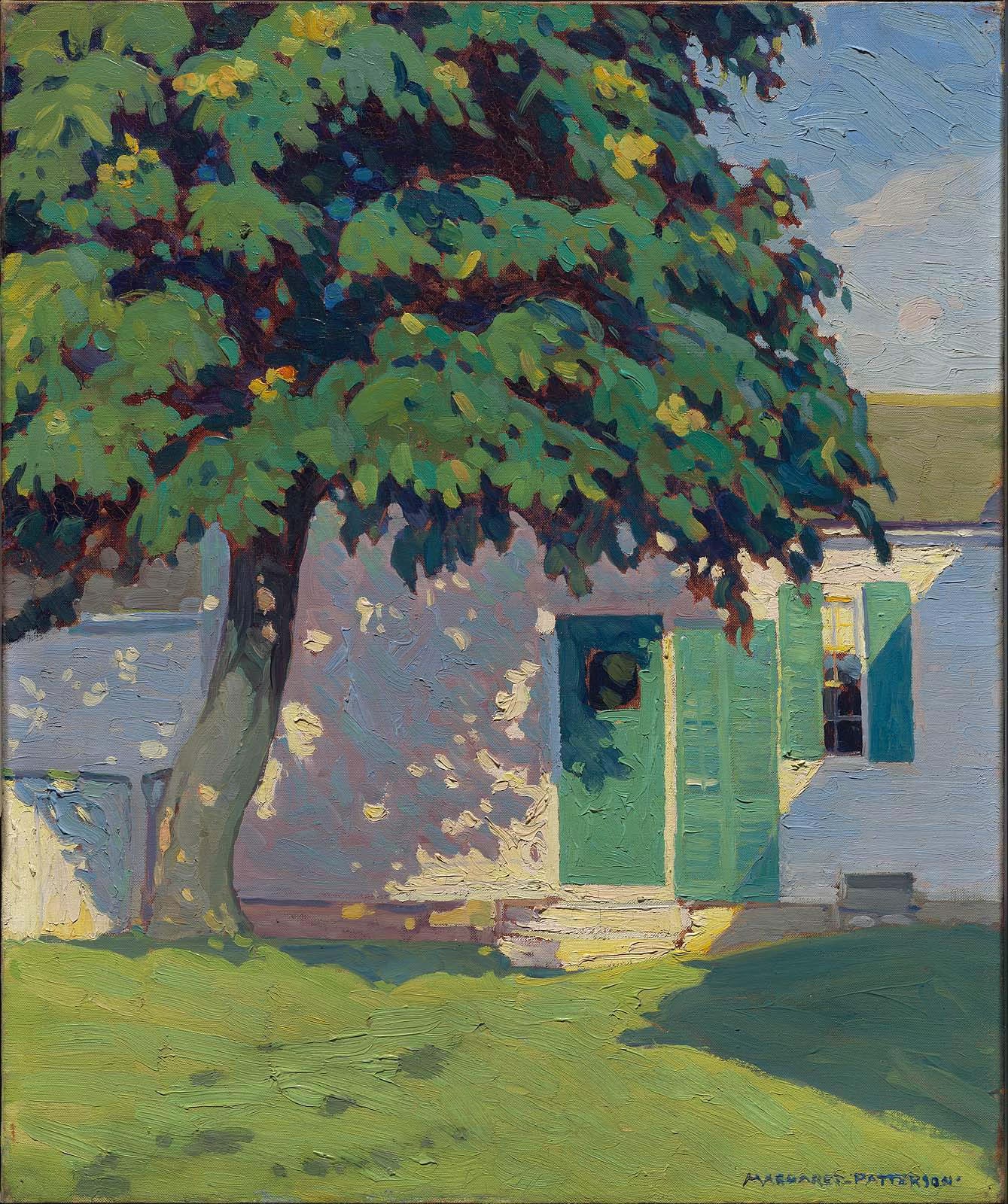
Art by Margaret Jordan Patterson.
ARTICLE 13 PODCAST
How to Make Love

When two people begin a relationship, they often feel exciting, even overwhelming passion for each other. Yet for many couples, this passion declines when they get married. Sexuality starts to feel like a place of duty and work, rather than a place of life and joy. Dr. Jennifer Finlayson-Fife has seen this story unfold with many couples — and has also h…
JOIN US
Issue 7 Release Party

To celebrate the release of Issue 7, please join us for a gathering on Thursday, April 23, 7pm at The Compass in downtown Provo. We’ll have freshly printed issues, readings, food, and friendship. We hope you can join us!
The 2026 Wayfare Emerging Voices Mentorship Program

Are you an emerging writer seeking to develop your craft?
KEEP READING
“And when your children ask you”

There is something prophetically audacious about the Exodus story. Nor is this the only prophetically audacious story in the Old Testament. Just think of David and Goliath, Joshua and Jericho, and Jonah and Nineveh. The message is the same in all of them: God is mightier! God is mightier t…
Maundy Thursday: My Heart at God's Altar

O God
The call cracks my heart. Splices it, pares it down, strips it to bare essence. A primordial reaching, a beckoning for home, for release from displacement, loneliness, fear, acedia, ennui; it’s a plea from the belly of this post-truth cavern.
Six Questions to Help Us Get to Know Our Readers
Thank you! Please click on the button below if you would like to leave additional feedback about what we are doing well, what we can improve, and any other thoughts you have.

Thank you for this. I surely needed to read it. I am a recently retired professor, and often reflect on my (apparent) failures, of being passed over, rejected often, and left with mediocre opportunities, if any. But also many successes, even without the recognition I craved. This essay gives me hope.