


Author’s note: Over the last years, the following story has distilled into my heart. I have worked to hone it, including with the help of James Goldberg. I present it here, without further comment, as a parable.
I invite anyone who feels so inclined to write an essay in response. These responses can do anything with the parable: buttress it, question it, explicate it, deconstruct it, apply it to life, expand on a single sentence, or anything else. So far, the following authors are considering submitting responses: Peter Mugemancaro, Eliza Wells, Sarah Sabey, Jenny Richards, Tom Griffith, August Burton, James Goldberg, Rachel Jardine, and Joseph Spencer. I hope this will be an exciting combined literary experiment.
There once was a desert as wide as the world. Over most of the land, forlorn winds curled dust and sand into parched skies—but a few cities persevered in the harsh terrain.
One such city bustled and pulsed. The people thrived and grew wealthy. They built highways and waterworks. And at the center of the shining city stood a grand cathedral with facades carved from ornate stones. In the center of that building was a small room. And within the small room was a wide well brimming with crystalline, sapphire waters. There, loving and tending to the well, lived a man who had four daughters.
But as the years drew on, the well-keeper worried that the city had forgotten him—and the water he lovingly tended. In all their hustle and bustle, the citizens had lost sight of where the water came from and how it had been found so many years ago. But the well-keeper determined that he would never let the story die. If nothing else, he would ensure his daughters knew.
And so, on long winter nights, when the air grew frigid, the wellman would gather his girls under heavy blankets around a fire and tell them the tale of the oracle. “In the days when the desert was just a desert, and no city had been built,” he would begin—his voice cracked with age, his words heavy with wisdom—“our ancestors wandered from dune to dune in search of water.
“One day, a young man wandered away from the group and, as night fell, he realized he was alone. Nearly dead from thirst, he heard a voice whisper to him on the wind, drawing him toward a particular patch of sand. Just there, iridescent in the evening’s dimming heat, a fine mist rose and, the next morning, the man could see dew coalescing there also. Finally, parched and exhausted, he began to dig, and burrow, and finally to excavate with his hands. Slowly, water began to seep through the sand, wetting his cracked skin; then the water began to trickle, and to burst, until finally, to his relief and wonder, he realized he had unearthed an aquifer: a jewel-like pool of endless, gushing, clarion water, sweet on the tongue and cool as a melon in summer.
“Over time, it became clear that this was not happy coincidence—it was not just that the man had stumbled onto water by luck. Rather, as an oracle, the man was gifted with a second sight that made visible the otherwise invisible signs of water. Though others had never seen the mist or dew,” the old man continued, “they longed to be connected to this resplendent source of life, and so they began to build. Over months that grew into years, they built our city, right here. And, around the aquifer itself, we built the cathedral. But for many generations our family’s calling has been to tend—not to the bustling commerce of the city, nor even to the grand cathedral, but to care for the well itself. We are the keepers of the water, the ones who ensure it will always be here, clear and cool, for those who need respite in these dry lands.”
But though the wellman endeavored with all his vigor and devotion not only to tend to the well but also to pass on to his daughters the beauty and importance of their calling, as the daughters grew, they became their own beings and each walked her own path:
The first daughter became listless with the tedium of tending to the well. It was, after all, inglorious work. She looked longingly, instead, at the ramparts, buttresses, and glimmering bejeweled walls of the cathedral in which the well was housed. On idle afternoons, she would stroll the cathedral’s grand walkways, gazing with an ardent envy at its soaring corridors and regal beauty. Eventually, she discovered that the merchants who hawked their wares on the stone steps outside the cathedral felt like her people and she drifted away from the well and toward the fashion and prestige that defined those who could enjoy what only the very best could afford. She found among them a cosseted comfort, a sense that this was where she belonged.
The second daughter had grown weary from years in the city. She looked around at the failings of her fellow citizens and decided the city was not what it purported to be. She believed a city dedicated to the water would never grow so ornate, so supercilious, so haughty. And so she left. She journeyed to the city’s edge and finally passed out through the final gate. Into the desert she wandered, sure that, over the horizon, she would find a better, truer, more nourishing source of water. But the desert forgave no one the audacity of venturing into its precincts. Within hours of beginning her journey, and just as her hometown slipped behind the receding horizon, the wind attacked her with a ferocity she had not foreseen. Dryness crept into her mouth and her skin, cloaking her tongue with cotton and bristling her skin with cracks and wounds. Just as she thought all might be lost, however, she, too, saw, close to the ground, as the sun set behind her, tiny tendrils of mist curling into the dry air. She fixed herself to that spot and began to press her fingers into the sand. At first, it cracked her skin further and wore against her fingers, but then, slowly, as the cold of night set in, she felt the sand moisten into soil. And then, even deeper, she found a slowly softening layer of mud, and, below that, the smallest pool: water.
The third daughter shared the second’s weariness with the town’s hypocrisy. She, too, knew that something better must await her outside the city’s walls. And so, just a few months after her older sister had disappeared, she too ventured beyond the city’s gates, confident that she would find in the desert a liquid to slake her thirst—sure that she, unlike her progenitors and contemporaries, would preserve the water in all its purity, keeping it clean and building a society that honored what really mattered. Confident that she would become a new oracle, she waited as the sun set on her first night in the sand. But as dusk settled around her, she strained her eyes against the deepening dark and saw . . . nothing. Though she scoured the horizon and lovingly fingered inch after square inch of sand, she found no sign of moisture. Soon, the night grew cold and the sweat of the day cooled and brought to her chills and, finally, shaking. As the next morning dawned, she looked around in desperation for a sign of water, or for help, or for rescue. But as the sun climbed toward its zenith and the temperature inexorably rose, she saw only the pulse of the heat as it radiated off the sand.
Which left only the youngest and plainest of the wellman’s daughters. For reasons she did not know, this youngest daughter noted with a detached sense of admiration the quests and wanderings of her sisters—but never felt called to venture out herself. She was possessed of a settled quiet, a knowledge from very young that her calling was with the well. And so she became proficient at the daily tasks required to keep the water clean and access to the well clear. She recognized that her job held little appeal from the outside; indeed, she understood that virtually no one knew she and her father worked there day after day. But with an abiding sense of what it meant to be whole, a knowledge springing from somewhere deep, she would creep down to the well itself at night, cup the water into her hands, pour it over her face, and feel the rivulets trickle down her skin, letting the liquid quench her thirst as it ran in a cool wave over her tongue.
To submit writing in response to this invitation, visit the Wayfare submissions page, follow the directions for regular submissions, and add the note “Response to Tyler Johnson’s allegory invitation” under #9.
Tyler Johnson is a medical oncologist and associate editor at Wayfare. To subscribe to Tyler’s column, first subscribe to Wayfare, then click here to manage your subscription and turn on notifications for On the Road to Jericho.
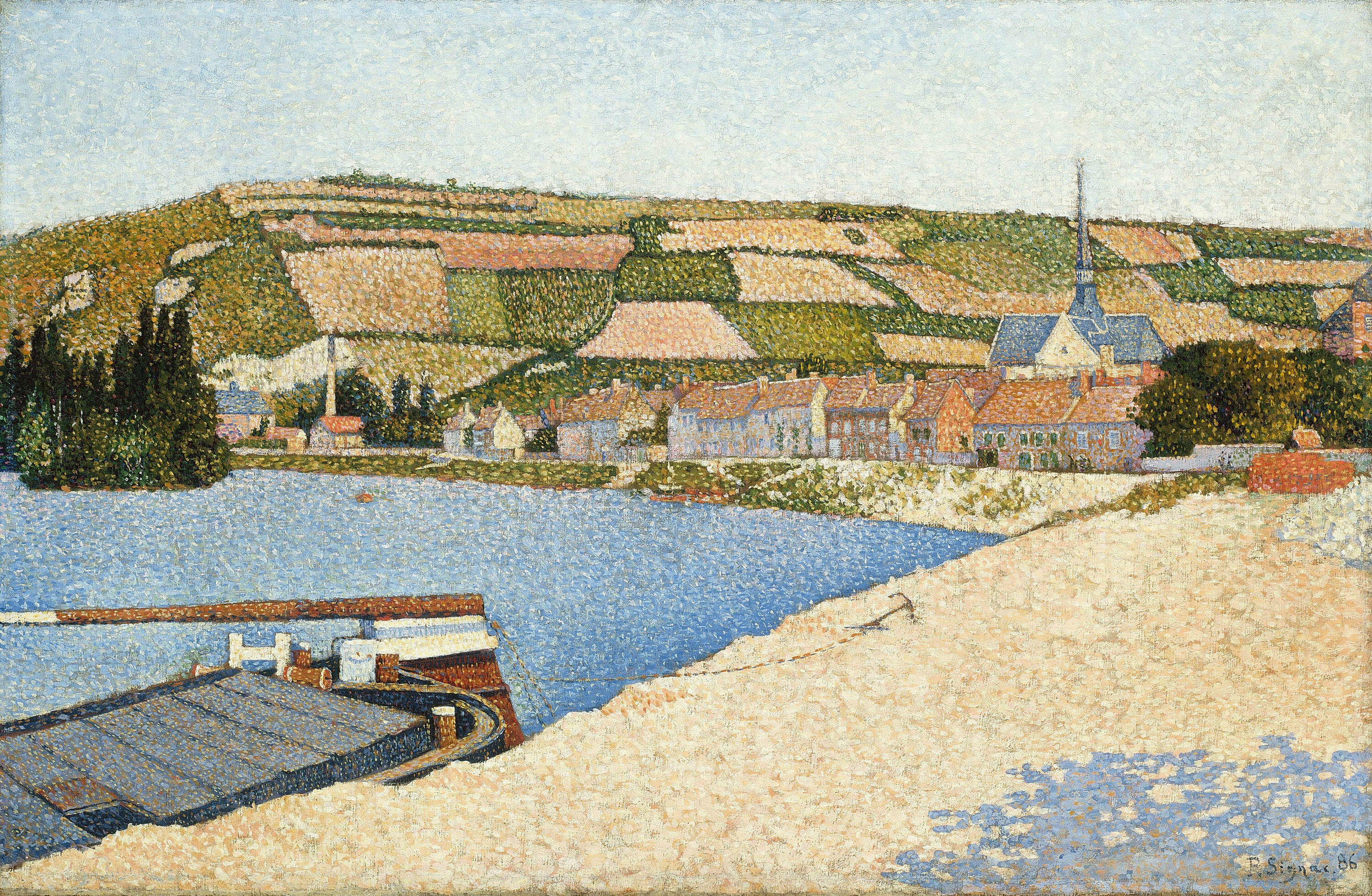
Art by Paul Signac (1863–1935).


Is this "parable" not representing the 5 tenets of Calvanism?
T — Total Depravity: Also known as "total inability," this doctrine suggests that as a result of the Fall, every part of human nature (reason, will, and body) is corrupted by sin. Consequently, people are spiritually "dead" and unable to choose to follow God or save themselves without divine intervention.
U — Unconditional Election: This teaches that God chose (elected) those he would save before the foundation of the world. This choice was not based on any foreseen merit, faith, or good works in the individual, but solely on God’s sovereign will and mercy.
L — Limited Atonement: Often called "Particular Redemption," this point asserts that while Christ’s death was sufficient to save all of humanity, it was intended specifically to achieve the salvation of the elect. In this view, Jesus didn't just make salvation possible; He successfully secured it for those chosen by God.
I — Irresistible Grace: This doctrine states that when God sovereignly purposed to save someone, that individual cannot resist the inward call of the Holy Spirit. God softens the hardened heart and makes the believer willing to repent and believe.
P — Perseverance of the Saints: Also referred to as "Eternal Security," this teaches that those who are truly called and sanctified by God’s Spirit will never fully nor finally fall away from a state of grace. They will be preserved by God until the end.
Eschatologically, Ezekial 47:1-12, Zechariah 14:8. and Joel 3:18 all predict that the living water is ultimately not an unappreciated, scarce resource, but rather will flow on both sides of the veil to heal every wounded soul who will receive It/Him. That is the Good News.
Doctrine and Covenants 88:51-61 describes the Living Water extending Himself to heal "Every man in his own order." No one will be left unvisited.
In 3 Nephi 17:7-10 Jesus asks His followers to bring all the sick and wounded to Him, and He will heal them. Remember the promise that every word shall be fulfilled.
Hence the "Keepers of the Well" parable is not eschatological, but rather describes the lone and dreary world as typified by the scarcity of Calvanism's Weltanshauung, as does the Parable of the Sower.
Good. Thanks.