


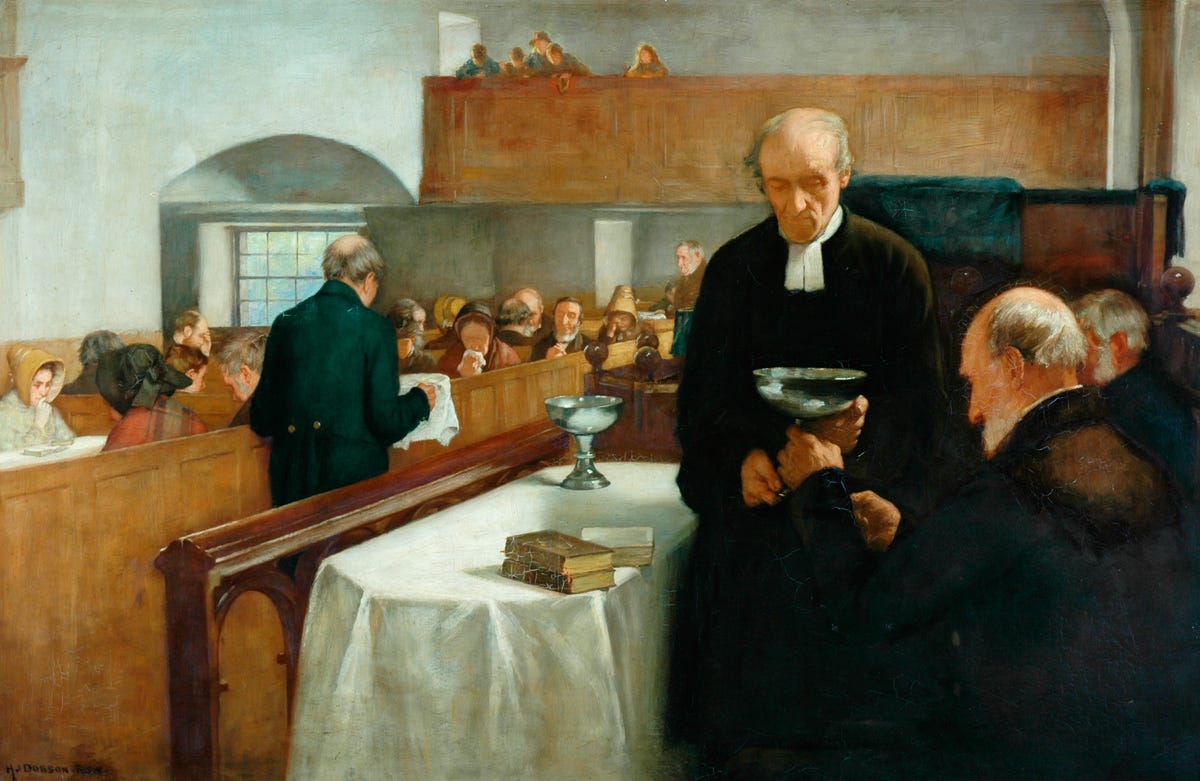
In the years that I was away from The Church of Jesus Christ of Latter-day Saints, I served as a pastor in a Protestant denomination. Ritual, the liturgical calendar, and contemplative practices were all daily rhythms that wrapped my being in shrouds of life. As I felt called back to the Church, I feared those shrouds would unravel in tattered strands and that my being would suffer in their absence.
It took me but a short while to realize what Elijah learned so long ago: God is not in the whirlwind, the earthquake, the fire, nor the intricate chalice. He is ever present in the sound of sheer silence. He is already there, inextricably intertwined in every fiber of our being.
The Simple Act of Being
“Be still, and know that I am God,” I whisper, placing another cup in its slot in the white plastic sacrament tray—small vessels for grace.
Then again, softer: “Be still, and know that I am.”
And finally, “Be.”
Each word peels away the next layer of self until only silence remains—the silence where God has always been speaking.
Preparing the sacrament has become its own liturgy of breath: inhale, exhale, place the cup, remember the holy. The rhythm itself—the simple movement of hands—becomes prayer. For someone who has walked away from the Church and returned, who has stood at altars both wooden and marble, I have come to see that ritual is not merely a thing the Church holds; it is what holds us.
Ritual as the Shape of Compassion
When I was a pastor and hospice chaplain, ritual was at the center of my doing and being. When I didn’t have a prescribed ritual, I would create one—sometimes needing to do so in the moment. Seeing the grief and bewilderment of a family member while they sat at the bedside of their dying loved one, I would offer a rite fitting for the occasion.
Once I was called in the middle of the night to the bedside of Margaret, a hospice patient who had become dear to me. Noting the heartache of her daughter, who could do nothing more than gaze in helplessness to stop the imminent end of her mother’s mortal life, I offered a ritual.
I went into the kitchen and found a clear bowl and filled it with water. I invited others who were scattered throughout the house to join us. As family members gathered around—mother, aunt, sister, and grandmother—I dipped my finger in the water and made on each of their foreheads the sign of the cross with a circle around it to signify eternity.
“Margaret,” I whispered, pressing my wet finger to her forehead, “I bless your head that has provided much wisdom to guide your family. As you prepare for your transition into eternal life, may it be filled with memories and thoughts of joy and peace.”
Placing my finger over her heart, I said, “I bless your heart that has showed so much love to your family and others, lifting and encouraging them when needed and reminding them that they were never alone.”
I continued on to her lips, hands, and feet, partaking in the at-one-ment that was happening not because of what I was doing or saying but because of what Heavenly Father was doing in the midst of those who had gathered to offer their farewell.
Finding the Sacred Again
When I returned to The Church of Jesus Christ of Latter-day Saints, I feared what I might lose—the breadth of open-hearted theology, the poetry of mystery, the focus on social justice, the unhurried space of ritual. I thought I would have to trade the shimmering ineffable for the stone-cold certainty of unquestionable doctrine.
And yet, having been back for a couple of years now, I see that the surprise of grace, the depth of ritual, the embrace of mystery, the care for the least of these—it was all still there. Not the same shape, perhaps, but the same pulse. I saw the Spirit in quiet ordinances, in the temple’s slow movements, in the sacrament trays passed hand to hand—ordinary as bread, extraordinary as love.
“That they [may] always remember . . . and have His spirit to be with them.”
These words carry the whole weight of communion. To remember is itself a sacrament.
The Bread, the Cup, the People
I used to don a robe and stole once a month and stand behind a green marble altar in a small Chicago church built by Japanese Americans once confined to internment camps. We broke bread—not just for the memory of Christ but for the unbreakable truth that love can rise even from captivity.
When I lifted the loaf, I felt the tremor of two thousand years—the mystery that God hides himself in hunger, in the hands that offer, in the mouths that receive. Behold, the magnum mysterium.
Christ has died. Christ has risen. Christ will come again.
And between those three truths—the world continues to breathe.
Rituals of Returning
Now my rituals wear simpler clothes. I fill trays on Sunday mornings and whisper the psalm that centers me back into the living Presence. I enter the temple to stand in water and speak words for those waiting beyond the translucent veil. I lift my hand in blessing for a child being confirmed, the circle of hands around him alive with quiet power.
It turns out that ritual never required marble altars or candlelight—only love dressed in intention.
Mystery and the Everyday God
Years ago in Tokyo, I sat cross-legged in a Shin Buddhist temple, the air thick with sandalwood. The abbot spoke: “A tadpole will become a frog without effort. But a human being must learn to become humane.”
The words entered me like revelation. Compassion—the intentional learning of love—is the shape of enlightenment. Meister Eckhart would have nodded. Thomas Merton would have smiled his quiet smile.
Later, I would read that Merton said ritual is “imbued with the beloved’s presence.” The work of our hands, when done out of love and compassion, become the very hands and feet of Christ. It’s not creating something ex nihilo but bringing into sight that which Heavenly Father has already placed in our midst.
Ritual, then, is simply the act of seeing—the willingness to notice that God has been here all along.
The Burning Bush of the Everyday
Now, as I place the last of the cups in its slot in the sacrament tray, I think of the faces who will drink from them: the widow still learning to breathe amidst the weight of her grief, the father between jobs, the woman waiting for a door to open. Each one unknowingly walking barefoot on holy ground.
The final cup gleams faintly under the fluorescent light. I pause.
Be still.
Be.
The bush burns quietly, and I, at last, am fully present to it as it is to me.
Brandyn is a father, author, leadership coach, and avid hiker. He loves to get lost in the mountains or ride his motorcycle while practicing wonder and curiosity for all that he encounters.
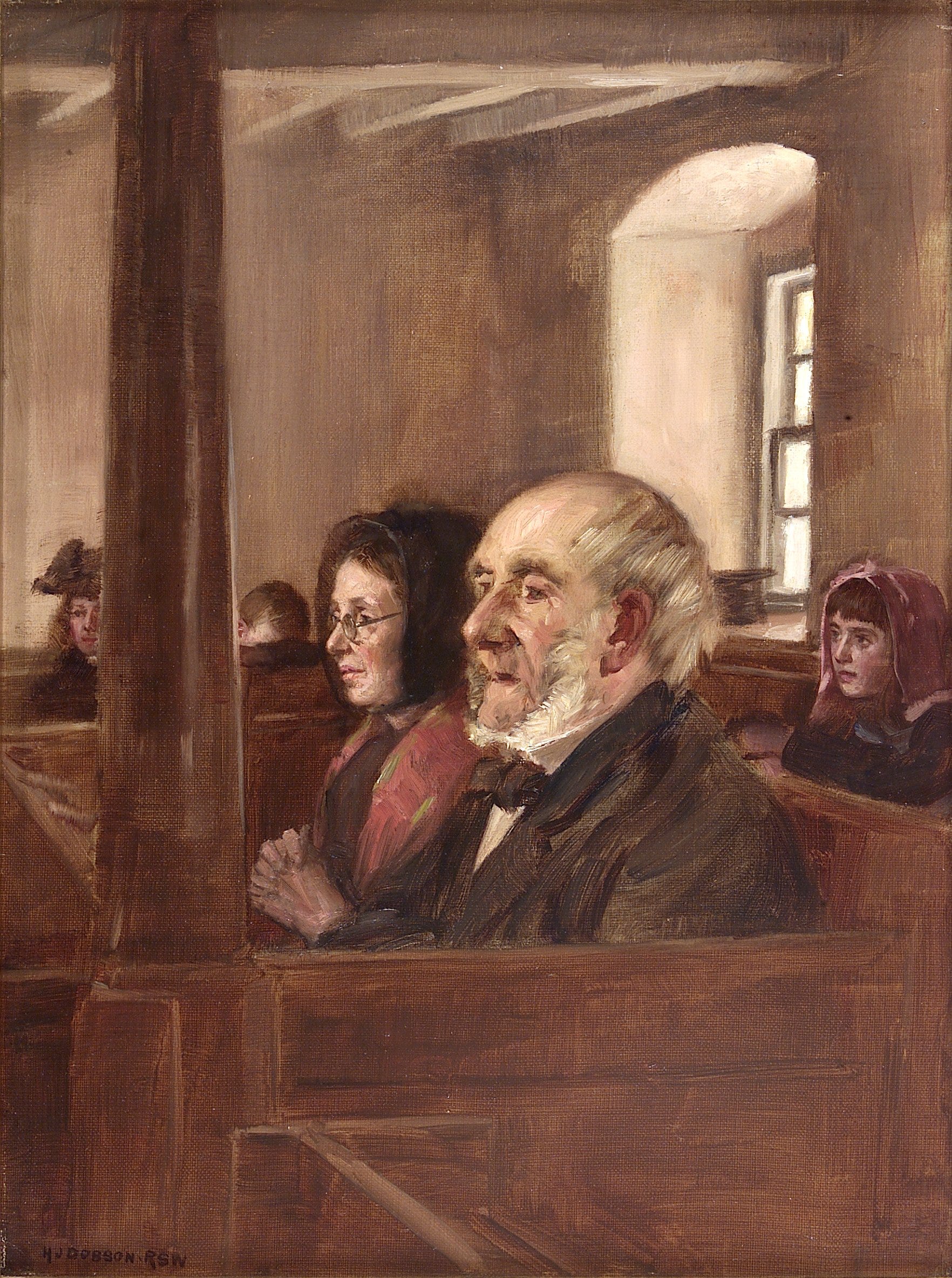
Art by Henry John Dobson (1858–1928).

Oh. Ah. Awe. I just read this. It fills my cup.
So beautifully said. ❤️ Thank you