There is a moment in teaching piano when a young student, either on their own or with some guidance from me, realizes that a small bit of rhythmic variation to a descending scale produces the melody “Joy to the World.” The look of surprised recognition that crosses their face is a joy to behold. Right there, grounded in the daily grind of mundane piano practice, is the opening line of a melody that connects to a world of musical possibility and beauty. The bright ones say, “So this is why I’m doing scales!”
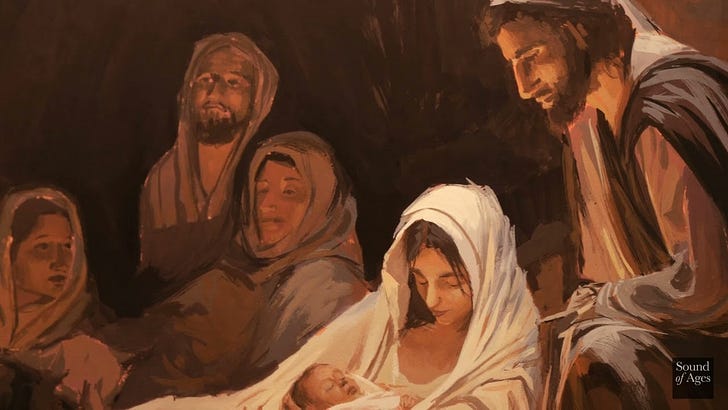
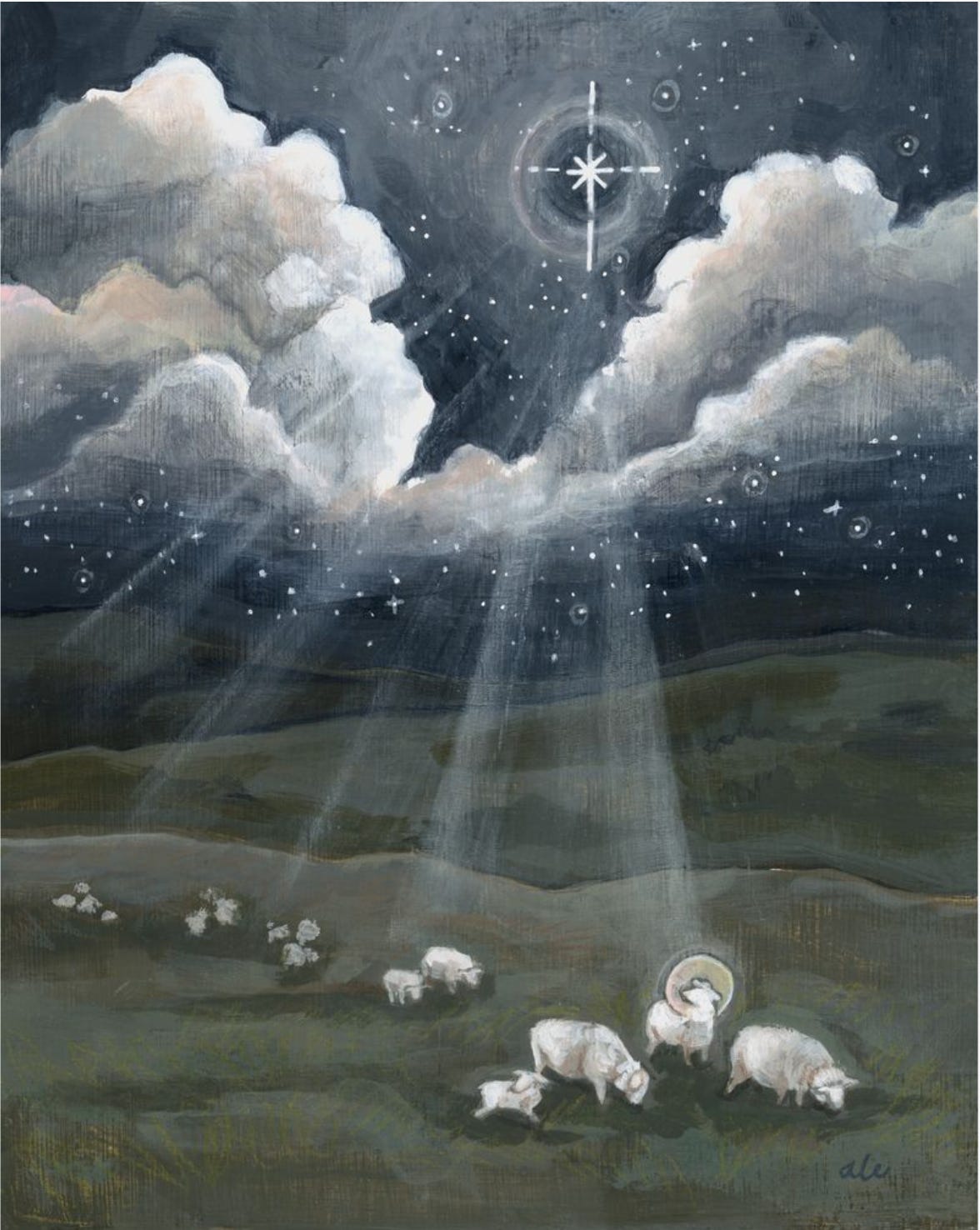
These moments of musical revelation remind me of Luke’s account of the shepherds abiding in the fields on the night that Jesus Christ was born. A typical, dark night was suddenly opened up to a host of singing angels declaring joy, peace, and good will to the world. The story is so appealing because it is rooted in the familiar, the scales of our life—babies are born all the time, loved and welcomed by parents, wrapped in swaddling clothes, and put to sleep as soon as possible. Shepherds doing their job night after night, watching the sheep, trying to keep warm over a fire, maybe telling stories to keep themselves awake, maybe commenting on the beauty of the night sky. And then, suddenly, darkness is dispersed and the dazzling glory of God announces the joy of the good news.
Luke, the narrator, was not an eyewitness to the angelic singing that night. It is possible he heard reminiscences of those who had knowledge of the event. It is also possible that narrative embroidery accrued to the story of the birth of Jesus Christ. Whatever the original source and content of the story, it is clear that by the time Luke wrote it down, every Christian reader from the time the account was first written knows that the story of a baby born in a manger, announced by angels, purposed to be the Messiah and Savior of the world, ends in betrayal, torture, and death. Every Christian reader also knows that while this death led to the atonement and resurrection and the great message of hope in Christ’s sacrifice to save mankind, we humans are still slogging away here on earth—no peace, no good will, no darkness dispersed by glory.
If we assume that the angels also knew the end of the story, then what did they mean in singing “joy to the world”? Celebration of the birth of the Messiah? Death of the Messiah? Salvation of mankind? The long, hopeful, waiting of mankind for that salvation?
Yes, all of it.
Mary Oliver, in the poem “Sometimes,” observes
I don’t know what God is.
I don’t know what death is.

But I believe that they have between them
     some fervent and necessary arrangement.
Lehi, in 2 Nephi 2:25 makes a similar observation: “Adam fell that men might be, and men are, that they might have joy.”
Joy is the ability to see the possibility and beauty of the “fervent and necessary arrangement” that comes from the fallen state of man. It is the expression of the balance we hold in our hearts between life and death. Our ability to cultivate that balance, to create music out of a scale, must be grounded in the reality of our material lives. Just like the piano student could never recognize the relationship between a scale and a melody unless they have invested the time to make the scale familiar, we too can never experience the comprehension that is joy unless we immerse ourselves in the material circumstances of living.
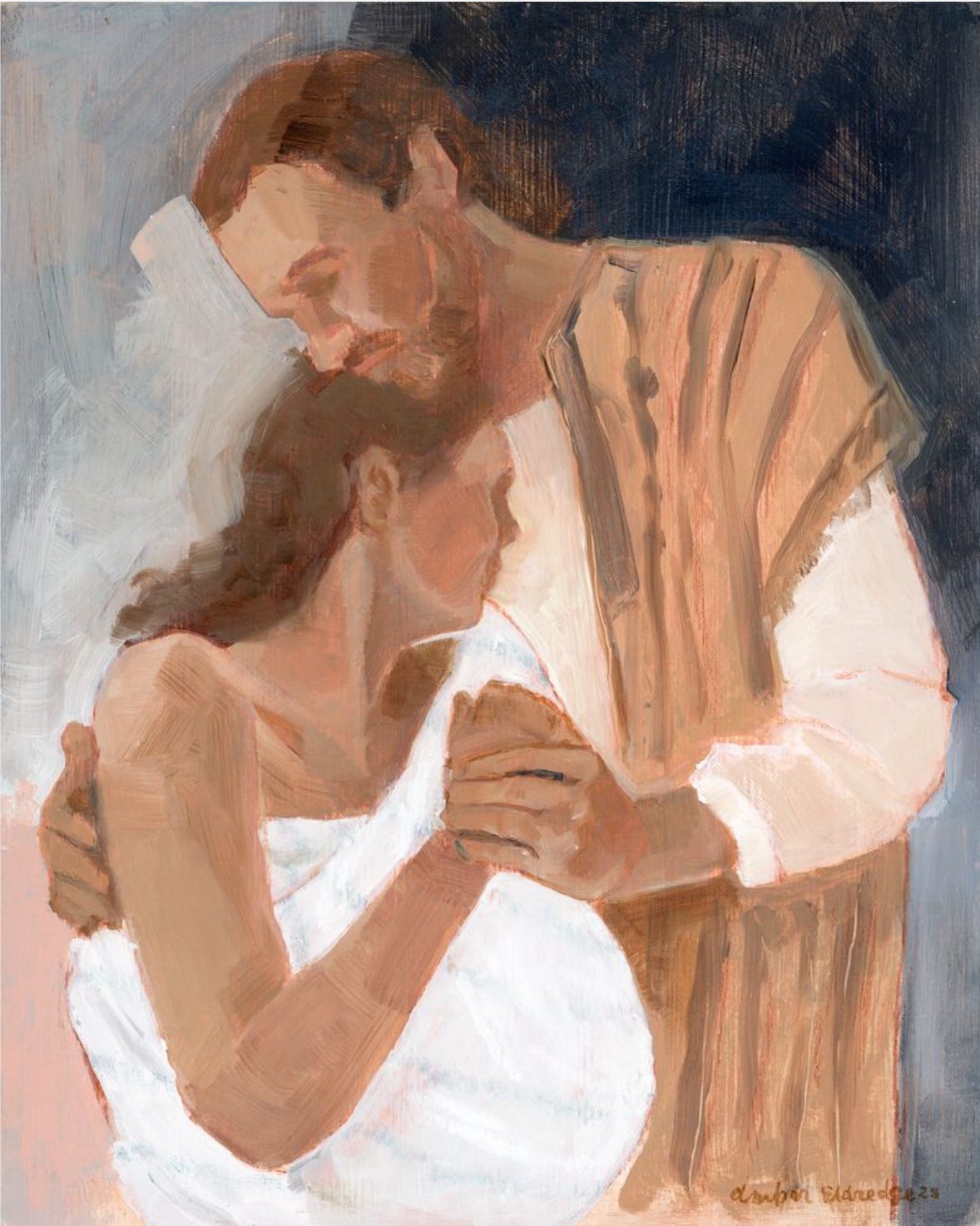
This is all rather abstract. Let me offer a specific example. My husband’s brother, Dolan, died of cancer on December 9, 1994, the day before his thirty-seventh birthday. He left behind three young sons ages eight, five, and three. I had helped care for the boys during Dolan’s two years of cancer treatment, and I wanted to help with my nephews at the funeral. How were three young boys going to manage to behave during a long church service while the adults around them grieved? It was hard to pray during this devastating time to a God who had taken our beloved husband, father, brother, son, friend away so early in life. But there was nowhere else to turn. I prayed that God would help me know how to help the boys.
Two nights before the funeral I had a dream that I had given the boys a Green Ranger. The Power Rangers television show had premiered in the United States the year before. It took little boys by storm. The Green Ranger was everyone’s favorite. It was the toy of the season.
First thing the next morning, inspired by my dream, I headed to Toys“R”Us. No luck. I went to several different branches of Toys“R”Us. I went to the local fancy toy store. I went to the discount department stores. I went to every store I could think of begging for a Green Ranger. The answer was the same every time. “Are you kidding? We are all sold out. Put your name on the list, and we'll call you when we get another shipment.”
I made a fuss at every store trying to explain to indifferent clerks that I needed the little green man now—not next week, not for Christmas. Sometimes I cried while explaining, “These boys are facing a life without their father and a little Green Power Ranger might just make their very bad day a little easier,” and then as an aside in my own head, And anyway God told me in a dream this gift would help.
I finally gave up and headed to a department store to get a dark coat to wear to the funeral. When I entered the store I saw they had a small toy section. I took a quick pass through it. There was no Ranger. In exhaustion and despair, on the last fumes of hope for an answered prayer, I stepped into a coat rack and prayed:
Dear God. This Power Ranger is a small thing in your list of concerns, but it will make the boys happy for a moment on the worst day of their lives. I know you won't give Dolan back to us, but can you at least give the boys a Power Ranger to play with?
I indifferently rummaged through the coats searching for something black in my size. As I did so, I saw out of the corner of my eye a flash of green. It was a Green Ranger box, little man intact, in perfect condition. Someone had obviously hidden it there to get later. That didn't matter. It was mine. It was the answer to prayer.
I carried the precious Ranger in my pocket to the funeral. During the viewing when the boys became restless, I pulled him out of my pocket. They took him with a gasp of delight, passing him back and forth, showing him around with glee, discussing his powers as family and friends wept around the casket. When the time came for the family prayer and casket closing, I suggested to the boys that Green Ranger take a rest in my pocket. Seth Dolan, the three-year-old who was holding him said, “Can I give Green Ranger to Daddy?” Stunned, I watched him walk up to the casket where he had to be lifted up to carefully place the little green plastic man on his father's chest where it remains to this day, a gift of generous love, buried in American Fork.
Joy is the vision I get when I think of that ridiculous green plastic man, still bright and shiny, gleaming in the rich dirt that was Dolan's body making a connection of love between materiality and eternity.
I tell you this
to break your heart
by which I mean only
that it break open and never close again
to the rest of the world.

—Mary Oliver, LeadAfter a lifetime of moving and living all over the world (and even a few places in the US like Washington DC and Boston), Diane Tueller Pritchett is currently living in the mountains of Utah with her husband, Lant Pritchett. She is two countries short of achieving her goal of 65 countries by the time she is 65. Diane likes to dance, sing, and play the piano and the organ loudly.
Art by Amber Eldredge.
This piece is included in our special Advent print issue of Wayfare. To receive a copy in the mail in time for Advent this year, become a paid Wayfare subscriber or place an order here by October 31. To read more from this issue, click here!