

To describe the impossibility of forgetting us, does not God ask incredulously, “Can a woman forget her sucking child, that she should not have compassion on the son of her womb?” (Phillipians 4:7)
That verse—the way it uses breastfeeding to convey the unending and intrinsic love of God for their children—could’ve been written about the way I felt one night while breastfeeding Jens. He was seven months old. It was right before we moved away from South Pasadena, sometime in the true middle of the night. Everything was still. I had stopped using my phone during night wakings. We had a beautiful view out our bedroom windows so I kept the blinds open, even in the dark. From the spot where I sat propped up against three pillows, I could see the silhouettes of palm trees to the left and a hill rising up to the right, stippled with homes. And I could see the sky. I loved to see planes and helicopters and faint stars. Mostly, I loved the way it was all combined and framed for me. The distance between the window and our bed, and the angle of my pillows, prevented me from seeing the roofs of two neighboring buildings, so I could just enjoy the sky and the silhouettes, the faraway planes and sparkling hillside.
Yet always I wished that Jens were not actually awake. I silently willed him to nurse a little less, to feel satisfied more quickly, but also, I was enamored with his face. I loved stroking his head and the part of his neck where it connected with his shoulders, folding into a soft heap. And the way I would know he finished moved me; the sinking heavy into my arms—suddenly unable to hold up his own body. That heaviness, the deepness of his rest, felt sacred.
Sometimes I would sit there, his tiny body so dependent on my arms, the palm trees frozen against the speckled sky, even though the nursing had stopped. It felt irresponsible to be awake when he was asleep, but I had to savor these moments. The world and my life spin and spin, often unable to come to stillness and the peace that Christ promises, the kind that “passeth all understanding,” but there it was in my room at 3:00 a.m., and I had to be in it longer (Isaiah 49:15–17).
We know it is “in the ordinances thereof” that the “power of godliness is manifest” (D&C 84:20). When I was a missionary in Nevada, I loved giving church tours. In particular, I loved leading people to the baptismal font because you could sense the residue of all the power of godliness left behind after years and years of ordinances. Something about nights with Jens, especially these moments of exquisite stillness, reminded me of the feelings that accompany an ordinance. Is it possible that something of the power of godliness I was feeling would linger on me the way it had at those baptismal fonts?
Eventually, I would begin the transition from our room to his. Shifting the covers off my legs, sliding out of bed, navigating around doors and into his room felt high stakes. I would gently set him down and watch his body scooch into a small mound before I closed the door, relieved.
It was on one of these nights when, in the middle of nursing, Jens unlatched himself and put his head back on my arm, relaxed his neck and gave the most contented sigh. He did it twice. His sigh was deep and rich. It felt—just like his laugh, and his smile, and the way he tips his sippy cup all the way back, glugging the water while his lower lip, chins, and neck move in sync—like it was made just for me.
It was such a pure moment—it had never happened before and he never did it again. There was no audience except me to hear his uninhibited expression of the comfort my body was bringing him—the nourishment, and the warmth, and the skin, and maybe some passing to him of the way I felt when I saw a plane far in the distance through the window. Euphoria, hopefulness, melancholy, the ephemerality of life, the deep joy of particular moments that have us floating above it all.

Before I had Jens, I remember explaining to my mom over the phone how stressed I was about all that was to come for him in life. I was driving back from my OB-GYN’s office in Santa Monica, weaving through the insane traffic on the 10, my belly barely fitting in our small car. This concern had sprung up as I watched how parents (not my own) felt pained beyond words by the intractable problems in their adult children’s lives. When I thought of my own baby—once the size of a strawberry seed and bigger now, but still not born—I projected onto him the litany of these concerns. In response, my mom reminded me that’s why people arrive as babies. I felt dissatisfied by this answer and disconnected from the coming baby—annoyed at how hard it all felt.
The next spring, with a baby much bigger than a strawberry seed and seemingly always attached to me, feeding, I read Life to the Whole Being by Matthew Wickman. About halfway through the book, he writes of praying for one of his two daughters at a point of great darkness and pain in her life. Wickman’s description of prayer is one of the most pristine I have ever read: “I was anguished, and God was not. I mourned the prospect of lost futures for my children, and God did not. I expressed regret, and God would have none of it.”
I finished this book just after we’d moved back to Boston from LA, by way of a two-week road trip across the country. Outside of Santa Fe, we stopped at a gas station off a lonely stretch of highway, across from a store that was both a Dollar General and a Dollar Tree, and I nursed the baby, his head resting on the cupholder and my arm. The car was hot and felt crowded, and Jens wouldn’t nurse as much as I wanted. In Amarillo, Texas, we stayed at the kind of hotel where you can still hear and see the interstate highway. Something that night triggered multiple wake-ups; it was enough that when we woke up in the morning, I had to have the hood of my sweatshirt up at breakfast as a way to protect my tired body and mind from everyone else and signal my crankiness with life. From then on, Alex and I would always joke about “hood up” mornings. In Pittsburgh, we stayed in a cousin’s basement. When the baby would wake up and cry in the night, I felt cold and disoriented and amazed that I was still alive enough to do this. I couldn’t believe that after months of being unable to sleep through the night, I was still able to breathe, that each of my organs still had what they needed to function. And yet, when I think back over my memories of that year, I realize there isn’t anything I loved like I loved this road trip and its vibrant, condensed memories of breastfeeding.
The beginning of breastfeeding—like everything else in the hospital—is not clear. I was so surprised to actually be there, to actually be giving birth, to actually be brave enough to do it all that it never caught up with me. Though birth was amazing, the next few days were awful. We couldn’t see the sun from our hospital room and I wasn’t allowed to go outside and every time I stood up I was horrified by the amount of blood beneath me. I cried when the nurse helped me use the bathroom for the first time—feeling the bitter reality of my body having been split open to let a baby into this world.
Somewhere in all of that I was also breastfeeding. The nurses would come in and demand that I show them a feeding log that I could never find. And then I remember that helping Jens latch required four hands! Alex and I had to lift his tiny body close to mine and position it just right. Four hands. I couldn’t comprehend that. Hadn’t my mom read while she nursed?
And now our year of breastfeeding is over.
In those first few weeks, when it was so hard to slip out of the tingly awareness of new motherhood—so hard that even if Alex watched Jens in another room, I could not sleep—there was a meditation I loved to play on my phone. It spoke of the trust we need to have in our bodies that they will come back to themselves, come back together. I did not fully feel this promised physical togetherness until I weaned Jens. So to come back to myself, to be autonomous, is to be grateful I am finished breastfeeding.
And yet in my freedom I write about this.
Is it because “[m]any creative mothers have argued that their relationship with their children has deepened their sensibility, broadened their range, brought them, as Ursula Le Guin put it, ‘closer to the bone’ ”?
Is that what I mean when I say it felt almost like an ordinance, when I speak of the hoped-for lingering of God’s power? And what does it mean to be closer to the bone spiritually—is it the way I used to have to remind myself to express gratitude in prayers and now I fall asleep praying in gratitude for Jens not because I feel like I have to but because nothing else would make sense but to say those words to God?
Right before I went back to work at my law firm, Jens progressed to only one waking each night. Alex’s mom once told me that nothing with infants lasts very long, which means that something you love can go too fast and something you hate won’t last forever. I guess in this moment—and it was just a moment—I felt that things were smoothing out, that there were things I could rely on. And so nursing my five-month-old in the middle of the night finally felt purposeful and manageable. I was finally leaning into the softness and slowness of it all. Walking without hurry to the library, reading LaRose in the rocking chair, letting the baby fall asleep in my arms for hours, enjoying everything, really.
But this slowness and sweetness were bigger than the baby. It felt like the second verse of a song I had already been singing. Verse one goes something like this:
It is a Saturday halfway through my pregnancy and we have just spent a couple of hours at a restaurant with a sweet lady Alex ministers to. I struggle to enjoy the lunch; her slow pace of eating means I’ll be billing later and later into the evening. When we finally get home, I go straight upstairs and start working. That night there is a beautiful sunset. I can get a taste from the bedroom window, but in order to fully enjoy the beautiful LA sunsets you have to leave our apartment and go up an additional flight of stairs to what we refer to as the “secret balcony.” This is a strange landing that seems to have no use and no users, except us, when we want to see the sky. I love time spent on that secret balcony, with its huge expanse of planes, stars, and helicopters stitching their way across the sky, a border of hills and palm trees holding it all together. It is similar to the view from our bed, but better. But that night I cannot go see the sky. I hate that I have created a life for myself that results in an inability to see the sunset on a Saturday night. Why have I worked so hard to be stuck inside on a beautiful night? I can smell the delicious spaghetti sauce my husband is making downstairs. I want so badly to go downstairs, cook together, pause to watch the sunset, and then pop back inside to enjoy the meal. But that night, none of those things is possible.
That night has seared itself into my brain, a warning that if I get caught up in money and importance and prestige, I will face bitter consequences limiting the type of life I want to live.
All this to say, I was thankful for the rich slowness of life with a baby.
There was one particular day where this knowledge settled down on me. It was a Saturday. In the morning we went to the LA temple, leaving Jens in the care of our bishop and his wife, who had kindly offered their babysitting services to all the young parents in the ward who wanted to go to the temple. In the afternoon we took Jens for a hike in Griffith Park. As we bounded down the wide, washed-out trails, feeling all at once the magic that is winter in LA and seeing in the distance the ever-present pollution, it dawned on me that having Jens along for the ride made life better. We could have done this hike without him for all the previous years of our life, but doing it here and now and with him was better. After the hike we found a sandwich shop that I had read about in the LA Times and ordered dinner late at night, my shoes still dusty from the hike and a precious baby staring up at me from the car seat. We sat outside on rickety chairs on a narrow sidewalk and I nursed the baby, his face towards the stream of cars and my hand carefully titled just so to avoid spilling the sandwich on him, and I felt it again—felt the way that having Jens here was a fulfillment of Jesus’s promise of an abundant life.
But I don’t want this portrait of softness to obscure the power at work here. One of my favorite descriptions of a literary character includes breastfeeding in a list of powerful, physically demanding tasks—things that give women clout and strength in a community: “Aunty Ifeoma drove into the compound just as we finished breakfast. When she barged into the dining room upstairs, I imagined a proud ancient forbearer, walking miles to fetch water in homemade clay pots, nursing babies until they walked and talked, fighting wars with machetes sharpened on sun-warmed stone.” Here, this link between nursing and carrying water for miles, between nursing and wielding machetes, is anything but soft. Instead it’s rugged in a palpable, substantial way. This description and elevation of breastfeeding pushes back on the inevitability of life, as though babies could grow without mothers,1 as though the fact that Jens is now twenty-five pounds was a foregone conclusion.
“I hope the sisters understand the spiritual treasures that are theirs in the temple.” I think about this statement a lot and I think it may be at the heart of the palpable, sustaining power I felt and feel because of the thousands of hours I spent breastfeeding Jens—the kind of embodied power and regality that Aunty Ifeoma represents.
Around the time I made that frantic pre-baby call to my mom on the 10, I went to the LA temple. This is an excerpt from my journal entry about that visit:
Leading up to my time at the veil and in the celestial room I was thinking a lot about the baby and how if he’s anything like me he might be feeling very sad to leave the people he loves in heaven and nervous/overwhelmed to start earth life. I had such compassion for him. . . . I felt the desire to pray for him to have courage.
Had Jens seen me on the 10? Fretting to my mom about all that was to come in his life? Was he also praying for courage, for me? This image sustained me during labor—the two of us, frightened but courageous. The two of us, aware that we cannot go back.
And then this, this year of nursing, of being together and together and together. This year of coming closer to the bone, this year of cloaking myself in some sort of spiritual residue so that I now and will forever call on God differently on behalf of my son—was this the spiritual treasure from the temple for both of us?
These memories of feeding Jens will linger. It’s why he came as a baby. The thousands of hours I spent breastfeeding Jens are going to add up to an ability to offer the kind of prayer Matt Wickman did and the ability to feel the kind of answer God gave and one day, to feel the way that God does about you and me and this world of ours full of planes and stars and palm trees and Dollar Trees.
Katie Stevenson is an attorney who lives with her husband and their delightful son and new daughter in Cambridge, MA. She loves being in the middle of a good book, a good conversation (especially with one of her six siblings), and a good meal.
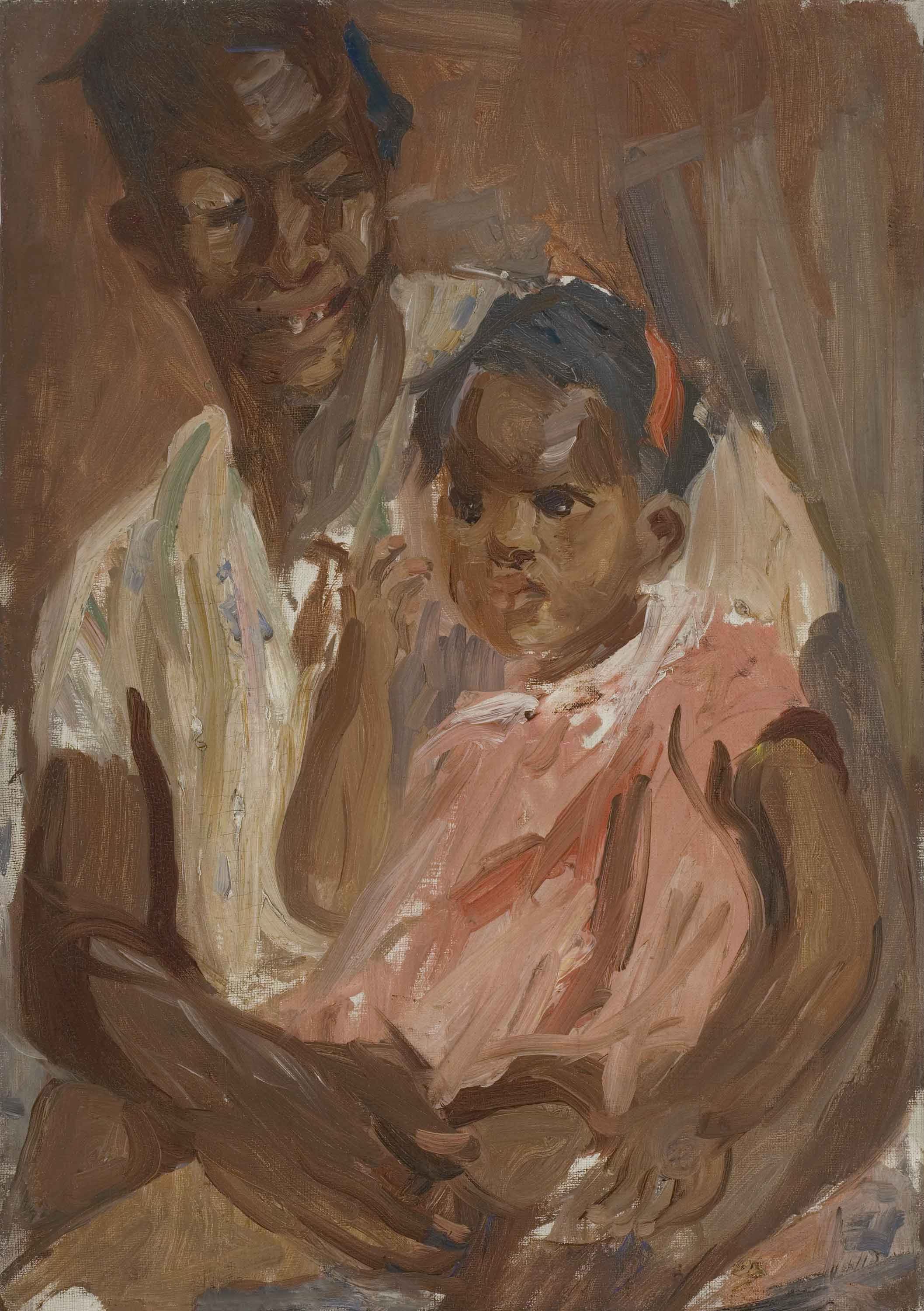
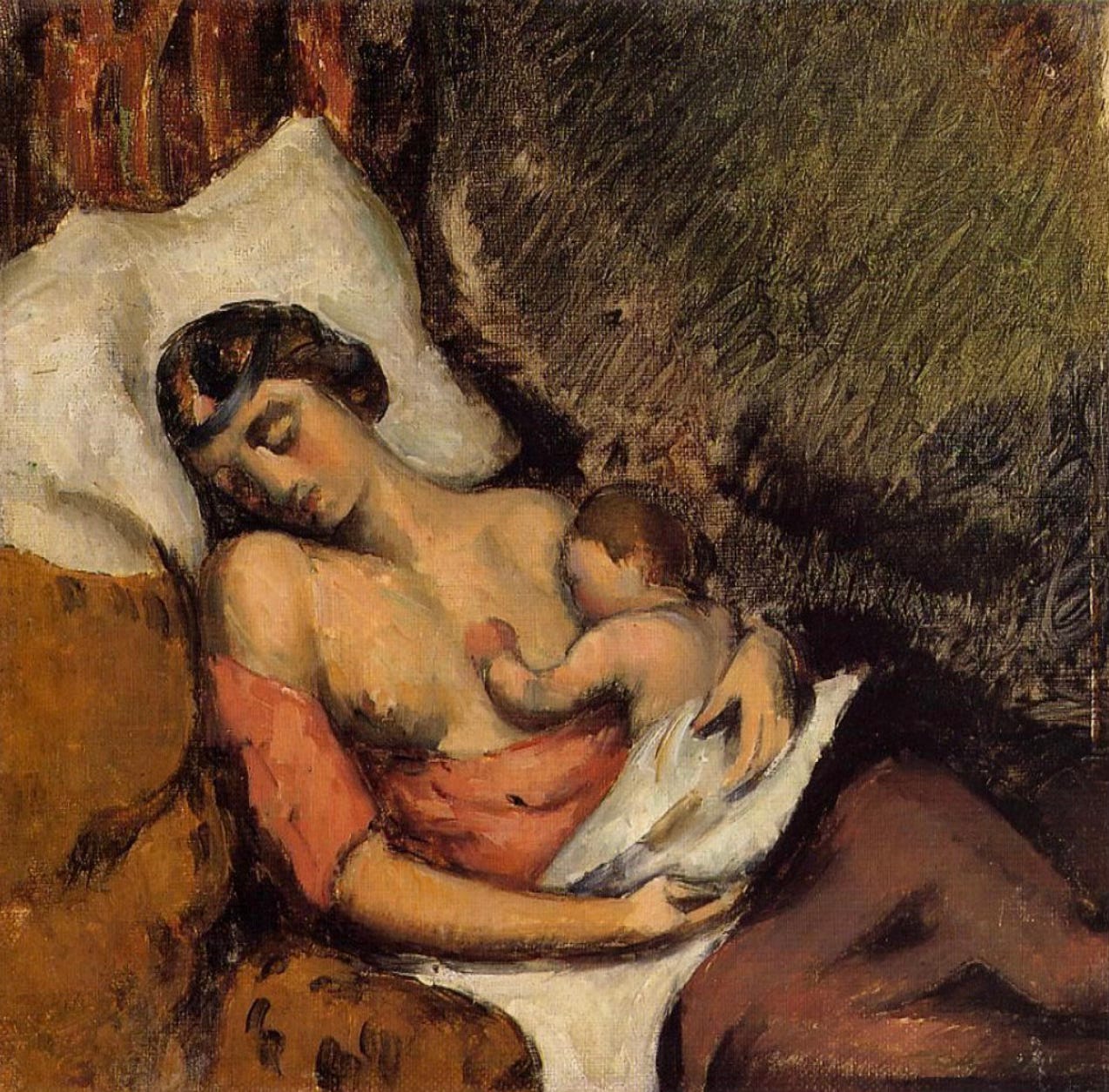
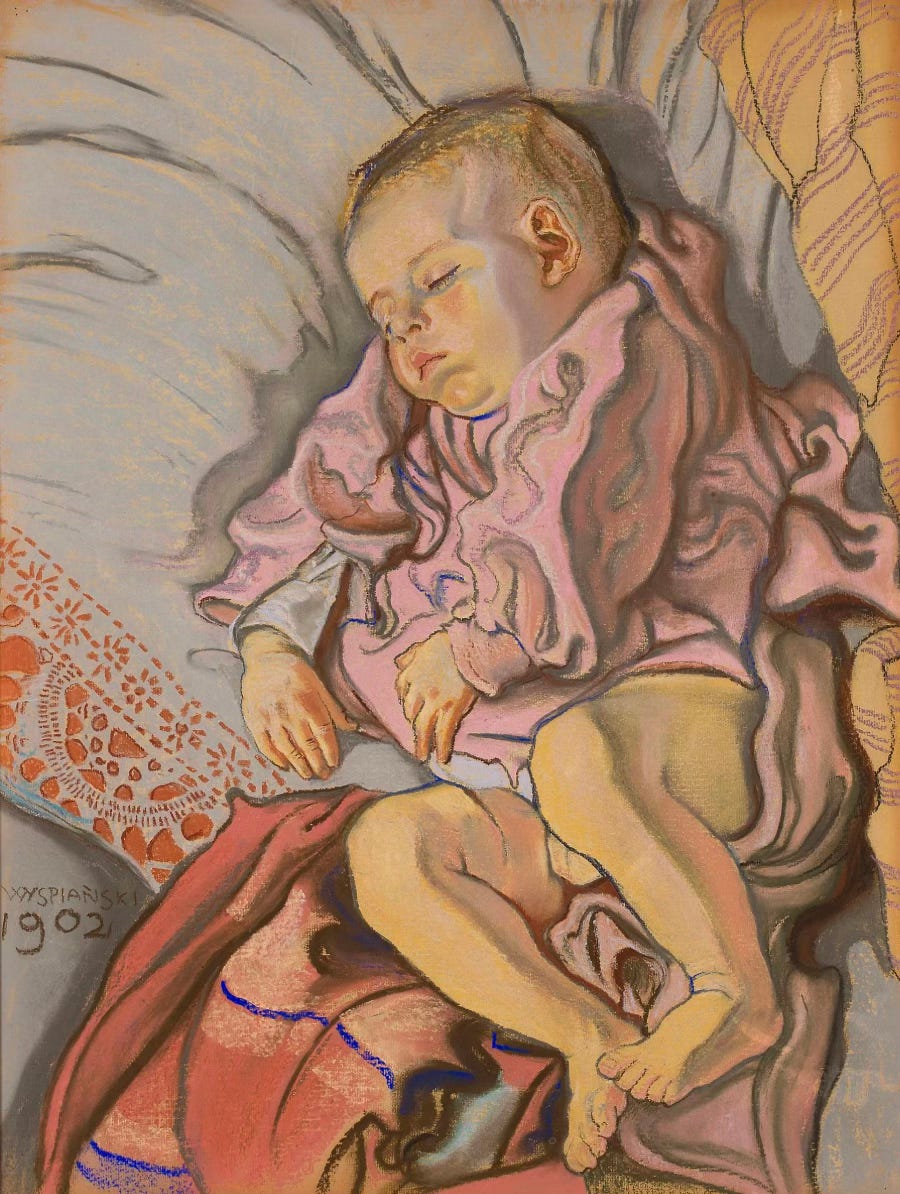
Art by Alice Neel (1900–1984), Paul Cézanne (1839–1906), and Stanisław Wyspiański (1869–1907).
To be clear, this essay is not meant to elevate breastfeeding above other methods of giving babies nutrients during their first year of life. Rather, it’s meant to interrogate what a particular year of breastfeeding meant to me then and means to me still. I believe similarly powerful lessons can and have been drawn from a variety of experiences feeding babies in other ways.
Loved this article so much - so lovely and tender. I'm really grateful to read stories like this that give me new perspectives!