


Fireside Talk Notes
Tulsa, Oklahoma Stake
September 2025
Benjamin Peters1
I stand over a sink at the end of a long day. The water rushes down, pouring through my hands into the sink below circling the drain. The water falls where gravity pulls it. In receiving the water through gravity, I am allowing a force greater than myself to do its work. Perhaps this image connects to my assigned topic tonight: The priesthood as we understand it today in The Church of Jesus Christ of Latter-day Saints is a channel as much as it is a source—both the proverbial sink and gravity—for better getting to work in the world.
My central claim is modest but consequential. The priesthood may be experienced more broadly—more deeply—if we understand it as more of a channel than as a source for relating with others. Its nature as a means, not an end, functions in at least three ways: a cosmological constant, a vertical covenant, and a horizontal relationship for receiving and bearing community with one another. (How many talks in a Christian church have implied a conceptual cross? Well, note this cross comes with a third, a background constant too.) In this view, every member (including priesthood bearers) receives priesthood channels and flows. Understanding our common role as receivers helps us better grasp what the priesthood is now and why it matters eternally.
I understand the priesthood to be, in John Taylor’s formulation, “the power of God delegated to intelligences in the heavens and to [people] on earth.” The power of God to act on earth is no small matter. Let us examine our understanding of the priesthood in three ways: as an eternal power that organizes the Church, as a personal covenant between us and God that invites each of us to virtue, and as a form of collective action and relational service.
But first I carry a question mark about the proverbial elephant in the room. After years of study, prayer, and reflection, I can personally affirm that the best response, for me, to the question of why women do not receive priesthood offices in the Church currently is, following Sister Melissa Inouye, “I do not know.” Every other answer sits less well with me. Sensitive to imbalances as well as to the wealth of what sisters possess, I stand with dignity in the fact that I simply do not know why we draw this difference between earth and heaven, temple and world. With President Nelson, to “think celestial” may also sometimes mean to think until the difference between here and heaven is zero; thus I rejoice in the celestial thought that, surely, the current arrangement cannot be for the eternities, even as we all are called to strive for the eternities here and now. As the poet Rainer Maria Rilke advised, we must learn to “live the questions.” Years ago, my family decided our motto would begin with this triplet: ask hard questions, solve problems, delight in dilemmas. I hope to live for all three today.
Three Ways to Understand the Priesthood
First: Priesthood as a Power That Organizes the Church
The eternal reality of the priesthood is this: it existed before us and will remain after us. Thus it must work with us—changeable and imperfect creatures that we are.
The priesthood comes before the Church. Consider the sequence. On May 15, 1829, before the Church was organized, Joseph Smith and Oliver Cowdery were ordained by John the Baptist to the Aaronic priesthood. Later, Peter, James, and John conferred the Melchizedek priesthood upon them. They had all necessary priesthood power before the Church was established. When the Church was later organized, both had to be baptized into it and ordained elders.
Note the order: Eternal priesthood precedes the Church, and the Church precedes offices. Although today we experience the priesthood primarily through Church offices, it clearly precedes the Church itself. Church offices are clearly transient; priesthood precedes it.
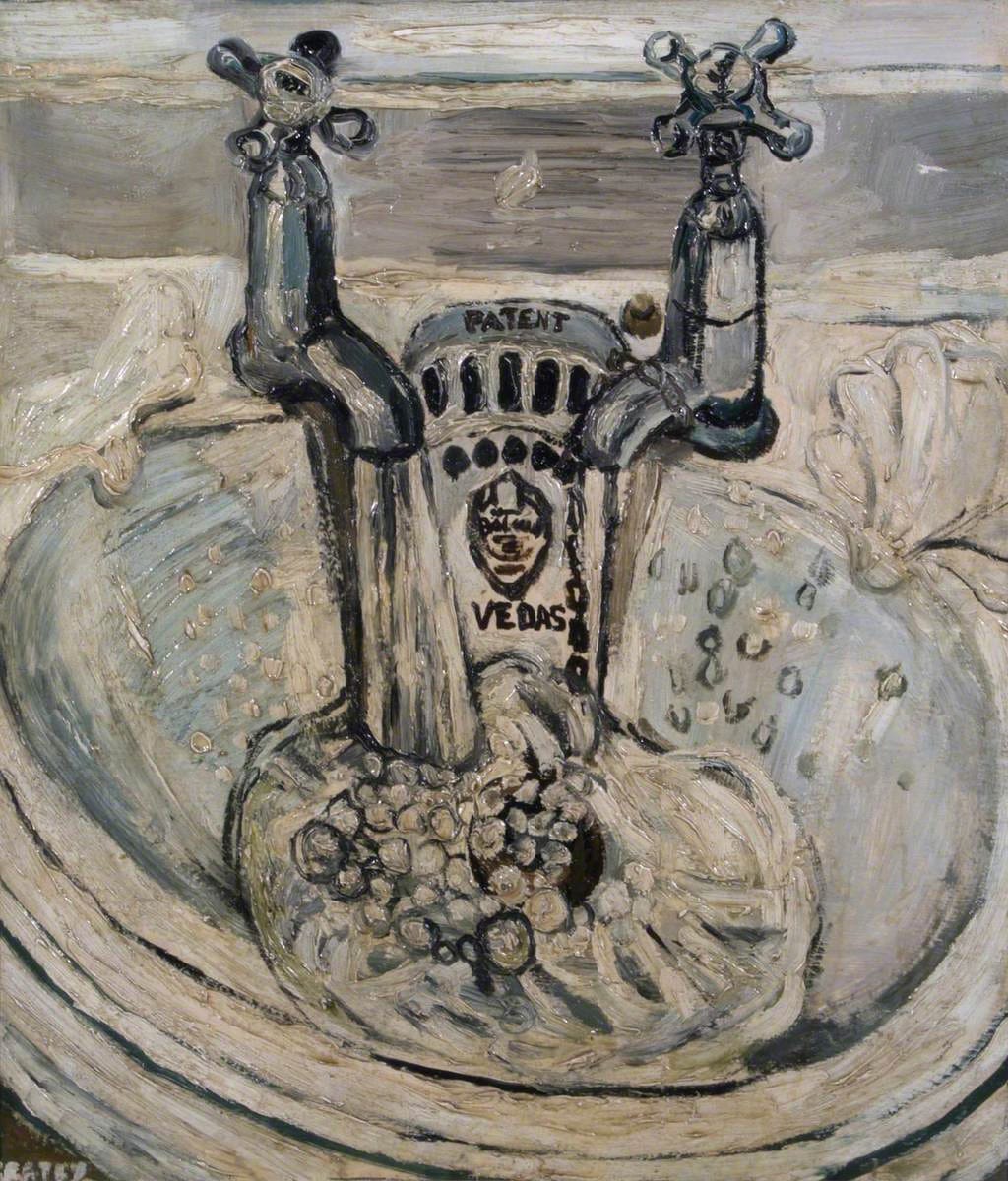
Consider my sink analogy. Perhaps priesthood is like gravity, a cosmological force. Perhaps the Church is like a home or building. Perhaps a priesthood office is like a drain in a sink. (Bear with me for a moment!) When we see the swirl of water pulled down a drain, we might think—cool, gravity. Fair enough. But gravity also comes before a home, and a home comes before a drain. The drain is how we experience gravity’s public workings, its visible choreography. Yet its force surrounds us everywhere.
If the priesthood has eternal reality, it must be the kind that changes and seeks restoration and evolution. The priesthood is both eternal and timely, both fixed and dynamic, both a cosmological “constant” (in fact, gravity is one of the less understood of the four fundamental forces in the cosmos) and a swirling drain. As our heavenly parents’ creative power, it predates creation itself; but once administered through the Church, it becomes subject to ongoing revelation. Our past, present, and future are uneasily dialectical: As Terryl Givens has observed, Latter-day Saint theology courts an environment of, in the language of Arthur Peacock, “infinite restlessness.”
Perhaps eternal things learn to stir, and thus awaken to our living world around us, by receiving and bearing uneven costs when they come to earth—the lesson we accept in mortality. The priesthood predates us. It is delegated to us as we’re ready to grow with it. Because it will predate and postdate all of us, it must be administered by imperfect mortals and institutions. Despite the resulting difficulties, this is not a failure but a feature of the design.
The Church hierarchy is clear, but differences between offices are never meant to be personal. At ward and stake levels, folks rotate in and out constantly. The Church should not respect persons. There are, of course, social hierarchies in our communities too—school, companies, governments. Learning to operate in self-checking hierarchies with grace is valuable. Good hierarchies include precious unequal relationships: mentor-mentee, teacher-student, parent-child. We operate well when we sustain leaders while never idolizing them. Local Church hierarchy, precisely because it rotates, ensures that ego-driven people do not merit leadership positions. A lesson I’ve learned at the university as well: all positions—teaching, talks, organizing, etc.—are best subsumed under the ego-diminishing, all-encompassing category of community service.
Second: Priesthood as a Personal Covenant
The priesthood is a personal covenant between God and person, inviting each of us to virtue. Priesthood covenants await us all in the temple. In 1832, before the first temple was built, Joseph Smith asked about missionary authority. The result was Doctrine & Covenants 84: “All they who receive this priesthood receive me, saith the Lord; . . . and he that receiveth me receiveth my Father . . . therefore all that my Father hath shall be given unto him” (vv. 35, 37–38).
The key word here is receive, not hold. The priesthood covenant offers internally nested relationships of receiving: God to Jesus, Jesus to receivers, receivers to holders, and back again. The value and power of the priesthood lies not only in worthily holding it (for men), but in receiving its power by covenant in baptism, sacrament, and temple—which every person can do.
The oath and covenant frames the priesthood as a relationship. First between God and person, then between sister and brother. The Lord promises blessings if priesthood bearers magnify what they receive, and blessings to all who receive priesthood covenants well, especially in the temple. Again, why only worthy men bear it remains my dignified question mark. But that each of us receives the priesthood, promising to magnify our relationship to it, is a potential beautiful universal.
Third: Priesthood as Relational Action
Priesthood is relational action—less noun, more verb: It orients toward others as an antidote to selfishness, a step away from the man behind every natural man. Consider obvious priesthood expressions. Blessings? Never does a bearer bless themselves. Ordinations? Never self-ordination (except Alma at the waters of Mormon). Passing sacrament? Deacons, and everyone on the pew, pass to others, not themselves. No event proceeds without a second witness. No action happens alone. Every decision made as a quorum or committee.
Even in structured contexts, priesthood manifests in relationships that open us to others: Sometimes we receive, sometimes we bear one another’s burdens. As C.S. Lewis says in The Weight of Glory, “The load, or weight, or burden of my neighbour’s glory should be laid on my back, a load so heavy that only humility can carry it, and the backs of the proud will be broken.” Thus are all of us humbled, if unevenly. Every member, bearing covenants, receives the priesthood. We all bear together (again, unevenly!) the very unevenness of who holds specific priesthood offices.
To understand priesthood’s eternal reality, we must go beyond the vertical—God reaching us through Church, covenant binding us to God. We should see priesthood as horizontal action between us that prompts us to see the fullest, most eternal reality of all of us. When we see each other as God sees us and serve one another accordingly, we are covenantally enacting priesthood together. When we minister to one another, when we call one another to imperfect callings, this is priesthood action illuminating our hands, hearts, and heads together. Zion is fashioned from humanity’s bent timber—that is precisely what makes it Zion. As Kant observed, “From such crooked wood as man is made of, nothing perfectly straight can be built.” Zion may lie in straits, but it is not straight.
Doctrine & Covenants 107:30 requires decisions “in all righteousness, in holiness, and lowliness of heart, meekness and long-suffering, and in faith, and virtue, and knowledge, temperance, patience, godliness, . . . kindness and charity.” Amen to any priesthood that elevates self above others, seeking wealth, glory, or power. The priesthood is a covenantal antidote to the natural man through collective action and relational service. As Martin Buber taught, “All real living is meeting.”
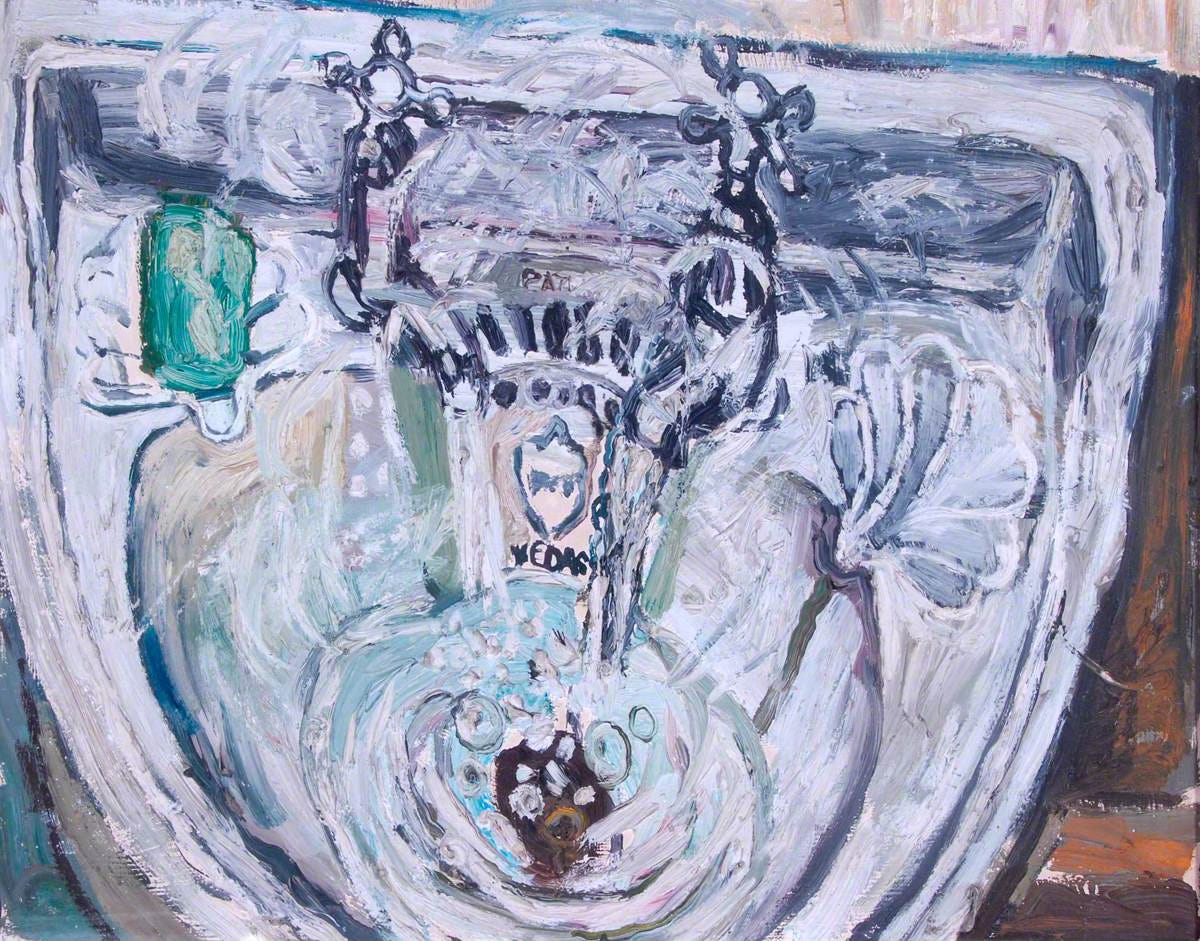
In my analogy, gravity works not just in kitchen sinks (Church offices), though there the swirl is obvious. It works all around us, in matter’s fabric. The question is whether we can learn to see and receive it everywhere in our lives’ covenantal fabric. Like gravity, priesthood is experienced in action drawing bodies together. Like gravity, it conditions our co-creation—we are never enough when alone—we all need each other, and Jesus needs us to need one another.
Conclusion
Seven summary points follow on understanding the priesthood as a nesting of cosmic power organizing the Church, a personal covenant, and a relational action for receiving and bearing community with one another.
First, the priesthood invites us to think celestial beyond office to relationship. Every ordinance, blessing, and service reminds us that God’s power flows primarily through eternal connection, secondarily through temporary offices.
Second, our “not knowing” can be faithful discipleship. Sustaining prophets while acknowledging understanding’s limits demonstrates, I think, mature faith trusting continuing revelation. Uncertainty is not the enemy of faith but its companion. (Indeed, if anything, certainty is the opposite of a live faith.)
Third, the priesthood calls us to magnify our capacity to receive. Spiritual growth comes through learning to receive God’s power more fully.
Fourth, covenant relationships create the fabric where priesthood power operates. Through marriage, baptism, and temple ordinances, we access power beyond our own through bonds with God and each other.
Fifth, the priesthood teaches us that eternal things work through mortal means. This tension between fleeting drains and enduring forces is a feature, not a bug, of earthly experience.
Sixth, real priesthood authority manifests in service, not status. The most powerful expressions happen when we lift others, not when one elevates themself above others.
Seventh, everyone participates in the priesthood’s relational nature. We are all receivers, all benefit from ordinances, and all help create a community where God’s power flows; even if all we sometimes see is water pouring into a sink, do we not also stand as witnesses to the fact that the force behind that flow must also be everywhere else at once? That thought gives me comfort. Let us receive the priesthood as the source for everything, a cosmological constant like gravity, and its offices as a channel for a few temporal things, maybe even the kitchen sink.
Testimony here.
Benjamin Peters is an editor-at-large for Wayfare.
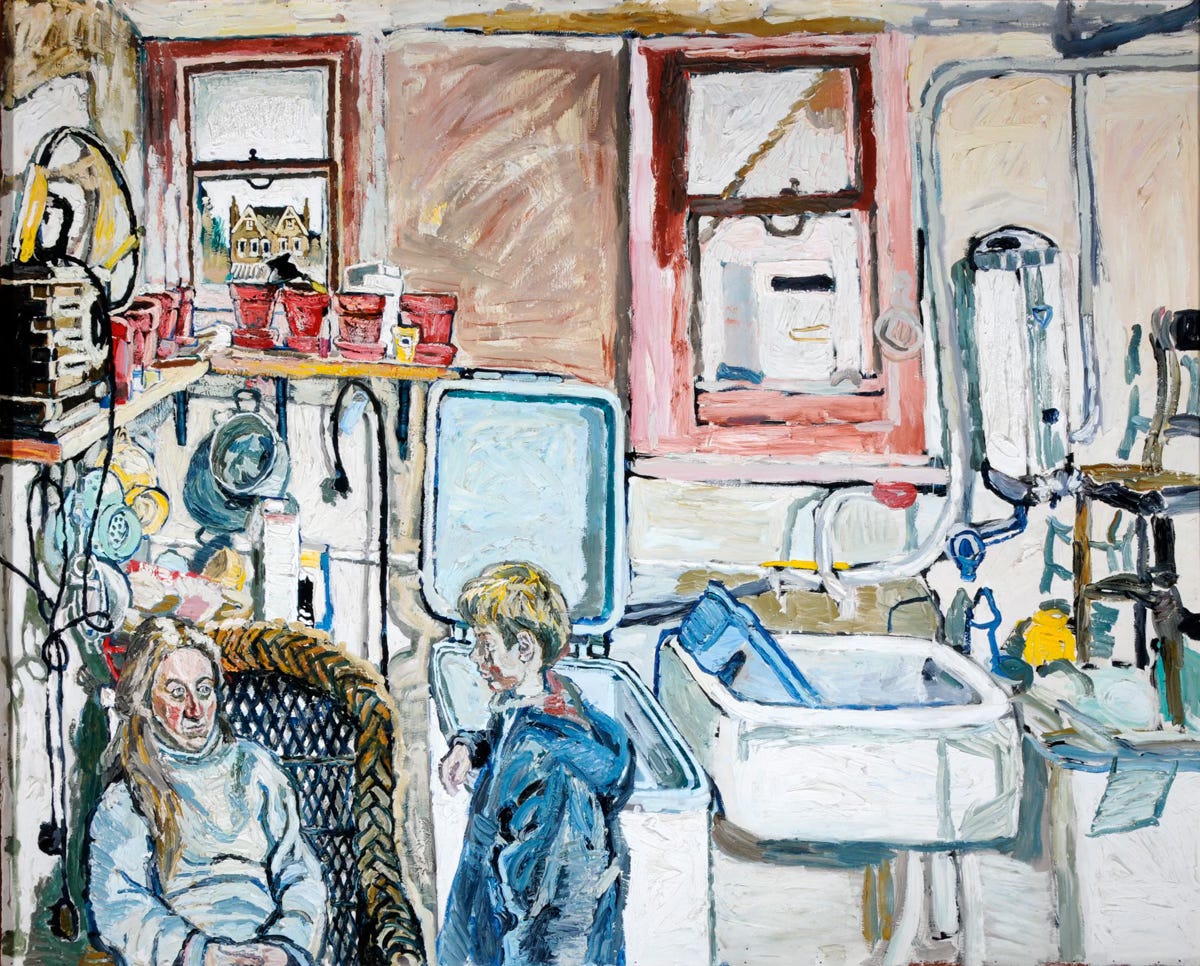
Art by John Randall Bratby (1928–1992).
The author used Claude (4.5) in October 2025 to provide a light copyedit of his talk notes. The author presented the following talk to a fireside in the New Haven Ward in the Tulsa Oklahoma Stake in September 2025.