


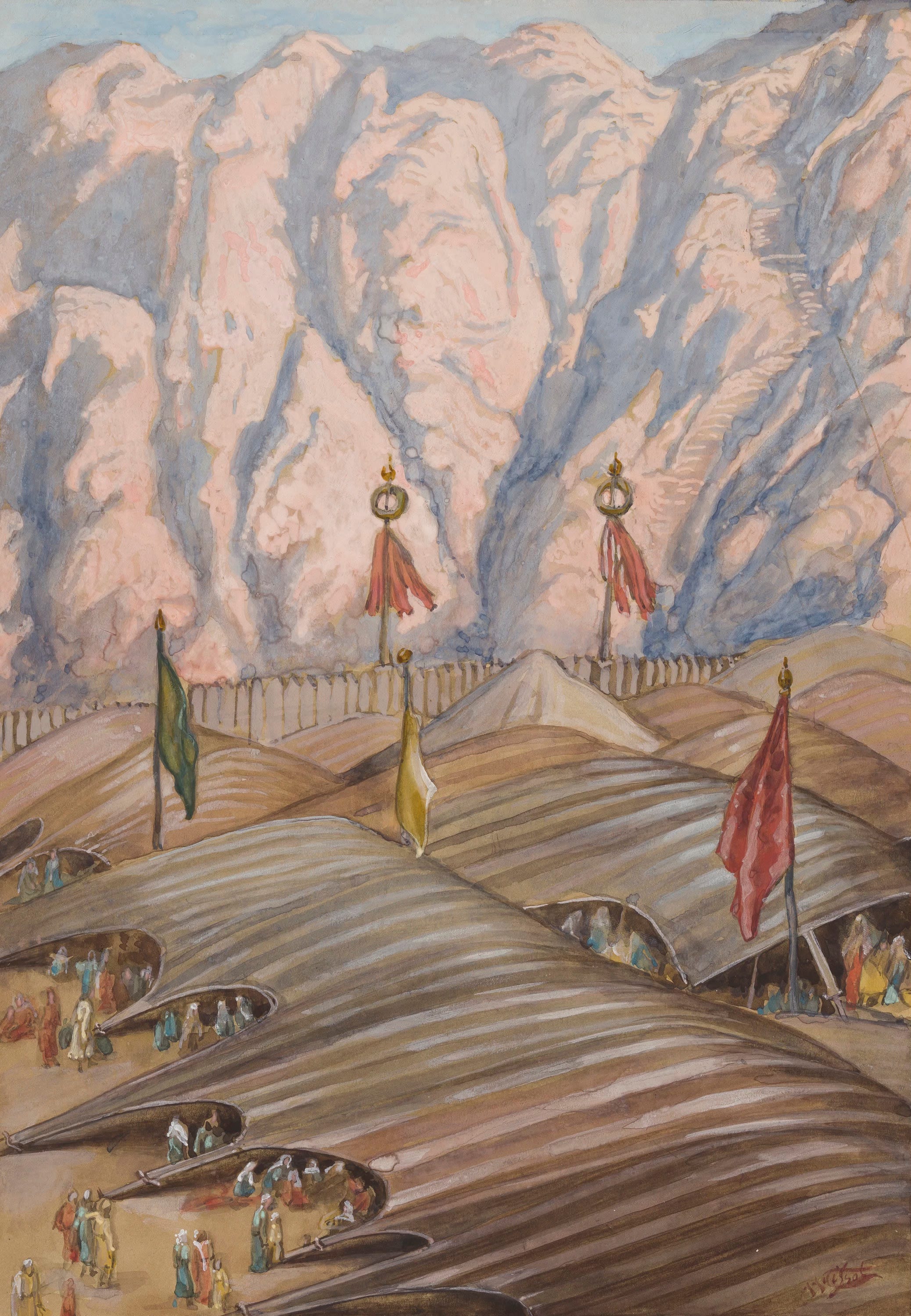
The Hebrew name for the book of Numbers, bamidbar, literally means “in the wilderness.” This seems a fitting title; the book contains tales of desolate places and desperate situations. The wandering Israelites find themselves hungry for cucumbers and leeks and meat, dying of thirst in the desert, surrounded by towering antagonists and fiery serpents, and in danger of being cursed by a professional pagan soothsayer. Death lurks around every turn. But abundance and anguish walk hand-in-hand through this wilderness. Miracles blossom wherever these weary souls turn. The wilderness is a place of great suffering and great love.
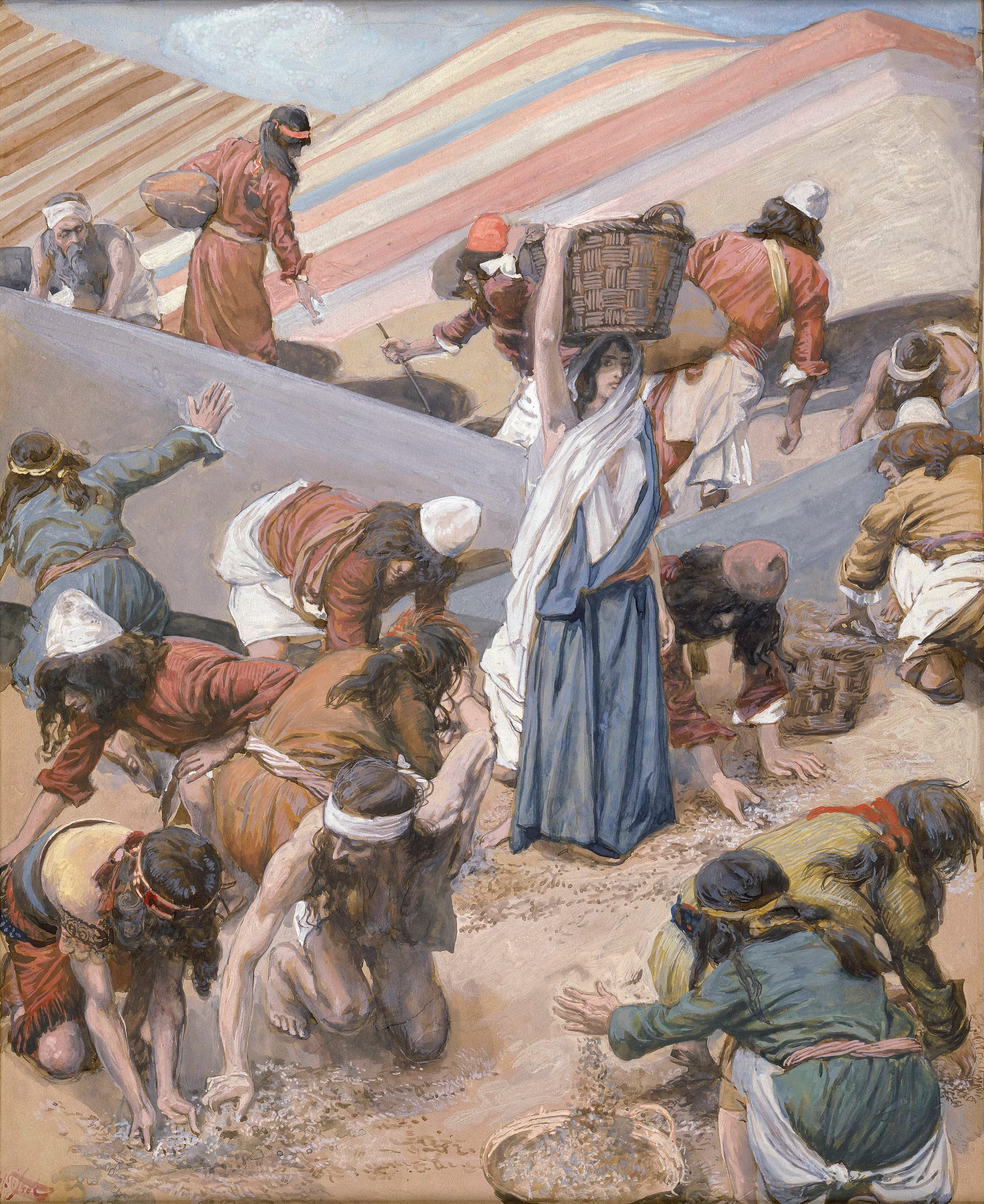
Sometimes the grace of the desert is merely sufficient. God rains down daily bread—enough to sustain us when we put in the unremitting work of gathering. At some point, every disciple will know the weariness of daily seeking, the feeling of hungering for a meager sufficiency of grace—enough patience or love or strength or hope or peace—to sustain us through one more moment of the exhausting spiritual, physical, and relational wildernesses of our lives. So it makes sense when the Israelites begin to murmur, “Who shall give us flesh to eat? . . . Now our soul is dried away: there is nothing at all, beside this manna, before our eyes” (Numbers 11:4, 6, KJV). They ask God, in essence, “Can’t you offer anything better than this honey-flavored miracle bread from heaven? Where are the fish, the melons, and the garlic we loved when we were slaves in Egypt? Can’t we catch a break from the dailiness and ordinariness of seeking sustenance?” (see v. 5). Even Moses gets so weary of the complaints of his people and the arduous relentlessness of leading them, that he asks God to let him die (vv. 11–15). We will all experience such moments of despair, hunger, and lament.
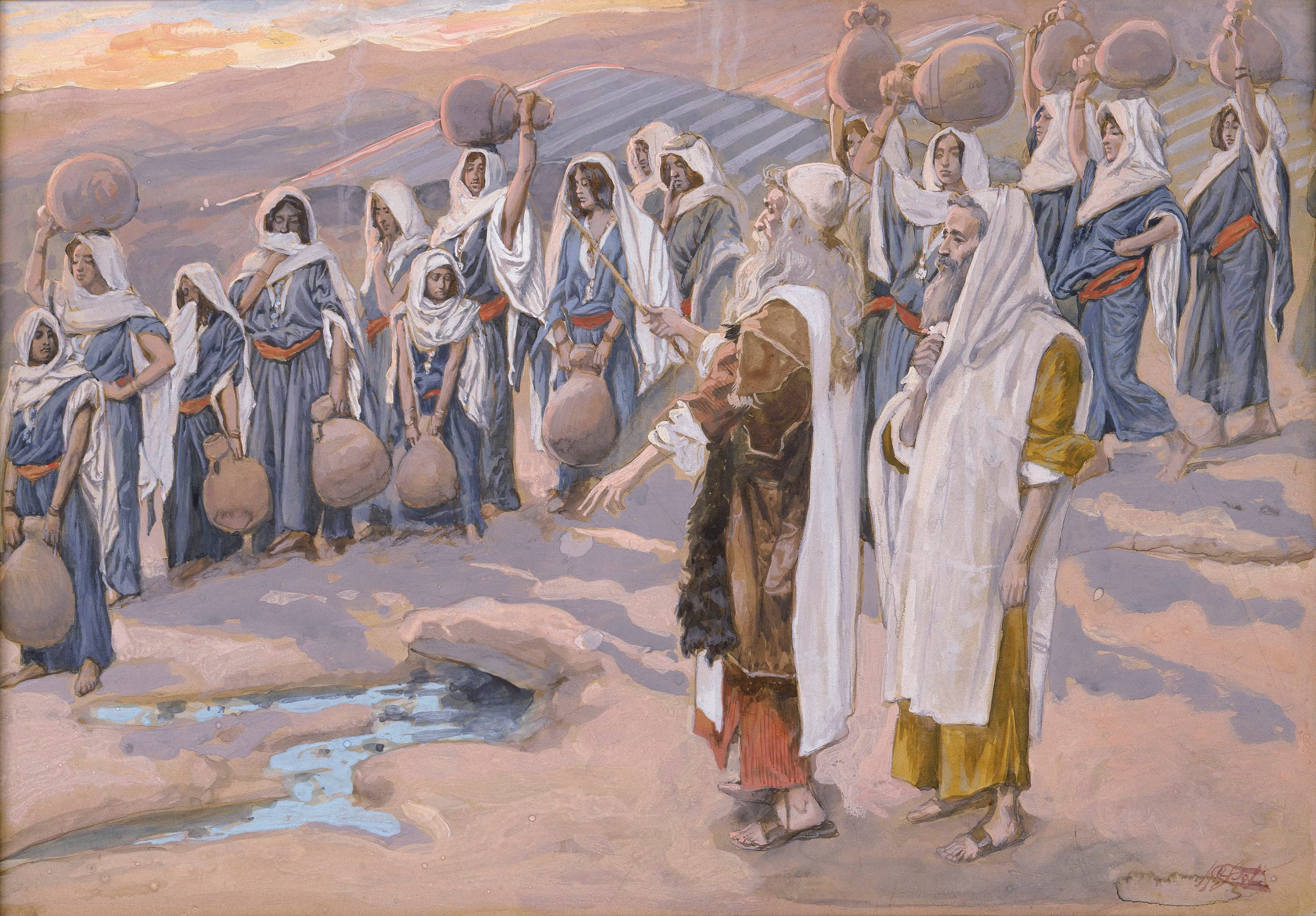
But God responds with abundant generosity. Quail drop from the sky in heaps three feet high as far as the eye can see (Numbers 11:31). The guy who gathers least—let’s call him Levi—gathers ten homers-worth of the meat (v. 32). This is over fifty bushels-full—about 3,000 pounds of quail—for the loser of the meat-gathering contest. Who could carry such a burden of blessings? It turns out God’s hand is not shortened at all (vv. 21–23). The God who walks with us through the wilderness overspills with open-handedness. When the dust-throated people complain of thirst, Moses smites the rock “and the water came out abundantly” (Numbers 20:11, emphasis added). We could imagine a mere trickle, but that wouldn’t account for the use of that word, “abundantly.” This was more than enough to quench the thirst of the dirt-encrusted Israelites. The Psalmist remembers how God “brought streams . . . out of the rock, and caused waters to run down like rivers” (Psalm 78:16). One can envisage the young Israelites splashing in this life-giving liquid, the desert sand turning to mud. This was grace you could wade in, swim in, drown in. Sometimes we receive grace sufficient for the day; other times abundance overflows our nostrils (see Numbers 11:20).
Granted, the abundance that meets the Israelites’ need also meets their greed in the story of the quail, and a plague breaks out among the people. The text says that by this plague, “the Lord smote the people” (Numbers 11:33). It’s easy to delight in the God of profuse mercy in these stories, but perhaps the most difficult parts of the narratives for modern readers are the relentless assertions of God’s destructive wrath which kindles like a devouring fire in response to the people’s rebellion. Of course, as Elder Renlund has asserted, ascribing these actions to God may be merely a matter of rhetoric. He teaches, “In the scriptures, getting off the path [to God and joy] is referred to as sin, and the resultant decrease in happiness and forfeited blessings is called punishment. In this sense, God is not punishing us; punishment is a consequence of our own choices, not His” (emphasis added). Perhaps God is acknowledged as the cause of this suffering because God oversees the mortal experience, allowing us to navigate a world that can be both harsh and holy, where our dance is always accompanied by darkness.
And it feels important to keep in mind what these stories were doing for the people who told and retold them, who passed them down to their children and gave them space inside their lives. The narratives sought to shape the souls of listeners, to articulate the ways of holiness, gladness, and peace, and alternately to expose the paths that lead to devastation and destruction. For the ancient Israelites, it seems, murmuring amid the miraculous proves especially deadening to the life of the soul. A certain leprosy of the spirit accompanies my complaining. This can only be healed by God’s generous responsiveness (see Numbers chapter 12). One translator renders the words of the Persian mystical poet Hafiz thus: “Complaint is only possible while living in the suburbs of God.” When I sense that my life with all its tragedies and trials is simultaneously the habitation of the divine, the place where I can meet and praise God, I can perceive and delight in the radiance of this mortal experience.
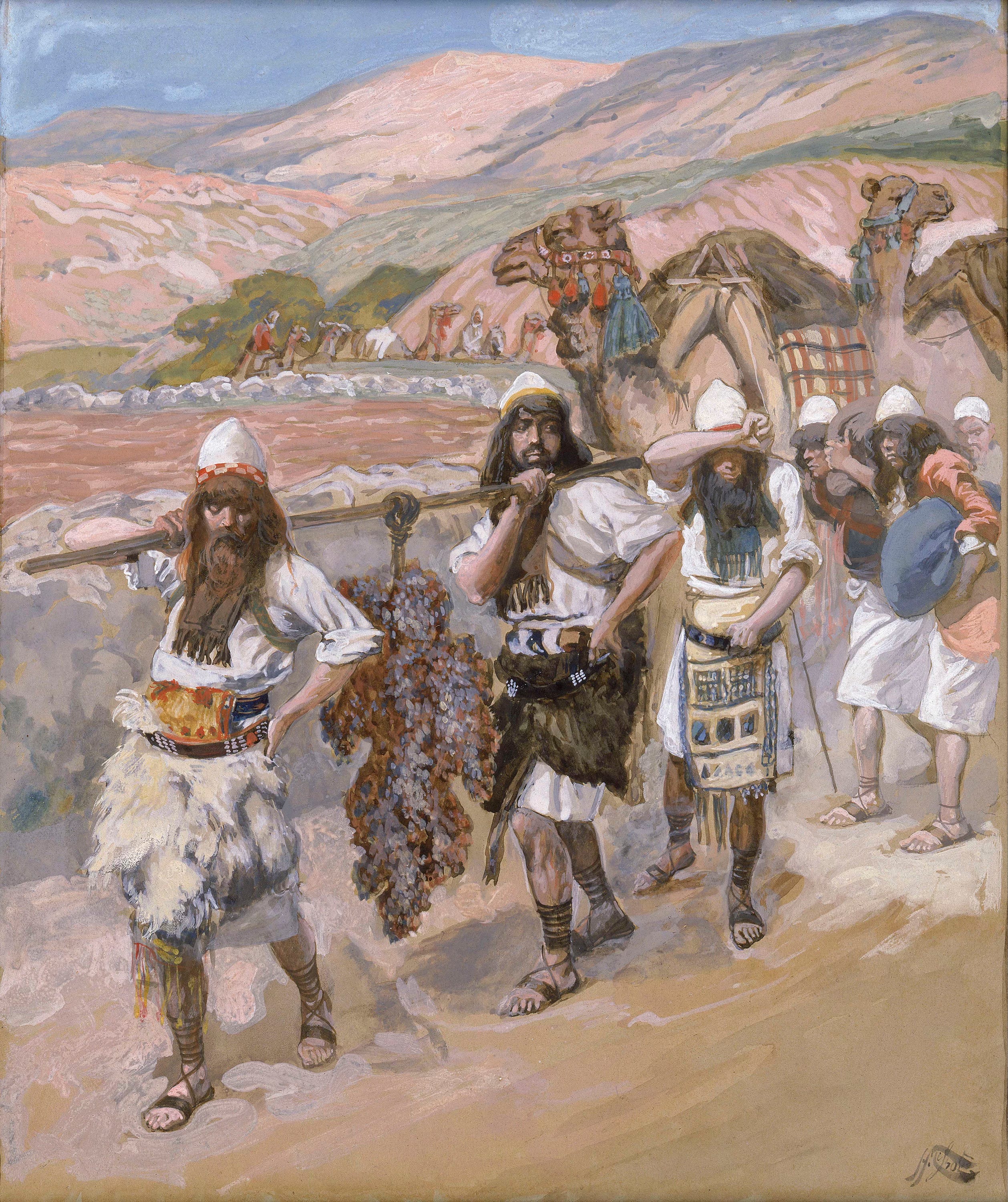
The story of the twelve spies highlights the significance of what we choose to emphasize in a world where mysterious beauty mingles with mystifying brutality. A man from each tribe enters Canaan to assess the promised land. Despite the fact that the scouts return with a single cluster of grapes so extravagantly large that it takes two men together to carry it on a staff—manifesting the lavish goodness of the land—ten of the men return with “an evil report” (Numbers 13:32). They don’t seem to care that the place flows with milk and honey; they are terrified of the gigantic inhabitants who make them seem like grasshoppers in comparison (vv. 27, 33). Fear eclipses hope. Their report causes grief, lament, and the kind of terrified and violent response that often accompanies the despair that comes from blindness to the numinous realities of existence. The people want to take up stones to kill Caleb and Joshua because they assert that the land “is an exceeding[ly] good land” and affirm, “the Lord is with us: fear . . . not” (Numbers 14:7, 9). Because of this experience, this band of recently emancipated slaves will wander the wilderness for forty years before their children will inherit the promised land. They did not wander because they could not find Canaan. They had been on its borders but could not perceive its beauties. Unless we can recognize the miraculous nature of the world right in front of us, we will never inherit the promised land we already inhabit. As Episcopal priest Cynthia Bourgeault notes, “The Kingdom of Heaven [or, for our purposes, the promised land] is really a metaphor for a state of consciousness; it is not a place you go to, but a place you come from. It is a whole new way of looking at the world, a transformed awareness that literally turns this world into a different place.” Will we praise the world we have and inherit our souls, or will we wander in fearful blindness to the ever-present effulgence of existence?
We will be bitten by the poisonous serpents of mortality, but the Christ who suffers with us offers us healing through a glance (Numbers 21:5–9). Where we fix our gaze will determine our thriving. If we are blind to the angels in our path, we will be tempted to curse this life and the people that God has placed before us (Numbers 22:21–35). But when we see with open eyes that “it please[s] the Lord to bless Israel” (Numbers 24:1), we can sing songs of hope, can live in wondrous awe, can shout praises to the God who is light and shadow in the wilderness. I believe that “the Lord [does] delight in us” and has brought us “into this land” and that it is indeed “a land which floweth with milk and honey” (Numbers 14:8).
Robbie Taggart is a teacher and poet who delights in the holiness of the everyday.
Art by James Jacques Joseph Tissot (1836–1902).
The Old Testament Reflections series is published in collaboration with the Maxwell Institute: https://mi.byu.edu/old-testament-reflections.
Thank you for reading Wayfare Theology. If you no longer wish to receive these items in your inbox, click manage subscription under your profile and turn off notifications for this section.


