


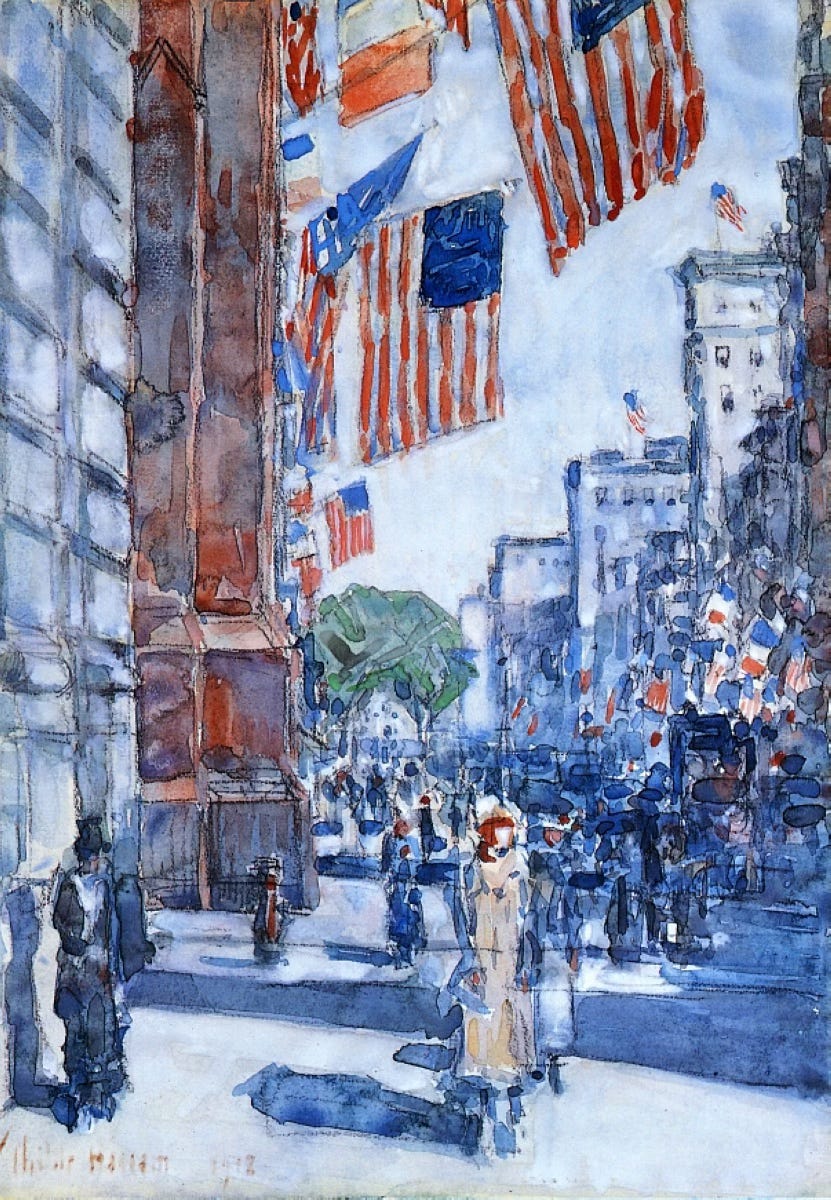
I am honored, humbled, and more than a bit nervous to speak on the 250th anniversary—the semiquincentennial—of the United States of America, at a moment of national celebration and sober reflection. Taking the pulpit to talk about civics in an age where even Mister Rogers can spark partisan snipings . . . well, I plead for your prayers that today we might hear and speak with the spirit of the free, the brave, and the holy at once. Namely, I’m going to make four points: (1) the USA is a great country; (2) patriotism, properly understood through goodness not greatness, is a deep virtue; (3) civics and public life make up a “sacred secular” we should serve; and (4) the Fall in Eden has a lesson about the US Constitution.
But first, what’s in a flag? I remember as a five year old making a US-flag birthday cake with my Mom. We used strawberries for the red stripes, whipped cream for the white stripes, and blueberries for the stars. The USA was delicious and fun, I thought (I know my flag code well enough now to have my doubts about flag cakes). My flag enthusiasm soon hit a self-imposed speedbump: A couple months later in my international kindergarten art class, each student was assigned to paint the flag of their nation of origin on a large canvas. Slowly it dawned on me that, without my mom there to help me, the US flag is surprisingly complicated—thirteen stripes and then fifty stars! After seeing another flag (all white with one red circle) that my friend Kenji was drawing, I appealed to my teacher, might I not have some ancient Japanese ancestry? Ms. Kate smiled and told me “no.” Instead, I toiled to paint the US flag, eventually felt good about my work, and learned a lesson from the flag that sticks with me today: Countries, like flags, are about more than delicious cake and celebrations. In helping to tell us who we are, they involve complexities, require work, and help us grow up a bit.
Fast forward about fifteen years, I was walking through my first area in provincial Russia as a missionary, white shirt and tie, with Book of Mormon in hand. The events depicted in The Saratov Approach took place in exactly my first area one month earlier. I quickly learned that whenever Russian young men dressed in Adidas track suits gathered in groups greater than three, one of them would surely holler at us from across the street: “khey, Amerikan bois!” I remember thinking “well, yeah, that’s true enough; I am an American boy, although my companion is German, and our common language is broken Russian.” As Lord Acton put it, exile is the mother of nationality. I have never felt more American than in provincial Russia.
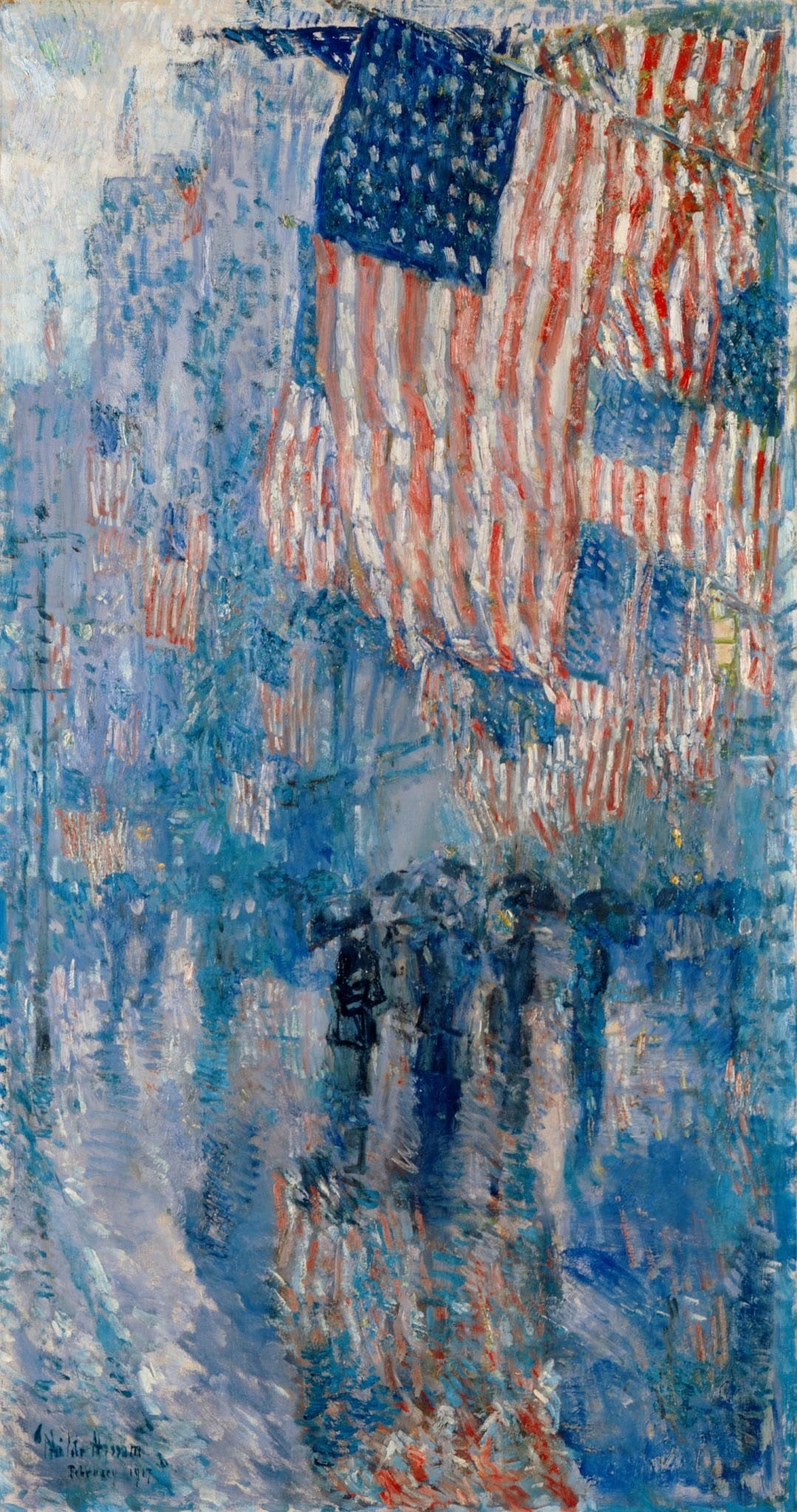
1. Great is a Given
Today, Sunday, June 28th, sits midway between Juneteenth and the 4th of July 2026. Today we celebrate the two founding Moses moments of our country: the day the Emancipation Proclamation finally reached the last enslaved people on June 19, 1865, 161 years ago, and the day the founders signed the Declaration of Independence on July 4, 1776, 250 years ago--or the two days the United States threw off Pharaoh’s two greatest sins: slavery and monarchy. May such independence stretch ever into the future!
Since then, the United States has risen to become an indisputably great country. It would feel silly to imply otherwise. Consider: the USA is great in landmass, great in population, great in economic impact, great in diversity enriched by immigrants from around the world. (As the Moses moments make clear, even its sins are great.) The USA has also enlarged the world’s political imagination by proving for the first time that large-scale republican constitutional democracy is possible, even desirable. Our prophet and constitutional scholar President Oaks remarked, “God revealed that He ‘established’ the Constitution ‘for the rights and protection of all flesh.” For all flesh indeed! The Bill of Rights and the Constitution are for more than the US; they have helped shape divinely inspired templates for the universal rights of all people. As many as 180 countries have since drawn from, and even improved upon, our documents (a fact we should celebrate on behalf of our brothers and sisters everywhere). “Without a Bill of Rights,” President Oaks adds, “America could not have served as the host nation for the Restoration of the gospel, which began just three decades later.” In the twentieth century, the US intervened to help the Allies stop the mundane evils and monstrous designs of Nazism and Japanese imperialism, then helped generously rebuild Europe through the Marshall Plan and Asia through similar programs. Leading US research universities have pioneered life-improving breakthroughs: vaccines that stopped polio, astronauts that walked on the moon, computers that changed everything. And don’t forget jazz: a great and uniquely American gift to the world. None of these gifts can be returned. Our greatness is guaranteed. The USA has long had much greatness about it.
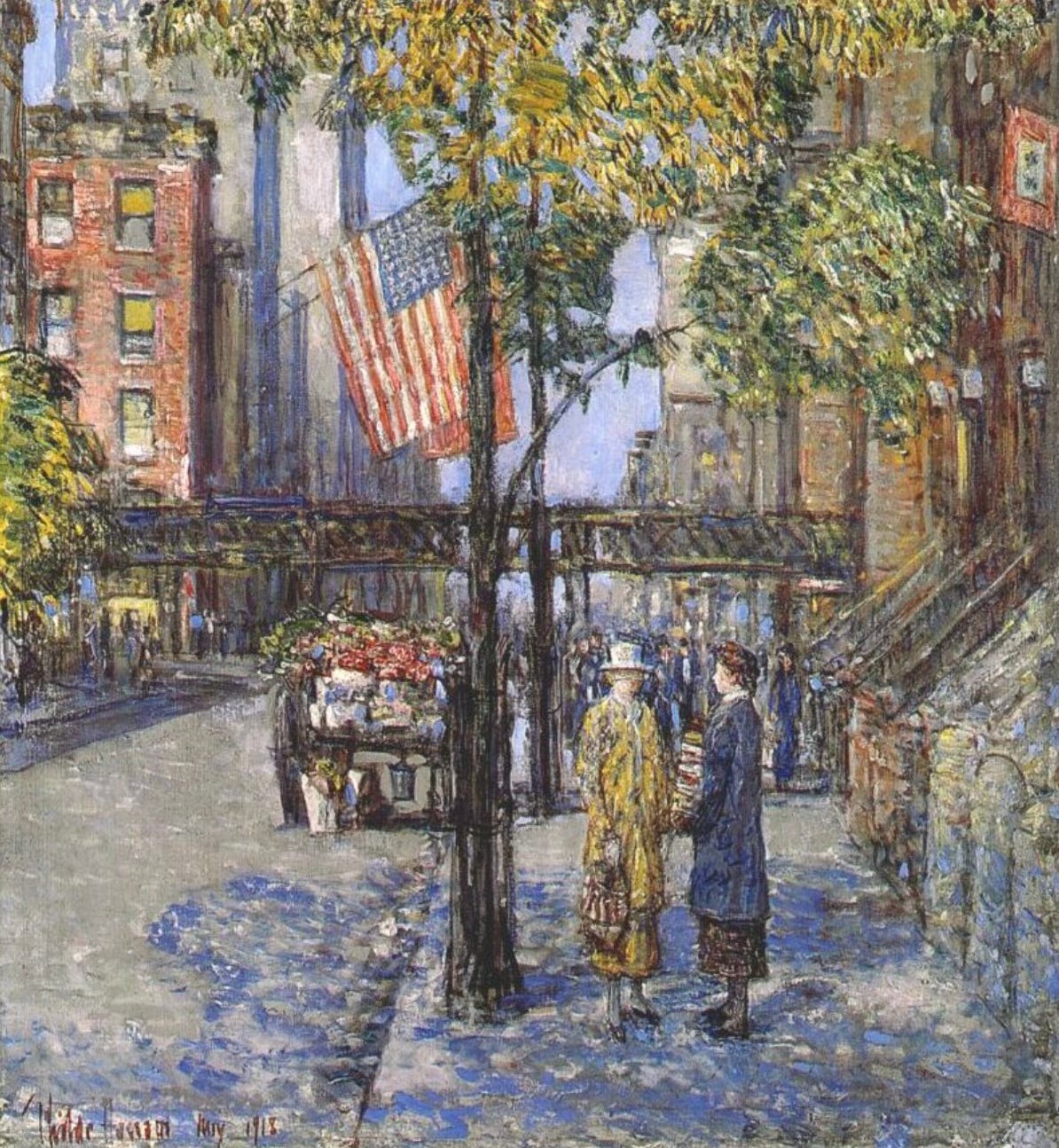
II. Good Patriots, not Great Nationalists
The 250th anniversary invites us to remember what the Constitution actually gave us: not a nation of blood and soil but a divine theory of plural goodness—a framework designed, as Madison wrote in Federalist 51, to protect minorities and pursue justice as “the end of government” and “the end of civil society.” That theory still awaits its full practice. Our task as dual citizens—of this republic and of the Restored Gospel—is to close that gap.
This is why I distinguish flag-waving patriotism from flag-wrapped nationalism sharply, and why Jesus Christ recognized the first (the dignity of kin and people) while teaching meekness before the powers of empire. Patriotism is the love of a people enough to see them clearly, lift them together, and hold the country to its founding promises. Nationalism is something else: It starts with something good, the love of kin, but then nationalism mistakenly generalizes that local good and tribal decoration for a divine mandate. It elevates blood and soil over covenant; nationalism says to live for and die by blood while the restored Gospel says, because the resurrected Christ lives, we all too may live on the covenant path. Curiously, wherever I have encountered nationalisms in our seven years abroad, in Russia, Ukraine, Turkey, Germany, and the United States—it sounds exactly the same. Each nationalist tradition claims its own unique ethno-supremacy, and in doing so, they all sound alike. Patriotism is hard and particular; nationalism is as dull as it is dangerous, and both its root and its fruit is war.
The Latin nacio—birth, natal origin—gives us a key. There is only one human family of common birth—spirit children of the same Heavenly Parents. That fact leaves no room for the Rameumpton myth that any one nation is supreme. Where nationalism peaks at the top of the pride cycle, patriotism begins at the bottom in the hope and hard work that follows repentance. The 250th anniversary invites us to ask: Where is our nation in that cycle? Where is our community? Where are our loved ones? Where am I? What can I do better?
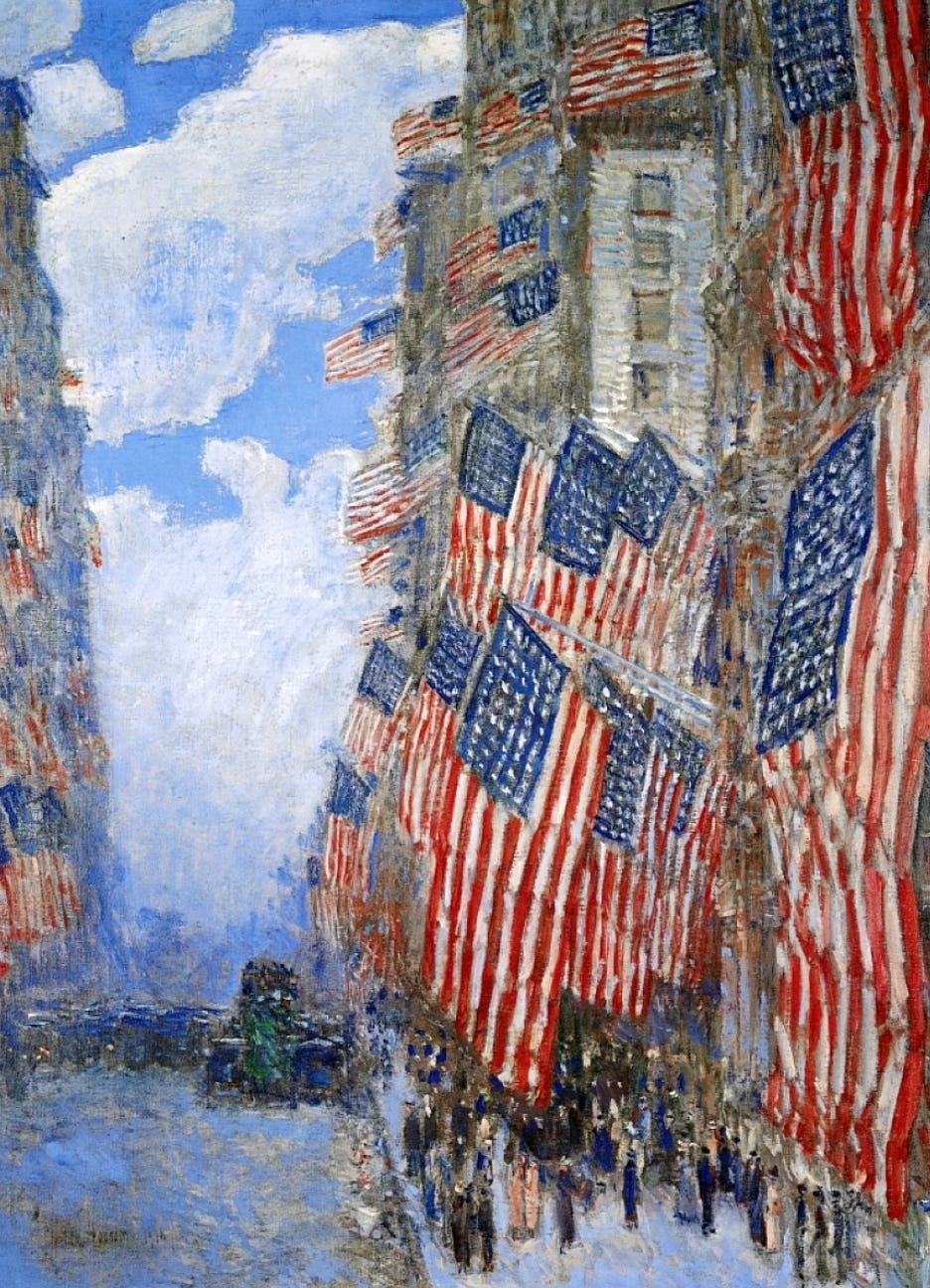
III. The Sacred Secular of Public Life
The US Constitution is a covenant to the oppressed and the excluded—and members of the Church have known exactly what that means. The divinity of the constitution lies precisely in that it protects the Biblical “least of these” while establishing protections for the rights of all sorts of minorities, including religious minorities. The founders invoked our Creator but never named a specific Church—and for good reason. Our faith had to be restored in a country first committed to protecting religious freedom, separating church from state, and sustaining what I call the “sacred secular” of public life below. In short, we live in a society made up of many minorities, a plural society: a plural society requires living with compromises. Our constitution, covenants, and status model precisely such the blessed compromises of our being a minority.
Our faith’s history is a history of protecting minority traditions from the “tyranny of the majority.” Consider the scriptures: The Old Testament is written by nomads surviving between neighboring empires; the New Testament, by a few followers of Christ fed to lions for Roman entertainment; the Book of Mormon, by minority groups eventually exterminated by majorities; and the Doctrine & Covenants touches on the decades of violence and then pariah status early Latter-day Saints faced before the United States in the nineteenth century. Ranging from the Lord giving Abraham “a land wherein thou art a stranger” to a Quorum of Twelve Apostles today with five or six origins of nationality, our whole history is a history of minorities in need of protection all the way up to heaven--and after that too!
Remember, as LDS historian Paul Reeve makes clear, early Saints of European background, alongside the Italians, Irish, and Poles, were not considered “white” in the very decades the USA was tearing itself apart over its greatest early sin: the enslavement of our Black brothers and sisters. May we lead with solidarity: we all have once known what it means to need, and not receive, the constitutional protections for minorities; what it means to need, and not yet taste, that Moses moment of freedom from oppression. Let us not turn away from the gaps between constitutional theory and practice: insofar as hardship teaches us how to treat others, may they teach us how do so and become saints together.
President Oaks stresses, “Minority religions are especially dependent upon a constitutional guarantee of free exercise of religion. We are fortunate to have such a guarantee in the United States. The importance of that guarantee should make us ever diligent to defend it.” Now, with almost two hundred years of growth, our faith today remains (blessedly, I might add) a religious minority in nearly every country, including this one. Protecting minorities is at once the most American and Latter-day Saint thing. It just is the right thing to do. (Paraphrasing a dear friend’s grandfather, we often now tell our children, “Do the right thing for the best reason you can think of, and if you can’t think of any, do it anyway.”) For not long ago, our faith was an oppressed minority. Who else can stop the cycle of former minorities oppressing current minorities except former oppressed minorities?
Consider a few other faces of this sacred compromise: what McKay Coppins calls the “most American religion”—The Church of Jesus Christ of Latter-day Saints—is populated in its first decades, as well as increasingly in the last few decades, by people outside of the USA, especially Europe, then Latin America, and now Africa. Like many of you, I stand before you today as a sixth-generation US patriot because I am first a seventh-generation Latter-day Saint with more countries of ancestral origin than generations in that period. We all come from immigrants and wanderers. Even David’s grandmother was a Moabite, Ruth. Each of us is plural through and through.
A wise commentator recently publicly praised what a General Authority taught at BYU, writing, “one of the senior leaders of the Church had told the entire student body—twenty-plus thousand—that their mission is peacemaking: civic peacemaking. This is an example of how a church can be very demanding, very counter-cultural, and asks a lot of its supporters—and yet not go down the road of fear. It’s going down the road of pluralism and compromise.” I pray we realize those demands together by love and solidarity, not fear or violence.
IV. The Fall and the US Constitution
We can learn something about the US Constitution from the Fall in Genesis. Borrowing from and paraphrasing Jonathan Rauch’s book here and Wayfare essay here, both are founding creation stories that begin with sacred compromises. Both point us, in an LDS reading, not downward from a state of innocence but forward into a space of sacred compromises, covenants, and sweat, toil, and engaged citizenship toward others. Both mark the beginning of the maturation of a people, reminding us that our government and public life will be only as good as its people. Under the US Constitution, we continue the wisdom of Eve and Adam in making complex, complicated choices in civics and conscience.
Madison sees this fallen yet divine compromise clearly, writing, “If men were angels, no government would be necessary. If angels were to govern men, neither external nor internal controls on government would be necessary. In framing a government which is to be administered by men over men, the great difficulty lies in this: you must first enable the government to control the governed; and in the next place oblige it to control itself.”
The last 250 years required what the next 250 years will as well: the post-Eden sweat and tears of parents and children serving and growing, living and learning together in local communities and growing global families. The Savior cannot save us from ourselves. There’s no magic solve-all. As we learn in the temple, the Savior saves us through one another—our covenants, commitments, communities, and even our sacred secular compromises to love, work, and build heaven on earth, here and now. Here and now are the real politics we all must act on. Our constitution and covenants alike remind us of a timely truth: The only way we get out of this mortal mess is through it, together, with eyes and hands wide open, anchored in Jesus Christ to serve the real needs of every person here and now.
The sacred secular invites us to do other next right things too: jury duty, paying taxes, and of course informed voting, all this and more baked into the twin divine right and responsibility of “we the people” to act for ourselves. No rights without responsibilities; no authority without consent. The 11th article of faith is one of our subtle superpowers: each of us must be able to make decisions according to the dictates of our own judgment and conscience. In these articles of faith, we have no less than, the commentator continues, “a fully formed, coherent scriptural foundation for Madisonian pluralism.”
My personal prayer is that all those eligible to vote run with the 11th Article to the secret ballot booths: the First Presidency itself has recently cautioned, “Merely voting a straight ticket or voting based on tradition without careful study of the candidates and their positions on important issues is a threat to democracy and inconsistent with revealed principles.” In democracies abroad, our brothers and sisters often weigh the vote compromises amid five or more parties; I am confident all compatriots here can manage to vote in conscience for more than one. May our votes be moved by careful learning, study, and conscience, never constrained by party; that goes double for those who serve in public office. When they fall short, replace them at the ballot box. Heck, run for office to replace them. And if that doesn’t work, reform the election laws until you—and I’m thinking of, say, any of the Relief Society or Primary leaders I’ve known in our ward—can run for office and win. A sacred secular Zion suddenly sounds more feasible to me!
Jury duty, paying taxes, informed voting. Behold practical constitutional patriotism.
V. The Jubilee Call
We are now a quarter millennium into our country’s history. What call shall we issue in its honor, except to continue the perpetual struggle for fuller liberty and equality for all? In that spirit may we solemnly declare this 250th anniversary an ongoing jubilee, a return to our Moses moments, to abandon all oppression in all of its forms: wherever the hydra heads of cruelty and poverty, sickness and racism, bigotry and braggadocio bear their teeth, may free and fair people everywhere meet them with sevenfold increase in kindness and service, justice and discernment, care and the very civic sobriety necessary to build heaven on earth at home, in every community and clime. What awaits a better future is no hero, no mythological escape hatch but hard work, sobriety, and action with a conscience: PTOs. Neighborly gatherings. Reading, not watching, the news. (Not too much. Pay for it. If paying for the news is not an option, the Associated Press and Reuters make money by syndicating documented facts, not selling our attention.) I believe firmly in such practical politics, the story of six generations of practical people before us, and I’m honored to help retell that story forward today.
It’s now forty years since I learned a lesson in kindergarten about the reality and complexity of our beautiful red, white, and blue flag. The flag, in its full dignity not idolatry, has never waved as beautifully to me as today. It’s been twenty-five years since that “Amerikan boi” first saw my own origins anew in provincial Russia. How will I see that legacy in another twenty-five years, when my adult civic life is mostly spent: how will each of us have served our country and the world? I pray that, in 250 years from now, on the half millennium of our country’s independence, the Lord will find the United States of America full of patriots, not nationalists, seeking goodness before greatness, bound together in a constitutional patriotism and pluralism, fulfilling sacred secular compromises of covenant and constitution to build Zion for all.
For ours is a vision for all. As Elder Bednar notes, borrowing from J. Reuben Clark, Zion is built by and for all of us little people too—not just the Brigham Youngs or the Eliza R. Snows on the pioneer trail—but what Clark calls “They of the Last Wagon”: I add my testimony to Elder Clark’s conviction: “To these humble souls, great in faith, great in work, great in righteous living, great in fashioning our priceless heritage, I humbly render my love, my respect, my reverent homage.” Now this is the greatness I seek.
May God bless the United States of America. May we become that blessing to others by how we live. On the 250th, I wish you all a delicious piece of cake.

This essay is a lightly-edited text of a sacrament meeting talk given on the 250th anniversary of the USA in the New Haven Ward in Tulsa Stake, Oklahoma on June 28th, 2026.
Benjamin Peters is an editor-at-large for Wayfare.
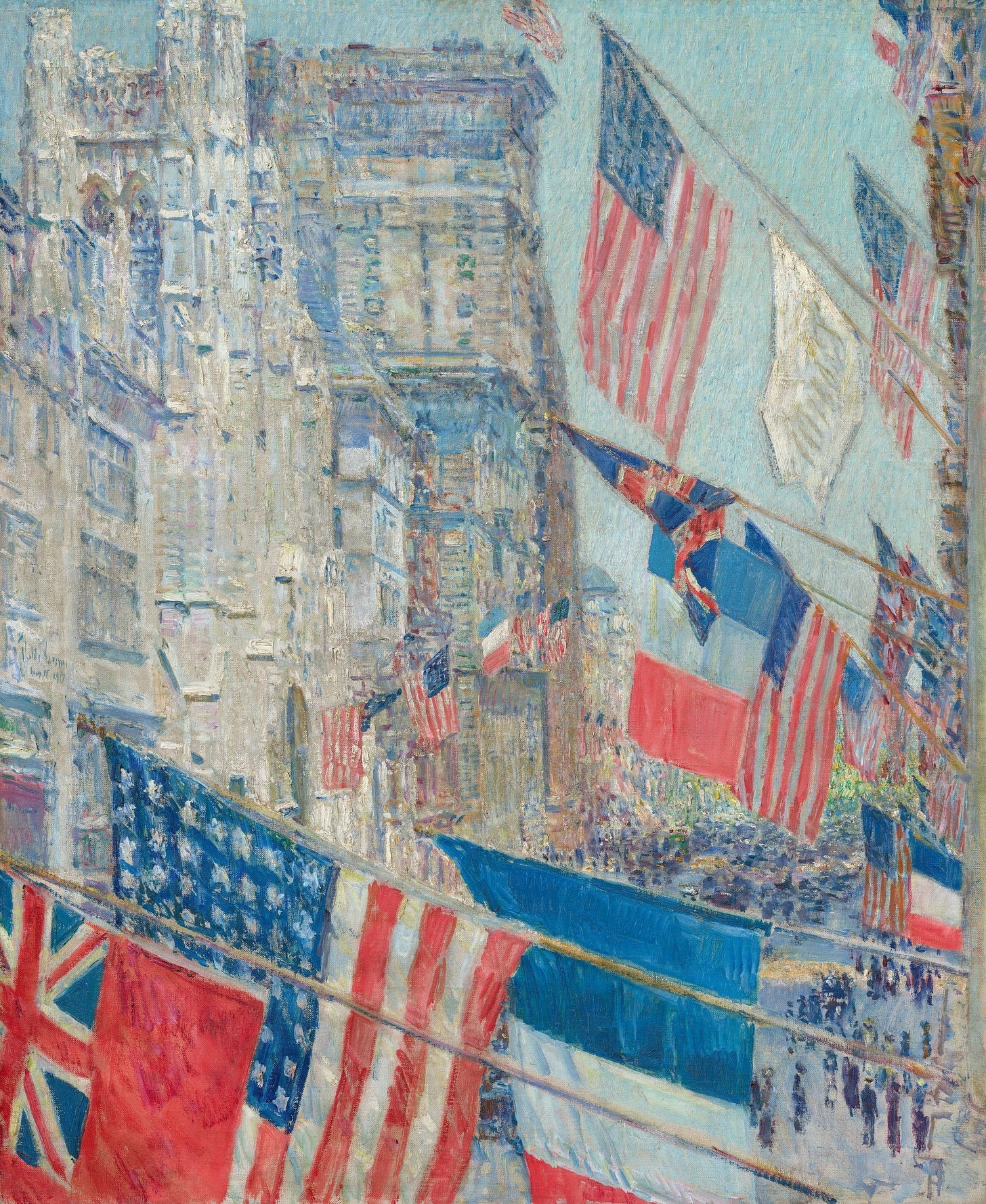
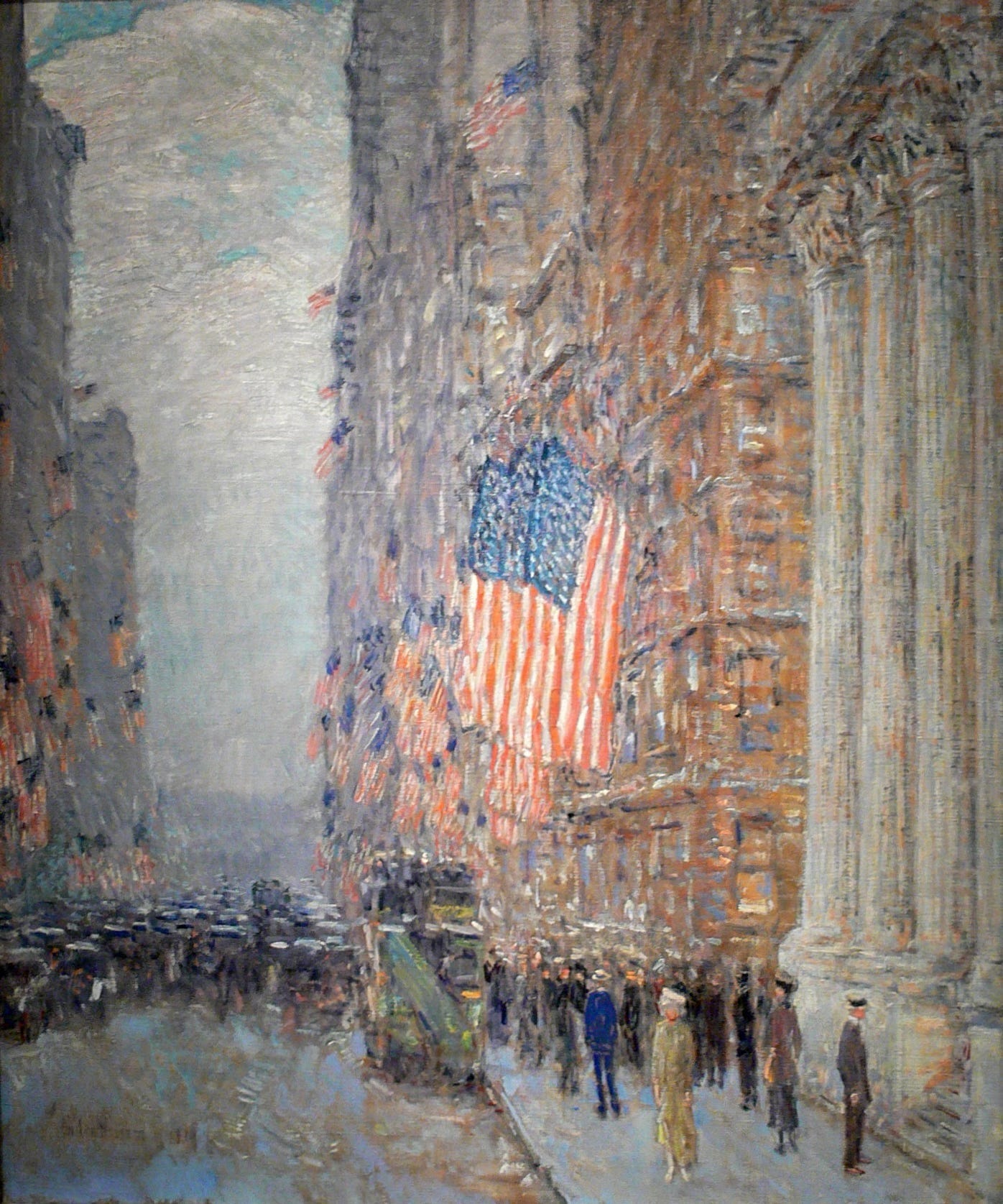
Art by Childe Hassam (1859–1935).