


In The Church of Jesus Christ of Latter-day Saints, we spend a lot of time talking about covenants. We speak of the covenant with our first parents, with Enoch, and especially the covenant with Abraham and Sarah. In the book of Exodus, we find a record of the first covenant that God made with Israel as a whole people. Occasionally overlooked and often misunderstood, the Sinai Covenant is the covenant that the biblical authors are most concerned with. We usually call this covenant the law of Moses. Although the law of Moses can sometimes have a negative reputation among members of the Church (and broader Christianity), this is an unfortunate characterization of the primary way in which Jehovah interacted with his children for centuries.
Back in Exodus 6, as the Lord began the process that would culminate at Mount Sinai, he told Moses what he wanted for Israel: “And I will take you to me for a people, and I will be to you a God: and ye shall know that I am the Lord your God, which bringeth you out from under the burdens of the Egyptians” (Exodus 6:7, KJV). Fundamentally, this is the Old Testament idea of God’s relationship with Israel. Israel is to be Jehovah’s people, and he is their God. All of the commandments, regulations, and covenants that the Lord gave to his people in the scriptures were in service to this bond. When Deuteronomy commands Israel to “love God” (see Deuteronomy 6:5), this love is essentially an expression of the deep relationship that God is forging with Israel.
Thus, when Jehovah brings the people to Mount Sinai and offers them a covenant relationship with him, he elaborates on his purpose behind giving Israel a covenant: “Ye have seen what I did unto the Egyptians, and how I bare you on eagles’ wings, and brought you unto myself. Now therefore, if ye will obey my voice indeed, and keep my covenant, then ye shall be a peculiar treasure unto me above all people: for all the earth is mine: And ye shall be unto me a kingdom of priests, and an holy nation” (Exodus 19:4–6). This, then, is the vision of the law of Moses and the Sinai Covenant: “a kingdom of priests, and an holy nation.” The law of Moses should not be understood as a bad law, given to bad people, but was instead a way for the Lord to help Israel, then and now, to become the kind of people that he wants them to be.
Even before Jehovah gives Israel a single commandment, the Israelites affirm, “All that the Lord has spoken we will do” (Exodus 19:8). Rather than describing a people who are wicked and rebellious, Exodus begins with the depiction of a people who are willing to do anything God asks them, even before they know what that is going to be. This is an act of tremendous faith on the part of the Israelites, as they choose to put their trust in a covenant relationship with Jehovah even before they know what the parameters of that bond are going to look like. A covenant with the Lord is not intended to be transactional, where we keep God’s commandments in order to get what we want. It is instead based on our trust in a divine Heavenly Father who wants us to be like him and has prepared a plan to that end. The covenants we make today are part of the plan, and so were the covenants in ancient Israel.
This perspective invites questions on what it means to be a “holy people” and a “kingdom of priests.” The laws in the law of Moses give a clue about this. As it is currently organized in our Bible, the first commandments in Jehovah’s covenant path are what we call the Ten Commandments. These commandments involve regulations about the proper ways to interact with God and proper ways to interact with other human beings. Note that Exodus puts the connection with God first and foremost: “Thou shalt have no other gods before me” (Exodus 20:3). This is followed by a command against images and idols. These commandments indicate that one of the most important aspects of humanity’s part in the covenant is our faithfulness to God.
This kind of enduring faithfulness is not something that we only feel for God when things are going the way we want them to go. Our covenant with the Lord and his relationship with us is not something we enter into simply to get blessings. God is trying to make his people into something holy, and sometimes that process can be painful. Because of our covenant trust in Jehovah we understand that his cosmic perspective is superior to our own mortal views. The ancient Jewish midrash on Exodus, Mekhilta de-Rabbi Ishmael, contains a beautiful expression of the kind of trust enjoined by our covenant connection. This text is a commentary on Exodus 20:20 by Rabbi Akiva, one of the most famous Jewish sages.
R. [Akiva] says: Ye Shall Not Do with Me [Ex. 20:20]. Ye shall not behave towards Me in the manner in which others behave toward their deities. When good comes to them they honor their gods. . . . But when evil comes to them they curse their gods. . . . But ye, if I bring good upon you, give ye thanks, and when I bring suffering upon you, give ye thanks.1
This is not always easy to do, but it is no mistake that trust in God is at the foundation of the covenant path and the beginning of the doctrine of Christ. Sometimes we try to turn something else into Jehovah, like ancient Israel did with the golden calf, but one of the lessons of the revelation on Mt. Sinai is for us to let God be who he really is, rather than who we want or imagine God to be.
Thus, one of the primary purposes of the scriptures is to show us that God is a being in whom we can trust. For the ancient Israelites, the primary saving event was the rescue from Egyptian bondage. We see in Exodus 19 and 20 Jehovah pointing to bringing Israel out with a mighty hand. For us, the primary saving event is the redemption and resurrection of Jesus Christ. We participate weekly in the sacrament of the Lord’s Supper so that we can “always remember” what God has done for us. Remembering and focusing on these events and the covenants associated with them help us to appreciate the ways in which God is helping his children become a “kingdom of priests, and an holy nation.”
Avram R. Shannon earned a BA in ancient Near Eastern studies from Brigham Young University (2007), a master of studies in Jewish studies from the University of Oxford (2008), and a PhD in Near Eastern languages and cultures with a graduate interdisciplinary specialization in religions of the ancient Mediterranean from The Ohio State University (2015).
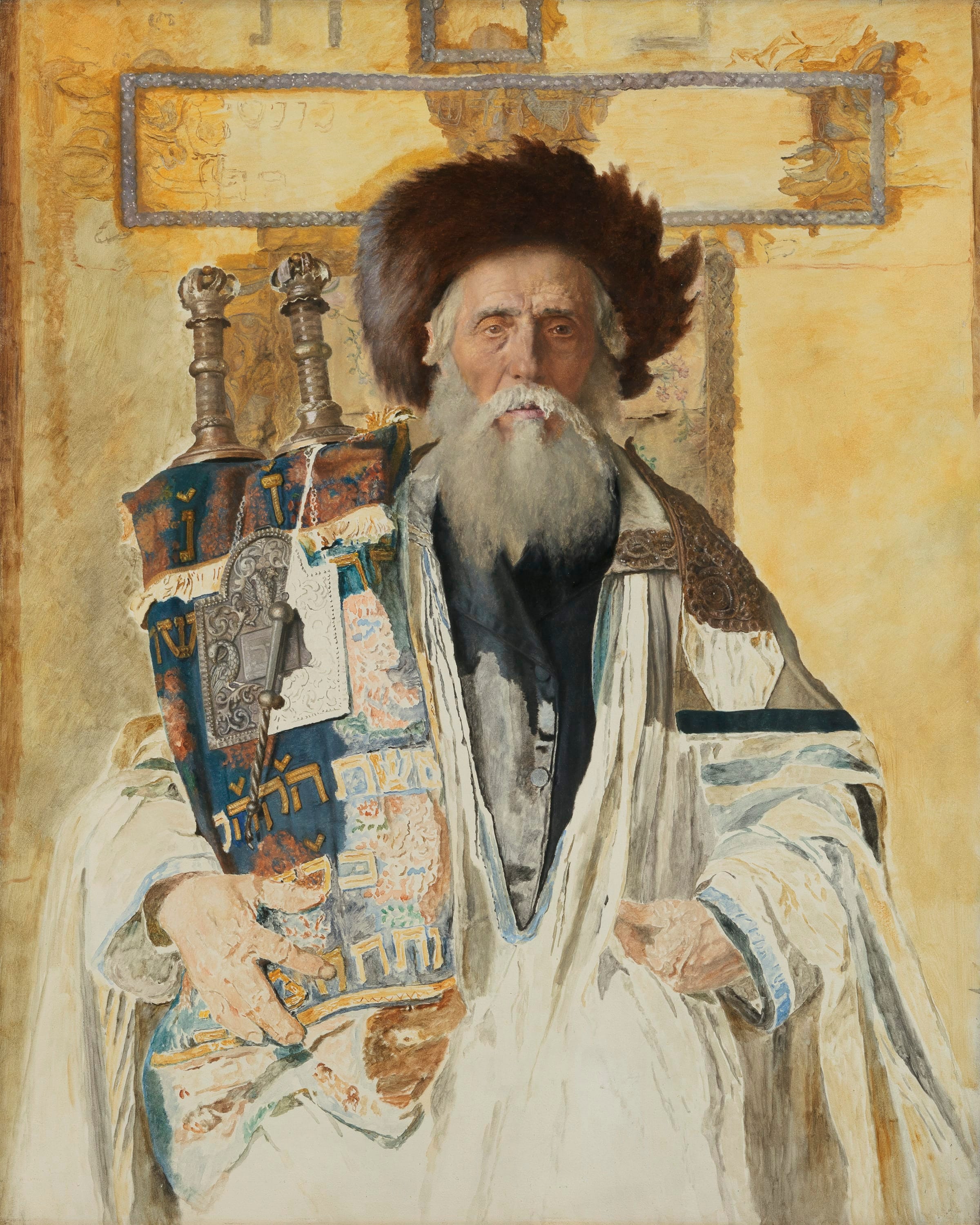
Art by Isidor Kaufmann (1853–1921).
The Old Testament Reflections series is published in collaboration with the Maxwell Institute: https://mi.byu.edu/old-testament-reflections.
Thank you for reading Wayfare Theology. If you no longer wish to receive these items in your inbox, click manage subscription under your profile and turn off notifications for this section.
KEEP READING


Jacob Lauterbach, ed., Mekhilta de-Rabbi Ishmael: A Critical Edition, Based on the Manuscripts and Early Editions (Jewish Publication Society, 2004), 344.
