


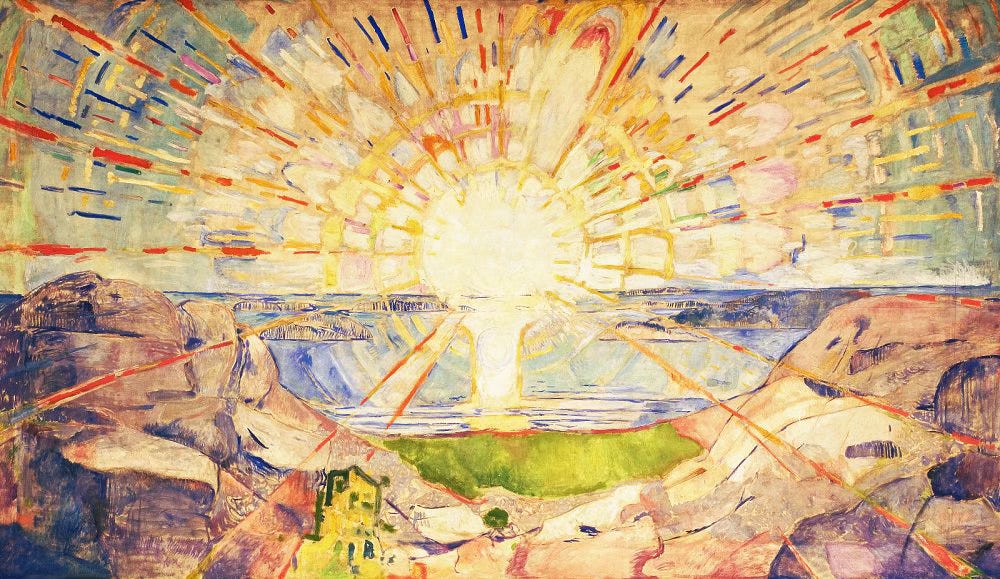
End: The ultimate point or thing at which one aims or directs his views; the object intended to be reached or accomplished by any action or scheme; purpose intended; scope; aim; drift. . .
— Webster’s 1828 Dictionary of the English Language
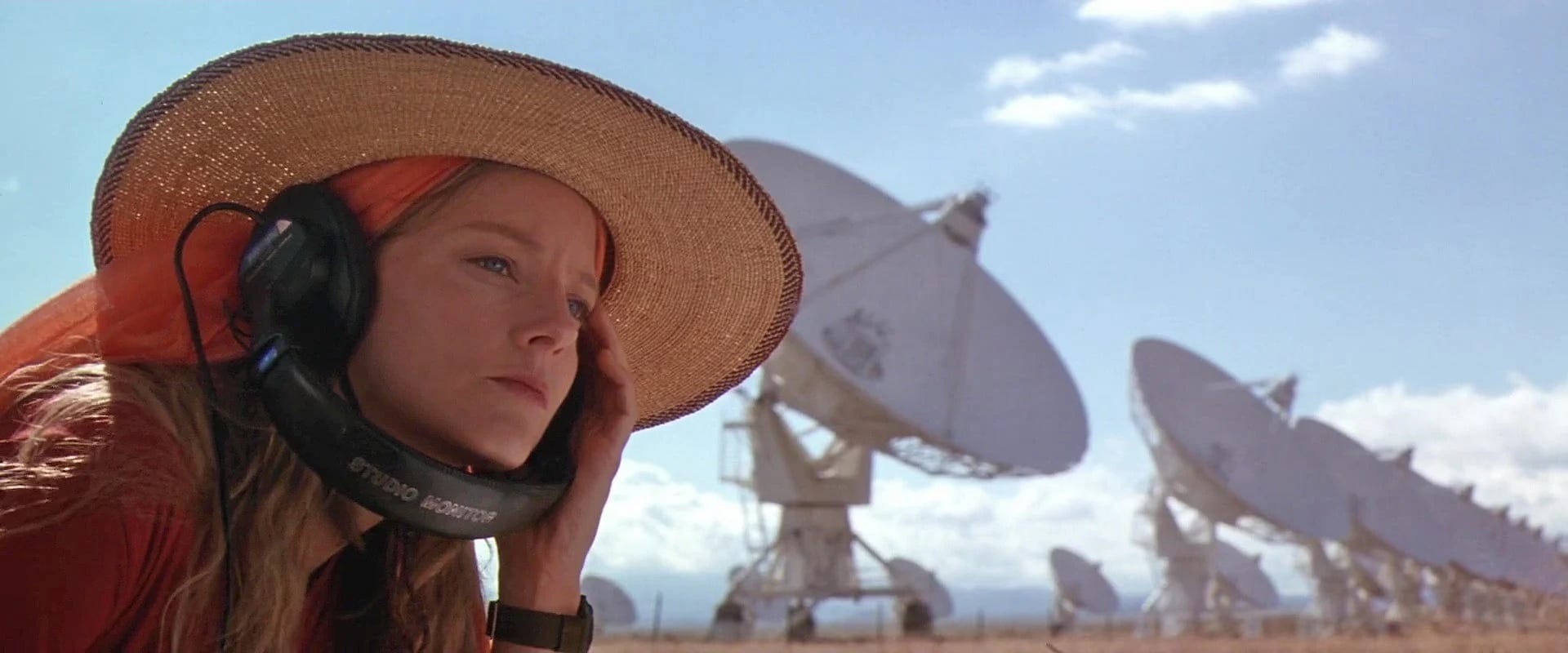
In the film Contact, Dr. Ellie Arroway—initially mocked as “The High Priestess of the Desert”—discovers faint radio signals from the distant star Vega. The signals, composed of a surprising sequence of prime numbers, point to intelligent origins. Decoded further, they reveal thousands of pages of data, but the pages don’t make sense. They can’t be read. The error, Ellie realizes, isn’t in the message but in the mindset: The team has been thinking in two dimensions. Only when they “think like a Vegan,” arranging the pages in three dimensions, does the message reveal its fullness: a blueprint for a cutting-edge machine.1
I’ve come to think I’ve made a similar error in my interpretation of the phrase “endure to the end.” With my two-dimensional mindset, I’ve heard it to mean, in essence, live well, and then keep living well. Have faith, then do it again. Repent, then repeat. Be baptized, then rehearse it weekly through the sacrament. Receive the Holy Ghost, then remember again the next day. Slog diligently on. Even when life throws you for a loop—wash, rinse, repeat until you die.
As a BYU student, I took a Book of Mormon class from a physics professor. Physics excels at condensing messy reality into unifying principles, like e = mc², and maybe that way of thinking also infused the class. What stayed with me was the doctrine of Christ as that unifying principle: faith, repentance, baptism, the Holy Ghost, and enduring to the end. My professor showed how this principle is woven throughout the Book of Mormon, unifying all its diverse messages. This insight helped frame my own religious life—assorted scriptures, Young Women’s lessons, Primary songs, and expectations.
But not until David A. Bednar’s April 2026 general conference talk did “enduring to the end” register as anything more than “just keep on keeping on.” When he said, “Charity is the very essence of the ‘end’ toward which we are enduring—becoming new creatures in Christ,” my mind lit up as the two dimensions shifted into three.
End has another meaning entirely—a different semantic dimension. It refers not just to time, but to purpose. It is depth rather than breadth. The timeline is picked up off the page and rotated ninety degrees so that it plunges deep. Here, the end of an education is no longer graduation, but wisdom. Along this dimension, the end of law is justice; the end of an acorn, an oak tree.
This kind of “end” is teleological (dealing with purpose) rather than temporal (dealing with time). The phrase “a means to an end,” such as a government whose end is the common good or a meal whose end is nourishment, uses “end” in this teleological sense. “To that end” means “for that purpose,” as in “we hoped for empathy; to that end, we listened deeply.”
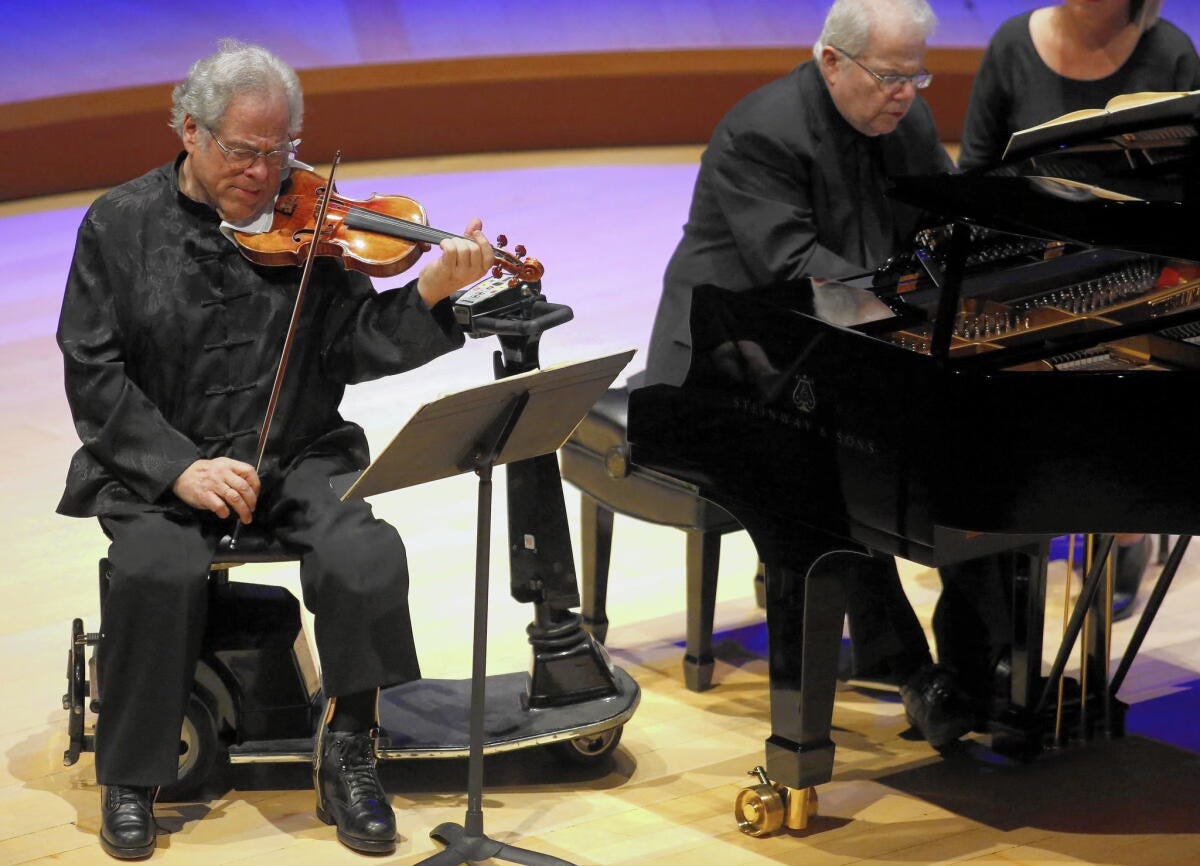
What comes from shifting from a temporal end to a teleological one? The difference is not mere semantics; it feels, almost, like a shift into more vivid experience. A couple of years ago, I watched the violinist Itzhak Perlman perform Mendelssohn’s Violin Concerto in E minor. His legs, weakened by childhood polio, and the crumpled cloth at his chin stood in contrast with the fluidity of his playing; the violin seemed a natural extension of his body.
While the piece had a temporal progression from beginning to end, Perlman played toward its teleological end—every facial expression, every shoulder movement, every chin reset, bow lift, and vibrato serving the music’s fullest artistic expression. What enchanted me wasn’t flawless execution, but depth: a performer fully in service of his end, not his final note but his purpose; each action was fully oriented toward what it was meant to become, each moment pregnant with intention.
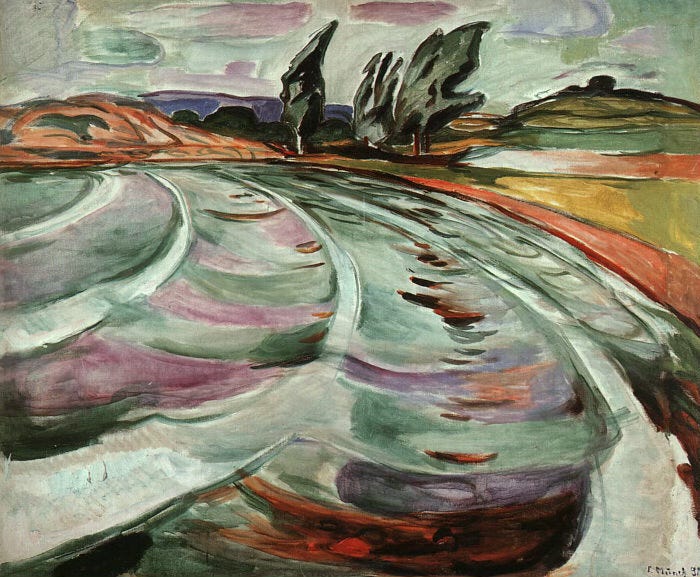
The same shift enlivens a river. Rivers, too, have temporal ends: when they finally converge with the sea. But what of their teleological ends? There is something vastly more dynamic about these.
At any given snapshot in time, the water spends itself—rising from the river’s surface to join the clouds, diffusing across the thin gill membranes of a trout, and coating the tongue of a fox. It recklessly spills into floodplains and seeps haphazardly down through fractured limestone and volcanic rock into aquifers. The water chips the rock face into canyons, while in its eddies, it gently cups water striders as they hunt, their thin, elongated legs forming light dimples on the river’s skin. The water leaps and dives over downed branches and stones, lavishly offering itself to the thirsty roots of cottonwoods and cattails. All is alive. Vibrant. “Crammed with heaven,” as Annie Dillard writes. All is the interchange of earth, sky, and life.
The river’s teleological end, it seems, has less to do with a final destination and more to do with something deeper. Something soul-sustaining: the ongoing tending of a world. As with Itzhak Perlman, I picture a fully engaged artistic expression. Perhaps the river’s end registers best as metaphor: the creative attentiveness of a mother, the unwearied beating of a heart.
Like violinists and rivers, scripture also explores “ends.” Some are temporal, others teleological, while others are ambiguous, or, I suspect, often misread. Paul seemed especially fond of teleological ends. “The end of the commandment,” he writes to Timothy, “is charity out of a pure heart” (1 Timothy 1:5, KJV). Read as a duration of time, this “end” makes little sense. But read teleologically, it’s revelatory; charity is the purpose of the commandment. Its point.
Similarly, Paul writes to the Galatians, “For all the law is fulfilled in one word, even in this; Thou shalt love thy neighbour as thyself” (Galatians 5:14). Again, love is not the law’s termination, but its aim. Its fulfillment. Immersing ourselves in the Sabbath reveals the restful intimacy of God’s love. Plunging into the commandment of forgiveness reveals the love that binds us to one another. Deepening prayer reveals a love that seeks not just answers, but communion.
Over and over, scripture reveals love’s theological primacy. Love of God and neighbor is where the law was always going. It is what the law and prophets hang upon (Matthew 22:39–40). Without it, we are nothing, adrift (Moroni 7:46).
And just as e = mc² does real scientific work, “enduring to the end” does real theological work. Not only do commandments find their end in love, but covenants do as well. A covenant path shifts from a sequence of punctuated steps into a deeper unity of purpose, where diverse covenants converge on a single end: love. At baptism, the covenant to mourn with those who mourn finds its end in love. Sealings unite us in love. In the endowment, the law of consecration finds its end in dedicating all we have and are to God in love.
This unifying idea becomes a lens through which a multitude of experiences can be seen differently. Relationships with family, neighbors, strangers, and even enemies orient toward love. “Families can be together forever” begins to sound less like a prediction of future proximity and more like an invitation into present devotion. Chats over the fence feel different, as do brief encounters at bus stops. Conflict, too, shifts. From boardrooms to shared beds, we unclench our hearts and see people as people. Even if relationships can no longer continue, we turn toward forgiveness; we let our broken places mend; we trust in time.
The lens reframes church life, where the patterns of worship, service, and even opinionated ward councils find an end in love. Callings become invitations to love specific people. As a ward Relief Society secretary, perhaps my calling is to love the members of my Relief Society presidency so they can, in turn, better love the sisters of our ward. Breaking bread together during the sacrament gives form to love. As does the funeral luncheon sign-up. Even the occasional “no” can be drawn into that same love, making room for what is freely given rather than obligatory.
If all this can be drawn into love, what, then, of suffering? Does it also have an end in love? The Holocaust survivor Viktor Frankl spent much of his life writing about man’s dogged search for meaning in the face of suffering. Whether this search is courageous or naive, I can’t be sure. But once, in a chemotherapy room, my unarticulated plea was that even there in that wretched place, suffering might somehow find a meaningful end.
That day, while I was being treated for a rare, pregnancy-related cancer, a small “Cancer Sucks” plaque sat on the receptionist’s desk. Usually those days were nothing short of hell: gaunt patients swallowed by armchairs, tethered to IV poles, liquid poison dripping into their veins. This day was the same, but also different. Holy, somehow. One woman told the story of her chemo friend’s hair falling out—how she had rolled the car window down and her “bang” flew out the window. The telling was disarming. We laughed. My husband sat near. An elderly couple sat together—she had breast cancer, he had colon cancer. We all breathed the same air, nothing more. That day, suffering had an end in love. Jesus was in those depths.
I have so many questions. Does the search for truth have an end in love? What about a single day? What about the shape of a whole life—does it end not on a deathbed but in each of life’s moments where we choose love: where, like a river, we tend the world we are given and are tended by it in return? I hope that in all of it, love is the end.
Perhaps, for me, then, the Christian question is how to plumb the depths of all things toward love—how each commandment, gift, experience, and relationship is drawn into that end. Into what is real. As Jesus taught, the law of Moses “hath an end in me” (3 Nephi 15:8). Whether the law of Moses, the law of sacrifice, or the law of the gospel, all have their end in Christ—and their telos in love.
In this way, salvation as a temporal end—going to heaven, arriving at a final destination to live with God—is eclipsed by salvation as a teleological end. It is a descent into the depths of love itself, where dwelling with God is a present and vivid reality.
My two-dimensional reading was off; the message was always there, though I’d been looking through a glass, darkly. The end is not simply where time’s flow passes into eternity, but in time’s base layer, where its groundwater flows. There, living water emerges from crag and hollow, from type and shadow. There, love is. There, Christ is. There, all things have become what they were meant to be, revealed in their fullness. As Moroni writes, from faith to meekness to perfect love, the “end shall come [yes, that end], when all the saints shall dwell with God” (Moroni 8:26).2
Hannah Packard Crowther has an MS degree in biological science education from Brigham Young University and a twenty-plus year vocation as a full-time mom. She aspires to become a theologian, a poet, or a beachcomber. Maybe all three.
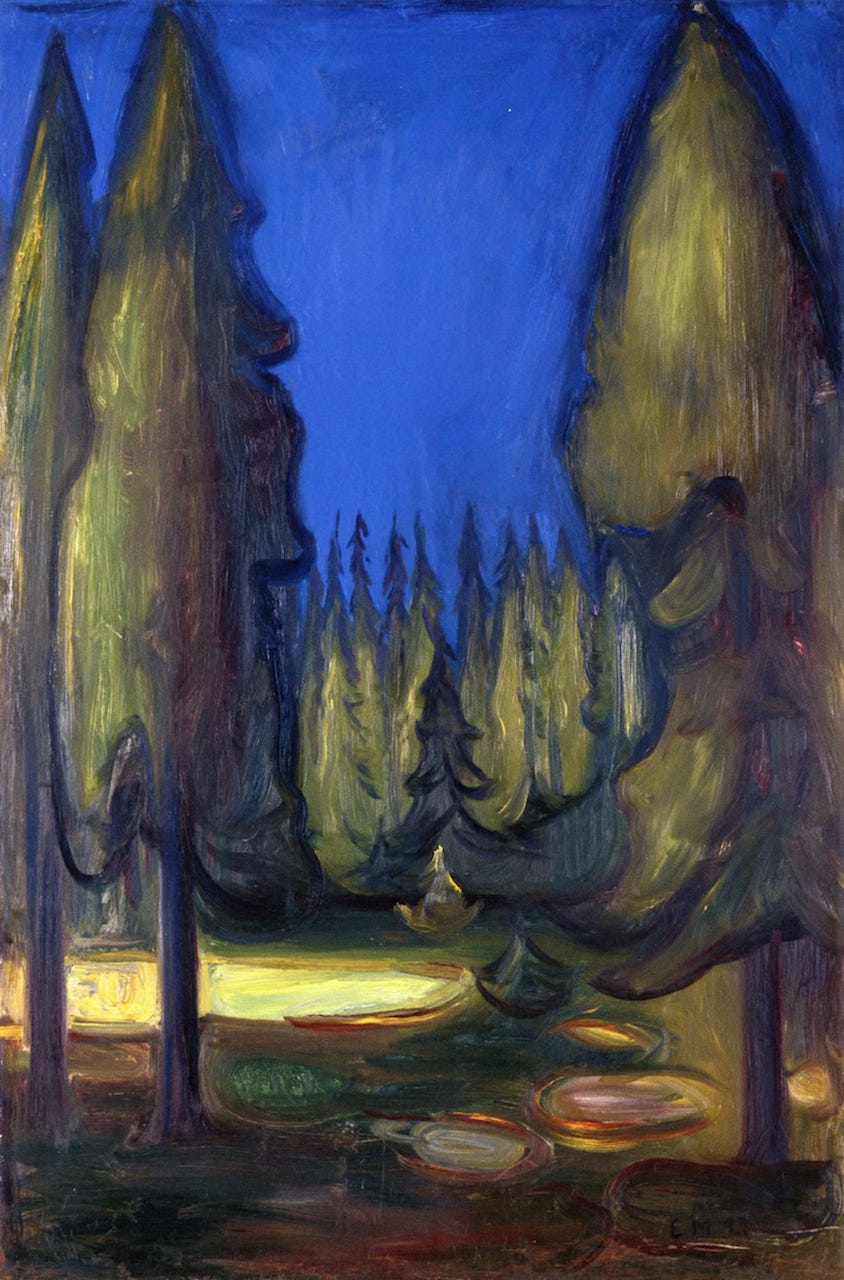
Art by Edvard Munch (1863–1944).
KEEP READING

THEOLOGY

FICTION

Robert Zemeckis, Contact (Warner Bros., 1997).
Annie Dillard, Holy the Firm (Harper & Row, 1977), 70.
