



What do you want to be when you grow up?
What will you do after graduation?
What’s your career path?
What’s your plan?
My students hear these questions and their many variants almost daily from a constellation of mentors: teachers, parents, coaches, elders, and other well-meaning adults. These questions lurk in the background as they grapple with the A- that they fear will drop their grade point average and make medical school admission a far-off dream, or as they ponder just how much AI they can reasonably use as they rush to finish a research paper before turning to other assignments imminently due. This mindset determines how students discern the most lucrative summer internship option—“Should I intern with McKinsey, Meta, or Palantir this summer?”— or just the right volunteering opportunity that will allow them to remain buoyant against the undertows of the demands of accomplishment and attainment. Most often, these questions are asked not directly by any one person, but seemingly absorbed by osmosis through the amorphous matrices of digital culture endlessly available with the flick of a thumb—TikTok reels and Snapchat stories of influencers basking in performative success, YouTube shorts and Instagram reels showcasing the ersatz wonders of a life of social capital built on finely-tuned attention mills. From all directions, young people today face the brunt of a constant barrage of variegated calls for them to attain, succeed, perform, accomplish, secure, advance, and do.
Despite it all, my students admit that something is missing; despite the world at their fingertips and the relative comforts that globalized capital has provided unevenly to many swaths of the world, scores of students identify an unnamable, implacable dissatisfaction that runs just under the surface of their affairs—a thin thread of disquiet under the achievements, a hollowness that remains even after the college admissions letter or job placement offers are secured, a root of despair that doesn’t seem to dislodge. I have heard students use different adjectives to describe the sensation—a hollowness, an emptiness, a hunger, and an itch.
Zachary Davis, in his recent Wayfare article The Four Horsemen of New Theism, offers a sobering and unignorable diagnosis: things have gone terribly wrong with our civilization. Along with Davis, a diverse chorus of scholars and philosophers have sounded the alarm on our civilizational course, ranging from Charles Taylor’s evaluation of the secular age,1 to Seyyid Hossein Nasr’s analysis of the loss of integral cosmology in the modern world,2 to David Abram’s call for a more interdependent ecology of the more-than-human-world.3 These varied analyses suggest that we are approaching the limits of the now-globalized, post-Enlightenment worldview and confronting the anthropological, epistemological, and cosmological voids it has left behind. In signaling a shift, the era’s trend of declining religiosity appears to be slowing and, in some cases, reversing. In its wake, a growing thirst for religious experience and spiritual encounter stirs.
Davis suggests this is a moment of re-enchantment. Amidst so much chaos and uncertainty, there is a greater yearning for a new story and for a new way of seeing—and being in—the world. We are looking for a narrative that will bridge the incoherence of contemporary culture with the depths of our intuitions, aspirations, and inner experience. Davis and his interlocutors offer a compellingly sober analysis of our situation. The next logical question, of course, is—now what?
For those of us eager to roll up our sleeves and work to build, in ways great or small, a better world—one that is more just, joyful, caring, beautiful, virtuous, wise, and receptive to mystery—what are we to do? Where does the work of re-enchantment begin? Whether we agree with those like Paul Kingsnorth who suggest Western civilization cannot be salvaged and that we must begin anew or we agree with those like Rod Dreher and see potential for civilizational rehabilitation, we will wake up tomorrow and grapple at first light with the question—how will I work, today, to build a re-enchanted world?
As a scholar of comparative religions, I believe that we can only rejuvenate Western culture to the extent we grow from our inheritance of intellectual, religious, and spiritual diversity. In the twenty-first century, the West is home to new communities of indigenous Islamic, Buddhist, Hindu, and other communities that exist and thrive at the intersection of multiple epistemic commitments. Re-enchantment ought not aim for perceived cultural purity, but rather—perhaps more essentially—for a shared, multi-polar vision of the human capacity for transcendence. A rehabilitation or reemergence will require both recovery and expansion—a return to origins that also honors the gifts and wisdom gained through all that has been encountered and learned along the way. T.S. Eliot captures this beautifully in the lines:
We shall not cease from exploration
And the end of all our exploring
Will be to arrive where we started
And know the place for the first time.
In all cases, it will be the duty of future generations—equipped with whatever tools, visions, insights, and questions we may offer them—to continue the work of re-enchantment after we are gone. A sense of re-enchantment must first animate how we teach the rising generations.
I teach religion, ethics, and philosophy across several institutions of secondary and higher education in the United States. As a doctoral student in the Study of Religion, I chose this path with the commitment to becoming a scholar-teacher of the world’s religious traditions, particularly Islamic, Buddhist, and Catholic contemplative traditions. If my scholarship is concerned with the work of intellectually grappling with re-enchantment, my work as a teacher is to make the possibilities of re-enchantment intelligible and meaningful to broadly capable and diverse yet equally disquieted and existentially-thirsty audiences. Following the essential pedagogical inspiration of the Buddha’s teaching of the dharma, wisdom and insight are framed and delivered in myriad ways depending on capacity, language, and context. Each person, regardless of their capabilities, may receive the dharma; any good pedagogy is adaptable, fluid, and responsive. The re-enchanted world will only be built if we explore, consider, and teach the structures on which it may be built.
As a teacher of both high school and college students, I often think about the precarity of the current moment. Besides general and valid concerns of professional teachers being under resourced, under compensated, and under appreciated by students, parents, and the broader culture, teachers stand on the frontlines as translators and interpreters of an uncertain and confusing world. Teachers are generally left to their own devices in the work of molding coherent selves in a world that feels increasingly fragmented; each morning millions of teachers across the country must wake and discern how to best model, to absorptive and observant minds, how to be coherent beings in an often-incoherent world. The work of training young minds how to think, act, and be in the world, in society, in a nation, and in communities often seems an insurmountable task.
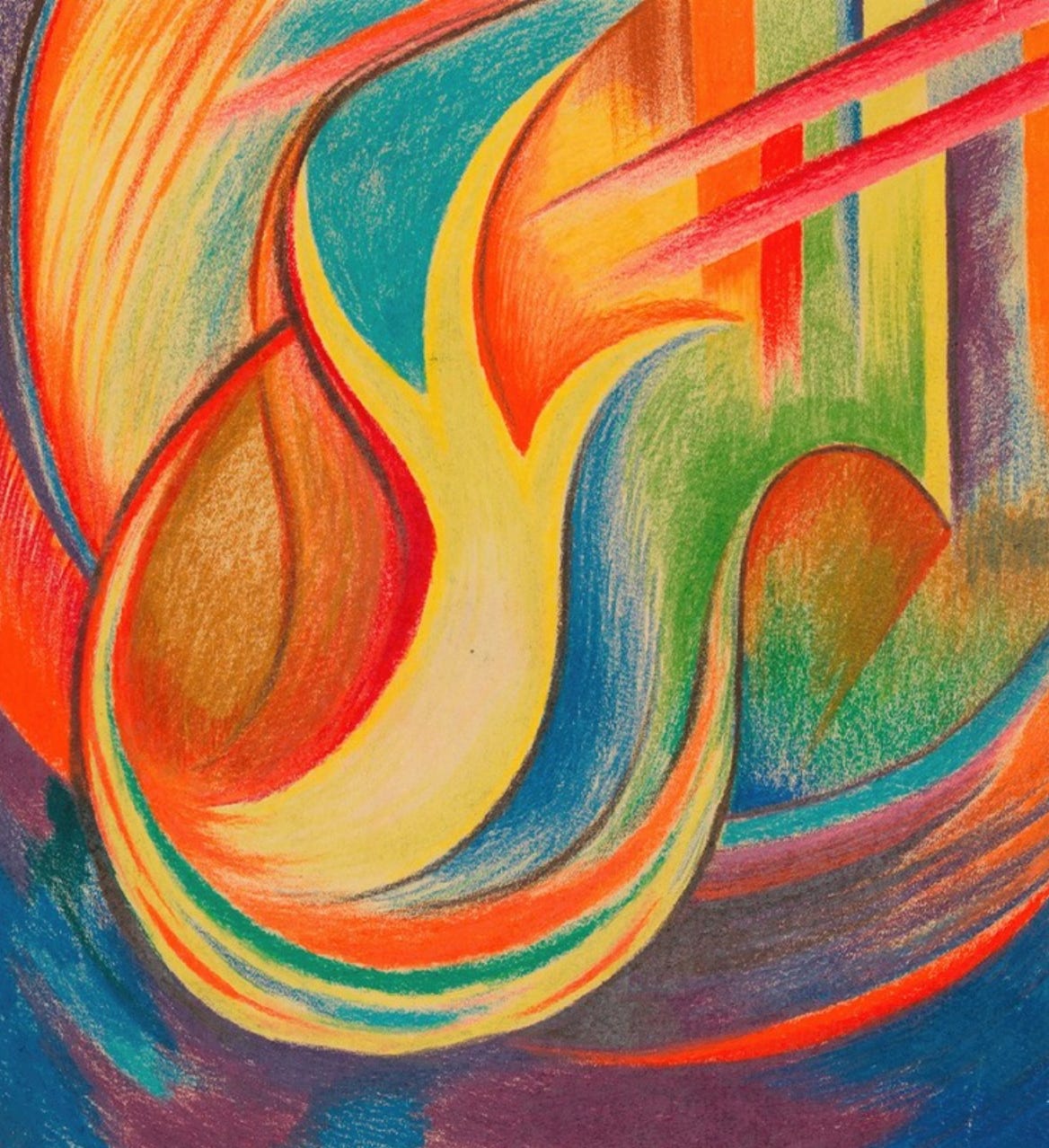
Despite the precarity, I also find hope in this moment’s potential for cultural re-enchantment. Teaching has a central and immediate role in turning these philosophical ideas into meaningful cultural, personal, and civilizational change. Teaching is a sacred vocation. The most apt image of a teacher, in my mind, is that of a fire kindler—either the tender of a simple deep-woodland campfire on a cool autumn evening or of a Zoroastrian athravan, a guardian of the temple fire. Teachers are tenders of the fire of wonder, those who guard and tend the holy fire of that which is essential for our survival in the long, cool, dark night of the modern world. Teachers are not charged with teaching students what to think, but the many ways of how one may think. As a teacher of religion, I do not see my role as that of a proselytizer seeking to convince students of a particular intellectual system or cosmological vision. Instead, I strive to create encounters that kindle their inner sense of wonder. That wonder may arise through my attempts to convey the zeal of a Sufi dhikr, the peace of moral certitude in an ethical case study, or the ungraspable clarity of insight cultivated in zazen meditation. Which tradition or experience resonates is ultimately up to the students themselves and whatever chord of longing it awakens within them. My pedagogical work, then, is the sacred art of tending wonder: inviting students to linger in the mystery and beauty of the world, and offering enough kindling for the next stage of their journey. Most importantly, our work lies in teaching students how to renew their own fuel so they may sustain their fire for the journeys that yet lie ahead long after they have left my classes.
In the work of wonder-tending, I see as essential the cultivation of a new anthropology that shifts a student’s primary focus from occupational and production-oriented ontological measures of one’s worth in the world to an ontology of a wonder, humility, and awe whose fruits are delight and joy. This calls for a multi-polar anthropology which draws on shared wisdom of the new ecumenical, multicultural, and inter-religious context of Western civilization and on cross-cultural intuitions of our human capacity for transcendence and re-enchantment. It is an anthropology that shifts the metric upon which we build out worldview from what do you want to do? to how are you going to be?
To this end, in my work as a teacher, I have tried to shift to new variants of the questions above when I teach or mentor students, such as:
What is the quality by which you want to be known by your grandchildren and neighbors?
What kind of home do you want to inhabit when you are older?
How do you want to be?
Most of these questions indicate a subtle but necessary shift towards a new anthropological vision—from product-oriented beings to process-oriented beings, and a shift from gaining understanding to gaining wonder and its fruits of humility, delight, and openness. It is a shift from the dominant post-Enlightenment anthropology of doing, towards a re-enchanted anthropology of being.

This essay is an excerpt of a longer essay exploring the methods for igniting wonder. Find the full-lenth version here.
Peter Dziedzic is a PhD candidate in Comparative Religion and Islamic Studies at Harvard University. He is also working on a comparative study of walking pilgrimages around the world. He is currently an instructor in Religion, Philosophy, and Ethics at Phillips Exeter Academy in New Hampshire and has recently served as the Assistant Director of Undergraduate Studies in the Study of Religion at Harvard University and as a professor in Religious and Islamic World Studies at DePaul University.
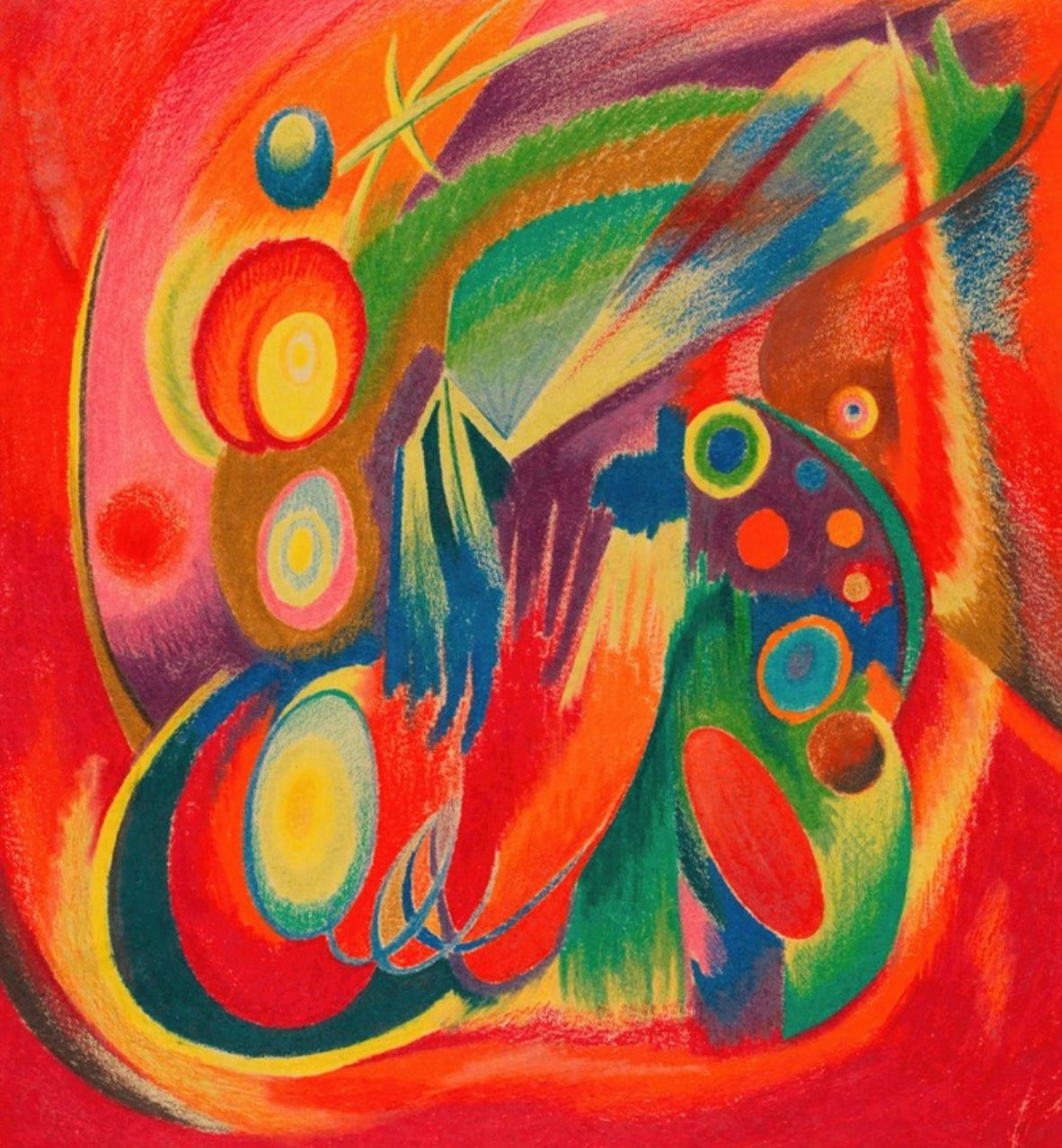
Art by Karl Wiener. 1901-1949.
Taylor, Charles. A Secular Age. Cambridge, MA: Belknap Press of Harvard University Press, 2007.
Nasr, Seyyed Hossein. Man and Nature: The Spiritual Crisis in Modern Man. Chicago: Kazi Publications, 2007.
Abram, David. The Spell of the Sensuous: Perception and Language in a More-Than-Human World. New York: Vintage Books, 1997.
