


What we look for influences what we are likely to find, and that is nowhere more true than in the context of scripture study. If you are like me, perhaps you have turned to scripture with the expectation of finding an answer to a question, or finding peace during tribulation. And those are understandable and worthy aims. Still, thinking about what we hope scripture will offer us begs some fundamental questions: What are scriptures, exactly, and how do we use them as we seek to connect with God?
I can see how my expectations about scripture change depending on my circumstances and mindset. At times I have found them useful as a sort of recipe book that teaches me how to follow a set of practices that will bring me closer to God. Other times I have read scripture as an inspirational guide that, in a holistic manner, helps me design and build my own life as a disciple. These modes of reading scripture share the common idea that scripture is intended to communicate immutable truths, and that the role of the prophets who penned them is to transcribe such truths to the best of their abilities. Accordingly, the ideal prophet would function as a transparent intermediary: God utters the words, so to speak, and the job of the prophet is simply to write them down. One friend of mine summarized this theory of scripture by saying that scripture (and general conference talks) are like “text messages from God.”
As appealing as this conception of scripture might be, further reflection—and my own limited experience with the ineffable—suggest that such a view might be misleading, or at least incomplete. Elements of our theology and history indicate that we have other ways to understand prophets and their words as found in scripture. I believe we need to grapple with the possibility that the creation and function of scripture do not work only as a divine communication transmission. In fact, understanding scripture only as “text messages from God” may needlessly limit the truths we glean from scripture precisely because that view limits the ways in which we can understand divine truth. In this essay, then, I want to ask: how else might we describe scripture, and what does it mean for our personal devotional practices?
As I think along these lines, I am brought to think about one of my favorite paintings, Wanderer Above the Sea of Fog, by Caspar David Friedrich:
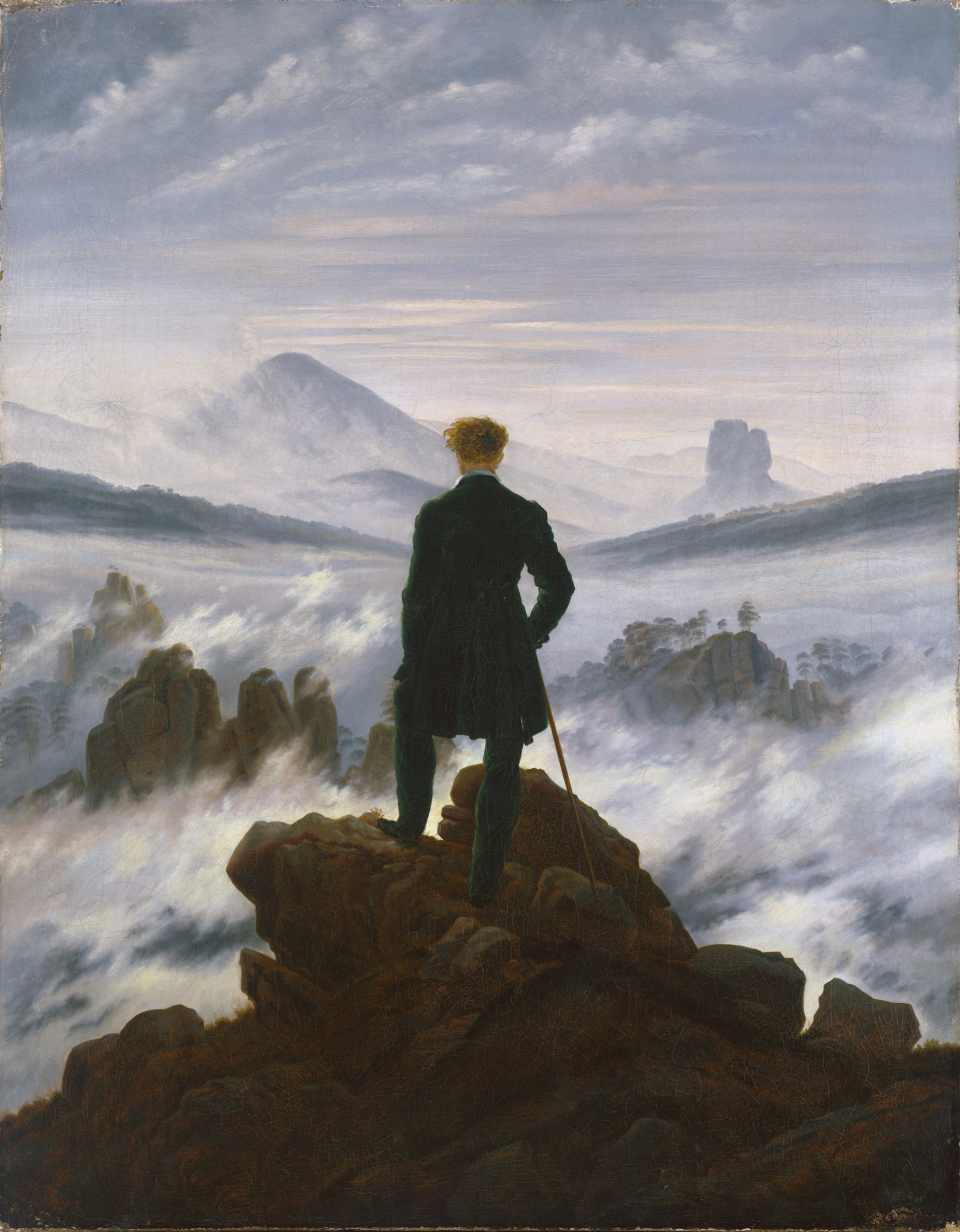
This painting is considered one of the masterpieces of the German Romantic era, the quintessential Rückenfigur painting. This style of painting depicts its primary subject from the back, robbing us of the opportunity to see the figure’s face and thus focusing us on what the figure is experiencing. In the case of this painting, it brings our sight toward the landscape upon which the central figure gazes, sometimes seen as representing “the sublime.”
I love this painting as a metaphor for the prophetic project for multiple reasons. The first is that the painting pulls us away from the prophet himself and toward that to which the prophets point us—the sublime in the painting, Jesus Christ in our theology. Beyond that, the painting reminds me that prophets, too, are humans just like we are. The figure in the painting, though depicted in the foreground, remains dwarfed by the landscape he is beholding—he is not a titan, not a colossus, but a man faced with an overwhelming scene.
