


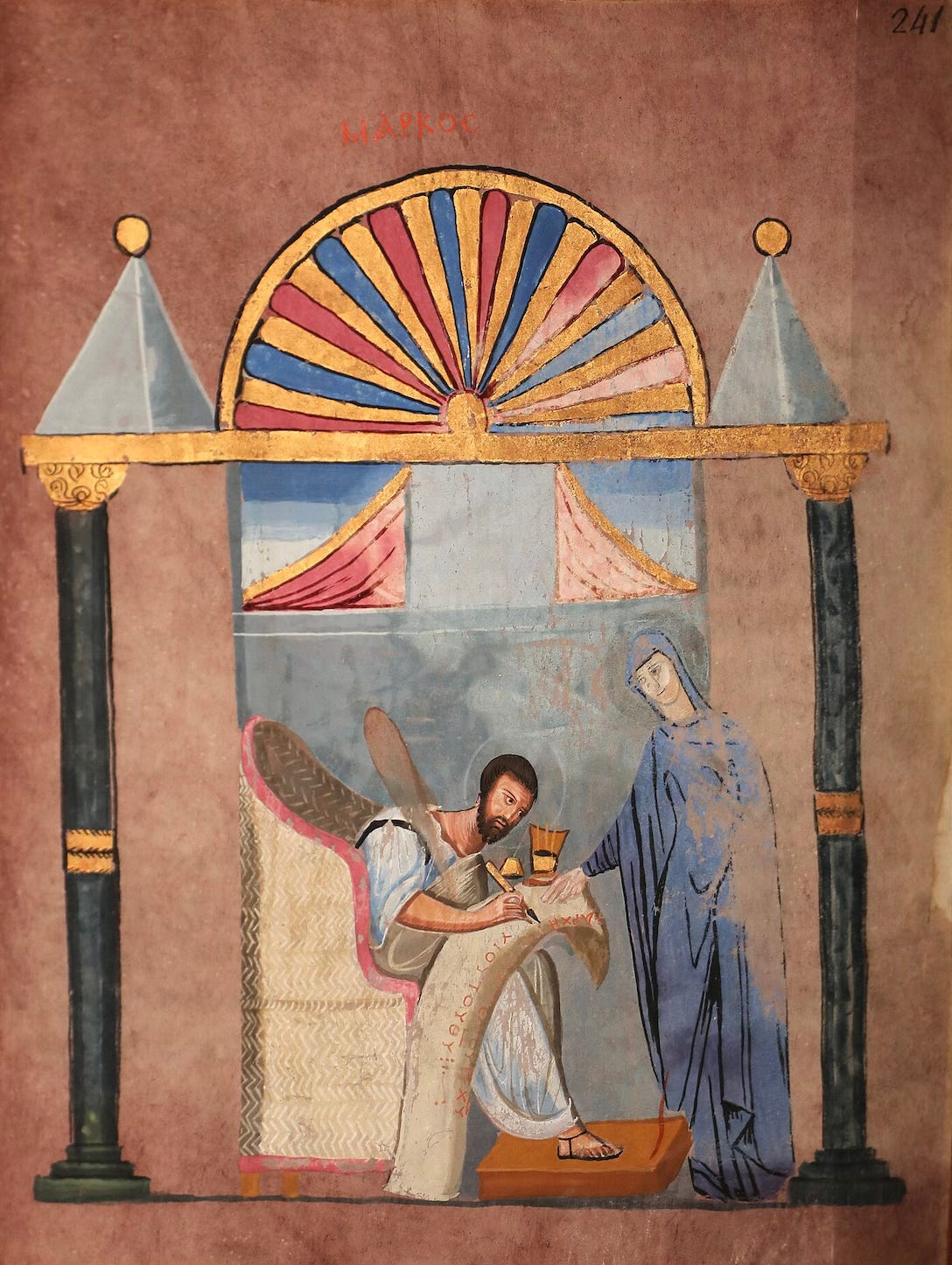
The New Testament begins with four distinct portraits of the life, death, and Resurrection of Jesus. Known as the Gospels of Matthew, Mark, Luke, and John, these four books contain some of the most memorable and influential passages in scripture. They form the very foundation of Christian faith and stand at the heart of its enduring literary tradition.
But these books are also sometimes misunderstood.
Many readers tend to view each Gospel as a straightforward record of what Jesus said and did. Some imagine that if they could travel back to ancient Judea with a camera, their footage would match the events described in the Gospels exactly.
However, the Gospels are much more than just simple records of events, and how we understand them inevitably shapes how we read them. One helpful way to make sense of their origins, especially when reading them through the exegetical lens, is by thinking in terms of three distinct historical phases.
Phase One: Before the Gospels
The Mortal Ministry of Jesus (sometime between 7 BC and AD 30)
Born sometime between 7 and 4 BC, Jesus grew up in the remote village of Nazareth. As an adult, He began a traveling ministry, proclaiming God’s coming kingdom. He drew crowds, spoke with unusual authority, and became known for His acts of healing. As a Galilean Jew, He lived and preached within the religious world of Second Temple Judaism, addressing fellow Judeans in Aramaic, His native language. During a Passover festival in the city of Jerusalem, He was arrested and crucified under the authority of Pontius Pilate. So far as we know, Jesus Himself left no writings behind.
Phase Two: Before the Gospels
The Preaching of Christ Crucified and the Resurrected Christ (between AD 30 and 65)
In the wake of Jesus’s death, many people had experiences in which the risen Christ appeared to them (see 1 Cor 15:3–8). Some had been His followers during His ministry; others, like Paul, had not. Those who encountered the resurrected Jesus began proclaiming His victory over death and the promise of a coming kingdom. Most of this preaching spread by word of mouth—believers sharing the message with family, friends, and fellow citizens in personal interactions. Some Christians who had the resources took up traveling ministries, moving from city to city to share the good news of the crucified and risen Christ.
As believers shared this message, a few important things began to happen. First, Christian preachers naturally began adapting the stories and teachings of Jesus to connect with new audiences. While Jesus had taught in Aramaic to His fellow Judeans in rural Galilee, later Christian preachers adapted His message for urban audiences, which included translating His life and teachings into Greek. Traditions about Jesus evolved accordingly.
Second, Christian preachers increasingly interpreted and retold the story of Jesus’s life and death in light of their belief in His Resurrection. The traditions they shared, the memories they emphasized, the stories and teachings they preached were selected and shaped in accordance with their conviction that Jesus was the risen son of God.
This is a common cultural phenomenon that is sometimes forgotten when we talk about Christian history and traditions about Jesus. Think of it this way. Imagine a girl who does well in school—she gets good grades, wins her third-grade science fair, and competes on her high school swim team. Later in life, she becomes a successful real estate agent and swim coach. If you were writing her biography, what details of her childhood would you emphasize? What stories would you include? Now, think of a different scenario: Imagine that instead of selling homes, this woman wins a Nobel Prize for a breakthrough in cancer research. How would you narrate her past? Maybe those same childhood successes—in class and at science fairs—take on new meaning, offering glimpses of her future achievements. The past remains the same, but the way we tell the story—the portrait we paint, the memories we emphasize—changes dramatically. A single, transformative event in the present can affect how we view the past.
Something similar likely happened when early Christians spoke about Jesus’s life. They couldn’t talk about His birth, childhood, ministry, or death without seeing it all through the lens of their witness that He was the Lord who had conquered death.
Third, as ancient Jews and pagans heard and embraced the gospel message, they brought with them their own religious assumptions and ways of thinking. As they shared the message with others, some stories about Jesus and His relationship to God were inflected by the preachers’ own theological worldviews and expectations. Added to this were the ordinary limits and frailties of human memory and language. Some traditions were passed along faithfully, others were misremembered, some were embellished, and still others faded from memory.
Finally, some educated Christians began writing down traditions about Jesus. A handful of these writings survive in the form of Paul’s letters. Others have been lost: letters exchanged between churches, early collections of sayings, and fragments of remembered events. From a largely illiterate world, such writings mostly preserve the voices of a limited, educated few.
This “second phase” represents a crucial yet poorly documented period in the formation of Christian tradition and scripture. Modern Christians who revere the Bible owe a measure of gratitude to the largely unremembered figures of this generation whose efforts helped preserve and shape the traditions that informed later Christian faith.
Phase Three: The Creation of the New Testament Gospels (AD 65 to 100)
All four Gospels as we have them appear to be the work of second or third-generation Christian writers who drew on both oral and written traditions to tell the story of Jesus.
In sum, each Gospel reflects multiple layers of tradition—woven from the words of Jesus, the memory and teachings of His early followers, the artistry of ancient authors, and the inspiration of God. As Elder Alexander B. Morrison put it: “The four Gospels are, by no means, the unchanged and unadulterated words of biographers or stenographers who followed Jesus around and recorded His utterances verbatim. They probably began, in common with other ancient scriptures, as oral traditions—collections of reminiscences, stories, proverbs, and anecdotes.”
Behind each of these literary portraits is, of course, the figure of Jesus Himself—the living, breathing Jesus whose words and deeds changed the world. And while each Gospel is holy, beautiful, and foundational to our faith, each necessarily falls short in its representation of the divine. As with all forms of human communication, these sacred writings cannot fully encapsulate the truths they point to. God and Jesus will always be more than what our texts can say about them.
President Jeffrey R. Holland said that “the scriptures are not the ultimate source of knowledge for Latter-day Saints. They are manifestations of the ultimate source. The ultimate source of knowledge and authority for a Latter-day Saint is the living God.” The Gospels do not contain Jesus; they are portraits of Jesus. They can point us to Jesus, but only so far.
[To keep this excerpt concise, some additional teachings from Church leaders and Restoration scripture have been omitted here. They are included in the full book.]
Why Does Any of This Matter?
Why should it matter to the modern reader whether the Gospels contain the exact words and play-by-play deeds of Jesus’s life—or whether they are portraits of Jesus, produced by devoted Christian authors who have shaped inherited stories into narrative form?
It matters because how we think about the New Testament Gospels influences how we read them. If we treat them like video transcripts, like raw footage of Jesus’s life, we risk misunderstanding the message of the Gospels, the religious movement they represent, and even the figure of Jesus Himself.
If, on the other hand, we remember that each Gospel reflects multiple layers of tradition—words of Jesus, the memories of His followers, the artistry of the evangelists, and the inspiration of God—we open ourselves to enriched readings and grounded expectations for what these stories are doing. Here are a few examples to illustrate this point.
When the Gospels Don’t Match
Sometimes the Gospels present subtle, and occasionally significant, differences in how they report the same events or teachings. [For space considerations, we have omitted specific examples from this excerpt, but the full book examines such differences in greater detail.] If we expect the Gospels to give us literal, harmonious accounts of Jesus’s life, we can find ourselves coming up with creative fixes—extra events, elaborate explanations—to make the stories fit together. But these well-intentioned solutions sometimes go against the texts themselves and occasionally introduce new problems even as they attempt to solve old ones.
It bears noting: These kinds of solutions come from a good place. They arise from a deep, heartfelt reverence for Gospel traditions that have brought billions to faith in Christ and inspired extraordinary acts of love. Given this, it’s entirely understandable that a faithful reader would want to resolve even minor tensions in the text.
But remember: There is more than one way to approach the Gospels with faith.
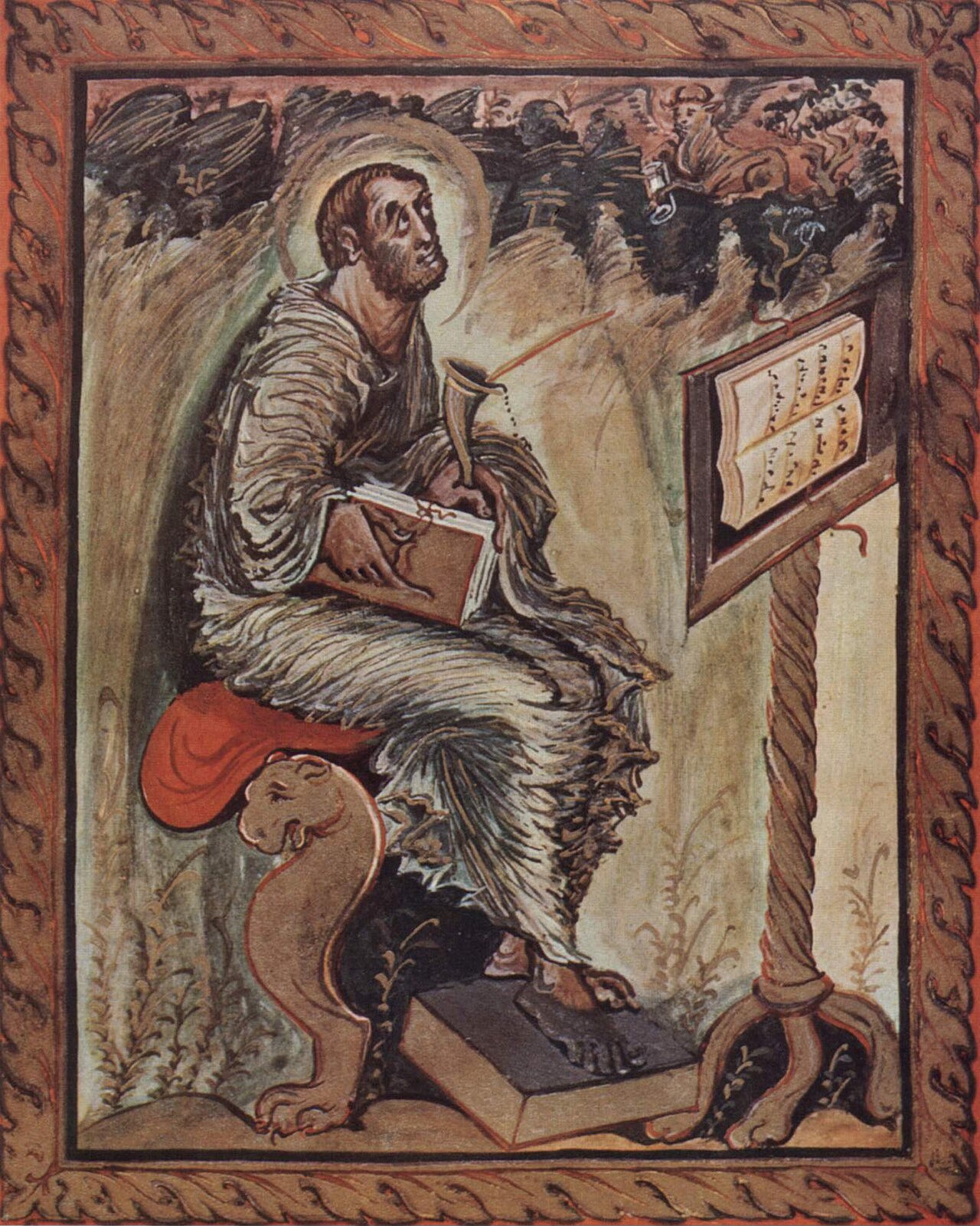
Consider, for instance, what happens when we approach the Gospels as portraits—not as stenographic records, but as inspired and creative works written by second- or third-generation Christians. In this view, Gospel writers drew from shared traditions and shaped them to fit the themes and structures of their narratives. So in Matthew, Jesus delivers the Beatitudes on a mountain to His disciples (Matt 5:1), evoking Jesus as a new Moses giving divine instruction from a new Sinai. In Luke, Jesus speaks to a multitude that includes both Jews and Gentiles (Luke 6:17), emphasizing themes of almsgiving and the elevation of the poor—consistent features of Luke’s narrative portrait of Jesus.
This way of reading the Gospels doesn’t have to shake anyone’s faith. In fact, I’ll suggest it can lead to a richer, more mature faith in both Jesus and ancient scripture.
Did Jesus Really Say That?
For nearly two thousand years the New Testament Gospels have served as humanity’s primary source for the words of Jesus. So cherished are these sayings that some Bibles even print His words in red ink, helping readers to spot them right away. Life-changing sayings such as:
“Do to others as you would have them do to you” (Luke 6:31, NRSV).
“Greater love hath no man than this, that a man lay down his life for his friends” (John 15:13, KJV)
“Blessed are the peacemakers: for they shall be called the children of God” (Matt 5:9, KJV).
But not all of Jesus’s sayings in the Gospels are equally uplifting. Some, in fact, are a bit confusing. Or even painful.
A Painful Example: John 8
John 8 recounts a dispute between Jesus and a group of Jewish opponents during the Feast of Tabernacles. As the confrontation escalates, Jesus challenges their spiritual lineage: “If you were Abraham’s children, you would do what Abraham did. But now you are trying to kill me” (John 8:39–40, NRSV). Offended by the accusation, Jesus’s Jewish opponents protest: “We are not illegitimate children; we have one father—God himself.” Jesus then responds with a devastating claim: “You are from your father the devil, and you choose to do your father’s desires” (John 8:44, NRSV).
This is one of the most troubling passages in the New Testament, both because of what it says and how it has been read. In it, Jesus appears to denounce His Jewish opponents as children of the devil. For centuries, then, this verse has been interpreted as a theological judgment not just on the individuals in the narrative, but on Jewish people as a whole—fueling anti Jewish attitudes and actions across Christian history.
But notice what happens when we view the Gospels as the final product of second- or third-generation authors—writers who drew from a wide array of traditions and perspectives. Instead of assuming that this condemnatory statement in John 8 is a timeless divine pronouncement, we become open to the possibility that it may reflect later Christian memories, perspectives, and conflicts. Indeed, many scholars believe that this saying reflects the evolving conflicts between early Christians and their Jewish contemporaries rather than a specific confrontation in Jesus’s own lifetime.
Let’s imagine one possible way these things might have unfolded. The earliest believers in Jesus were Jewish men and women who believed not only in His Resurrection, but in His divine status (see “Phase Two”). For them, Jesus was not just the Messiah; He was the Son of God who was one with God. But such a claim did not go unchallenged. Within the synagogues, arguments broke out: “There is only one God,” many insisted. “This Jesus cannot be divine.”
Over time, these debates hardened into divisions. Some Jesus-followers were driven out of their synagogues. Others left voluntarily. When Christians remembered and retold the story of Jesus, they did so through the lens of their own struggle. The rejection they had faced became Jesus’s rejection. And so they told Jesus’s story accordingly. In their memories, Jesus didn’t just debate His critics—He condemned them as children of the devil. In time, these community memories found their way into the Gospel of John (see “Phase Three”), where they were woven into the story of Jesus—and ultimately preserved as part of sacred Christian scripture.
To help my Latter-day Saint students recognize how history, memory, and evolving theologies shape religious texts, I sometimes draw on a familiar example from our own hymnbook. William W. Phelps’s “Praise to the Man” honors the life and martyrdom of the Prophet Joseph Smith. When Phelps first wrote the hymn, deep grief over Joseph’s death still haunted the Church. This grief, and even anger, is evident in the original second verse:
“Long may his blood, which was shed by assassins, / Stain Illinois while the earth lauds his fame.”
But by 1927, Church leaders had revised the verse to reflect a more measured, graceful tone:
“Long shall his blood, which was shed by assassins, / Plead unto heav’n while the earth lauds his fame.”
This shift in language reflects a cultural transition—from outrage and pain to reconciliation and reverence—and highlights how sacred texts, like the New Testament Gospels, are shaped by the immediate concerns and experiences of believing communities.
Conclusion: The Gospels as Memory
It bears repeating that each Gospel reflects multiple layers of tradition, woven from
• the words of Jesus,
• the memory of His followers,
• the artistry of the evangelists, and
• the inspiration of God.
Put differently, each contains the divine words and deeds of Jesus, blended with the voices and perspectives of those saintly men and women who preserved the traditions of Jesus in the decades after His death and Resurrection. The Gospels thus serve as rich storehouses of sacred individual and communal memory, bearing ancient witness to the divine sonship, death, and Resurrection of Jesus Christ.
The Gospels aren’t windows or camcorders. They are portraits. The revelatory efforts of the Gospel writers can lead us to Jesus, but they will never capture Him fully. No writing or portrait can.
This essay is an excerpt from the book A Modern Guide to the New Testament (Deseret Book, 2026) by Luke Drake.
Luke Drake is an assistant professor of Classical Studies at Brigham Young University and of Near Eastern Studies at the BYU Jerusalem Center. He earned a Master of Theological Studies in the New Testament and Early Christianity from Harvard Divinity School and a PhD in Religious Studies (Ancient Mediterranean Religions) from the University of North Carolina at Chapel Hill. Prior to joining BYU, he served as a Seminaries and Institutes Coordinator for the Church Educational System in Tampa, Florida. His research explores the New Testament, early Christian literature, and the broader religious world of the ancient Mediterranean.
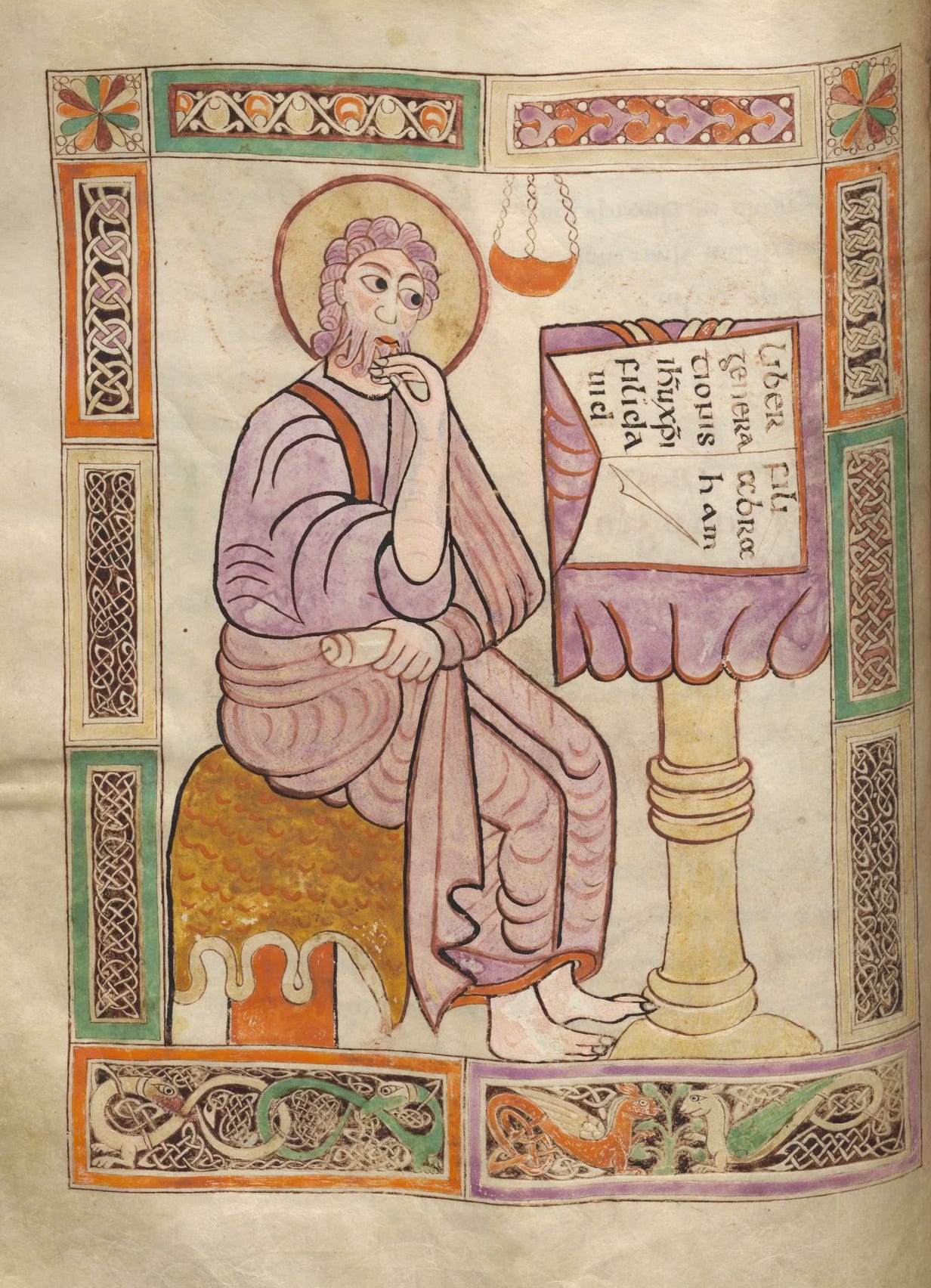
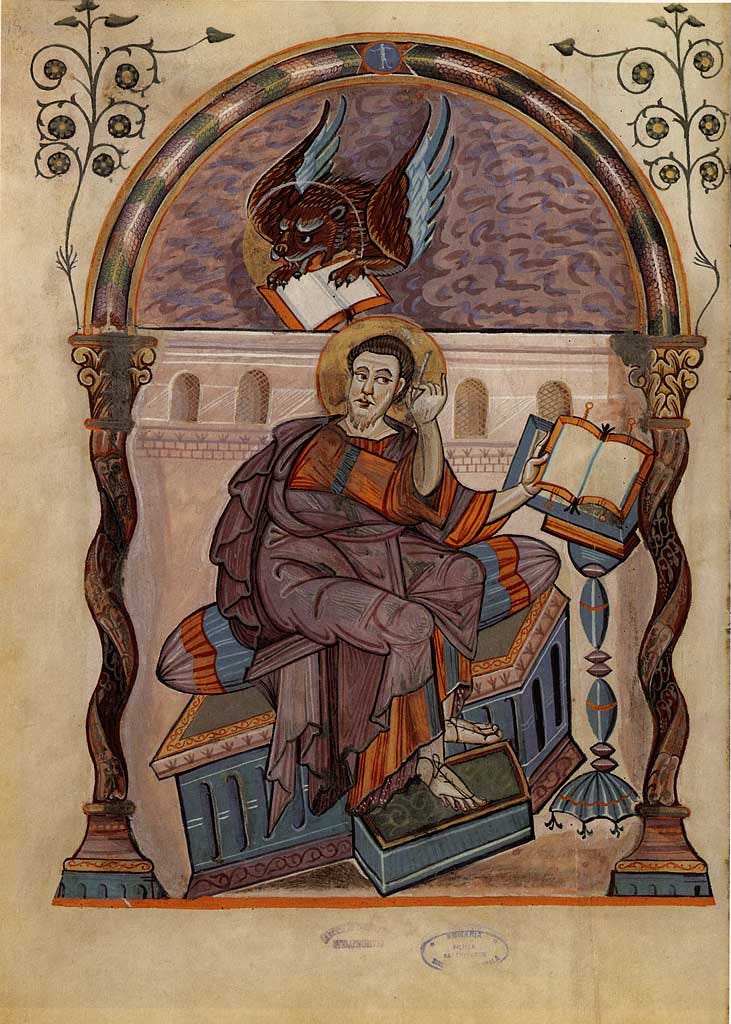
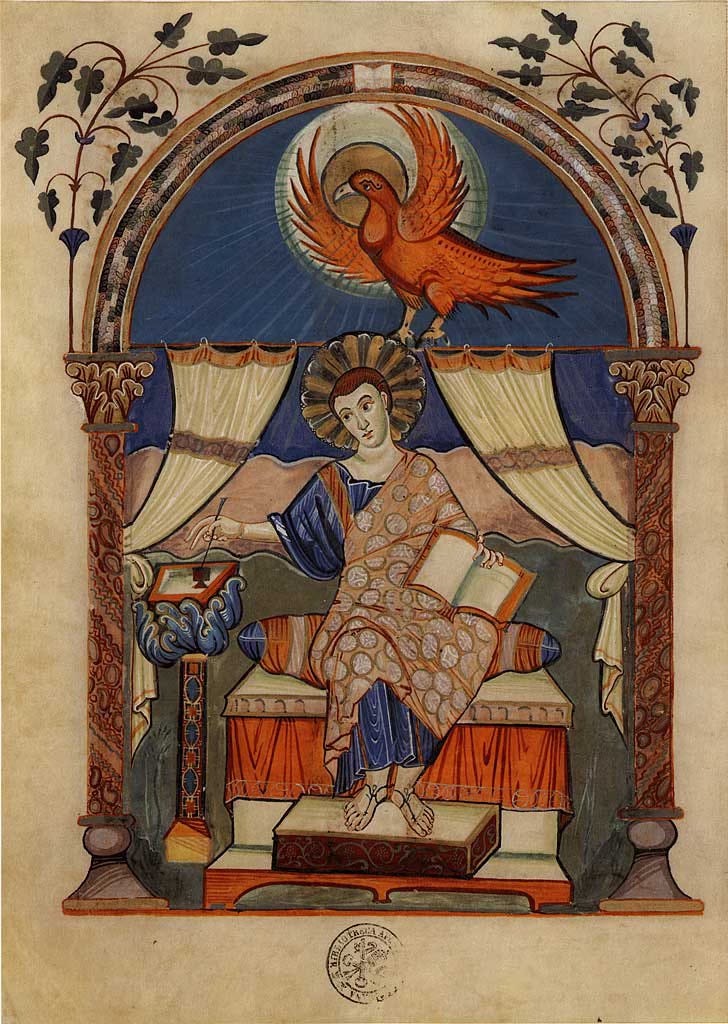
Art from the Codex Aureus of Lorsch (c. 778–820), Cutbercht Gospels (c. 8th century), Ebbo Gospels (c. 816–835), and Rossano Gospels (c. 6th century).
