



“I write because I don’t know what I think until I read what I say.” —Attr. Flannery O’Connor
“Writing is a form of prayer.” —Franz Kafka
Wayfare loves words, and since you, lovely reader, are reading Wayfare, I’m willing to bet that you love them too. In fact, I’m willing to bet that you not only love reading words, but working with them. Learning them, arranging them, splicing them, dicing them, befriending them, rearing them, poking at them with a stick, crouching in a stream all night with a net as you watch bleary-eyed for the right one, the one you’ve been waiting for, to flash in the moonlight. In other words, writing.
Writing is a joy—and frustrating, mystifying, and a lot of hard work! Thankfully, the world is full of wonderful guides. What follows is a brief (and non-exhaustive!) list of such guides that Wayfare staff have turned to in their own writing adventures. Whether you’re writing a piece of scholarship, a poem, a novel, a talk for next Sunday, or tonight’s journal entry, we hope you might find one of these resources useful like we have.
Also, it’s worth remembering: “There is no good writing, only rewriting.” The phrase has been attributed to everyone from Tolstoy to E.B. White, but regardless of the provenance, we think it’s true (whichever famous writer said it, they know their stuff!). We become when we write, and just like there are many ways to become, there are many ways to write. So trust that your own process will find you, and that this is something we can all enjoy refining over our lives! To paraphrase Paul, test everything and hold on to what’s good.
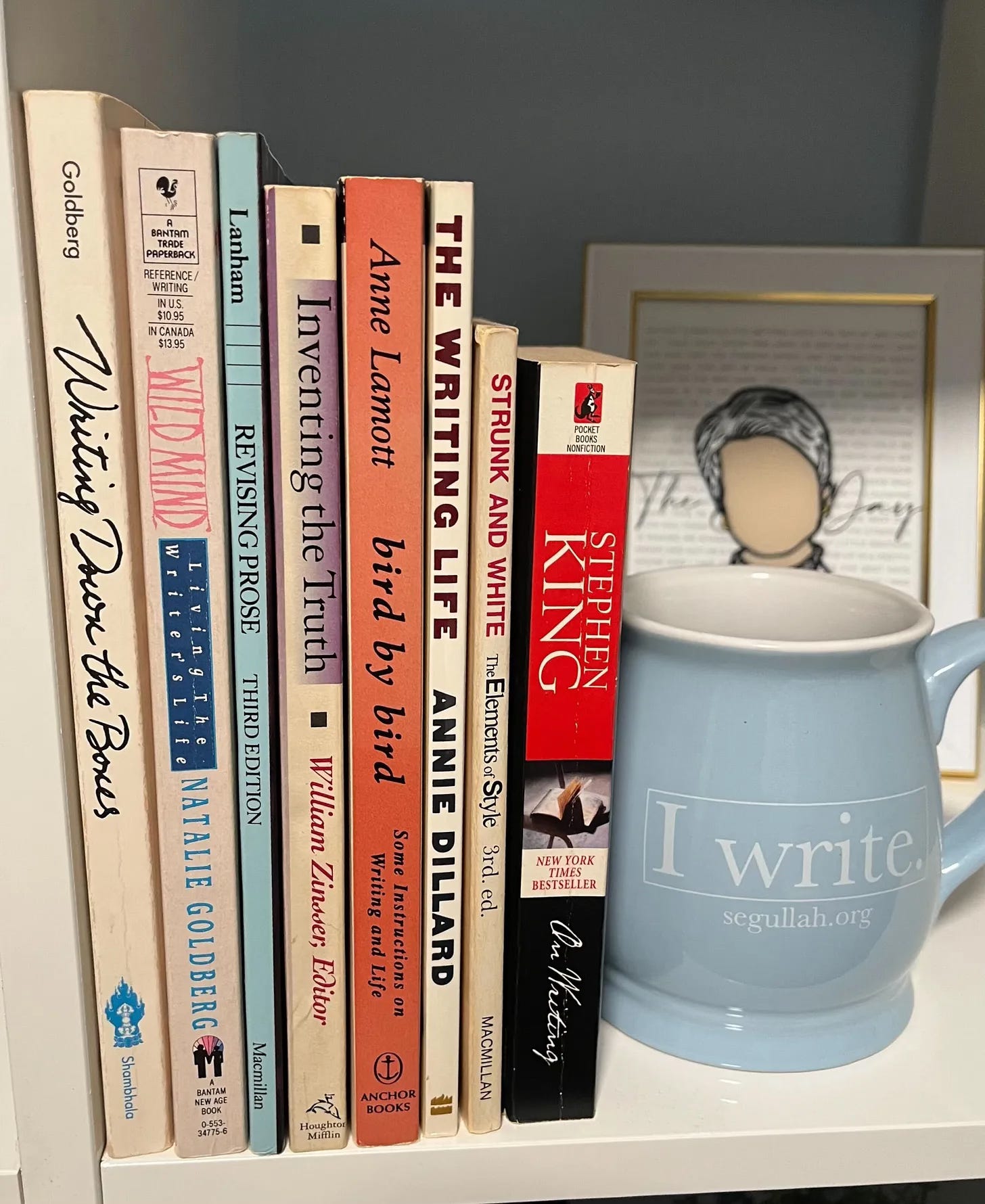
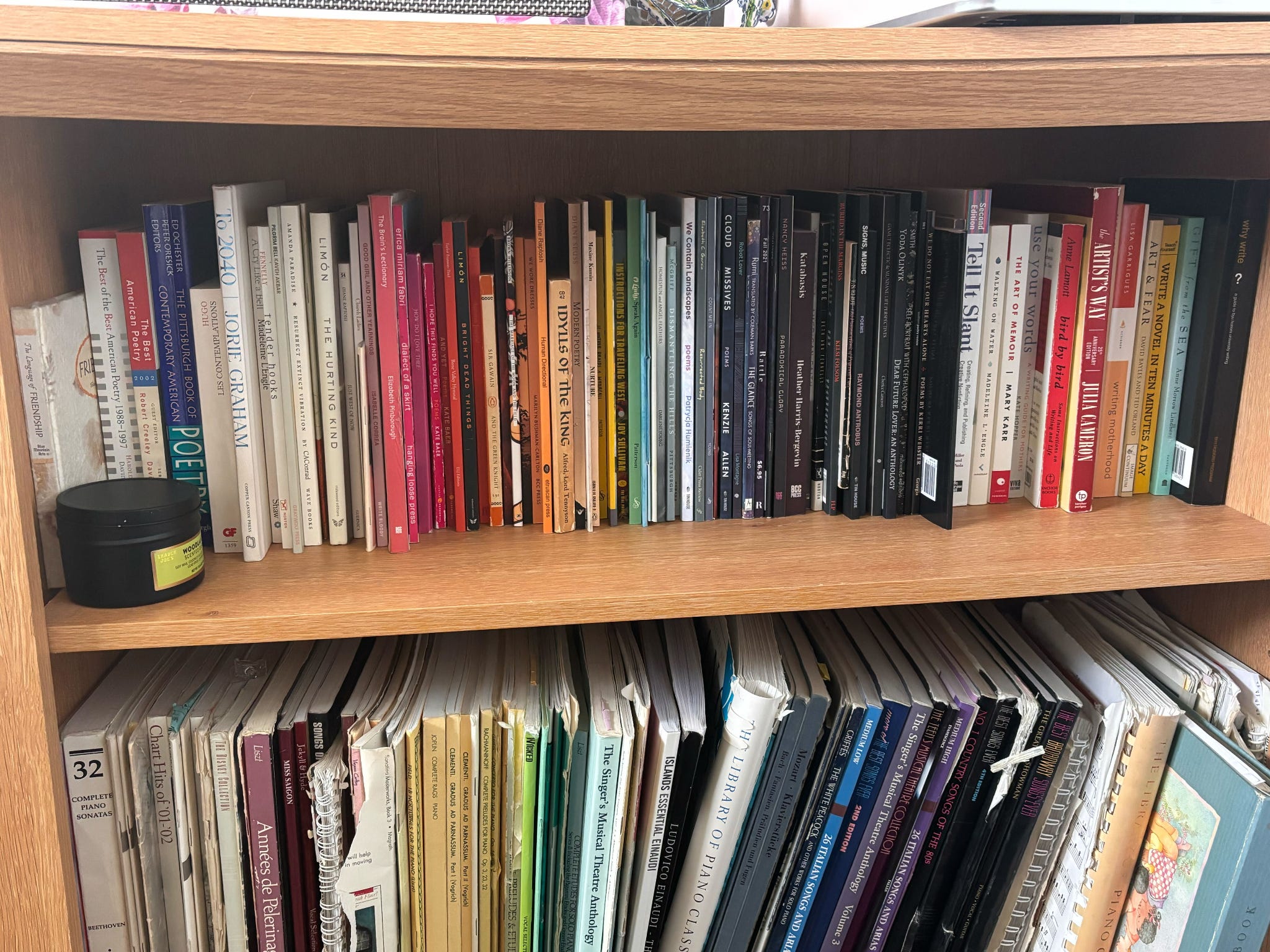
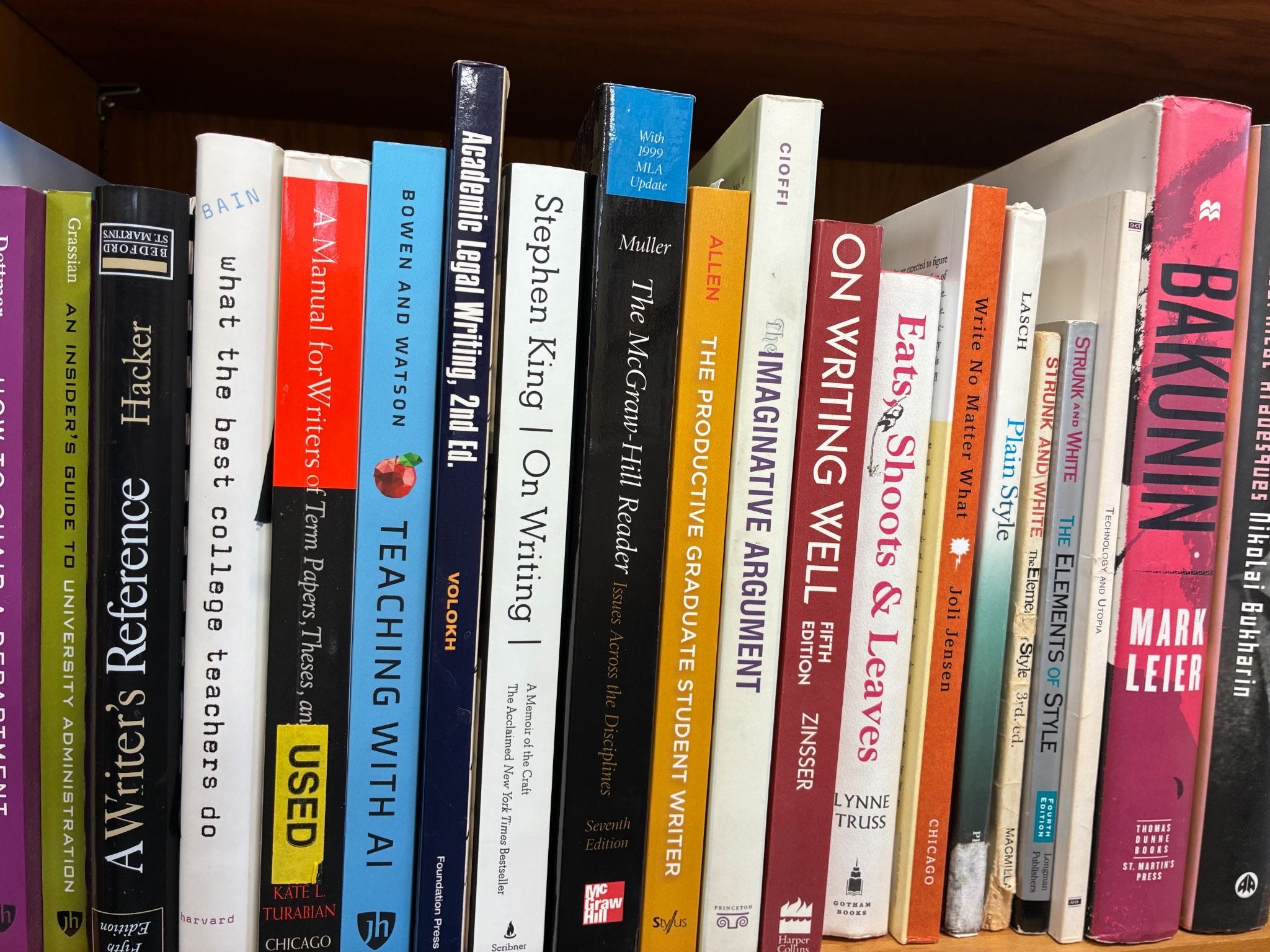
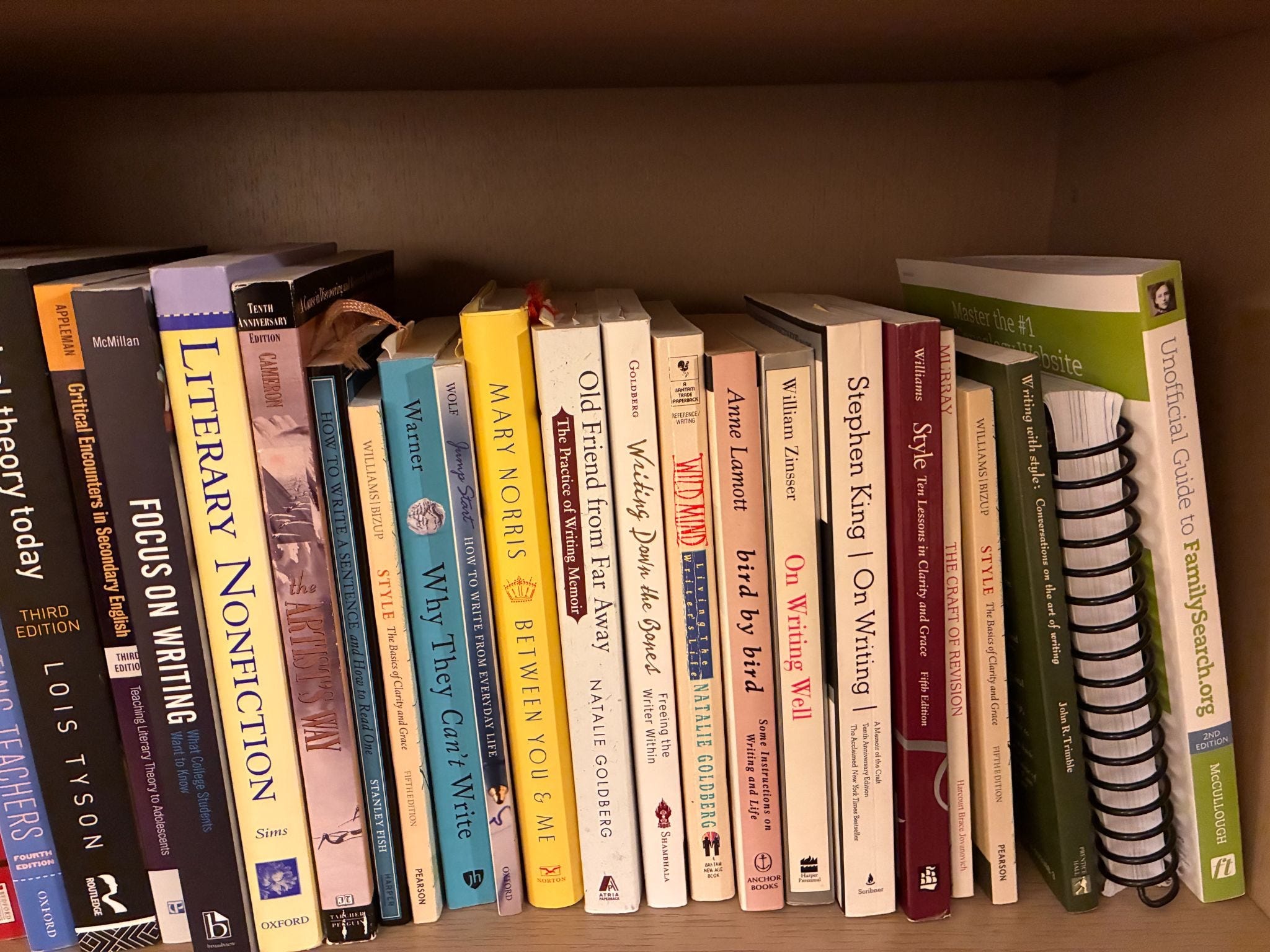
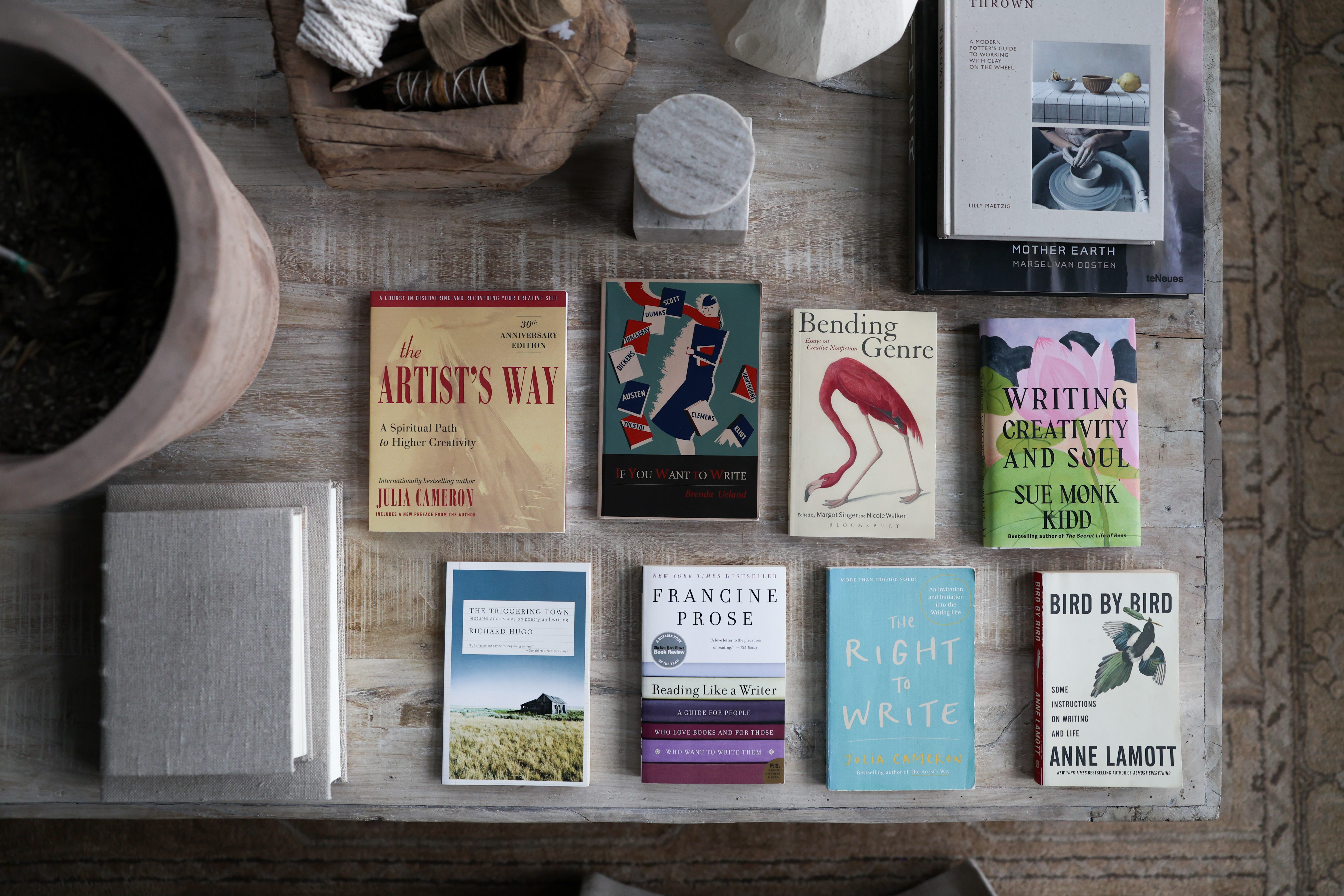
Please also enjoy a few photographs of bookshelves belonging to Wayfare staff, displaying many of these beloved companions. Reader, beware: Your browser may experience a mysterious multiplication of shopping tabs; at the same time your wallet may experience a certain lightness of being.
Enjoy!
A Swim in the Pond in the Rain - George Saunders
George Saunders presents seven short stories by Russian masters of the form followed by analysis of how each story works (or doesn’t). The stories are beautiful, the analysis incisive; the book teaches by example, over and over again. Each story brings different tools and techniques to the party.
Ryan Fairchild
And along the way, George Saunders reminds us why both writing and reading stories changes us. You’ll be inspired to be not just a better writer, but a better person.
Jeremiah Scanlan
This book not only changed the way I approach writing, but more importantly, it changed the way I read story.
Katie Lewis
On Writing Well - William Zinsser
The book that got me hooked on reading about writing. Clear, practical advice about the principles, methods, forms of, and attitudes we bring to writing. Focused on writing non-fiction, especially journalism, but applicable to all forms of writing.
Sunny Stimmler
Becoming the Writer You Already Are - Michelle Boyd
Becoming the Writer You Already Are is geared primarily towards academics and academic writing, but Boyd’s approach is to provide tools and practices for writers to identify their own writing process, which is valuable for all writers! I love the focus here on process and uncovering the default process that a writer has, and then finding ways to lean into that process, rather than resisting it. Definitely a book I’ll revisit again and again.
Conor Hilton
Writing Down the Bones: Freeing the Writer Within - Natalie Goldberg
Writing Down the Bones is the book I go to when I’ve let my inner critic take over or when I’ve talked myself out of writing altogether. Drawing on her background in Zen Buddhism, Natalie Goldberg treats writing like a spiritual practice. Through personal anecdotes and practical exercises, Goldberg encourages writers of all levels to show up to the page regularly, with honesty and courage, and to use the ordinariness of life as their best material. It is hopeful, funny, and inspiring all at once.
Tricia Cope
Rhetorical Grammar - Martha J. Kolln & Loretta S. Gray
Rhetorical Grammar is the rare college textbook I decided to hold on to after I graduated. It succinctly and clearly describes various grammatical rules and patterns, but more importantly, it also describes how grammar can help authors get their ideas across most efficiently.
Mark Melville
The Elements of Style - William Strunk & E. B. White
Rule 17: “Omit needless words.” A most assigned college text, The Elements of Style is as beloved as it is short. Dorothy Parker put it well: “If you have any young friends who aspire to become writers, the second-greatest favor you can do them is to present them with copies of The Elements of Style. The first-greatest, of course, is to shoot them now, while they’re happy.” In a more positive key, Elements drives home a lesson: every draft needs to be rewritten. It makes a good place to begin—and then begin again.
Benjamin Peters
Plain Style - Christopher Lasch
A critical older sibling to The Elements of Style, historian and social critic Christopher Lasch’s Plain Style convincingly elevates matters of punctuation and plain style to no less than the stakes of democracy. We are in trouble when we cannot call things by their proper names and cannot deliver “plain, forthright speech.” Lasch’s witty principles both model and convince that writing in a plain style is worth the struggle. I know of no other political essay of a high order that doubles as a primer on clear writing. (The Joys of Yiddish might attend the same family reunions.)
Benjamin Peters
Bird by Bird - Anne Lamott
Bird by Bird is the book I turn to when I need to get out of my own way and get words on the page. Anne Lamott manages to combine no-nonsense tough love with just enough tenderness to keep writers from giving up. I credit her encouragement to overcome perfectionism (“The voice of the oppressor, the enemy of the people,” she declares) and write terrible first drafts (she uses a more pithy and profane word) with getting me through every wobbly, uncertain first stab at a story.
Lorren Lemmons
Love, love, love this book.
Sunny Stimmler
This book’s good enough to be a beach read and simultaneously change your writing and your life!
Tricia Cope
Making Your Case - Antonin Scalia & Bryan A. Garner
Although this short book is written for lawyers, I can’t think of a better resource for how to make a clear, organized, and persuasive argument. Scalia and Garner teach how to cut to the heart of a matter both at the structural level and sentence level—how to polish grammar and word choice so that the argument shines clearly. Whatever one’s politics, it’s hard to argue with the fact that Antonin Scalia was one of the most talented writers in the history of the US Supreme Court, and it’s a treat to learn from him and Bryan Garner.
Jeremiah Scanlan
They Say, I Say - Gerald Graff & Cathy Birkenstein
A brief, actionable guide to scholarly writing, providing clear ideas for how to structure sentences, paragraphs, and essays. I particularly love the way that the authors help writers embed their ideas in an ongoing scholarly conversation.
Conor Hilton
A great teaching tool. Full of sentence templates for “the moves that matter in academic writing.” I’ve used it for years with student writers at all levels.
Sunny Stimmler
Eats, Shoots & Leaves: The Zero Tolerance Approach to Punctuation - Lynne Truss
A very entertaining read, even for people not invested in correct punctuation usage. While you’re laughing at her examples, the author is reminding you how to decide what punctuation to use, and where to put it.
Lori Forsyth
Seven Drafts - Allison K. Williams
Editing can feel insurmountable, especially with a messy draft. I love Williams’s systematic approach to tackling different aspects of writing—each draft focuses on a different element, whether a building block like plot, character, or setting or the nuts and bolts of language itself. The book is geared toward book-length projects, but it’s packed with gems that can be applied to any writing project.
Lorren Lemmons
Style: Lessons in Clarity and Grace - Joseph M. Williams & Joseph Bizup
This book gives actionable steps for making your writing clear and succinct. It’s an excellent resource on revising writing, especially for places in a draft where it may have taken several sentences to discover what you were really trying to say! Williams and Bizup help bridge the gap between a vague goal of writing that “flows” and “makes sense” and actually achieving a text that’s approachable to readers.
Layne Christensen
The reference is an inimitable beast. Use it. Cite it. Never, ever read it. Wage grammar wars with your nerd friends with it. (Cede only begrudgingly to other style guides such as APA, MLA, IEEE, and the like.) It contains the closest thing I know to a searchable complete compendium of all the style, usage, and grammar details necessary to write, edit, index, and work in professional English.
Benjamin Peters
Writing with Style: Conversations on the Art of Writing - John R. Trimble
Probably the first book I ever read on how to write—the first of many to encourage clear, concise writing with great tips on thinking well and increasing readability. It focuses on literary analysis and the structure of traditional academic essays. Trimble’s style itself is precise and full of light humor, busting the myth that academic writing must be dry and dull.
Sunny Stimmler
Merriam-Webster’s Dictionary of English Usage
Most of us have grown up hearing various English “rules,” but this dictionary shows that many of these rules get in the way of clear writing. In fact, the language’s best writers (e.g., Shakespeare) have flouted the rules for centuries. A reference book with “dictionary” in the title sounds like a snooze fest, but the entries are written in a surprisingly entertaining style, with just the right amount of snark. Merriam-Webster’s Dictionary of English Usage will tell you which rules you can safely ignore—and which will actually help you.
Mark Melville
Are you a writer? You may be interested in applying for our Emerging Voices mentorship program. Find out more below!
The 2026 Wayfare Emerging Voices Mentorship Program

Are you an emerging writer seeking to develop your craft?