



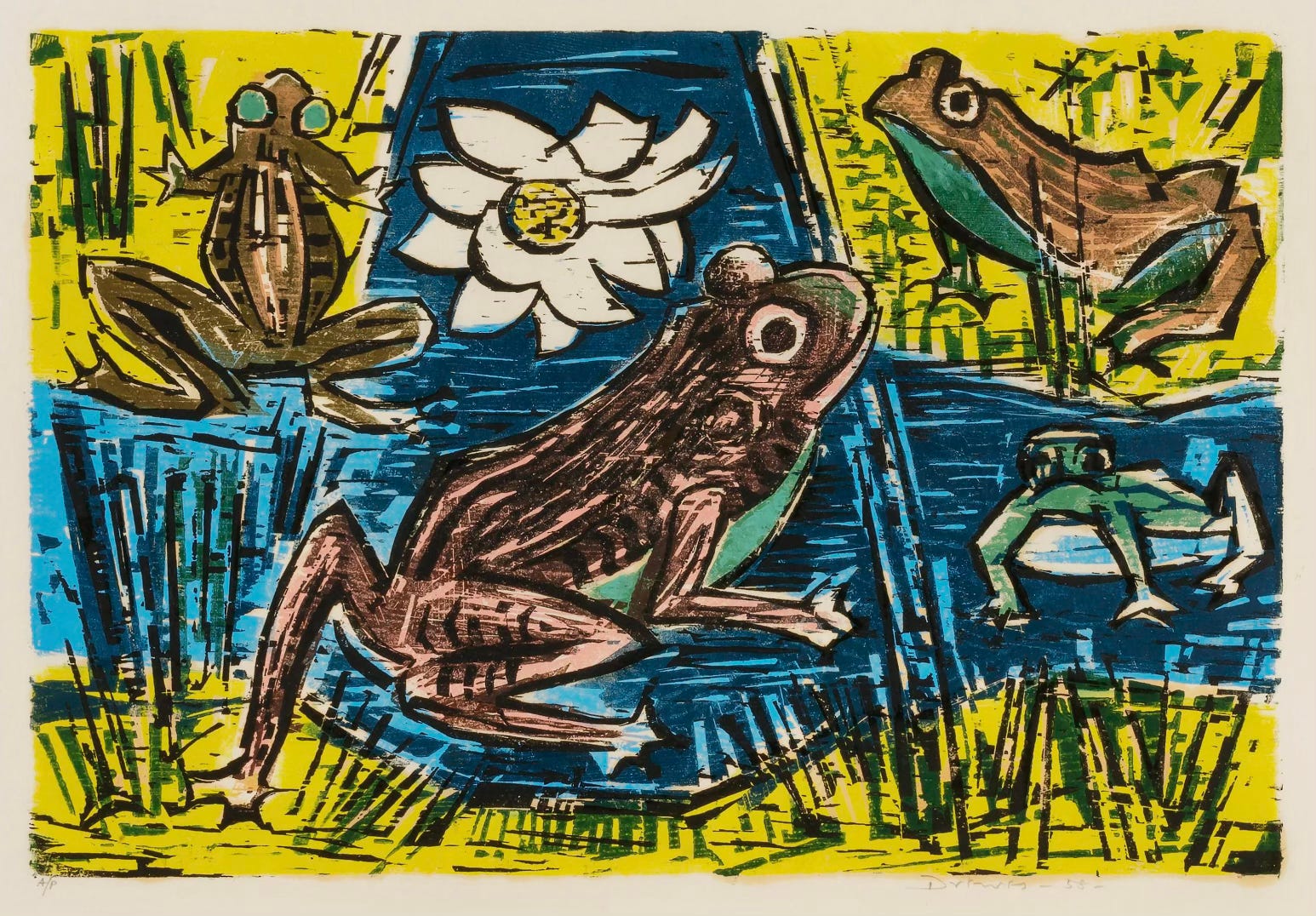
The Lord my pasture will prepare
And feed me with a shepherd’s care.
His presence will my want supply
And guard me with a watchful eye.
My noonday walks he will attend
And all my silent midnight hours defend.

When in the sultry glebe I faint,
Or on the thirsty mountain pant,
To fertile vales and dewy meads
My weary, wand’ring steps he leads,
Where peaceful rivers, soft and slow,
Amid the cooling verdant landscape flow.

—Joseph Addison, 1672–1719
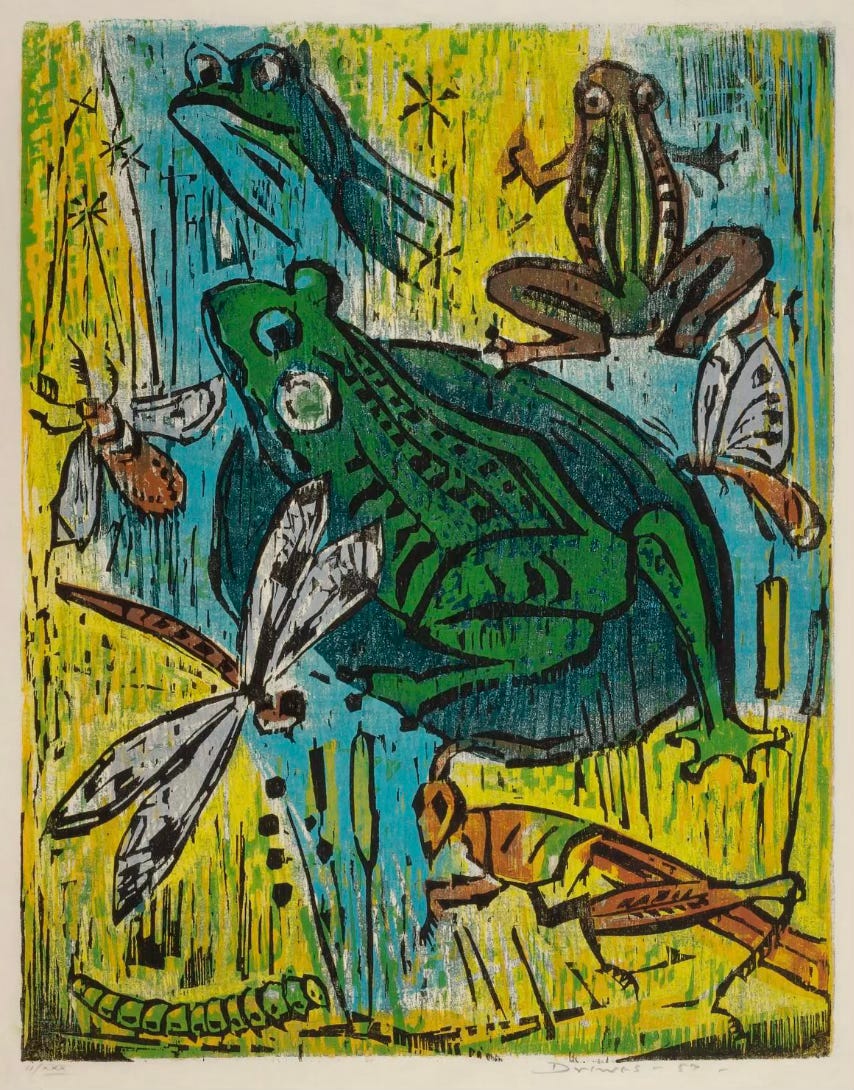
Toads returned to my backyard last year.
I live in Salt Lake County, Utah, where the namesake of our county, the Great Salt Lake, has come under the cloud of an ominous threat from human overuse of the available water in Northern Utah. The lake is a critical component of our ecosystem, as it protects the Salt Lake area from toxic minerals that lie beneath the lakebed, including naturally occurring arsenic. When the lake recedes, the dry lakebed is exposed to wind erosion that quickly launches the poisonous minerals into the atmosphere, harming all forms of life across the Great Salt Lake basin.
There are other liabilities with the lake’s decline. Salt in the lake prevents the lake from freezing in the winter. This large unfrozen body of water accelerates “lake effect” snowfall from storms originating from the Pacific Ocean during winter months, increasing snowfall by as much as 50%. That snowfall gradually melts in the spring and summer and is the primary water source for the three million people and every other living thing in the semi-arid climate of the Great Salt Lake ecosystem. Less snowfall in the mountains means less runoff water to the lake, creating a baleful downward hydrology cycle.
The wetlands around the lake are also a critical migratory refuge for sixteen million birds that make annual journeys from Alaska to Mexico and back. The decline of lake habitat contributes to declining bird populations. Declining bird populations disrupt the sensitive balance of plant life, insects, amphibians, fish, and brine shrimp (“Sea Monkeys,” for those of you old enough to remember), mammals, and inevitably, humans.
Two years ago, to do my small part in addressing lake decline, I let a quarter acre of my Kentucky Bluegrass lawn die by ending my practice of watering it with automatic sprinklers three to four times a week during hot summer months. No more water, no more fertilizer. No more weed killer. No more grub pesticides. I simply let grass on this quarter acre die and allowed it to repopulate with native plant species that had evolved to thrive in northern Utah’s semi-arid climate. All of this ended up in a Washington Post story that summer.
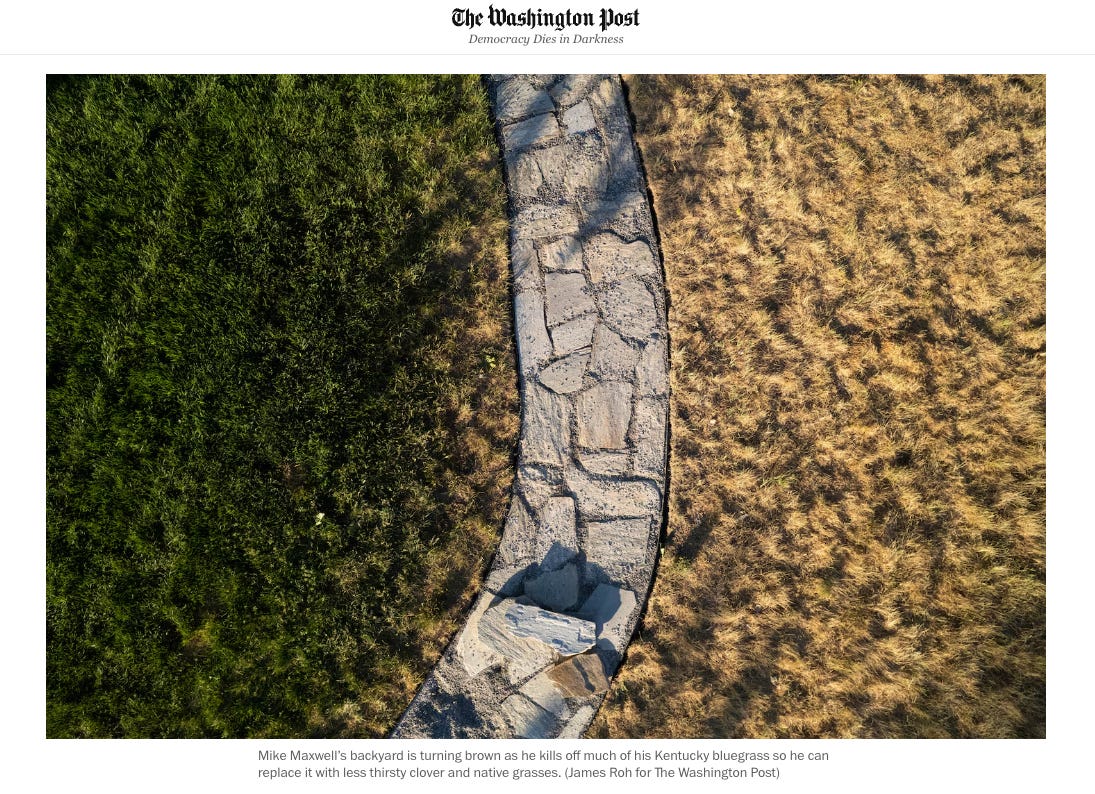
I didn’t let all of my lawn die. I preserved an area under a large Sycamore tree where the grass does not need as much water due to shade from the tree. It’s an area for family picnics and where my grandkids play when they come over. I still water it and it still gets some traditional lawn treatment, including modest fertilizer and weed herbicides, though I have scaled those back significantly from my past practices.
My yard is a few hundred yards from a small creek that flows out of nearby Corner Canyon. When we moved into this newly built subdivision twenty-five years ago, indigenous boreal toads populated our suburban neighborhood. Within five years of our moving in, the toads disappeared from our yard.
Amphibians are incredibly sensitive to toxins. Their departure from habitat is often a “canary in a coal mine” barometer of the declining health of an ecosystem.
My Christian discipleship calls me to care for all of creation. Latter-day Saint theology enshrines this ethos powerfully in restoration sources like the Doctrine and Covenants1 and in the temple endowment narrative. I find this best illustrated in the Gospel of John 3:17, where the author writes, “For God sent not his Son into the world to condemn the world; but that the world through him might be saved.”
Originally authored in Greek, the English word “world” is a translation of the Greek word “cosmos.” Cosmos is all creation. It’s every living thing that is created. Jesus’s mission is to all creation, not only the people, though people might be the highest form of God’s creation. The call I hear in scripture is to make my best effort to emulate Jesus, which includes ministering to people as well as the rest of creation. That’s how I understand Christian discipleship.
Fast forward to two years ago. After turning off the water and returning my quarter acre to its natural habitat, the toads reappeared—paradoxically, after we stopped dumping thousands of gallons of water on our lawn every summer. Environmental dryness from climate change is a frequent culprit in the disappearance of amphibious creatures across the globe so somehow my actions had the opposite effect.
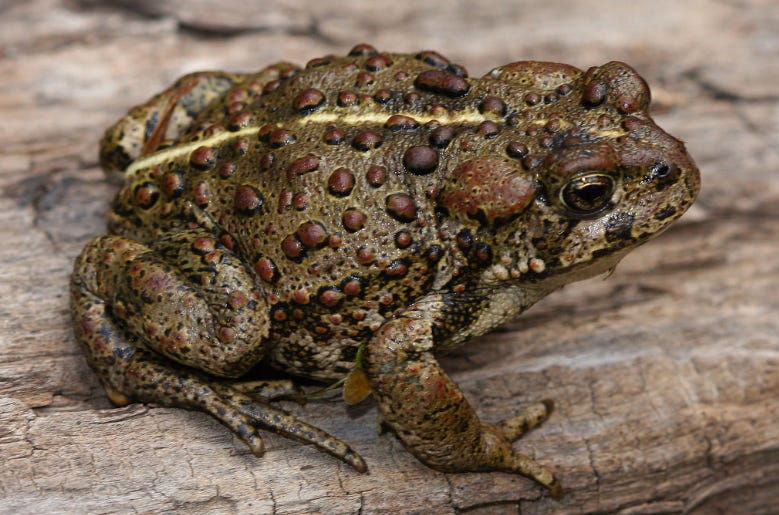
I don’t believe my toad recovery came from turning off the water. Rather, I believe it was the discontinuance of pesticides, herbicides, and fertilizers that I had been applying to this space for the past twenty years. Without a non-native pristine Kentucky Bluegrass lawn to cultivate, there was no longer any reason to be spreading toxic chemicals on that quarter acre.
In addition to toads, garter snakes, squirrels, and voles also returned. So did owls, hawks, and falcons, hunting the small creatures. Rather suddenly, we were seeing all of these species in our yard again. Nature is resilient when we give it a chance.
Juvenile toads are particularly sensitive to toxins like pesticides and herbicides, and I rarely see them in the bluegrass area. Once they mature, with greater resilience, the adult toads seem to really like the small bluegrass lawn patch, despite the modest lawn treatments I still use in that area, which is cooler and wet with more bugs to eat and more hiding places in the long grass.
My unscientific theory is that when the juvenile toads from the creek made their way toward my yard in those first few years of our residency, they were met with an impossible concentration of toxins that were far too much for their immature constitutions to survive. Lawn herbicides, pesticides, and fertilizer. So they stopped coming. They stopped even trying.
But by creating healthy conditions for the juveniles to mature, toads now come and stay through adulthood. The juveniles flourish in the indigenous habitat. The adult toads can abide in all of my yard and enjoy, and even seem to prefer, the tranquility they find in “fertile vales and dewy meads” of the cool, wet Kentucky Bluegrass area beneath the shade of the large sycamore tree. The toads, my grandkids, and I all thrive “amid the cooling verdant landscape” in this small corner of creation, which I steward and call home.
Mike Maxwell serves on the boards of Latter-day Saint Earth Stewardship and Great Salt Lake Interfaith Action Coalition, organizations activating communities of faith in the effort to save the Great Salt Lake.
Art by Werner Drewes (1899–1985).
Doctrine and Covenants 59:16–20; Doctrine and Covenants 104:14–18.