


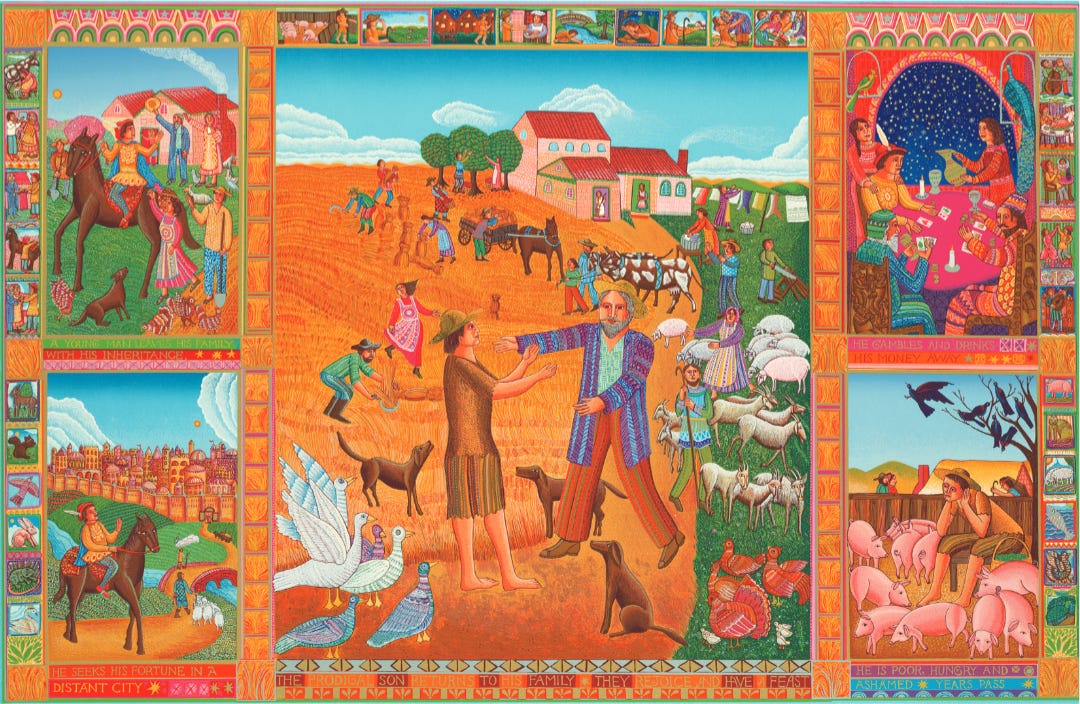
The teachings and parables of Jesus Christ often revolved around the pleasures of feasting and celebration. In his parable of the prodigal son, for example, Jesus describes a young man who “took his journey into a far country, and there wasted his substance with riotous living” (Luke 15:13). This prodigal’s search for pleasure is excessive, carrying him far from home, where he wastes the inheritance his father bestowed on him. But when he comes to himself and returns to his father in humility, seeking only to be “as one of thy hired servants,” the father responds by throwing a party (v. 19). He instructs servants to bring “the best robe, and put it on him; and put a ring on his hand, and shoes on his feet: and bring hither the fatted calf, and kill it; and let us eat, and be merry” (vv. 22–23). Although a love of pleasure and dissipation might be construed as the reason for his reduction to poverty, the father’s response is not to shield his son from fine food and drink and clothes but to welcome him home with a banquet and music and dancing. In response, the prodigal’s older brother refuses to participate in the festivities, complaining to the father that, despite his diligent labors, “thou never gavest me a kid, that I might make merry with my friends: but as soon as this thy son was come, which hath devoured thy living with harlots, thou hast killed for him the fatted calf” (vv. 29–30). The older brother objects to the music and the dancing and the fine clothes and the rich food, particularly because he has never sought pleasure for himself and because a pursuit of pleasure represents all that he despises in the younger son. Yet the father insists, “It was meet that we should make merry, and be glad” (v. 32). In his teachings, as well as in his lived experience, the Savior defended pleasure against the censures of the self-righteous.

