


Numbers tell stories, but only through human interpreters.
Currently, numbers showing the steep decline of global birth rates have sparked fierce debates in governments, magazines, and online forums.
The numbers certainly are striking. In 1950, the global total fertility rate (or the average number of children a woman had during her childbearing years) stood at about 5 births per woman. In 2025, that number was 2.24, and is expected to drop below 2.1 (the standard number for population replacement levels) by 2050.1
Many factors affect total fertility rates, including economic development, migration from rural to urban areas, birth control, access to education, and economic outlooks. In general, however, countries that once saw high or moderate birth rates in the middle and end of the twentieth century now report birth rates far below replacement levels.2
Numbers relating to birth rates are sometimes presented as neutral facts, but they rarely remain neutral for long. Once interpreted, they become weighted with anxiety, blame, and moral agency. In the United States, for example, pronatalists view falling birth rates as signs of economic decline or “moral decay.”3 Conversely, antinatalists welcome failing birth rates as relief from environmental or social strain.4
Debates, ideologies, and policies regarding natalism are not new. Governments have vested interests in birth rates since they shape the future of work, resource distribution, militaries, and taxes. In the twentieth century alone, governments tried various ways to raise (or depress) birth levels: from Sweden’s parental leave policies to Nicolae Ceaușescu’s decrees outlawing abortion and contraception in Romania; from China’s erstwhile “one-child policy” to France’s French Family Medals, pronatalist and antinatalist policies take many directions. There are even pronatalist and antinatalist stories in the Bible. In one of the Bible’s most infamous stories, Pharaoh murderously throws all male Israelite infants into the Nile, as he fears the Israelites will become “mightier than [the Egyptians]” (Exodus 1:9). While an extreme example, this story illustrates how discussing birth rates in terms of fear, contempt, or outright xenophobia and racism can lead to tragic outcomes.
I find both frameworks—pronatalism and antinatalism—deeply unsatisfying. While their desired outcomes are opposed to each other, they share similar fixations on control, prediction, and fear to achieve those goals. They frame birth as a problem to be managed rather than a mystery to be received, and they rarely succeed in convincing people to care more deeply for children or for life itself. I do not want to frame the holiness of life in terms of panic or preservation. I want to learn how to embrace life, with its interlocking, intertwining oppositions of mess and order, holiness and misery, and joy and sorrow (see 2 Nephi 2:11).
Our vision for the future is shaped by how we regard the world. The framing of the contemporary natalism debate has missed the mark about celebrating and nurturing the gifts of life, and instead has focused on numbers, the “right” kinds of births, and civilizational or ecological apocalypse. This framing does not lend itself to valuing life.
I propose looking at questions of cherishing birth and life through a different framework: that of beginnings, and specifically, through the philosophy of natality. Natality does not focus on demography or birth rates; rather, it crafts relationships and environments that welcome new beginnings for all.
What Is Natality?
Natality is a philosophical and political category created by the twentieth-century philosopher and political theorist Hannah Arendt. Arendt argues that the concept of natality is essential to human dignity, freedom, and action. “Man is free because he is a beginning,” she writes in her essay “What Is Freedom.” “Because he is a beginning, man can begin; to be human and to be free are one and the same.”5 Each birth, each new beginning, she argues, allows for a “new world” to come into existence.6
Ironically, Arendt’s views of natality were forged during chaos and destruction—while worlds she knew ended. Arendt, a Jewish woman who saw the rise and violence of antisemitism in Nazi Germany, who was imprisoned by the Gestapo, who escaped from an internment camp in Vichy France, and who lost loved ones in the Holocaust, certainly knew loss and death. Even after escaping from Vichy France and immigrating to the United States in 1941, she witnessed and wrote about the horrors of the Holocaust, nuclear proliferation, and human rights abuses across the globe.
Arendt saw how governments and individuals inflicted violence, and yet she chose to frame life—and political thought—in terms of the human capacity for beginnings. Birth makes all people “newcomers and beginners,” she writes, with the agential power to “take initiative,” regardless of circumstances.7 Agency and action create new possibilities, new political systems, and new worlds where people with different backgrounds can coexist.8 Instead of determinism or fatalism driving the human condition, Arendt argues for natality’s centrality in the human experience.9 To be mortal is to die, yes, but to be mortal also means finding ways to begin again. Natality is “the miracle that saves the world.”10
Arendt did not develop natality as a meditation on motherhood or childrearing, yet natality offers a more expansive and enlivening framework for discussing the political implications of birth and children than current pro or antinatalist positions. Indeed, the reality and needs of children offer a clear way to witness and respond to the urgency of beginnings, risk, and action. Birth transforms bodies, lives, and communities. According to Arendt, the words of the scriptural herald, “a child is born unto us,” are the most “glorious” for any society to receive.11
Children—all children—are born unto us, unto the families and communities which bear the responsibility of cultivating the good, beautiful, and true in their (and our) lives. Focusing on the ways children teach some of the principles of natality—including accepting risk, building community, and choosing courage—can provide “hope for a better world” by valuing children in our communities (see Ether 12:4).
Natality and Risk
Hannah Arendt ties the meaning of natality to freedom and human flourishing—having the freedom to create new possibilities in one’s life, society, or nation. Bringing children into this world—and raising children—embodies both the hope and the risk of new beginnings.
Natality embraces life, which includes the limits and power of human agency. And, whether to our dismay or wonder, life is charged with risk. As a mother to two young children, I witness how risk augments my children’s lived experience. Every day they amaze me with the strength of their bodies and minds. Yet every day I am also made aware of their vulnerability. At times, their little bodies shiver with fever; sometimes other kids push them away.
It seems both my heart and my amygdala grew after having children; my fear wants me to protect them from everything, whereas my heart realizes my capacity for fear threatens their capacity for growth and my capacity to love. While it is easy to let fear paralyze the future, I cannot live like that. I cannot love like that. To give into that fear would suffocate both my children’s and my ability to grow. Embracing life means facing fear, even while knowing there are no guarantees in human love. It takes courage to love life and to love those in our lives, never knowing when our endings and beginnings will coincide. But natality asks us to act—to love—anyway.
I remember sitting in Oxford’s Vault and Garden Café with a friend months after I had given birth to my firstborn. My husband and I had traveled to England together with our son so I could conduct archival research for my PhD dissertation while still breastfeeding. While in the UK, I met up with my friend. She was also a mother with young children, and she was also pursuing a PhD.
While my husband played with our baby, my friend and I exchanged confidences amongst the honey-yellow stones of Oxford. We talked about the haze and urgency of new motherhood, of endings and beginnings of various life stories, of shifts in hormones and priorities. We talked about risk, about death, and specifically about the “valley of death” in childbirth.
This friend, a mother of three sons, is intimately acquainted with that “valley of death.” She lost one of her sons at birth in circumstances that set off a medical emergency for her and another child. I asked her in a roundabout way how she ever walked through that grief. With tears in her eyes, she looked right at me and said, “You have more strength than you realize. Even in that.”
This is a natality mentality. This is hope in the face of new horizons, whether dark or bright. This is facing new beginnings, whether wanted or unwanted. This is centering life around birth rather than death. Not in a naïve, trivial way—neither birth nor death is easy. They both bring pain and uncertainty. But natality provides a useful corrective to fatalism, and a hopeful framework to work, build, and believe in the future. In our lives, we will experience death and rebirth in countless ways. If in each person are new beginnings with the potential to “begin the world over again,” then it follows that worlds can also end. But the framework of natality can give us strength to face dark nights and new horizons with faith.
Natality and Community
My friend faced death and new life, and the work of envisioning a revised world for herself and her family with the support of a community willing to enter an uncertain future with her.
Natality cannot thrive in isolation; while natality champions individual actions of freedom, it cannot stand alone. Natality means choosing each other. As one Arendtian scholar puts it, natality is our entrance into “the world we inhabit” and share in common with others.12
We enter worlds we did not create, yet we bear responsibility in how we shape those worlds and how we care for other newcomers. Our task, according to Arendt, is to “provide and preserve the world for, to foresee and reckon with, the constant influx of newcomers who are born into the world as strangers.”13 Natality means making space for each other in public, creating environments which welcome the newcomers we encounter, and practicing patience when life is noisy and uncomfortable.
Children are obvious “newcomers.” A society’s treatment of children indicates societal health. Authors of dystopian novels frequently use themes of controlling children, sex, or sexuality to explore questions of human flourishing.
I still remember reading Madeleine L’Engle’s A Wrinkle in Time as a child, and having a gut reaction as I read about the protagonists confronting evil on the planet of Camazotz. When Meg, her brother Charles Wallace, and their friend Calvin arrive in Camazotz, they notice a perfectly orderly neighborhood. But something is wrong. All of the children dribble balls in eerie synchronization. Later, all of the children’s “mother figures” (as L’Engle calls them) open their front doors and call them inside at precisely the same time. I felt like I was reading about hell. There was no “community,” only control. And it certainly wasn’t a place for children.
Perhaps it is from reading such novels that I continue to have visceral reactions when I read of no-children policies in museums, cafes, or even playgrounds. Whether adults want to recognize them or not, children are a part of society—including in grocery stores, restaurants, public transport, or airplanes. Childfree spaces are made in the name of control, order, and quiet, but making public spaces unfriendly for children hurts society at large. This practice prioritizes the value of convenience over human dignity, and entrenches a belief that money can buy freedom from others.
This doesn’t mean adults—whether parents, neighbors, or teachers—should neglect teaching children how to behave in public spaces. But when adult desires for control or ease are prioritized over children’s needs to learn to engage with and wonder about their world, societies suffer.
Even though our social natures are inherently risk-laden, we unfairly target children for exploring the world. Children often experience the brunt of society’s impatience with the vulnerable.
Going out with children is an exercise in faith, hope, and charity. When I get my children ready for sacrament meeting, or prepare them for a transcontinental airplane flight, I cannot guarantee my children’s good behavior. I often fear judgment from impatient strangers, and have experienced some unpleasant interactions. Still, I prepare, I hope, and I pray for kindness from others. And I am grateful to have received grace from strangers who have shown me how to respond to children in public.
When my family lived in Washington, D.C., I took my children on an outing downtown. I did not love driving in the city, so I opted to take the Metro. My toddler son rode in the stroller, while I strapped my infant daughter to my chest in a baby carrier. The ride downtown was uneventful, and we enjoyed our outing. But when it was time to go home, my son protested. With all the strength of his two-year-old limbs, he thrashed around while I struggled to get him back in the stroller.
Once he was firmly buckled in the stroller, we still had too many Metro stops (including a line transfer) until the safety of home. My son was still engaged in a classic “terrible two” power struggle, determined to show me that the stroller was not the place for him, and how dare I suggest he needed a nap.
We were sitting in the back of the Metro car, and I tried to keep his temper tantrum contained. I felt the looks—both looks towards me and away from me—from fellow passengers as my son’s treble voice crescendoed. He then proceeded to take off his shoes. I grabbed them before he could throw them across the train. We reached our transfer stop and I somehow managed to maneuver the stroller off the train. I looked for a place to hide on that all-too-public platform, wanting to put my son’s shoes back on and calm him down, when I heard an “Excuse me.”
I tensed up, afraid that someone was about to chastise me for having loud, misbehaving children.
I turned around to see a woman in her sixties. She opened her mouth again: “Can I help you?” she asked.
I burst into tears. “Yes,” I said. “Yes, please.”
She helped me get to the elevator, kindly talking to me, my son, and my daughter.
That woman saw us through the framework of natality. She saw chaos, but she also saw the potential to rearrange that chaos into something new. And she acted. She had the courage to come up to me and ask if I needed help. She didn’t know if I would reject her help. But she asked anyway. She saw a stranger, she saw my need, and she created a new beginning for myself and my children that day. She will never know how much her kindness meant, but it changed my world, not only that day, but every time I remember it.
Natality and Courage
Natality means choosing courage—to take heart in this world and find room in our lives for the newcomers and strangers among us. In choosing and protecting those newcomers, natality means exercising courage and choosing children. I do not mean this strictly as choosing to have children. Certainly, choosing to raise and respect our own children takes sacred moral courage and fortitude. But choosing to raise and respect children not our own (including strangers and newcomers among us) takes another type of sacred moral courage (see Matthew 25:35).
There are many ways to choose children, regardless of marital status, desires for or the ability to have children, or less-than-ideal family circumstances. If the most glorious words are, “a child is born unto us,” then choosing children and all they embody—love, risk, new beginnings, communal bonds, and interdependence—glorifies and empowers all of us.
Choosing children requires leaving a contemporary individualist mindset and looking outward. It means choosing life, and all of its accompanying joys, sorrows, rejections, pains, and wonder. We choose children when we take care of the children in our families and communities by ensuring they are fed, housed, and safe. We choose children when we support children’s parents or other caregivers—whether by volunteering to sit alongside parents with rowdy kids during sacrament meeting, babysitting for a single parent, or offering to hold a diaper bag while a parent tends to an upset child. We choose children when we seek ways to improve maternal health. We choose children when we advocate for those who cannot advocate for themselves. We choose children when we seek to build peace. We choose children when we find ways to repair relationships and help others to begin again.
These are the moments which change the world. Spiritually, these are moments of repentance, and of refusing to give into despair. These actions require choosing to begin again, to believe again, to, indeed, be “born again,” and create the societies we want for ourselves, our neighbors, and our neighbor’s grandchildren. Beholding the world and the future with a framework of natality is not repackaged naivety. Rather, it takes courage to begin anew. It takes faith to acknowledge our “bleared, smeared” world and still find solutions to problems. Natality rewards agency in our relationships. Whether in the yin or yang of marriage, the mirror-like reflection of a new baby, the suddenly-strange otherness of a teenaged or adult child, or in faces of those we consider strangers (or even enemies), natality begins the world anew by providing new beginnings for those relationships. Whether or not we are graced with the relationships we desire, the choice to welcome newcomers in our lives enlivens the soul and the communities we live in. There are risks to wanting, there are risks to loving. There are risks to being alive. But these risks hold the potential to “create the world anew” through the miracle of beginnings.

When I think about the moment of birth—of a child’s first breath and that raw, lusty cry of life, I sense the power of natality. When I see neighbors rally together for parents who have lost a child (whether to illness, injury, or violence), I witness the bonds of natality. When I hear strangers speaking up for those who cannot defend themselves (especially those experiencing violence and injustice), I behold the dignity of natality. And I want to be part of this ongoing story.
These worlds and these stories I want to help create will not be completely my own. Natality does not guarantee control; rather, it celebrates human agency as it seeks to create conditions for human flourishing. As we seek to make private and public life more amenable for children, we will, in turn, make life better for us all.
Geopolitically, managing and controlling birth rates results in unexpected outcomes. Nations that seek to suppress birth rates later want higher birth rates; countries seeking higher birth rates have never found a proven policy. Pharaoh was so focused on numbers that he discounted the power of action, and the creative paths of a mother’s love. He did not count on his own daughter’s intuitive insights into natality, that she would take a newcomer, hidden in the bulrushes, and raise a stranger in royal robes. He could not have expected that that baby would challenge his empire and legacy.
Babies save the world. Like baby Moses, John the Baptist, or Jesus Christ, the new face of a child compels us to let the other—the baby, the immigrant, the stranger—change our old conceptions of ourselves.14 They make us all new creatures in Christ (2 Corinthians 5:17). “Respect[ing] the infant’s faith,” as William Blake writes, allows us to “[triumph] over Hell and Death,” and to see possibilities of renewal, redemption, and reconciliation. How we respond to and prepare for newcomers—especially for children—increases our capacity for working miracles in our own homes, communities, and nations.
Megan Armknecht is an associate editor for Wayfare. She is a writer and historian currently based out of Bangkok, where she lives with her husband and two children.
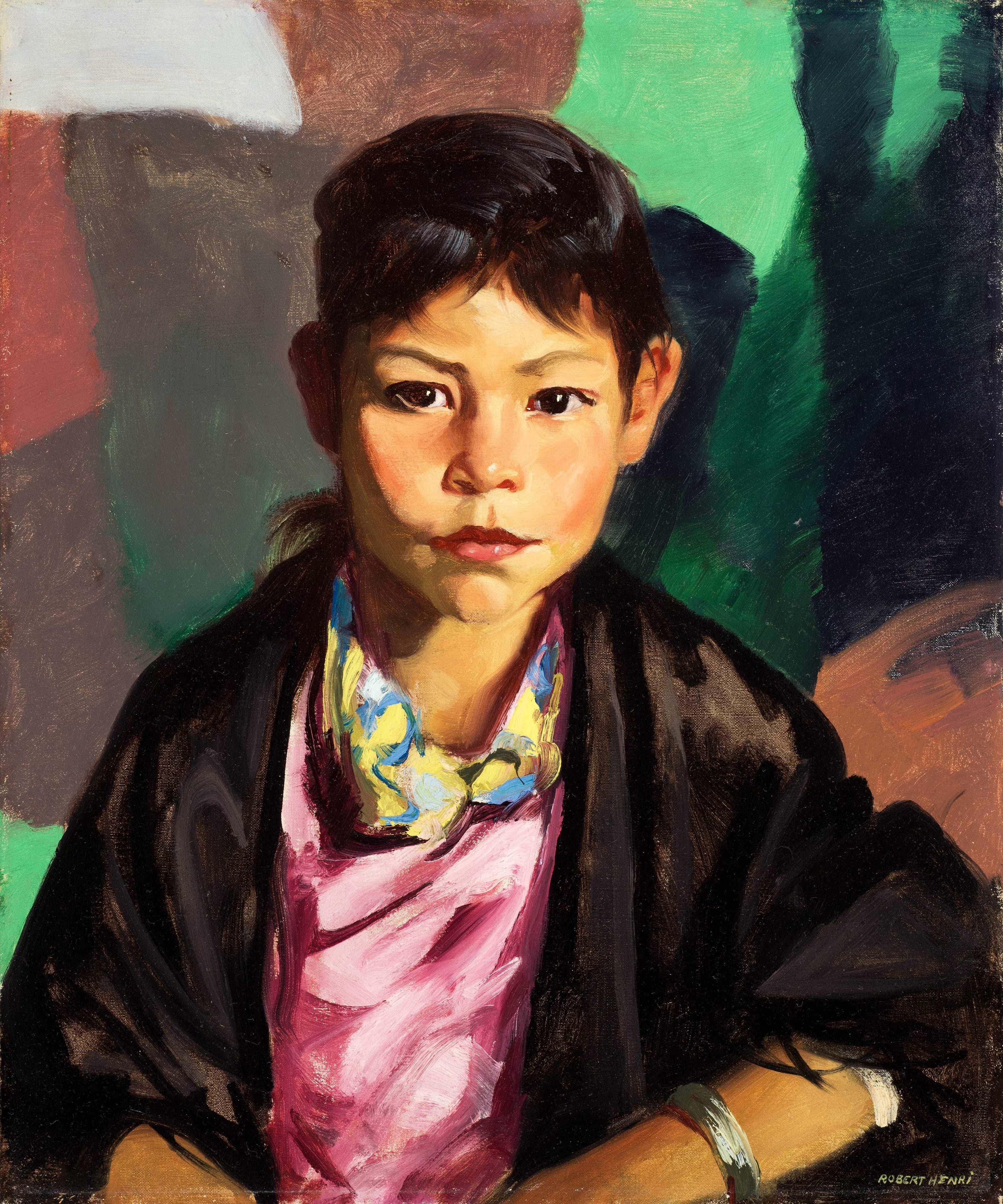
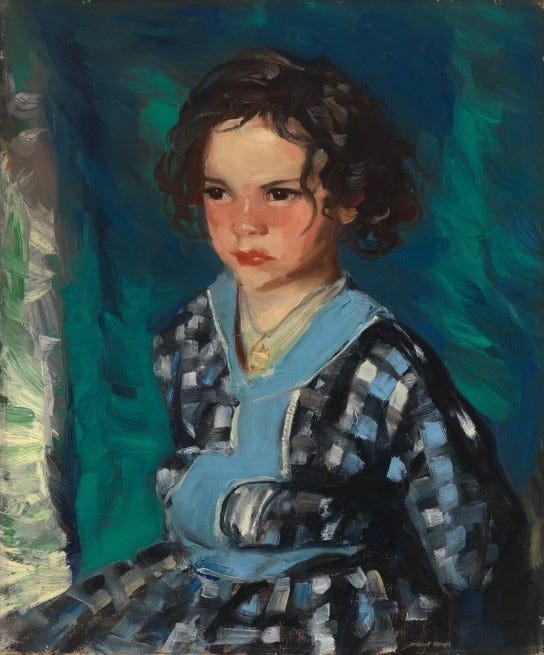
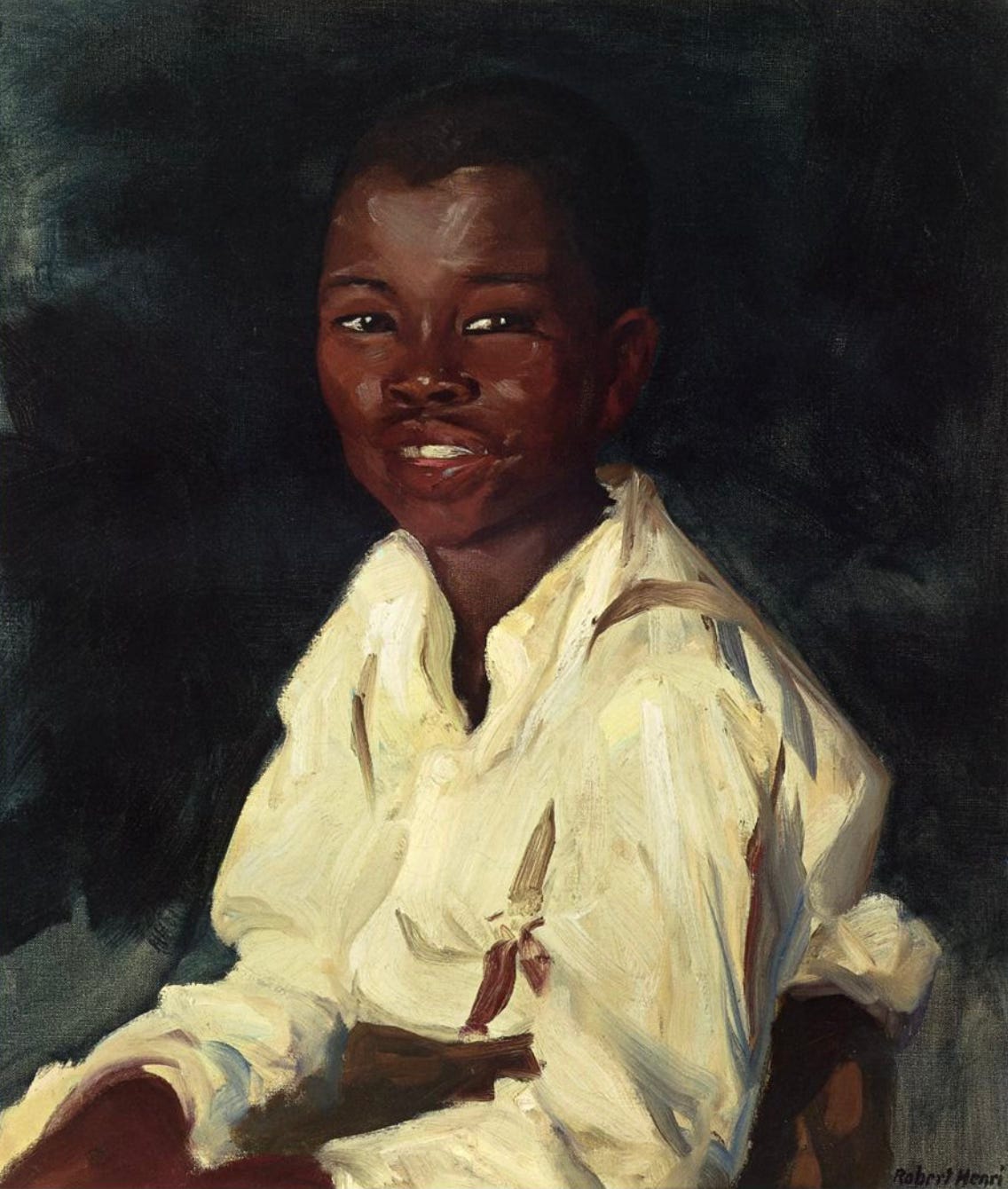
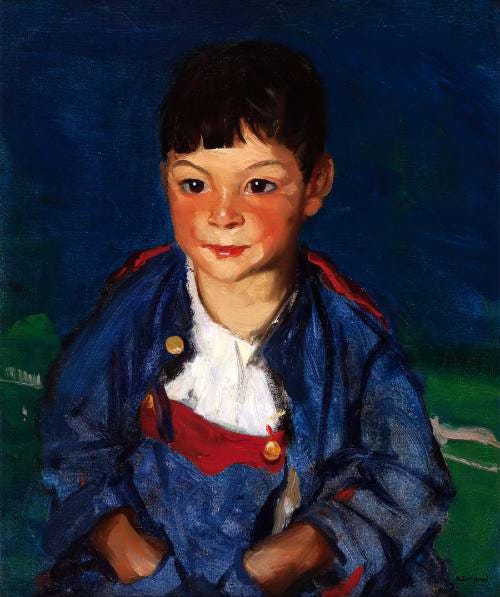
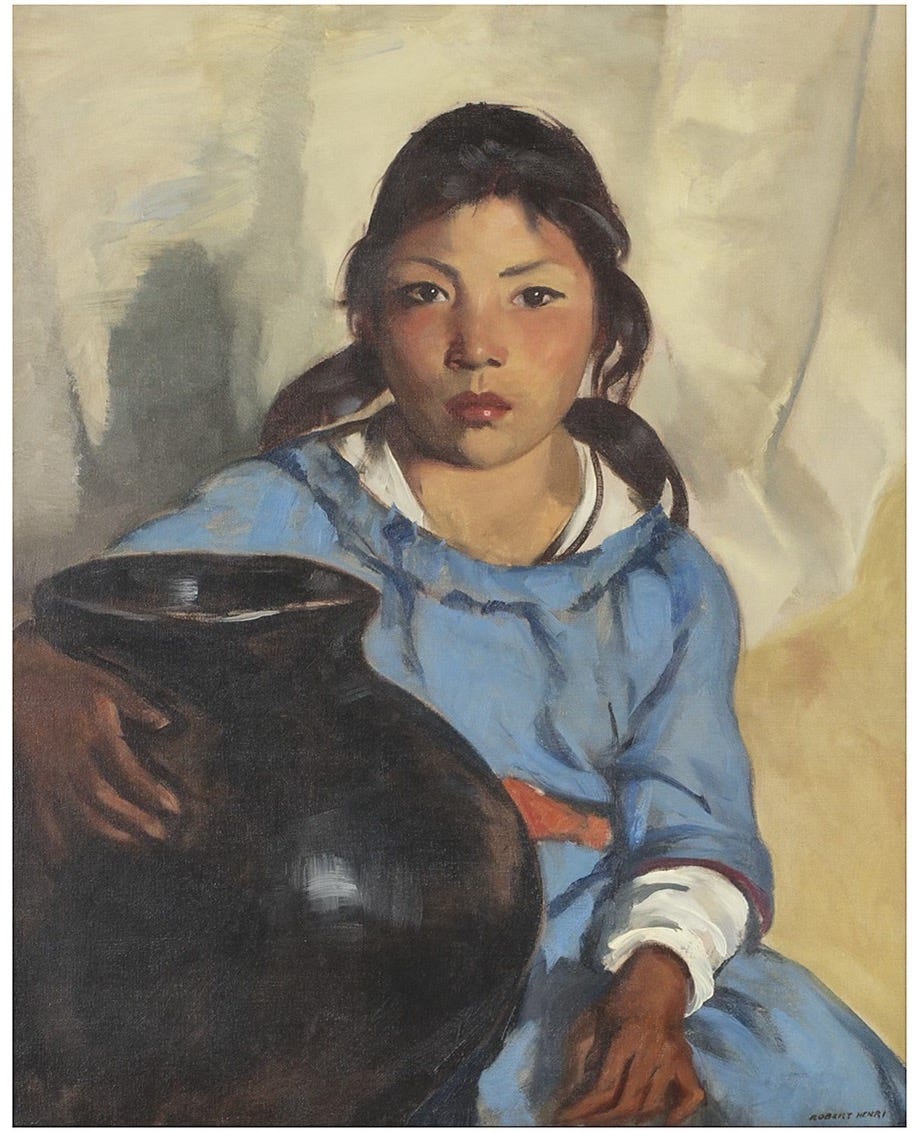
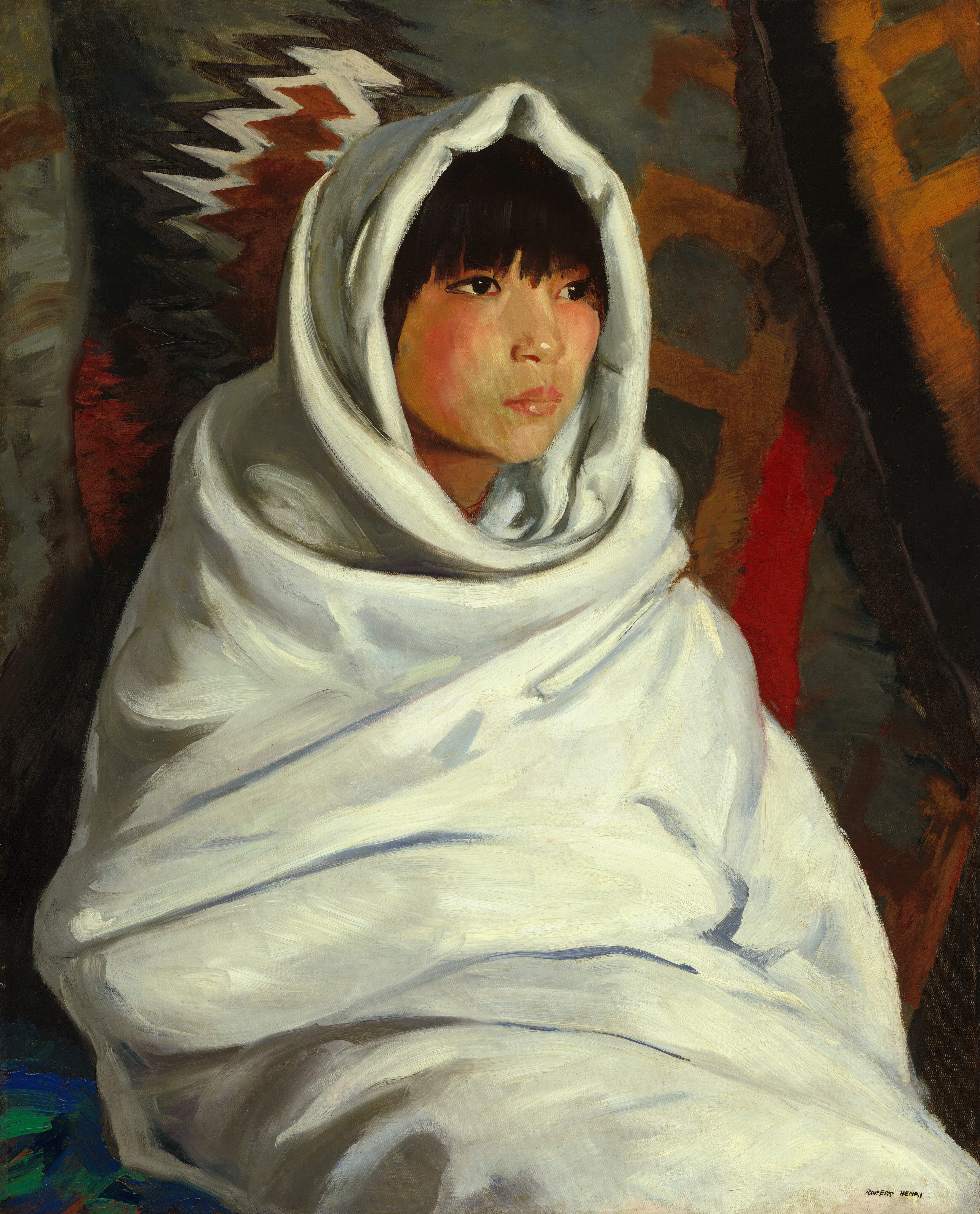
Art by Robert Henri (1865–1929).
David E. Bloom, Michael Kuhn, and Klaus Prettner, “The Debate Over Falling Fertility,” Finance and Development Magazine (June 2025), The International Monetary Fund, https://www.imf.org/en/Publications/fandd/issues/2025/06/the-debate-over-falling-fertility-david-bloom.
Lynne Peeples, “People are having fewer babies: is it really the end of the world?” Nature. 19 August 2025 and “The Great Relationship Recession,” The Economist, November 8, 2025, 9. See also Leonard Lopoo, “How to Make American Babies Again,” Wall Street Journal, April 29, 2025.
“The Great Relationship Recession,” The Economist, November 8, 2025, 9. See also Leonard Lopoo, “How to Make American Babies Again,” Wall Street Journal, April 29, 2025.
For a review of antinatalist thinkers see Joshua Rothman, “The Case For Not Being Born,” The New Yorker, 27 November 2017, https://www.newyorker.com/culture/persons-of-interest/the-case-for-not-being-born.
Hannah Arendt, “What is Freedom?” in Between Past and Future (The Viking Press, 1961), 167. More recently, Jennifer Banks has discussed the philosophy and political and policy opportunities of natality in her book, Natality: Toward a Philosophy of Birth (W. W. Norton & Company, 2023).
Hannah Arendt, The Human Condition, 2nd ed. (University of Chicago Press, 1998), 242.
Arendt, The Human Condition, 177. Some Arendt scholars claim that her focus on natality is directly opposed to her mentor (and erstwhile lover) Martin Heidegger, who framed the human condition in terms of the death drive, or sein-zum-tode. While this might be part of the story, I do not think it is the only answer; rather, there are multiple factors and philosophical sources which contributed to Arendt’s positions on natality.
See Arendt, The Human Condition, 7–8.
Arendt, The Human Condition, 247.
Arendt, The Human Condition, 222.
Hannah Arendt, The Origins of Totalitarianism (Harcourt, 1973), 466.
From Gaye İlhan Demiryol, “‘That There Be a Beginning’: Arendt and Natality”, International Journal of Social Sciences and Art Studies 2, no.1 (2023): 131.
Arendt, The Human Condition, 8–9.
Emmanuel Levinas, Totality and Infinity: An Essay on Exteriority, trans. Alphonso Lingis (Duquesne University Press, 1969), 198, 200, 291.
Beautiful writing, as always, Megan. I agree with much of this.
But I lean towards thinking that what you outline as natality is a kind of pronatalism. I think that pronatalism is a word people dislike because of its connotations, such as its association with controversial public policy or with unsavory characters like Elon Musk. But the word “pronatalism” literally means “for birth” or “in favor of birth.” Your focus “choosing children” feels synonymous to me. In fact, given that research strongly suggests that cultural factors matter more than economic factors for people choosing to have children, I think your focus is core to what pronatalism is (or at least what it should be).
Relatedly, I disagree that pronatalism is necessarily about control or fear. For example, the pronatalist Lyman Stone frames the argument for higher birthrates in the developed world as “helping close the gap between the number of children women say they want and the number they end up having.”