


Please find the original Spanish-language version of this essay here.

This I say therefore, and testify in the Lord, that ye henceforth walk not as other Gentiles walk, in the vanity of their mind, having the understanding darkened, being alienated from the life of God through the ignorance that is in them, because of the blindness of their heart. (Ephesians 4:17–18, KJV)
There are seasons in which one ceases to feel. One does not cease to believe, at least not entirely, but the chest stops burning. Prayers become monologues; the scriptures, merely a text. What was once presence becomes silence. And in the midst of that silence, a question can arise that few dare to voice aloud: What if what I felt before was not real either?
Many of us who have served a mission know that question, even if we have not always lived it firsthand. We recognize it in the faces of companions with whom we faithfully served, companions with whom we felt that burning in the chest (that sign of which the Lord speaks in Doctrine and Covenants 9:8) and who no longer walk with us. Some drifted away upon discovering something in Church history; others grew angry with a leader; still others simply stopped believing, without visible scandal, without any decisive argument. John records it with a sobriety that stings: “From that time many of his disciples went back, and walked no more with him” (John 6:66, KJV).
What happened? What was missing?
I do not presume to answer those questions, at least not directly. What I offer here are thoughts, disordered reflections like those of the seventeenth-century French thinker Blaise Pascal, on how we know God, on what happens when our faculties for knowing him fail, and on why we need both the heart and reason so as not to lose our way.
Blaise Pascal was, first and foremost, a man of science; he was a mathematician, physicist, and inventor of one of the first mechanical calculators—he was one of the sharpest minds of the seventeenth century. But on the night of November 23, 1654, between half past ten and half past midnight, something happened. Pascal wrote on a piece of paper what he experienced that night and sewed it into the lining of his doublet, where he carried it until he died. No one knew of the paper until it was found on his body. The first line reads: “Fire. ‘God of Abraham, God of Isaac, God of Jacob,’ not of philosophers and scholars.”1 From that night on, Pascal dedicated the remaining years of his life to writing what would become his great apologetic work: the Pensées. He never finished it. What we have are fragments, scattered notes, sketches that his friends compiled after his death in 1662. Despite their unfinished nature, or perhaps precisely because of it, in those pages one can perceive with clarity the depth and perspicacity of his thoughts. They are, above all, an attempt to lead the reader from the concrete reality of the human being, with all its greatness and misery, to an encounter with the living God.
What is clear from reading these fragments is that Pascal did not intend to demonstrate God’s existence through geometric proofs or metaphysical reasoning. His wager is something else: moral arguments that seek to incline the heart, not to convince the intellect, toward God. It is a different approach from what we are accustomed to seeing in Christian apologetics, and it is all the more surprising coming from the seventeenth century. The emphasis Pascal places on the heart2 occupies a central place in his anthropology as that human faculty where feelings, intuitions, and the first principles of knowledge converge. Unlike discursive reason, the heart operates through immediate and affective channels, which makes it a dimension especially vulnerable to external influences. This vulnerability is, in fact, the very reason behind Pascal’s severe warning against the theater: By representing human passions in so natural and convincing a manner, theatrical performance has the power to awaken in the heart feelings that, once awakened, escape the control of reason. For Pascal, even a love represented as chaste and virtuous onstage is dangerous precisely because of its innocence—it disarms the soul before it can defend itself:3
It is the heart which experiences God, and not the reason. This, then, is faith: God felt by the heart, not by the reason.
The heart has its reasons, which reason does not know.
Heart, instinct, principles.
While I think that the “God of Abraham, of Isaac, and of Jacob”4 (to use his words) must be felt, must be experienced, I sense that rarely—if not almost never—do we arrive at the knowledge or idea of God through the intellect alone but rather after having experienced or felt an external presence, or after being overwhelmed by thoughts that seem to come from outside ourselves. I believe it is only at that point, after feeling, that we employ the intellect. After all, “reason is, and ought only to be the slave of the passions, and can never pretend to any other office than to serve and obey them.”5
So on this point, I agree with Pascal that God must be felt, must be experienced, rather than approached with metaphysical puzzles to try to justify our belief, our feeling. It is reason that demonstrates theorems, but it assumes the axioms that the heart gives it:
We know truth, not only by the reason, but also by the heart, and it is in this last way that we know first principles; and reason, which has no part in it, tries in vain to impugn them. . . . Principles are intuited, propositions are inferred, all with certainty, though in different ways[.] And it is as useless and absurd for reason to demand from the heart proofs of her first principles, before admitting them, as it would be for the heart to demand from reason an intuition of all demonstrated propositions before accepting them.
But, on the other hand, what happens with those persons whose heart (whose feelings and intuition) is not entirely well? What happens with those who suffer from depression or anxiety, with those who endure some mental illness or live affected by an emotional disorder? Can these persons trust in their feelings or intuition, which depend so much on their heart? How can they know if they are correctly interpreting divine communication? How can they distinguish their own disturbed feelings from what is genuinely divine, especially in their worst moments?
If Pascal distrusts even the theater for its capacity to awaken dangerous passions, one would think that a person with advanced depression could scarcely recognize or interpret their feelings, much less use reason fully. And this raises further questions: Can those who suffer from depression or anxiety still feel God or experience communion with the divine? Certainly, if God so wills, he can dispel and even heal persons in that condition, without any doubt. But what happens in the meantime? Must that person remain in total darkness?
This presents a problem, at least in conventional Christianity, because while God may manifest himself through signs, we can read in the scriptures that his modus operandi is gentler, more still: “And he said, Go forth, and stand upon the mount before the Lord. And, behold, the Lord passed by, and a great and strong wind rent the mountains, and brake in pieces the rocks before the Lord; but the Lord was not in the wind: and after the wind an earthquake; but the Lord was not in the earthquake: and after the earthquake a fire; but the Lord was not in the fire: and after the fire a still small voice” (1 Kings 19:11–12). Similar descriptions are given in the New Testament: “But the fruit of the Spirit is love, joy, peace, longsuffering, gentleness, goodness, faith, meekness, temperance: against such there is no law” (Galatians 5:22–23).
So, as I have mentioned, in such cases the heart would be an impediment to holding on to this belief in God, even though we have already seen that the heart lays the foundations on which reason builds. What is to be done if our heart does not function correctly and cannot provide us with those foundations? Can this order be reversed? Can we trust in reason (insofar as possible, since some of these illnesses can cloud judgment)? Is it possible to place our trust in reason so that afterward the heart may corroborate these reasonings? My proposal, modest but firm, is yes, the order can be reversed, reason may sustain the structure while the heart heals, and when the heart returns to its normal function, it will corroborate what reason kept standing.
Pascal seems to propose something similar, although without mentioning mental illness—which is unsurprising, as that concept probably did not exist in his era. Nevertheless, he recognizes that not all of us can arrive at that knowledge and not everyone is granted the gift of knowing through the heart. It would have been interesting to know his complete proposal on whether it is possible for the heart to fail and to see whether he would agree with what I suggest here. “Therefore, those to whom God has imparted religion by intuition are very fortunate and justly convinced,” he wrote. “But to those who do not have it, we can give it only by reasoning, waiting for God to give them spiritual insight, without which faith is only human and useless for salvation.”
But this proposal carries a risk. If reason could sustain faith in the absence of the heart, it could also, when poorly employed, impose dogmas that the heart would reject. Pascal himself fell into that trap.
The only criticism I can make of Pascal is that there must be a balance and a mutual cooperation between the role of reason and that of the heart. My current reading of Pascal suggests that he grants primacy to knowledge acquired through the heart and seems to deny reason thereafter, or to actively limit it:
For it is beyond doubt that there is nothing which more shocks our reason than to say that the sin of the first man has rendered guilty those, who, being so removed from this source, seem incapable of participation in it. This transmission does not only seem to us impossible, it seems also very unjust. For what is more contrary to the rules of our miserable justice than to damn eternally an infant incapable of will, for a sin wherein he seems to have so little a share, that it was committed six thousand years before he was in existence? Certainly nothing offends us more rudely than this doctrine; and yet, without this mystery, the most incomprehensible of all, we are incomprehensible to ourselves.
Pascal renounced reason in favor of mystery, and he set reason against it. This belief in original sin caused much suffering and pain to millions of people (i.e., the condemnation of unbaptized children), and he chose to accept it as mystery. This is the danger when we relegate our reason and accept dogmas. When there is a dissonance between the heart and reason, this should serve as an indicator that something is wrong with one of the two faculties. We must not submit to dogmas without first having achieved a harmony between both.6
Dostoevsky spoke to us about this danger in “The Grand Inquisitor,” contained within his novel The Brothers Karamazov:
We too have a right to preach a mystery, and to teach them that it’s not the free judgment of their hearts, not love that matters, but a mystery which they must follow blindly, even against their conscience. So we have done. We have corrected Thy work and have founded it upon miracle, mystery and authority. And men rejoiced that they were again led like sheep, and that the terrible gift that had brought them such suffering was, at last, lifted from their hearts.7
If we do not use the heart and reason together, we can become victims of inquisitors.
And here I return to those who have left the Church. How many of them stood before a dogma that their reason rejected and their heart could not sustain? How many asked genuine questions and received as an answer the “authority of the Church”? How many were told that they lacked faith, that they should not doubt, that they should simply obey? How many learned that asking questions was synonymous with apostasy?
But it would be unjust to point only outward. Perhaps we, and perhaps they as well, have failed to give reason to our faith. The heart gave us the foundation, a genuine knowledge, but we did not build on it. And when that knowledge grew dark, nothing remained to sustain us. To build with reason is not to doubt; it is to give foundations to what the heart has given us.
And perhaps, even after having done all this and having built our metaphysical castles, God may come to meet us and tear them down and through the heart teach us that in reality, we know far less than we think we know, that we have made a God in our own likeness. It is one of the essential beliefs of Christianity: We believe in a God who reveals Himself, who makes Himself known to man and allows us to know Him. Hence the word “revelation”: to remove the veil. And at moments when we are allowed to see (to feel with the heart) through that veil, only our human nature prevents us from comprehending it all at once, and we will probably spend a lifetime trying to make sense of what we experience.
And what if we had the opportunity to see beyond the veil or if we beheld some miracle? Think of Julian of Norwich, who received numerous revelations and spent an entire lifetime, as an anchoress, trying to understand those revelations. These experiences of the mystics show us that an element of reason that tries to intervene, to help us translate, to capture something of the divine—something that allows us to hold on to that manifestation, to that knowledge we acquired through the heart.
I believe in a God who has revealed Himself in history and has made Himself known among men, who has become man. I believe that God desires that we all seek communion with Him. I believe it is important to accept revelation, but I also recognize that this revelation, whether given through a prophet or contained in the scriptures, is not exempt from error. The men who have written and prophesied are as human as we are: They have had fears, desires, and interests, and they have been victims of their era, their time, and their culture.
Those of us who have received our faith through the testimony of others should exercise reason while seeking that direct experience with the divine that can speak to our hearts. And if we have not had such an experience, we must use reason with even greater rigor. If we begin from the principle that God has given us reason, it is reasonable (if you will forgive the redundancy) to think that God expects us to use it. History has shown us, painfully, what happens when faith is left unexamined—when entire communities accept as divine mandate what reason would have exposed as human prejudice.
I believe that revelation is iterative, that God gives it to us little by little because we cannot withstand its fullness all at once. If even now it seems to bother some that God is love and that His message is so inclusive and broad,8 how much more difficult would it be if He gave us all His fullness at once. By iterative, I mean that it can be corrected along the way. I believe that at times even the prophets may have misinterpreted their experiences and needed correction. That is why I say iterative, not merely additive.9 Nor am I against organized religion, for other broad reasons that exceed the purpose of this reflection. Suffice it to say that we can believe in organized religion as well as in God’s individual communication with us, so long as we remain open to the heart and submit what God gives us to reason, doing the best we can.
I think again of those who have left. Perhaps what was missing, for them and maybe for us as well, was learning that the heart and reason are not enemies but companions on the road.10 That to doubt is not to lose faith, but to give it a foundation. That to question is not to apostatize, but to honor the reason that God gave us. After all, Pascal spent an entire night in fire, and he devoted the rest of his life to thinking and writing his incomplete apologia. And perhaps it is fitting that it remained incomplete, for no single generation can exhaust that labor on its own. Future generations will have the duty not to perpetuate and engrave in stone our beliefs or dogmas but to correct them in the light of new revelation. This will allow us to unveil God ever more, until we no longer see “through a glass, darkly,” but rather we will see “face to face” (1 Corinthians 13:12).
Javier Fuentes Mora is a computer systems engineer with studies in Catholic theology and a master’s in Philosophy, Culture, and Religion. He is passionate about theology and runs a YouTube channel discussing faith, history, and philosophy from a Latter-day Saint perspective.
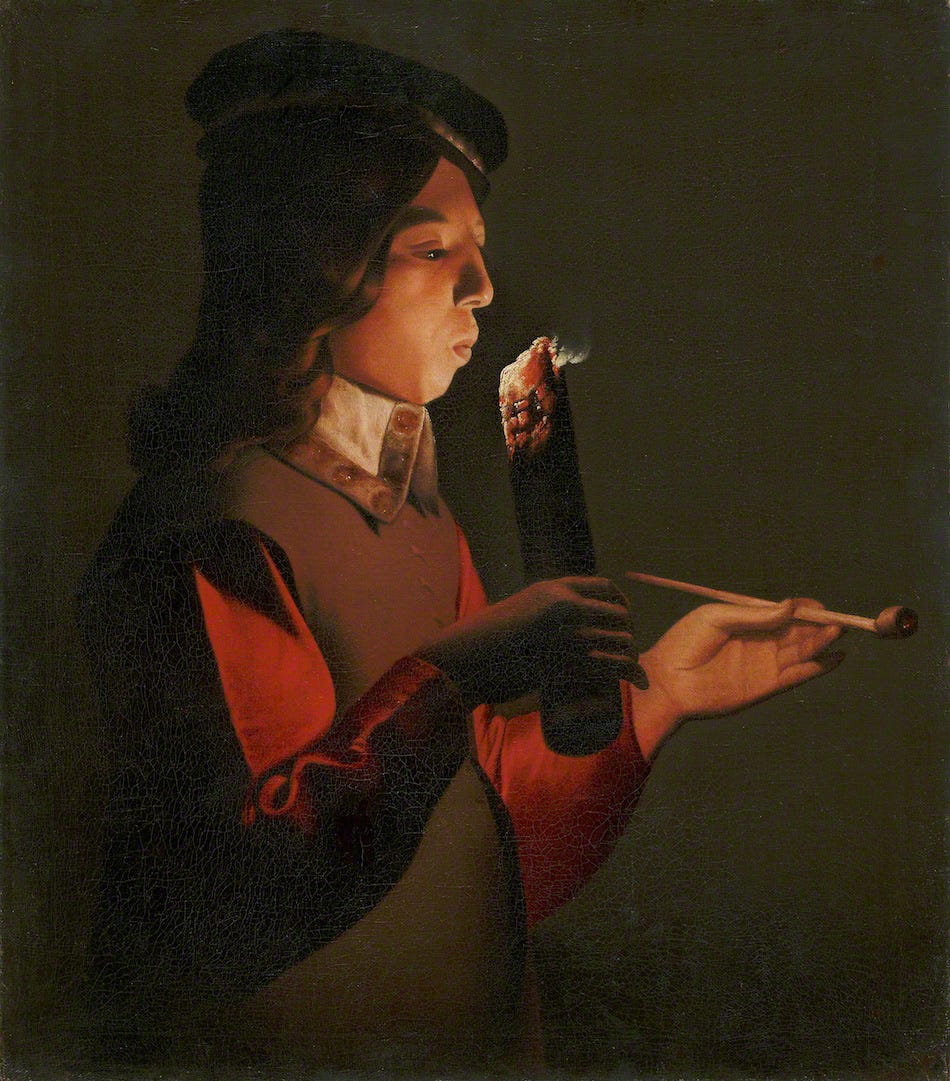
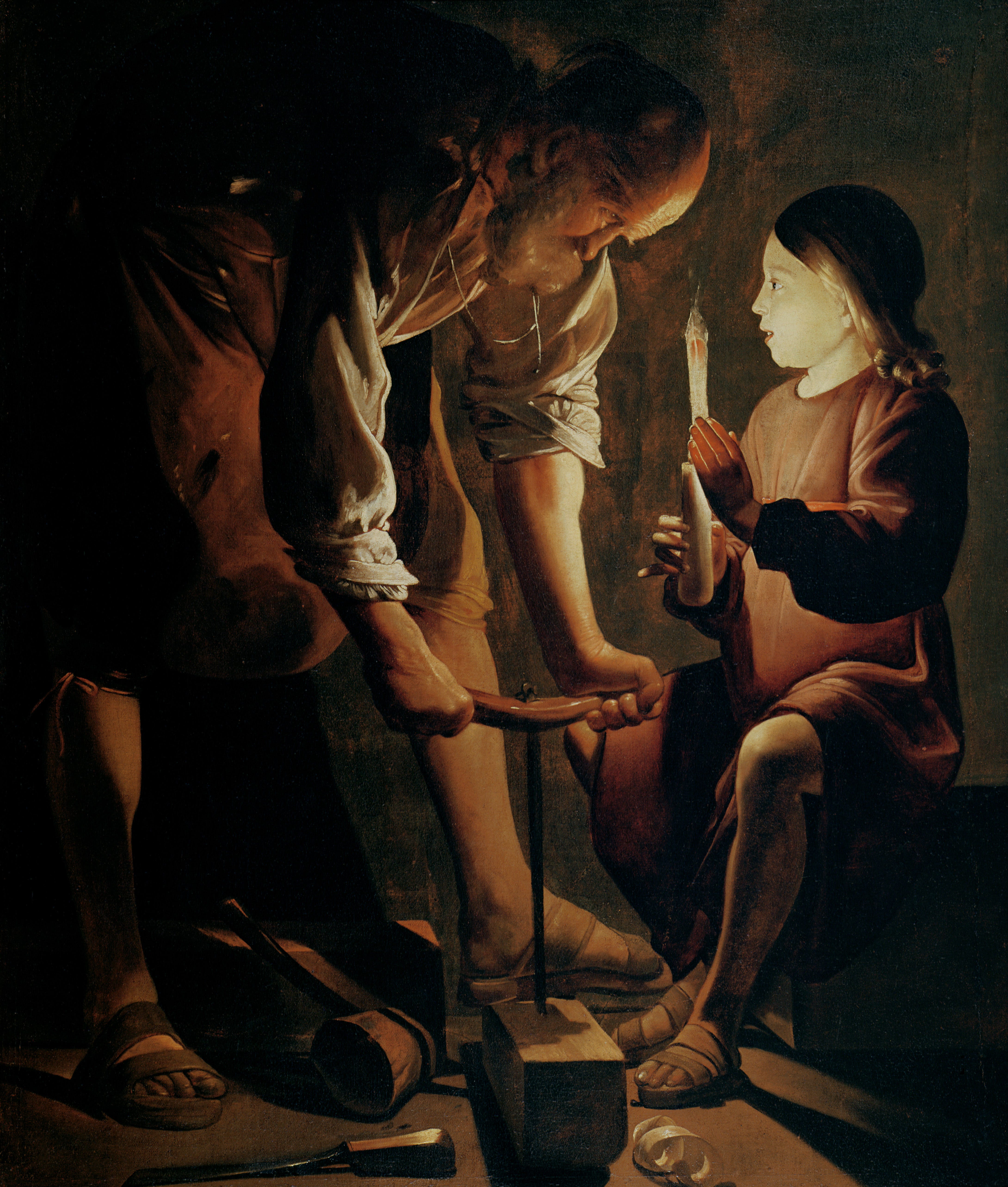
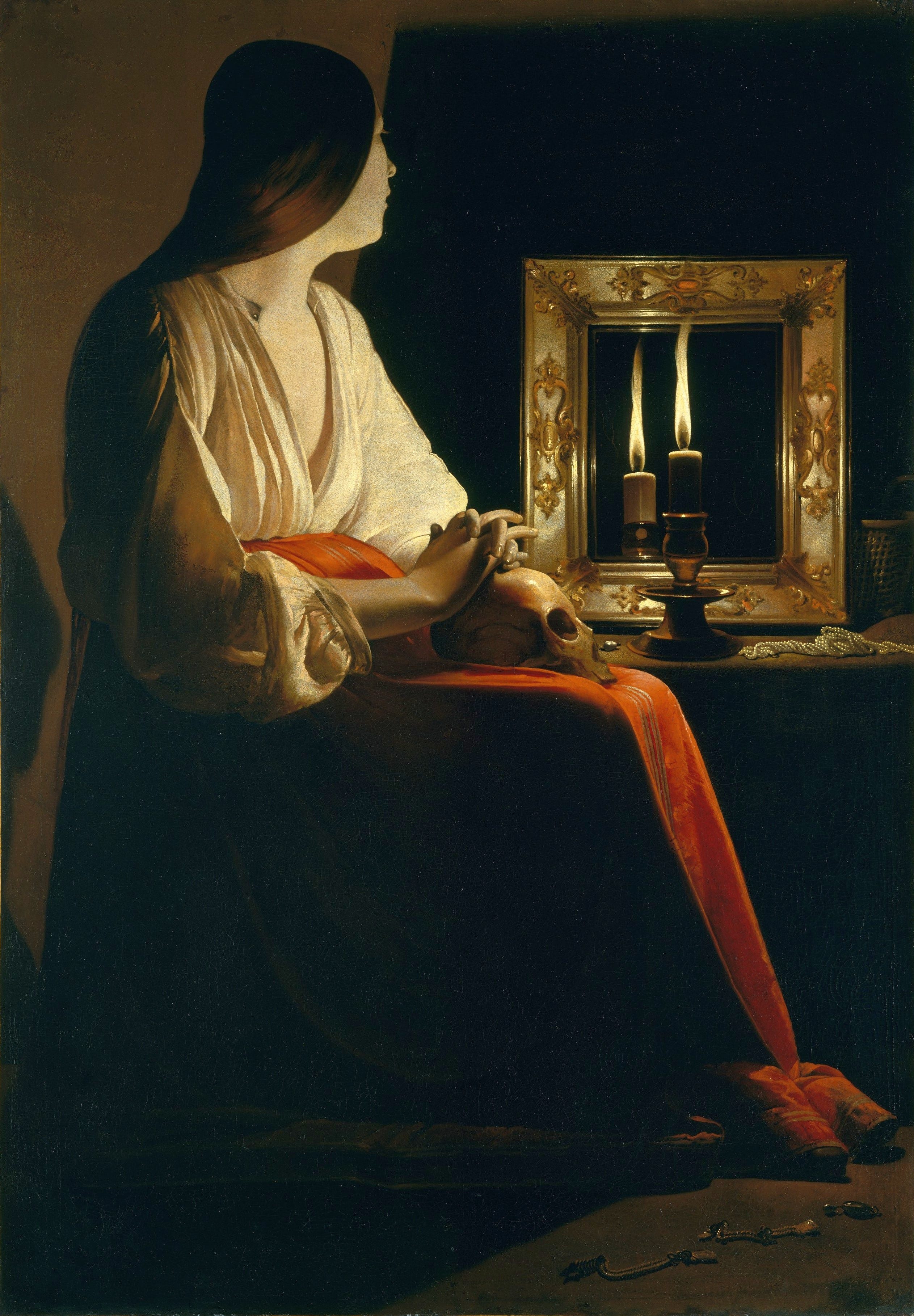
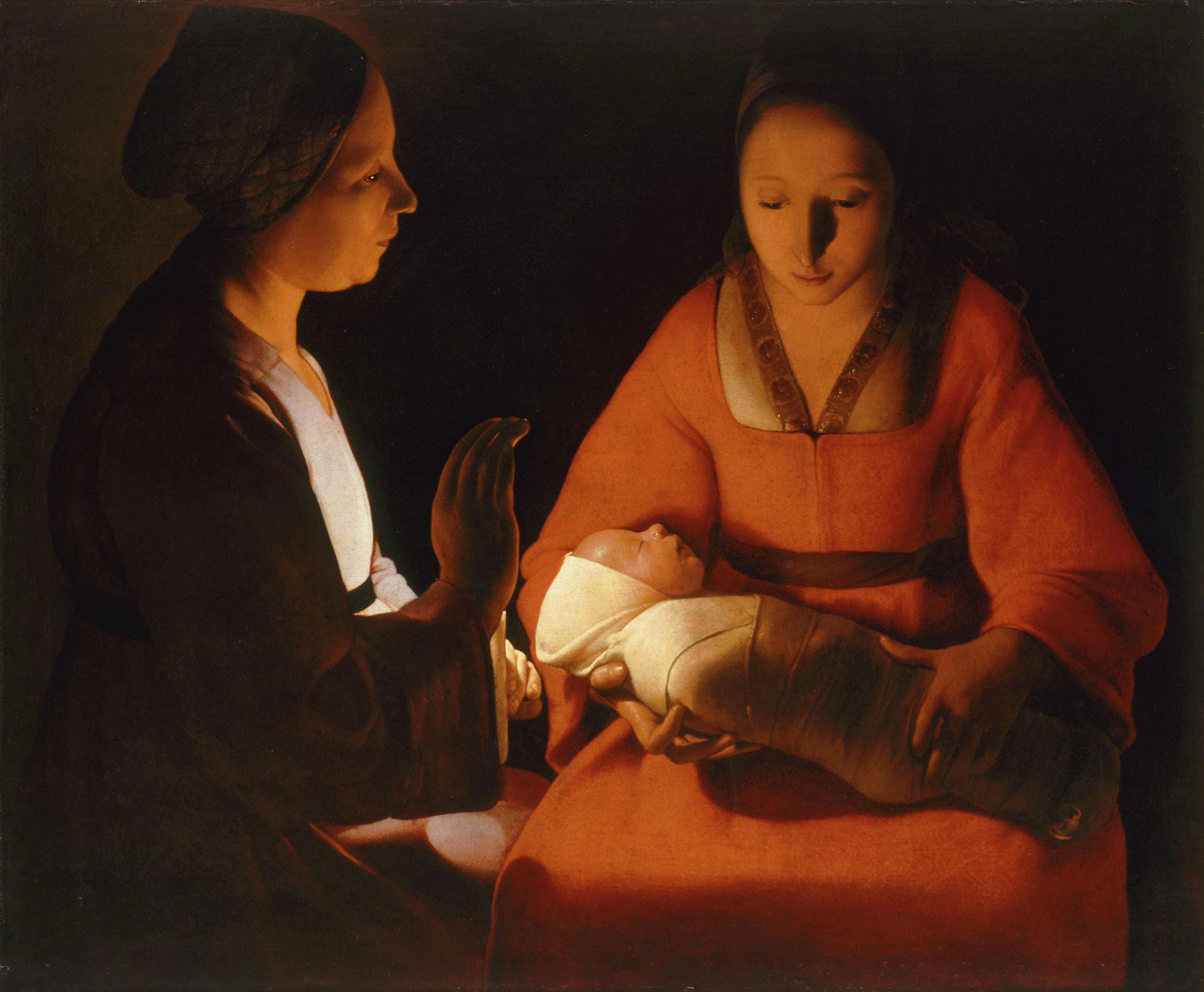
Art by Georges de La Tour (1593–1692).
Blaise Pascal, “The Memorial,” in Pensées, trans. A. J. Krailsheimer, rev. ed. (Penguin Books, 1995), frag. 913.
This emphasis is probably due to the influence of Cornelius Jansenius Gandavensis, who in turn drew from Augustine, and Augustine from Paul. It is from there—from the Pauline idea that God inclines the hearts of men—that he probably constructs his theology.
Elsewhere, Pascal writes, “All great amusements are dangerous to the Christian life; but among all those which the world has invented there is none more to be feared than the theatre. It is a representation of the passions so natural and so delicate that it excites them and gives birth to them in our hearts, and, above all, to that of love, principally when it is represented as very chaste and virtuous. For the more innocent it appears to innocent souls, the more they are likely to be touched by it. Its violence pleases our self-love, which immediately forms a desire to produce the same effects which are seen so well represented; and, at the same time, we make ourselves a conscience founded on the propriety of the feelings which we see there, by which the fear of pure souls is removed, since they imagine that it cannot hurt their purity to love with a love which seems to them so reasonable.” Blaise Pascal, Pensées, ed. Léon Brunschvicg, trans. W. F. Trotter, fragment 11.
This reminded me greatly of the writings of Cyprian: “Hence turn your looks to the abominations, not less to be deplored, of another kind of spectacle. In the theatres also you will behold what may well cause you grief and shame. It is the tragic buskin which relates in verse the crimes of ancient days. The old horrors of parricide and incest are unfolded in action calculated to express the image of the truth, so that, as the ages pass by, any crime that was formerly committed may not be forgotten. Each generation is reminded by what it hears, that whatever has once been done may be done again. Crimes never die out by the lapse of ages; wickedness is never abolished by process of time; impiety is never buried in oblivion. Things which have now ceased to be actual deeds of vice become examples. In the mimes, moreover, by the teaching of infamies, the spectator is attracted either to reconsider what he may have done in secret, or to hear what he may do. Adultery is learnt while it is seen; and while the mischief having public authority panders to vices, the matron, who perchance had gone to the spectacle a modest woman, returns from it immodest.” Cyprian, “To Donatus,” in The Epistles of Cyprian, epistle 1, para. 8, Andrews University, accessed November 13, 2025, https://www.andrews.edu/~toews/classes/sources/early/Cyprian%20Epistles.htm.
Blaise Pascal, “The Memorial,” in Pensées, trans. A. J. Krailsheimer, rev. ed. (Penguin Books, 1995), frag. 913.
David Hume, A Treatise of Human Nature, book 2, Of the Passions (Penguin Classics, 1986), part III, section III.
Obviously when possible, since, as I have mentioned, we may suffer from some mental disorder or illness that prevents us from making full use of reason.
Fyodor Dostoevsky, “The Grand Inquisitor,” in The Brothers Karamazov, trans. Constance Garnett, book V. emphasis in original.
One need only consider how the universality of God’s love has been resisted throughout history. In our own time, white evangelical nationalism in the United States offers a striking example: A gospel that is for all peoples is refashioned into a marker of racial and cultural belonging for some. This is not a new phenomenon—similar tensions appear wherever revelation meets the human desire to contain it.
For centuries, biblical texts such as Leviticus 25 or Ephesians 6 were used to justify slavery. Today, no serious Christian defends that position. It is not that the Bible changed but that our understanding of what God reveals in it was gradually corrected, often through tremendous suffering. This same pattern appears within our own restored tradition. The restriction of the priesthood from black members was maintained for approximately a century until it was reversed in 1978. Someone might object that this does not count as iterative revelation, because the restriction was never, properly speaking, a revelation at all but rather a human error that crept into the practice of the Church. But that objection, far from weakening the argument, actually strengthens it: If inspired leaders could present as doctrine for decades something that was not doctrine at all, then the need to continually subject what we receive to the scrutiny of reason and moral conscience becomes all the more urgent, not less. The correction itself is part of the iterative process. Joseph Smith himself offers us a more intimate model of this: He would revise the revelations he received, return to consult the Lord, and continue expanding and refining them over time. The Lectures on Faith are another illustrative case: They originally formed part of the Doctrine and Covenants as a doctrinal section, but they were eventually removed precisely because the concepts they articulated kept evolving and the text could not fix in place what was still in motion. In all these cases, revelation did not arrive complete and final all at once. Sometimes it advances; sometimes it corrects; sometimes it openly acknowledges that the previous path was wrong. That does not weaken faith in revelation. On the contrary, it makes it more honest.
A similar idea is expressed by John Paul II in Fides et Ratio: “Faith and reason are like two wings on which the human spirit rises to the contemplation of truth.” John Paul II, Fides et Ratio, Encyclical, September 14, 1998, introduction, https://www.vatican.va/content/john-paul-ii/en/encyclicals/documents/hf_jp-ii_enc_14091998_fides-et-ratio.html.
