


“Amazing Grace, how sweet the sound . . . ”1
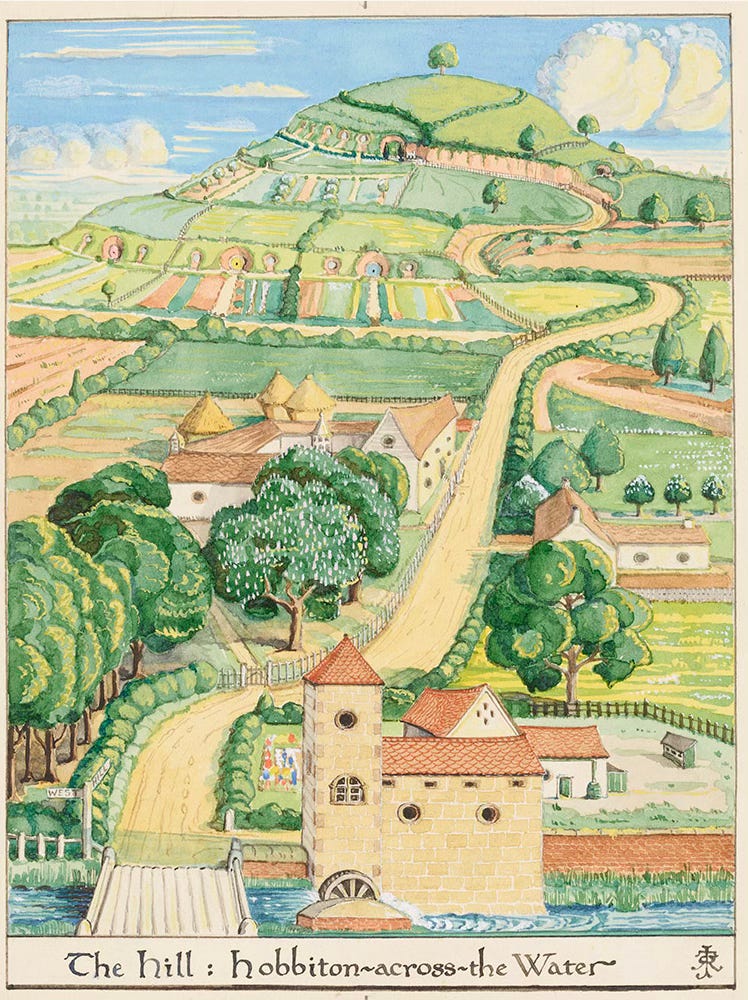
For most of my life, I have been someone else. Actually, I was myself trying to be someone else, on a journey through several languages and cultures. The personas I created, though, were so convincing that I forgot who I truly was—until, not long ago, I came to myself. How that came about follows. Recently, after retiring from a career as an historian, I turned my analytical skills toward my own life. I had been crushed by the worst catastrophe: the death of my wife of thirty years. Only Annette came to know me as I am, and in spite of my self-evasion, she still loved me. In the midst of unquenchable grief, grace found me. With it, I came to see that my journey has been one of love, recognition, and return—with grace being the ever-present, though mostly invisible, engine of its unfolding. I came to see that my journey was not unlike that of Frodo and Sam to destroy the Ring and return home. This comparison is particularly meaningful to me, since my family emigrated from the very place that Tolkien used to model the Shire: Penkridge, Staffordshire.
Like Frodo, I, too, carried a “Ring” of shame, fear, and memories of childhood trauma. I fingered my Ring constantly to make sure my secret was safe. Like Frodo, my Ring preyed upon my mind. I was hypervigilant and felt unsafe around most people. My Ring remained undestroyed while I was distracted by my quest to achieve significance. The tale of how it was finally destroyed reveals how grace has redeemed my soul from a living hell.
My story began not in the Shire, but in an obscure Midwest town—a place too small for my ambitions. Ancestors and close relatives had accomplished extraordinary things—inventors, pioneers, statesmen, scientists, decipherers of ancient scripts, and explorers. Thus, I sought adventure on wider stages, leaving the Midwest for more exciting places. I was driven to achieve because I didn’t want to waste my God-given talents. But there was another reason, as we’ll see.
When I left home, I also tried to leave behind the person I had been. I modified my speech and mannerisms to conceal my rural Midwestern origins. I sought correct English grammar and precise usage (not available where I grew up) and a less cacophonous vowel harmony. Wherever I lived—and I have lived among several varieties of English—I adopted elements of local speech and mannerisms that pleased me. I especially loved the bits I picked up from my time at Oxford. The result was a broadly and deeply educated persona that I hoped obscured my humdrum origins—effectively concealing the Ring—and projected, through elevated idiolect and erudition, the kind of cultured person I wanted to be. Curiously, none of these carefully cultivated voices mattered to Annette. She always heard my original one and always spoke directly to the authentic me. She was aware of and intrigued by my tapestry of identities, and I was at ease being vulnerable with her. She is the only one to whom I showed my Ring.
Reflecting on the course of my career, I could see how I was a beneficiary of grace, which helped me become a respected scholar of many languages. Once I stood before an audience of Iranian medical students in Tehran, where I’d been invited to present on Arabic medicine. I was greeted by, “Dr. Cooper, I read your article on medical crises,” or “How is the current edition of Galen coming?” So, when I rose to speak and introduced my talk in Farsi, I received a standing ovation. On another occasion, I shared a taxi with Sir Roger Penrose on the way to our papal audience, during a physics conference sponsored by the Vatican. Another memorable event was being a guest of President Erdoǧan of Türkiye while attending a conference on Islamic science. Moving among such luminaries validated my craving for significance and kept my Ring well-hidden.
I saw the divine at work in my life most clearly in my relationship with Annette. She came to know me better than anyone as we journeyed together. Before we began dating, we journeyed to Norway to visit her family. Unexpectedly, however, after Annette and I had spent much time together, I began to feel like I had come home—and not simply because I also have roots in the country. That our life journey together should begin there is more than coincidence. With my guard down, I fell in love with her as she spoke her ancestral language with her cousins in her beloved Norway. That moment of coming home, as it turns out, was my first acquaintance with a feeling that grew as we created an actual home and family, and that will be consummated in our eternal home. My soul grew entwined in joy with hers, and when her soul sailed into the West, mine was bereft. However, grace found me, filling some of this void and opening my broken heart to an even greater capacity for love.
A year after she passed, my Ring was finally destroyed. While reading Adam Miller’s Original Grace, I was moved by his shift away from viewing divine justice as a balance sheet of punishments and toward grace and forgiveness—away from praying for vengeance and toward praying for what I and my adversaries need. For many years, I had harbored hatred toward my former employer. I was more than qualified to be granted tenure, with more than sufficient published pages, and more skills and experience, but they misrepresented my record, their message being, “You’re not one of us, you don’t belong here.” Unable to provide adequately for my family, my self-worth as a husband and father was damaged. Annette held us together. She knew that my talents—my pearls—were unappreciated.
Then, like the Prodigal Son in a land far from home, I came to myself. While undergoing therapy for recent post-surgery trauma, my therapist taught me healing techniques involving body and soul together. This healing process finally freed me from the Ring’s power, which was the burden of silence and shame that I had carried for fifty years. So, quite by accident, the abusive emotional, sexual, and especially physical trauma I suffered as a child came forward. I both owned my experiences and let them go, so they no longer captivated me, and the Ring vanished.
My negative self-talk vanished: “You’ll never amount to anything. No one will want you, you’re damaged. People would shun you if they knew your secret.” The joy I feel with this freedom is indescribable. The colors of nature become clearer and more intense. The piano music I play sounds more beautiful; the tones are purer and richer.
A weight was removed: The Ring was gone. None of what had brought resentment seemed to matter anymore. I found myself more patient, smiling more, chatting with strangers. Finally at home in my own skin, I could attend authentically to others in conversation unmediated by inner questions like “Is this a safe person? How much of myself can I share?” My life was an extended effort to prove the negative voices wrong, to show the tormentors behind those voices how wrong they were by leading a life of significance, changing some corner of the world for good. In short, I have become more like the person that Annette perceived through the smokescreen.
Like the Hobbits’ journey in The Lord of the Rings, I left home for adventures in the East to serve great kings, encounter strange peoples and creatures, and battle orcs and dragons. I entered a larger world with important people, august institutions in distant lands, and intellectual pursuits beyond anything imagined by those where I grew up. Eventually, I returned to where I began, profoundly changed in ways I could not have foreknown.
The story of David and Goliath is used to teach that, like David, we’ll prevail against our Goliaths through obedience. But what about the Davids who follow God’s counsel, do everything they are supposed to do, but their Goliath remains undefeated? How do they handle their disappointment and despair? We would all benefit by more practical discussions at church about how to cope with failure.
My Goliath-antagonists were university administrators, smugly dressed bureaucrats in ties who sanctimoniously impose metrics on everything, as if everything could be quantified. As Oscar Wilde noted, such men know the price of everything and the value of nothing. Scholars are treated as human resources. Neither I nor any other scholar worthy of that name is a “human resource”: that puts us on the same existential level as office equipment. My employer deprived us of my livelihood in retaliation for whistleblowing—in spite of their knowing that I was grieving my deceased companion.
So, I returned home wounded, with my Goliath undefeated, despite all that I could do and despite all that could be done. Moreover, my life’s companion had gone on before me. It seemed that all was lost. However, in the alchemy of the Atonement, my resentment and rage transmuted to goodness and gratitude.
Returning home, I was surprised by the celebrations that awaited me from the very people I had sought to leave behind. None of my defeats or Ring that wounded my heart lowered my esteem among my own people. There, I am not judged by academic accomplishments, titles, or prestige. I am simply received as I am, enveloped in love and acceptance, the fatted calf, new clothes, shoes, a ring—a good ring. I felt this love especially on two recent occasions: my wife’s funeral and my son’s wedding. I had come home, and experienced it as if for the first time.2
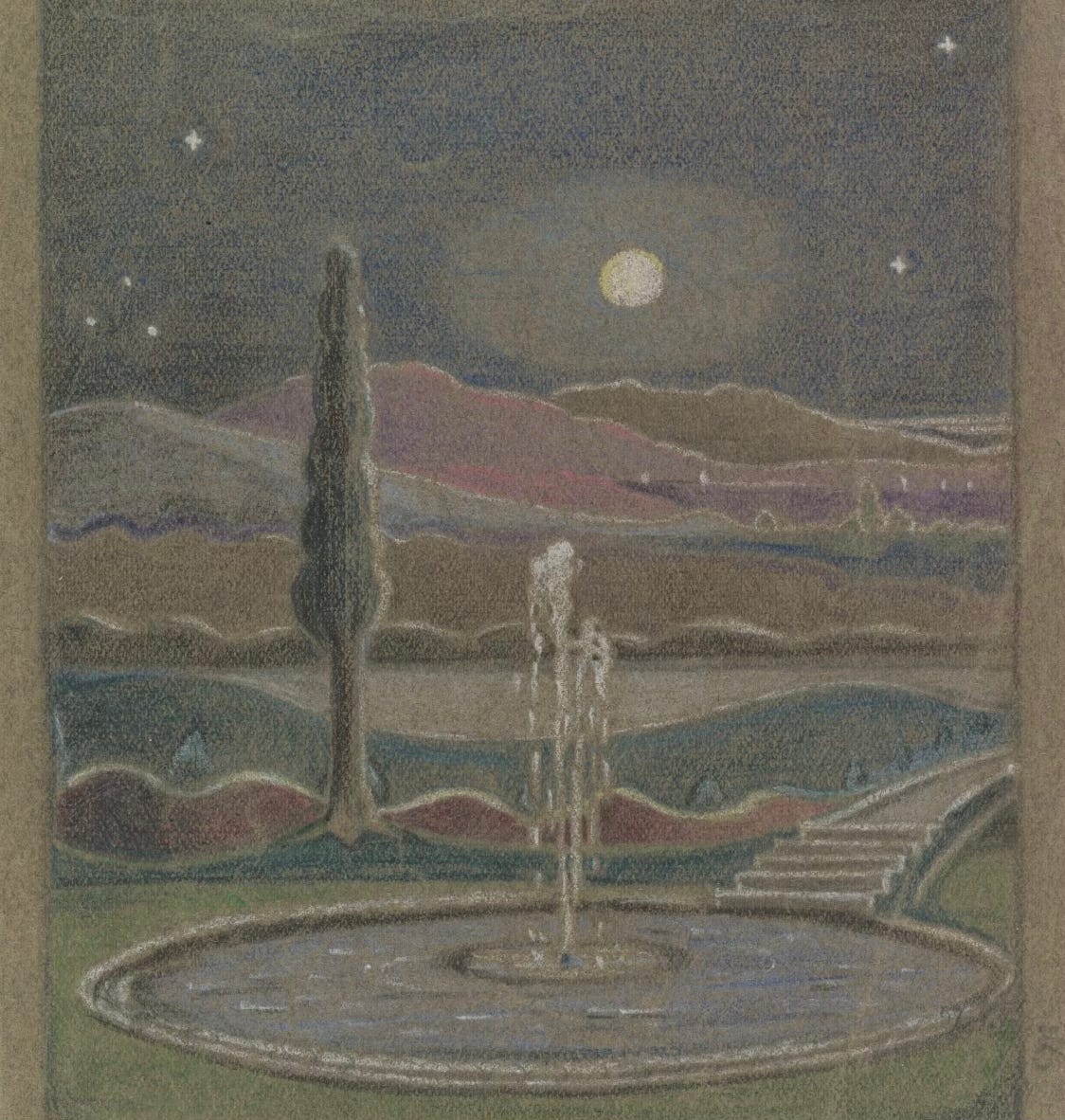
I had hoped to accomplish great things with my life. Will my story be remembered? When measured against saving the world from the power of Sauron and the Ring, my deeds may seem minor, but they made a difference to a few people. My discoveries are fascinating, but they haven’t changed the world as I hoped—although they’ve changed me and a handful of students. Being open to grace has helped me to see that. Whereas my career seems to have failed, I did not fail in life. The most significant thing I ever did was marry Annette, and all the good that happened flowed from that decision. What if my greatest deeds have little to do with fame, prestige, or even an academic career? What if they consist instead of surviving childhood trauma—destroying my Ring, choosing to follow Jesus, serving my community, thriving in spite of losing a career, building a strong marriage, and creating the best family we could?
At the end of the journey, I remain a boy from a small Illinois town, who chased adventure in the East, and was the guest of kings, popes, ambassadors, prime ministers, and universities. He battled dragons and ringwraiths and Goliaths, seemingly failing in his quest, and has come home like Frodo, with wisdom, wounds, and a memory replete with stories to regale admiring young hobbits. There, he won the greatest victory of all: he became free of his Ring’s poison. There is now time for reflection, writing, healing, forgiveness, and being who I am at last with those who love me. At the end of my journey, after all the languages I learned, all the voices I borrowed, and all the identities I tried to inhabit, the only voice that mattered was the one Annette had recognized from the beginning. When I join her in the West, that is who she’ll embrace.
“I once was lost, but now I’m found, was blind, but now I see.”3
Recently retired from BYU, where he enjoyed teaching, Glen continues writing on the history of medicine and Arabic science. He loves his children, foreign travel, discussing philosophy, and music, both listening and composing. A former resident of Plato’s Cave, he plans to craft a memoir about his healing experiences in therapy.
Art by J.R.R. Tolkien (1892–1973).
John Newton, cf. LDS Hymns, “Amazing Grace,” no. 1010.
Cf. T. S. Eliot, Little Gidding, from Four Quartets.
John Newton, cf. LDS Hymns, “Amazing Grace,” no. 1010.
