


Ute Leader Wakara was in high spirits when he stepped out of his lodge and into the warm sunlight in late spring of 1847. His belly was full. His signature bespoke suit of rich broadcloth, cut in the European fashion, stretched tight over his frame.
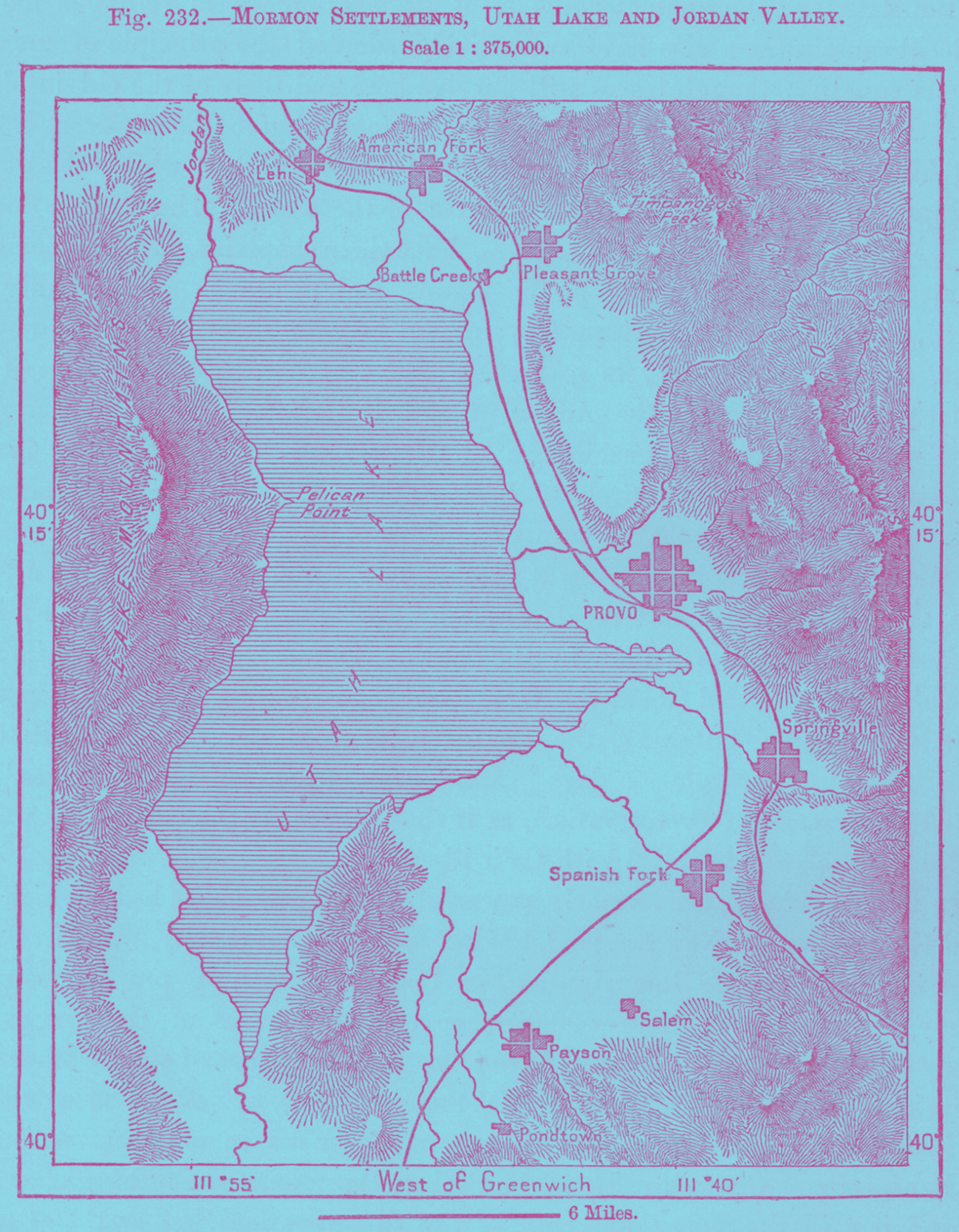
Wakara was attending the Timpanogos fish festival held each spawning season at his band’s hunting and fishing grounds on the eastern shores of Timpanogos (Utah) Lake. Dozens of other lodges dotted the rich, grassy plains. Wakara watched as fellow Utes waded in the Timpanogos (Provo) River, pulling fish from the cool, clear waters. And he watched as others prepared the daily catch, slicing them from belly to throat, ready to be eaten immediately or dried for leaner times later in the year.
Fish flesh had replenished Wakara’s body, which had grown gaunt during the previous season raiding horses from the California ranchos on the western end of what the settlers called the Old Spanish Trail. These raids, which began in the fall, lasted two or three months. By late January or early February, Wakara and his cavalry would begin the return trek to his band’s homelands in central Utah. He often brought back 1,000 horses, dozens of cattle, and more than a few Paiute children whom he had captured or traded for along the way.
Wakara timed his return to Timpanogos Lake with the spawning runs of what the Utes called pagü (fish). As the days grew longer in mid-March, the lake’s icy seal began to thin. The warming waters drew trout, mullet, chubs, whitefish, and suckers out of the lake’s dark depths. Over the next few months, distinct species in distinct waves, guided by internal compasses attuned to the slightest variations in temperature and mineral concentrations, swam up the snowfed streams and rivers around Timpanogos Lake to find the waters of their own births and spawn their own young.
For about the first 6,000 years of the existence of Timpanogos Lake—a vestige of an inland, freshwater sea—countless generations of fish returned to their birth waters without human interference. Then, starting 12,000 years ago, when the first humans established temporary communities around the lake, through to the last five centuries, when Utes gathered at the lake for their annual festival, enough fish populated their spawning waters not only to sustain Timpanogos Lake’s fisheries but to make living easy for the Utes during the spawning season.
Some of the fish were caught in the Utes’ nets, weirs, and baited traps. Others were shot by Ute arrows or yanked from the water by Ute hands.
The fields and waters around Timpanogos Lake were the Utes’ springtime Eden, where the fish refilled the Utes’ bodies and spirits. When Wakara and his fellow Utes were not feasting on suckers, chub, and trout, they watched youngsters participate in races on foot and horseback. They danced the mamakönühkay (Bear Dance), which signaled the start of spring—the season of pairing off Utes into couples or, in Wakara’s case, perhaps adding to the ranks of his wives. Wakara and other horse raiders also regaled festivalgoers with tales of the cavalry’s latest horse-raiding exploits from the season in California.
The festival involved more than feasting, games, and courting. There was also business to attend to. Wakara exchanged the profits of his horse and slave raids for other valued commodities with fellow Utes and with visitors from near and far. From the south, hoping to barter for Wakara’s Paiute captives, New Mexican traders brought guns and ammunition and Navajos brought their well-crafted blankets. From the west, caravans returning from California along the Old Spanish Trail also came to trade for Wakara’s new crop of captives and horses.
There was also band politics to conduct. Ute kin, who had spent the winter months in smaller family units, came together at the festival. Heads of families gathered in the head bandsman’s lodge. They reaffirmed their fealty to the leaders and appointed new lieutenants. They also redrew territorial boundaries of band control. Once the business was completed, the peace pipe was passed, the smoke that enveloped the participants signaling agreement and kinship.
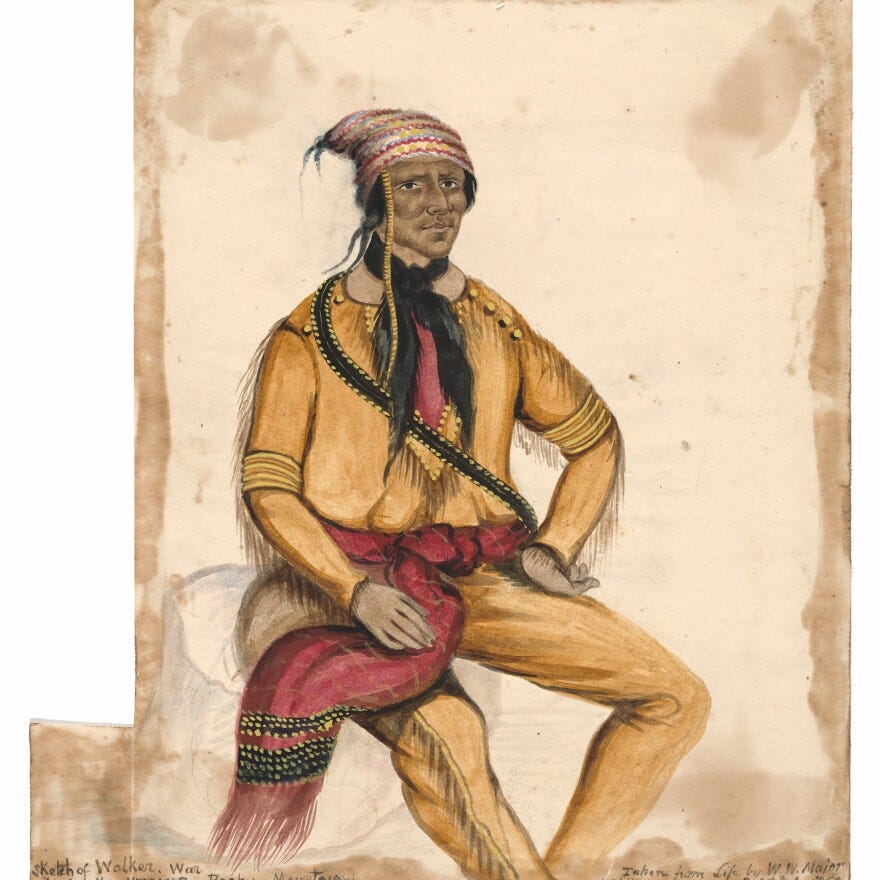
For Wakara, such meetings were sometimes difficult affairs. Wakara was a blood member of the Timpanogos ruling family, but his fellow Utes did not always recognize him as a band leader. Years earlier, rivals had assassinated his father—an act that Wakara did not forgive or forget. Still, Wakara commanded respect and fear. After all, in 1847, the “Napoleon of the Desert,” as some settlers would come to call him, oversaw a vast empire of flesh. Wakara built this empire by trading horse and human bodies with empire-building explorers and settlers. These horses and humans provided essential labor, commerce, transportation, and war making with and against other empires that competed for control of the American Southwest.
A few weeks later, Wakara rode his horse north at the start of buffalo hunting season, when he and his Utes chased bison across what is today southern Wyoming and western Nebraska. Wakara followed the well-worn path—a two-day horse ride between Timpanogos Lake and the Great Salt Lake. Wakara could have ridden this path blindfolded; he knew every twist and turn, every rock and root. Still, Wakara kept his eyes up and his ears perked. A hundred or so newcomers, whom the Utes called “Mormonees,” had entered the valley a few weeks before.
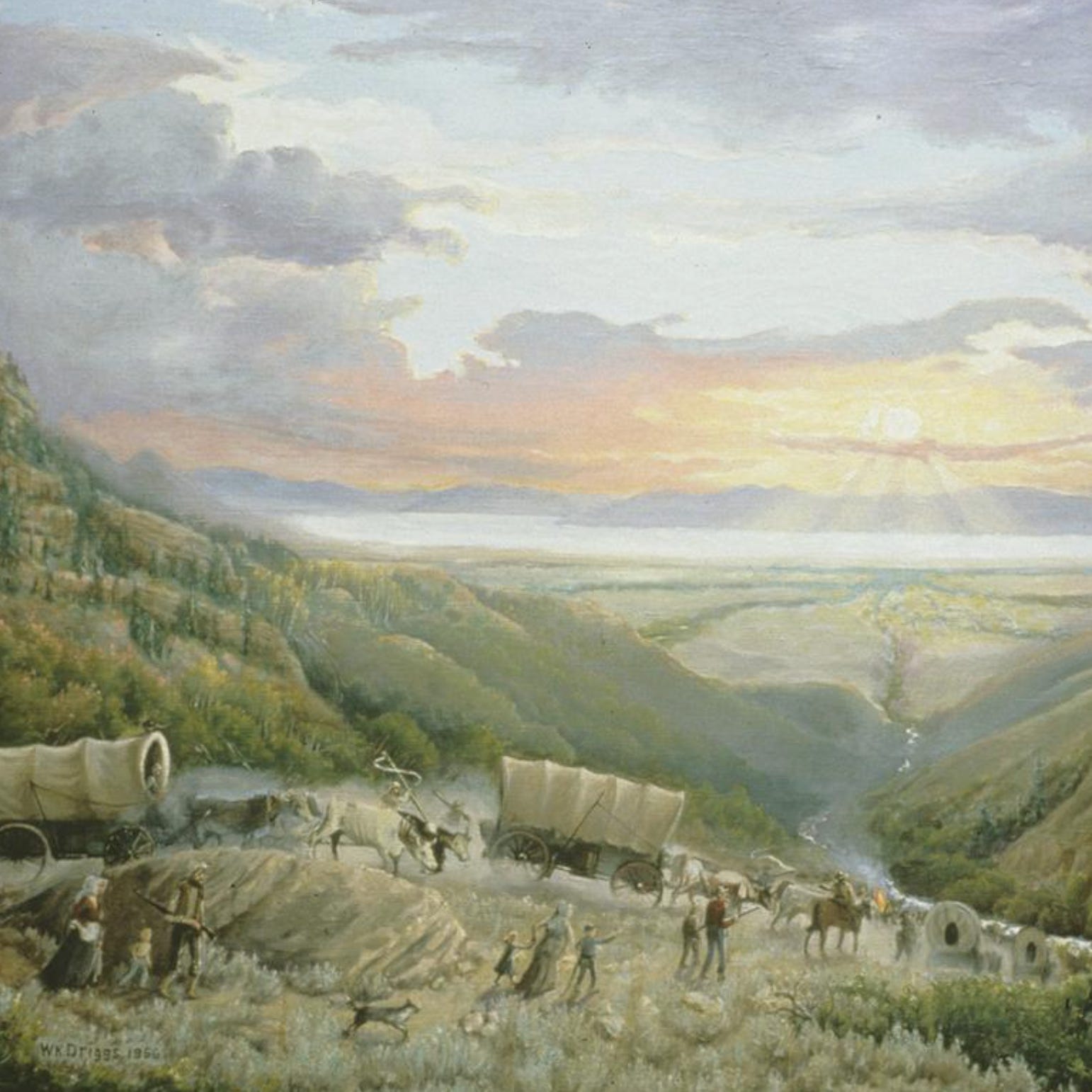
Wakara tapped his legs against the sides of his horse. She slowed, then stopped in the shade of a thicket of trees and bowed her head to snack on a tuft of grass. Her rider stayed mounted. He surveyed the newcomers, busy as bees, erecting their embryonic settlement a few miles south of the foothills of the northern Wasatch Front. After months on the trail, followed by weeks of backbreaking labor, the bodies of the newcomers had been reduced to skin and bone. Corn mush, salt-rising bread, and the occasional bacon strip could not keep pace with the caloric expenditures of pioneer life.
Wakara was curious about these newcomers. He watched one group shove hoes into the red-clay earth to form irrigation ditches for a thirty-five-acre farm. He also listened to a rhythmic thump, thump, thump as another group swung axes into trees that grew along a river that the newcomers would soon name Jordan. Wakara heard the whine of a whipsaw slicing felled trees into eight-foot poles, which the newcomers raised to form a palisade around their ten-acre fort. The palisade doubled as the back wall for twenty-nine log houses. Narrow gunports, through which the newcomers could aim their long guns at unfriendly Natives, were the houses’ only openings to the outside.
After watching the newcomers chop down trees, Wakara and his horse rode north, stopping again to survey more newcomers laying out what would become Temple Square. Two years later, under the shade of the Bowery, Wakara would feast at the newcomers’ first annual Pioneer Day celebration.
These newcomers did not warrant concern, Wakara concluded that summer day in 1847. Their numbers were small, their bodies weak and fragile, and their building skills laughable. The Bowery was unimpressive, constructed haphazardly with rough-hewn logs and branches, not cloth and animal-skin tents like his own lodges. Instead, Wakara saw potential to turn these newcomers into buyers of his horses and humans and even into targets of raiding to supply himself with more horses, cattle, and trade goods. If they began to pose a danger, Wakara believed he could root them out with little effort. After all, Wakara had bested far better foes in California. And he had brought to heel any number of explorers along the Old Spanish Trail.
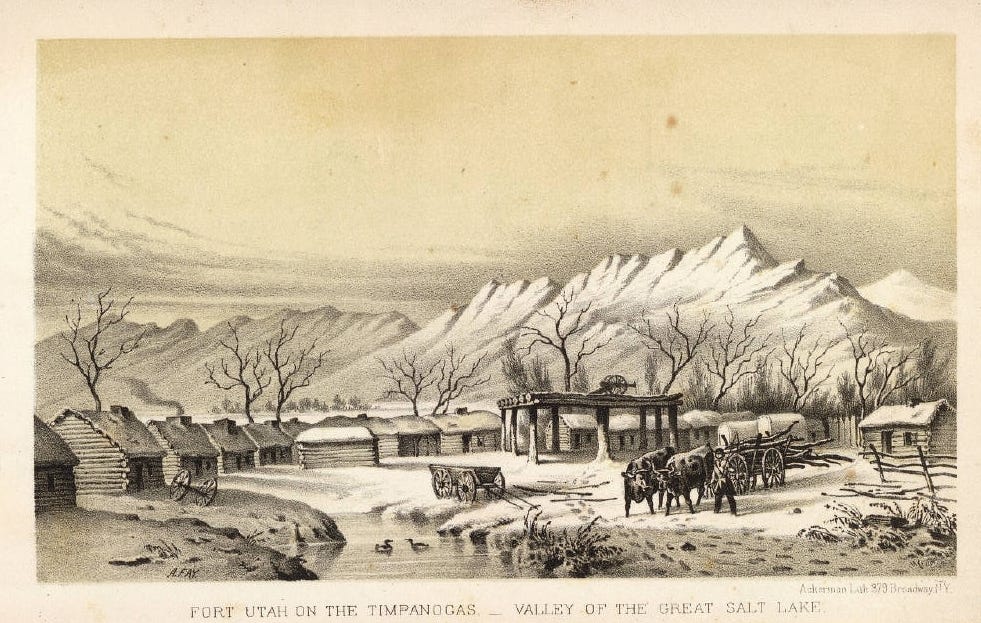
Later Wakara would have regrets. Over the next few years, he would watch as caravans of Mormon settlers, stuffed into endless wagon trains, swarmed into the Utes’ ancestral homelands. To build their forts and settlements, like insatiable ants, they would gobble up forests, grasslands, game, and, most worrisome for Wakara’s fish-eating Timpanogos, fish.
The 1847 fish festival would be among the last. In less than a decade, Mormon settlers would massacre many Timpanogos and displace the rest from their sacred festival grounds, where they had gathered for half a millennium. Within fifty years, through year-round fishing and the introduction of invasive species like the common carp, the settlers would all but destroy the 12,000-year-old Timpanogos Lake waterway, leading to what ecologists have called a “stage change” to the lake’s ecosystem. The settlers’ unwelcome interventions converted a clear lake that supported a wide diversity of plant and animal species into a turbid, eutrophic lake in which the levels of dissolved oxygen in the water were so limited that most aquatic animals could no longer catch their breath. Before the settlers arrived, there were thirteen fish species native to Timpanogos Lake. Today, only the June sucker and two other native species swim in the lake. And they do so in tiny numbers compared to the carp, which until recently outnumbered native fish 100 to 1 and made up 90 percent of the lake’s biomass.
Soon after the arrival of these newcomers, in more than name, Timpanogos Lake became Utah Lake.
Native and Settler Americans: A Contrast
The story of how Timpanogos Lake—once the geographical and cultural heart of the Utah Valley—became Utah Lake is the story of the difference between Native and settler Americans.
Traditionally, Native Americans have seen themselves as part of, not separate from, the landscapes they inhabit. Through trial and error, Wakara’s Timpanogos learned what worked and what did not in their reciprocal relationship with the fields of woods, plains of grasses, and rocky waterways, as well as in their relationship to the nonhuman animals who also called Utah Valley home. Wakara’s Timpanogos defined themselves through their connection to the fisheries that they learned to care for, so that both the fish and the Fish Eaters could thrive. Over the course of a year, the Timpanogos moved through the different “earths” of their homeland in rhythm with the seasons, with the fish festival on the shores of the lake at the sacred center of their calendar. And yet, over the course of generations, the Timpanogos mostly stayed put within the boundaries of their homelands.
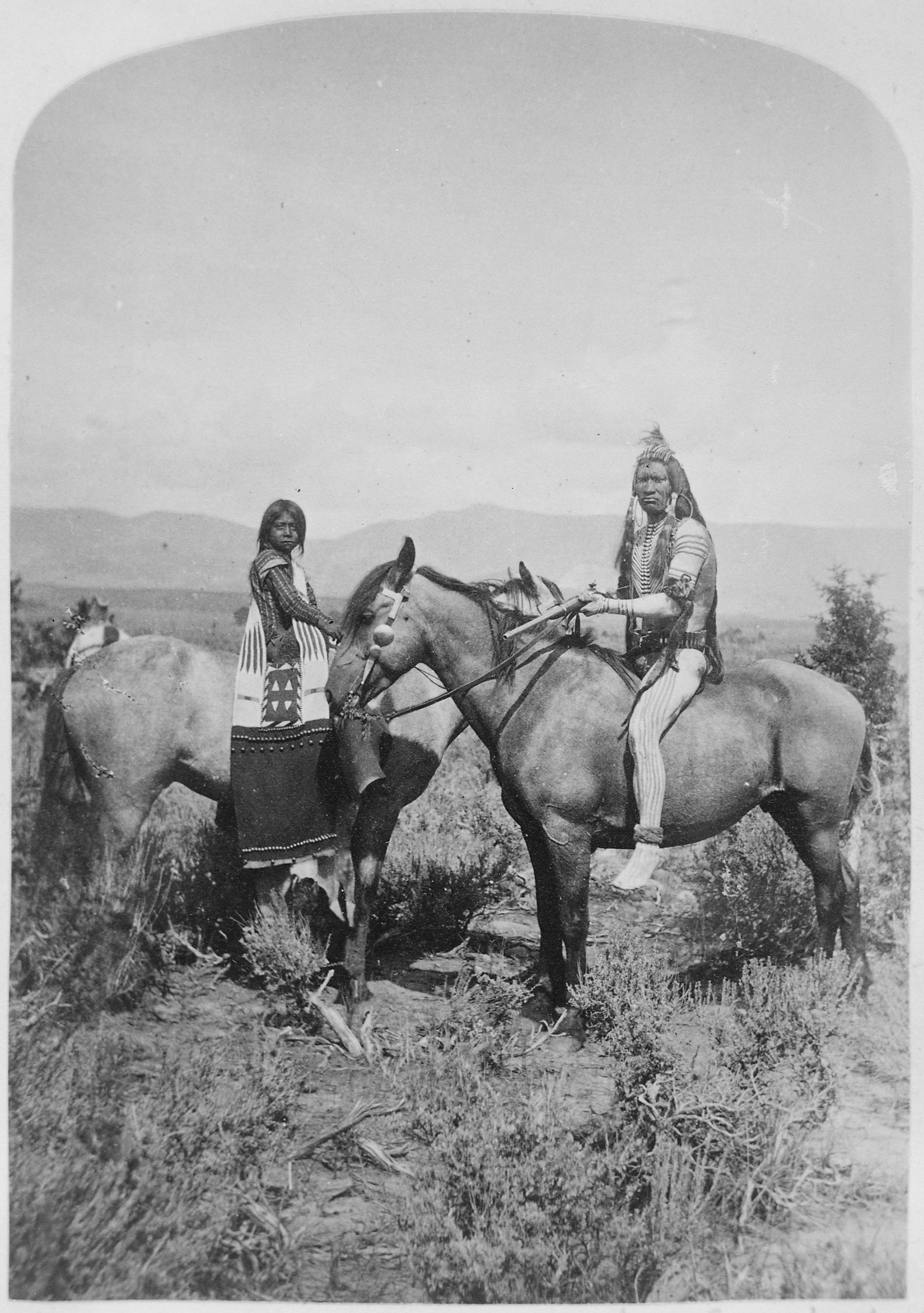
In contrast, settler Americans moved onto the land with the purpose of extracting from the land and from the land’s people and nonhuman animals. Starting in the late 1840s, through disease, violence, slavery, and environmental degradation, Mormon settlers displaced the Fish Eaters from the fisheries that they had managed for centuries. Because they did not know how to care for the land and water, settlers also ate up almost all the native fish. And their farms drank up much of the water and poisoned the rest with runoff from their fields and, later, their factories. Once they extracted what they could from the lake, they turned their back on what they renamed Utah Lake and reoriented themselves and the rest of the Utah Valley toward the mountains.
The June Sucker and the Lake’s Recovery
Despite all these challenges, the lake, though sick, remained healthy enough to sustain an underappreciated but invaluable native inhabitant: the June sucker.
“The lake killed the family dog.” That’s what those who want to “pave over Utah Lake” want you to believe!” So exclaimed Captain Todd Frye of the Bonneville School of Sailing as we motored the Bella Vie, a twenty-seven-foot Catalina, toward the open water of Utah Lake in the summer of 2022 to see firsthand the June sucker’s imperiled, but not irredeemable, home waters.
Sporting a floppy hat over thick, white hair, Frye moved around his sailboat with confidence developed over forty years of sailing oceans around the world. But he’s spent the last two decades sailing Utah Lake, the third-largest body of fresh water west of the Mississippi River—approximately the size of New York City’s Manhattan, Brooklyn, and Bronx boroughs combined.
Not ten minutes before Captain Todd made this declaration about the dead dog—a story I often heard from some Utahns who say that the lake is sick and polluted beyond saving without drastic human intervention—I boarded the Bella Vie docked at the Utah Lake State Park marina in Provo. Some even proposed “paving over” Utah Lake with a massive network of human-made islands, a plan that echoed in its human-centered arrogance the attitude of Mormon settlers toward the lake and nature in general a century and a half before.
Isabella Errigo, then a Brigham Young University (BYU) graduate student and conservationist, had invited me to join this sunset sail. I squeezed into the narrow cockpit, taking my seat among local scientists from BYU and Utah Valley University in Orem, along with a cadre of city council members from the booming bedroom communities that surround the lake. Errigo made a quick study of my fair complexion and passed me a bottle of coconut-scented sunblock. “Let’s send you back home the same shade as when you got here,” Errigo teased.
Errigo was happy to have me along. But her target audience was the politicians. She and her BYU mentor, Ben Abbott, a professor of aquatic ecology, wanted to show off the lake at its most splendid, when the orange, setting sun glimmered on the water’s rippling tide. Sunset was also when the evening easterly winds would most likely fill the sails and blow away biting bugs that swarm on the lake’s surface.
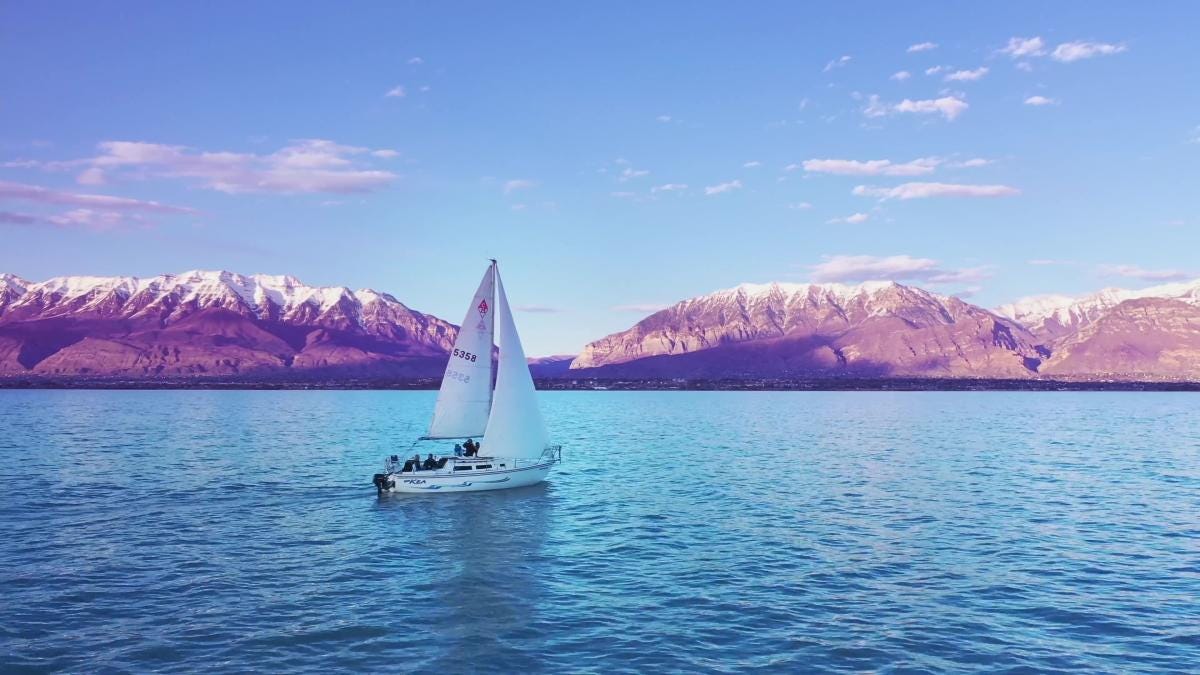
Abbott, Errigo, and Captain Todd hoped the politicians would take in the lake’s beauty while absorbing lessons from the scientists about the lake’s natural history, its abundant wildlife, and, most importantly, its ability to heal itself—if humans would only get out of the way.
The most exciting lesson that the scientists and sailors wanted to share was about the June sucker. For the past twenty years, inspired in part by Wakara’s Timpanogos descendants, a multiagency effort called the June Sucker Recovery Implementation Program (JSRIP) has improved the health of the entire Utah Lake ecosystem by restoring the habitat and population of the June sucker and removing literal dump truck loads of invasive carp.
“The June sucker can only be found in Utah Lake,” explained Errigo as we sailed toward the former mouth of the Provo River, where Wakara’s Utes had their festival grounds and where the June sucker and other native fish started their spawning journeys. Today, a massive project is underway there to recreate the braided river channels and wetlands of presettler times, so that the suckers can once again spawn as they did for millennia. “The sucker is an indicator species,” Errigo explained. This means that “as goes the June sucker, so goes the lake.” As a result of the success of the JSRIP, the June sucker has recently been removed from the endangered species list.
By highlighting the recovery of the June sucker, the sailing junket challenged the dominant narrative about the lake that has emerged over the last two decades: that it is so sick and polluted that, as Captain Todd alluded, in 2014, after swimming in the lake for less than an hour, a family dog died from ingesting toxic algae blooms.
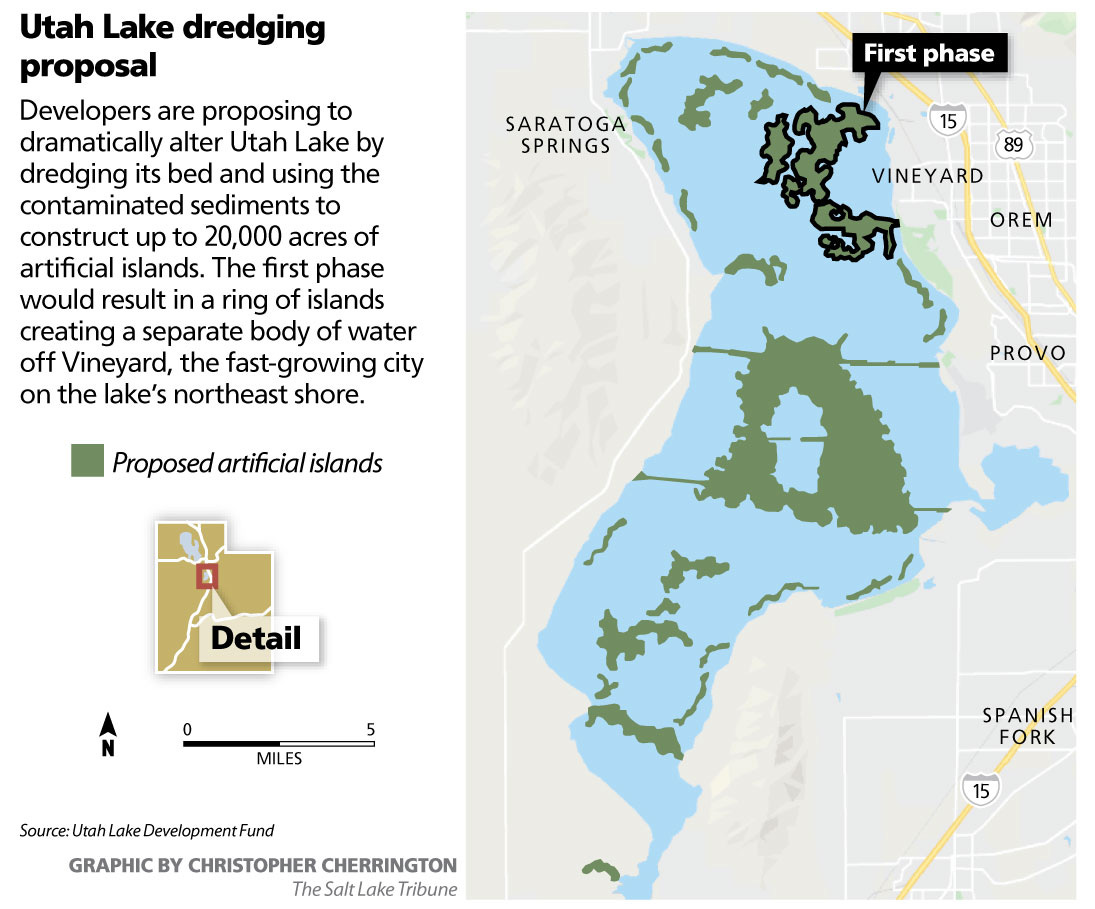
The narrative that the lake is not only beyond saving but also a danger to humans and hounds alike motivated a Utah-based company, Lake Restoration Solutions (LRS), to propose “killing” the lake in order to save it. In 2018, LRS released a plan to dump the pesticide rotenone into the lake to kill off all plant and animal life. Then, to deepen the naturally shallow lake, LRS proposed to unleash sixty dredgers to scoop one billion cubic yards of sediment. LRS would then sculpt the dredged mud into 18,000 acres of islands, linked together, and to the shore, by bridges and causeways. These islands would become new areas for wildlife and recreation as well as residential and commercial properties for some half a million people. If implemented, LRS’s plan would be the most expansive and expensive (costing some $6.4 billion) environmental “restoration” project in American history.
LRS believed its plan would bring about two miracles at once: raise the lake from the dead and create more land for Utah Valley’s booming population. Utah Lake would become akin to Dubai, with its infamous artificial islands off the Persian Gulf coast, which LRS-associated designers had helped develop.
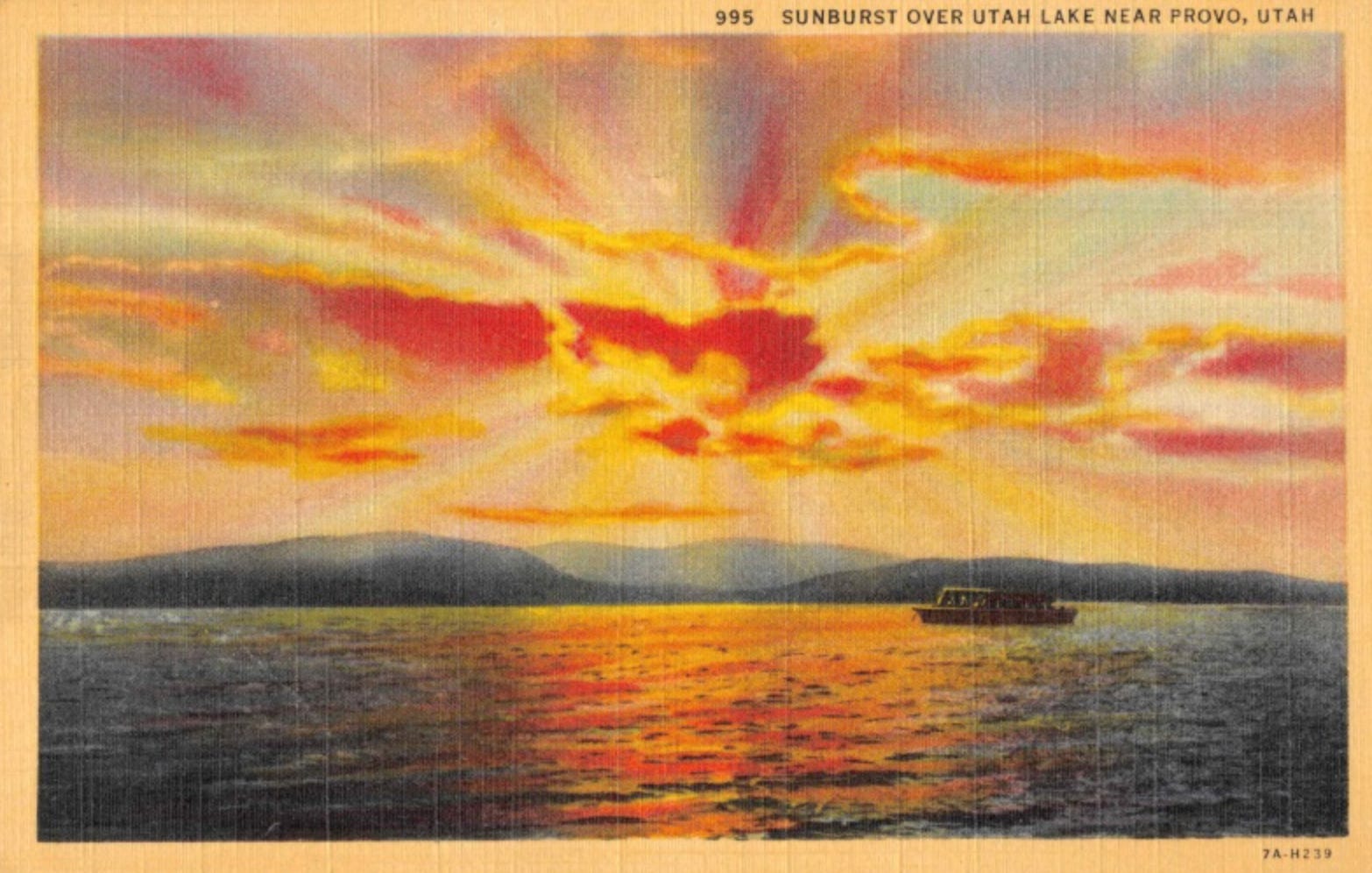
Errigo and Abbott’s crew of scientists on the sunset sail did not strongly push their opinion that LRS’s plan was a very bad idea. They did not mention that the Dubai project had gone tens of billions of dollars over budget or that only one of the four proposed archipelagos was completed. They did not mention that the project degraded the water quality of the Persian Gulf, leading to more harmful algae blooms, erosion of the coastline, and massive sea life die-offs. Instead, as we tacked back and forth, they told stories from the beginning of the twentieth century when the lake was a major site of recreation for citizens of the Utah Valley, as it had been for Wakara’s Timpanogos for centuries before that. Resorts had dotted the shoreline, where visitors fished and bathed during the day and danced under half-shell bandstands at night. The scientists invited the politicians, whose support LRS would need to move forward, to imagine what could be again. The hope was that the politicians would see for themselves that the scheme to “pave over Utah Lake,” as some of the plan’s opponents described it, was a financial boondoggle and an ecological apocalypse in the making.
Yes, the dead dog was bad PR, BYU fish scientist Ben Abbott explained to me. “The lake has been sick, but not ‘terminally sick,’ as LRS says.” Still, what Abbott describes as LRS’s “engineering-focused” approach—to mold the environment to fit humans’ notions of what the lake should look like—is what led to the lake’s poor health in the first place. And not just in recent decades, but over the last century and a half, starting when the Mormons cut down trees that lined the lake’s tributaries, dug irrigation ditches, and waged war against the region’s long-standing stewards, Wakara’s Timpanogos. Later, these settlers introduced commercial fishing operations that decimated most of the native fish species in the lake. By the mid-twentieth century, they even treated the lake as Utah Valley’s toilet, dumping human waste directly into it. One longtime local described water-skiing on the lake in the 1980s as “skiing the scum.” “We did slalom between the islands of floating shit.”
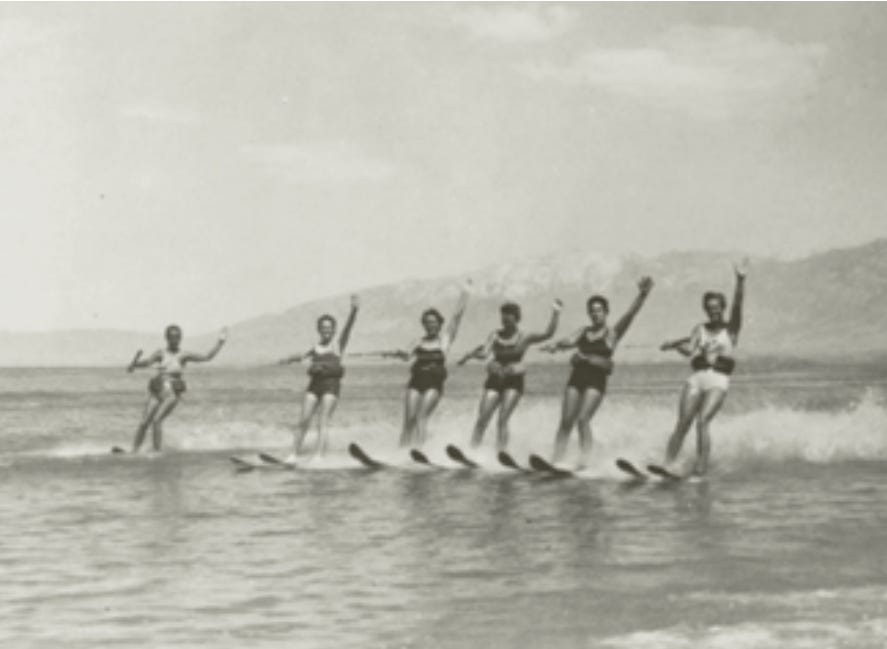
Human waste isn’t the only fertilizer in the lake. Phosphorus and nitrogen run off from farmlands and lawns, which feed the algae blooms. The lake’s tributaries are choked by huge stands of phragmites, tall, invasive perennial reeds that have crowded out native grasses along the lake’s shore. The lake’s natural shallowness, combined with the unnatural decrease in mountain runoff from its tributaries and the warming of the lake’s temperature due to climate change, has created such massive blooms that, in the last decade, the Utah County Health Department has issued occasional warnings to keep dogs and humans from spending time in any part of the lake. The blooms have also become the dominant image in the public’s psyche about the lake. In 2010, 300,000 people visited Utah Lake. In 2017, that number was down to 100,000.
“People remember the dead dog and the algae blooms, as if it’s the lake’s fault, and not the people who came here and changed the entire landscape,” Isabella Errigo explained toward the end of the sail. Abbott agreed. “The settlers and their descendants have taken a human-centered approach to how they view the lake . . . that the lake exists to serve our needs. Instead, we need to think of ourselves like the Timpanogos did, as part of the ecosystem, in relationship with the water, the land, the fish.” Utah Valley’s residents have forgotten that the lake is what drew their Mormon ancestors here in the first place, Abbott continued. And they’ve forgotten that the fish saved the settlers from starvation when their crops failed in the 1840s and 1850s.
Perhaps remembering the lake will help restore the lake to what it once was—the ecological and cultural heart of the Utah Valley. By centering the health of fish, in particular the June sucker as the Timpanogos did, and by restoring its habitat to something close to its presettler state, June sucker advocates hope that fish and humans can together save the lake and once again draw people to it, as the fish did for the settlers 170 years ago. And as the fish did for Wakara’s Timpanogos for hundreds of years before that.
Max Mueller is a theorist and historian of race and religion in American history, with particular interest in Indigenous and African-American religious experiences, epistemologies, and cosmologies.
This essay is an excerpt from Wakara’s America: The Life and Legacy of a Native Founder of the American West.
