


The Kid first noticed the men in London. Every morning for a week, they sat on a bench across the street from our hotel on the Strand. Sometimes they read the Illustrated or another paper, feigning nonchalance as they waited for us to leave. They wore tailored frock coats, dark suits, and bowler hats. I thought they looked like typical Londoners, but the Kid had a knack for spotting trouble. It was a gift of the spirit.
Right away I knew the men were Chandler’s. Joseph had always worried—privately, at least—that Chandler would try to take back the mummies and scrolls. He told me once that Chandler had returned to Kirtland a few days after the sale, his clothes disheveled and his hair matted with grime and sweat. The scrolls, he raved, had bewitched his soul with what he called their “immortal promise.” He begged Joseph—pleaded with him—to sell them back, but by then, Joseph had already studied some of the strange characters on the papyrus and sensed the depth of their secrets. He turned Chandler away, not unkindly, and then made sure the antiquities were never far from those he trusted.
At first, the Kid was nervous about being followed. He wasn’t afraid of the men, not with Ephraim and Manasseh holstered at his hips. His draw was faster than a steam engine and carried twice the punch. I always thought that any man who tried to get the jump on him—in a dark alley, say, or in the privy—would be choking on lead before they had breath enough to say Cleopatra. No, his nervousness—his fear, really—was for me. When Jeremiah and Kumen agreed to let me take this mission, they insisted that I bring the Kid along. My divine resilience had never fooled him, after all. He knew Chandler’s stooges could not hurt me, not physically. But I was still a tender old man with a fierce disdain for guns. And I was certainly no Sampson, despite my change. I needed the Kid’s muscle—and probably his grit—to do what needed to be done. (Or what we thought needed to be done.) But mostly I needed the Kid’s heart. He worried about me because he knew my limits. And since I loved him like a son, he would do anything to protect my soul.
“Listen, boss,” the Kid said one evening, “maybe them varmints can’t make you bleed, but they sure as thunder can make you wish you could.” As he said this, his hand reached unconsciously for Ephraim’s pearly grip. The pistol’s innate chill startled him, and he flashed me a sheepish grin.
“Don’t worry about me,” I said. “Worry about the mission. Getting the antiquities to Egypt is all that matters right now.” I clapped him on the shoulder and prayed he didn’t sense how rattled I felt.
On what turned out to be our last afternoon in London, we lunched at our hotel and walked a mile to the British Museum. As expected, we saw Chandler’s men perched on their bench, this time reading The Guardian. I braced myself as we passed them. The Kid had the antiquities slung across his shoulder in a long carpet bag, and for a moment, I thought the men would finally make their move. But the stooges kept their eyes on their newspapers, and we were a quarter mile from them when they stood to follow us.

At the museum, the Kid wandered the Egyptian galleries while I met with one Samuel Birch in a small office nearby. Dusty artifacts cluttered every corner of the room, and it was with difficulty that Birch made space for me and the carpet bag. He was a bald, bookish man with a gray beard and an unremarkable stature. When he met me outside his office, he had seemed distracted and impatient for our meeting to be over. But his demeanor changed once I set the carpet bag down on a repurposed surgical table and unfastened its buckles. A broad smile appeared behind his whiskers, and his eyes, which had first seemed dark and brooding beneath a heavy brow, lit up with evident delight and curiosity. He approached the surgical table and assisted me in removing each of the mummies from the bag. There were a total of four, each one rather small, and I could tell by the scholar’s furrowed brow and quietly clucking tongue that he was disappointed by their dilapidated state.
“When the mummies were purchased some thirty years ago,” I explained, “the owner had been eager to learn all he could about them. They came with two papyrus scrolls. I have those here as well—all but a few fragments.”
Birch nodded his head vaguely and then rolled one of the mummies onto its side. “The owner was an American exhibitor?” he asked, examining the mummy’s back.
“Not exactly,” I said. “He was a religious leader . . . a prophet.”
“Let me guess,” Birch said. “He thought he had purchased Joseph of Egypt—or maybe Joseph’s pharaoh.”
“Well,” I said, “not exactly . . .”
Birch laughed. “Not exactly!” He set the mummy down and rested his hands on the table. “Mister . . .”
“Timothy,” I said.
“Mister Timothy, these mummies are simply not that old.” He crossed to the other side of the table and ran a delicate hand through his beard. “Yes, they are ancient by our woefully narrow perspective,” he said, “but they are nearer in age to our Lord and Saviour than to Joseph or Moses.”
“Sir,” I said, “I’m wondering if you could help me know where in Egypt they came from.”
Birch shrugged. “May I see the scrolls?”
“Yes,” I said, retrieving a sack made from rubberized cloth. “I’m afraid they’re in a worse state than the mummies.”
Birch placed the sack on the table. “Do you know who sold these antiquities to your prophet?”
“A man named Michael Chandler,” I said. “He acquired them from someone named Lebolo.”
“Antonio Lebolo,” Birch said. “The Italian tomb raider.”
“You know him?”
“I know of him,” Birch said. “He was one of Napoleon’s men.”
“Is he still alive?” I asked.
“No,” Birch said. “He’s been dead for decades. But if he’s the man who excavated—”
Alarm flashed across Birch’s eyes as a loud noise from the galleries interrupted him. “Excuse me,” he said, taking a few timid steps toward the door. “I’ll just be a minute.”
Another loud noise—this time a thud—shook the room. The door swung open and the Kid rushed inside, Ephraim in hand. “Boss,” he shouted, “we gotta ride!”
Birch gasped as the Kid bounded recklessly through the room, desperately searching for another way out. Coming upon a stack of pottery, the Kid smiled wryly and shoved it hard with his shoulder. Pots and jars, almost as old as recorded time, shattered on the hardwood floor, revealing a soot-stained window. “C’mon, boss,” he cried. He flipped Ephraim into the air, caught it by the barrel, and hammered the window out with the butt.
I tipped my hat at Birch. “I’m sorry, professor,” I said. I reached for the scrolls, but a violent rattling of the doorknob froze me in place. “Gosh all Friday,” I said.
Crouching like a wrestler, I turned just as the office door burst open. Two of Chandler’s men—I recognized them from the street—stormed into the room with pocket Colts aimed at the Kid. Without hesitation, I lunged at the shorter of the men. A blinding flash of orange flame erupted before my eyes, and I felt a pair of lead balls glance painlessly off my skin. The men looked startled, so I pushed Shorty out of the room and then swiveled to face the other. He pulled a knife from his belt and appeared ready to attack. A long purple scar ran down his cheek.
“I wouldn’t do that if I was you,” said the Kid. He had Ephraim aimed at Scarface while Manasseh drew a bead on Shorty. “Boss here don’t believe in shooting irons, but I sure as thunder do.”
Scarface holstered his Colt, but he held his knife steady. The Kid laughed.
“Boss ain’t afraid of a little knife,” he said, “but go ahead, varmint. I’ve changed my mind.”
Scarface looked at the Kid and then at Shorty. He knew he was outmaneuvered.
“Alright, Boss,” said the Kid. “Let’s get a move on it.”
In an instant, I had the mummies and scrolls in the carpetbag. With some effort, I hefted the bag onto my shoulder and grabbed Birch by his coat sleeve. “Where did Lebolo find the mummies?” I said.
Birch’s eyes were wide with fear. “Thebes,” he whispered. “Luxor. The Valley of the Nobles.”
I nodded and hurried to the window. “May you keep the commandments and prosper in the land,” I called out to Birch. “And sorry for the mess.”
We took a steamer from Dover to Calais and caught a train to Marseilles. On the way, I told the Kid what Birch had said about the mummies. I already knew they weren’t as old as Moses or Joseph of Egypt. A German antiquary in New York City had confirmed their age—and, to some extent, their contents—not long after I recovered them in Chicago. But I had been struck by his wording—“nearer in age to our Lord and Saviour.” It was a description that suited me as well.
“Ain’t it ironic,” said the Kid. “Old boy lives and breathes the ancient world, but when a living, breathing antiquity walks into his office, he don’t realize it.”
“You make me sound like a mummy.”
“Y’know what I mean,” said the Kid. “Some people think they know everything, but we’re all just scratchin’ the surface of what there is to know.”
“It reminds me of something the Prophet once told me,” I said.
“What’s that?”
“Back in 1842, when he was hiding from the law, I stayed with him for a few days on an island in the Mississippi. He spent most of the time asking me questions about what it was like to be me. He could spend hours asking questions and just—learning.”
“My pa said he was a good talker.”
“He was,” I said, “but if he thought you knew something he didn’t, he wouldn’t let you go until he’d learned all he could from you. And that’s sort of what we were talking about that day on the island. He said the Angel Moroni had warned him to be wary of those who were ‘exceedingly anxious’ to show off their learning.”
“Like the good professor we just met?”
“Maybe, but that’s not really my point,” I said. “The Prophet told me that bit of counsel was always the hardest for him to follow. He was something of a showoff himself. He loved telling what he knew. In some ways, it was part of what made him larger-than-life.”
“I would’ve liked to have met him,” said the Kid.
“He was an incredible man,” I said, “and these mummies frustrated him.”
“Why’s that?”
“I don’t think he ever got from them as much as he wanted. The hieroglyphics mystified him more than he let on. It’s remarkable that we got as much of Abraham’s record as we did. Joseph wanted to get more, but you know how God works.”
“Yessir,” said the Kid, “God is one mysterious hombre.”
In Marseilles, we booked passage on a steamer to Alexandria for the following morning and then checked into a nearby hotel. The Kid was hungry, so we set out to “grab some grub.” The docks teemed that evening with people from every corner of the globe. As we walked along the Old Port, the street was a babel of French, Italian, German, Greek, and Arabic. The Kid was entranced by the exotic array of clothing and hairdos around him.
“Boss,” he said. “Some of these people look like Jesus.”
“Not when I saw him,” I said, “but I know what you mean.”
We found a café on a narrow street east of the port. It served a watery soup with overcooked vegetables and pale meat. A hard chunk of bread accompanied the soup, and when I put the two together, I had a surprisingly decent meal. As always, the Kid ate three times as much as I did. Neither of us said much. We knew what we had to do. In the morning, we’d begin our voyage across the Mediterranean , stopping here and there until we reached Alexandria one week later. We’d then catch a train to Cairo, where we’d book passage on a Nile steamer bound for Luxor. Once there, we’d purchase some excavating tools, travel to the Valley of the Nobles, and return the antiquities to the sand.
We hoped to do all of this without interference from Chandler, of course, but we knew we’d probably cross paths with them in Alexandria or Cairo.
On our walk back to the hotel, the Kid began whistling, a sure tell that he sensed danger. His pace quickened and he turned down one side street and then another. We were being followed.
“Here,” he said, handing me the carpetbag of mummies. I slung the bag over my shoulder as he drew Ephraim and Manasseh from their holsters.
“Scarface and Shorty?” I whispered.
“Them and two of their friends.”
“Should we split up?”
“Not yet, Boss,” he said. “’Sides, you couldn’t run with that bag on your shoulder.”
The Kid led us through a maze of streets and alleys. After a while, I was sure we’d lost our pursuers, but the Kid kept going, always looking back at me to make sure the mummies and I were safe. He did not utter a word the whole time, not until he turned onto a crowded gaslit street lined with seedy cafés and houses of ill repute.
“We might’ve lost ‘em,” he said.
“Might’ve?”
He shrugged, a little embarrassed. “Well, I just haven’t seen ‘em in ten minutes.”
We walked down the street and tried to blend in with the gamblers, whores, and streetcorner mystics. “You hungry?” the Kid asked. He stopped in front of a dim café called Le Lépreux Aveugle.
“We just ate,” I said.
The Kid rubbed his stomach. “I don’t know, Boss. That soup wasn’t as filling as I thought.” He grinned weakly at me, and right away I knew he was stalling. Did he think Chandler’s men were waiting for us back at the hotel? Or was he sensing some new trouble coming our way?
“You know what?” I said. “We got the mummies and the scrolls. Let’s just hide somewhere here in the city, hunker down until morning.”
The Kid chuckled and slapped me on the shoulder. “Boss,” he said, “you read my mind!”
We found a quiet alley north of the port, ducked inside, and stretched out for the night. The Kid had left his bedroll at the hotel, so I lent him my coat to keep him warm. As always, I kept watch.
As the Kid snoozed, I remembered how I found him encamped with General Connor at the south end of Cache Valley. He was a feral sixteen-year-old then, but his mastery of horses and guns had caught the general’s eye and made him an ideal scout for the United States cavalry. His father had been a missionary alongside Addison Pratt in the Society Islands. His mother was Otaheiti royalty, making him an outcast when he came to the United States. For a time, he rode with Porter Rockwell, who nicknamed him the Liahona Kid for his uncanny sense of direction. I believe Rockwell introduced him to Connor and the cavalry. But the cavalry was no place for a boy that age, no matter how good he was with a gun, and so I did what I’d been doing for centuries: I intervened.
From where I sat in the alley, I could see a sliver of cross street. Now and then, someone stumbled into view, bottle in hand. I tried not to judge, but over the years I had seen alcohol poison too many lives. The Kid himself had picked up the bottle in Connor’s camp, and it was only with great effort and God’s good grace that he embraced full sobriety.
These musings carried me through several uneventful hours. Around three o’clock, though, I noticed the outline of a man at the entrance of the alley. At first, I thought little of it. But then he struck a match to light a cigarette, and the small flame illuminated a purple scar along his cheek.
Moving slowly, I placed a hand over the Kid’s mouth. He awoke instantly and met my gaze. “Scarface,” I whispered.
The Kid sat up and noiselessly drew Ephraim from his holster. Raising a single finger to his lips, he moved into a crouching position and cocked the pistol. The steel click of the hammer split the silence, causing the slightest of movements in Scarface’s silhouette. The stooge took a long drag on his cigarette, tossed it to the ground, and stepped out of sight.
“Stay here,” the Kid whispered. He unholstered Manasseh and held it out to me. “Take this.”
I looked down at the gun. Even in the dark alley, the cold steel glimmered in the Kid’s hand. “No, thanks,” I said. “I don’t need it.”
“Just take it, boss,” the Kid said, his eyes pleading. “Take it for me.” He pressed the gun into my hand and disappeared into the night.
Five minutes passed and then ten. Manasseh sat awkward and heavy in my coat pocket. I tolerated the Kid’s guns because he respected their power, knew how and when to use them, and did not have my immunity to death. I belonged to a world before the firearm, and I had seen its cruel ballistic efficiency tip the scales in favor of cruel men who had no qualms about slaughtering people who looked like me. Of course, the history of the world was a history of weapons, and maybe I blamed the gun for more than it deserved.
But where was the Kid? I wanted to go after him, but leaving the alley would only put the mummies and scrolls at risk. The best thing to do was wait.
After forty minutes, I heard footsteps. Clutching the carpetbag, I retreated deeper into the darkness, forbidding myself to hope. The footsteps grew louder and then stopped. I heard a whisper: “Timothy?”
Ever since my bodily change, I had lost the ability to feel the purely physical manifestations of fear. Yet that loss had heightened my spirit’s capacity for experiencing terror and dread. Gone were the tremors, the knocking knees, the cold sweats. In their place, buried deep in my mind, was a persistent, soul-piercing scream. And I had no choice but to hold it back as best I could.
A man appeared at the entrance of the alley. Through the darkness I could see his emaciated body was doubled over with age or injury. He leaned on a cane and held what looked to be the Kid’s battered slouch hat.
“Timothy?” he said into the darkness. “Yes, I know your name. I know all about you.”
Manasseh felt like lead in my pocket. “Where’s the Kid?” I barked.
“All in good time,” he said. “My name is Dr. Michael Chandler. I’m not a real doctor, mind you, but you already know that.”
“The Kid!”
“You have some items that belong to me, and I want them back.”
“Over my dead body.”
Chandler laughed. “Oh,” he said, “we both know that’s impossible!”
“Then maybe over yours,” I growled.
“Threats mean nothing coming from a saint,” Chandler said, “so let me make this simple. My men have your mongrel friend, and they will kill him unless you give me back my property.”
“They aren’t yours,” I said. “They never have been.”
“They have always been mine!” Chandler sneered. “They will be mine forever.”
“You’re mad,” I said.
“No, I am old and sick,” he said. “I am dying.”
In the darkness, Chandler appeared to steady himself on his cane. Joseph’s words flashed across my mind: immortal promise. “You think these mummies will cure you,” I said.
“Not the mummies,” said Chandler, “the scrolls. They hold the secrets of immortality and eternal life. Your prophet told me so himself.”
“You misunderstood him,” I said. “The scrolls aren’t magic.”
“Oh, but they are,” said Chandler. “You’re the living proof, or so my men tell me.”
I wanted to laugh. So that was it, the source of his obsession. He had twisted Joseph’s words, spun them around in his addled mind until he believed something on the scrolls—some magical spell or glyph—could make him live forever. Then he found out about my imperviousness to physical harm, and he jumped to the obvious conclusion. Never mind that he was wrong.
“Let me see the Kid,” I said. “I need to know he’s alive.”
“As you wish,” said Chandler. In a moment, Scarface and Shorty wrestled the Kid into view. Chandler approached them and lit a match, briefly illuminating the Kid’s bloodied and beaten face. A checkered scarf gagged his mouth. Shorty held a knife to his jugular.
“He put up quite the fight,” Chandler said. “It took all of my men to subdue him.”
“Let me talk to him,” I said.
“No.”
“This has nothing to do with him.”
“As long as you have my property, it does.”
My mind raced with possibilities. The antiquities had no real value anymore. Joseph had wrung all he needed from them, and they had served their purpose well. They weren’t magic. They had no special properties. They were curiosities, nothing more. I could hand them over to Chandler, save the Kid’s life, and perhaps the work would be no worse for it. Chandler would live a few more years and die in frustration and disappointment. The mummies would pass to someone new, someone less delusional. Maybe they might end up in a museum or a private collection.
But I had a mission. Missions were my sole reason for life.
Gripping the carpet bag, I stepped toward Chandler.
“Smart man,” he said.
“In the name of God,” I said, “release that man.”
That instant, two men pounced on me from the shadows. One seized the carpet bag and tried to wrench it from my hand. The other kicked me hard in the back, dropping me to my knees. He wrapped a muscular arm around my throat and began to squeeze. With my free hand, I reached blindly behind my shoulder until my fingers found his eye sockets. Digging in, I yanked his head forward, twisting my wrist with all the force I could muster. The man screamed and loosened his hold on my neck, giving me just enough freedom of movement to release my grip on his face and elbow him hard in the sternum. The man groaned and crumbled to the street, clutching his chest. I then turned and seized the carpetbag with both hands, mustering all my strength for a mighty tug-of-war with the second goon.
But even after all these years, these cycles of painlessness and predictability, the universe handed me a ruthless surprise. I heard a gunshot.
My first thought, unpardonable in its hope, was that somehow the Kid had wrestled a hand away from his captors, drawn Ephraim, and fired off a shot. But when I turned to look at him—to celebrate with him—I saw Scarface and Shorty lowering his slumped body to the ground. Standing beside them was Chandler, his quivering hand enveloped in arabesques of sulphur and smoke. Confusion spread through me like poison, and I released the carpetbag. Only then did I see Ephraim in Michael Chandler’s decrepit hand.
I rushed to the Kid’s side, scattering Scarface and Shorty. Blood poured from a visceral bloom on his abdomen. I searched for a pulse at his throat, but my mind refused to focus. For the first time in centuries, I felt something I thought I had banished from my heart: rage. It telegraphed though my body in sharp, bitter pulses until all at once I reached into my coat pocket for Manasseh.
Placing a finger on the trigger, I spun around and aimed the pistol at Chandler’s wiry back. He had tossed Ephraim to the ground, and already he and his goons were retreating with the carpet bag. They were still close enough to pick off, one by one, and I felt an alarming—and not unwelcome—power surge through me. Chandler provided an easy target. His spindly legs jangled like broken branches in the wind.
I wasn’t the best shot. I wasn’t the Kid. But my hand was steady. It was always steady. I felt godlike.
“Boss! No!” The airless words, barely audible, cut to my soul. I looked down and saw the Kid reaching for me with a bruised hand. His eyes slit open and met mine. “Don’t hand it to them, boss. That ain’t you.”
“Kid!” I crouched beside him and gathered him in my arms. But it was too late. He was dead.
“Adieu,” I said, closing his eyes. “May you keep the commandments and prosper in the land.”
I recovered the mummies and scrolls from a Swiss sanitarium two years later. Chandler had died there on his last penny, his dream of Egyptian immortality never more than the echo of a death rattle. The antiquities were collecting dust in a storage room, and a clerk there was happy to let me haul them away. To my surprise, they were still in the Kid’s carpet bag. It was almost as if the past two years had never happened, as if the Kid really had died in vain.
I took the long way to Egypt. I crossed the Alps and wandered down the Balkan Peninsula to Istanbul. From there I crossed Asia Minor to Syria and Palestine, stopping briefly in Jerusalem. The Holy City was as dusty and ruined as ever, yet I was alarmed by the number of American and European tourists crowding its streets. One day, while passing through a dense marketplace, I thought I saw the Kid among a group of Americans in fine traveling clothes. He wore a slouch hat, just like the Kid’s, and when he passed by me, he touched a finger to the brim and nodded. I nearly called out his name, but I knew better. He was not the Liahona Kid.
I arrived in Cairo one month later and booked passage to Luxor on a steamer. The quarters I shared with a few other men were clean and accommodating. My bunkmates were mostly adventurers in search of glory and golden antiquities. They traveled with a few bags, simple excavating tools, and maps of the old Egyptian burial grounds. Every night, we sat on deck, entertaining each other with stories of exotic travel and wonder. I rarely did more than listen, although I occasionally contributed an anecdote to remain in their good graces. They were a godless and profane group of men, but I found, to my surprise, that I enjoyed their company. After so much time on my own, I did not want to be alone.
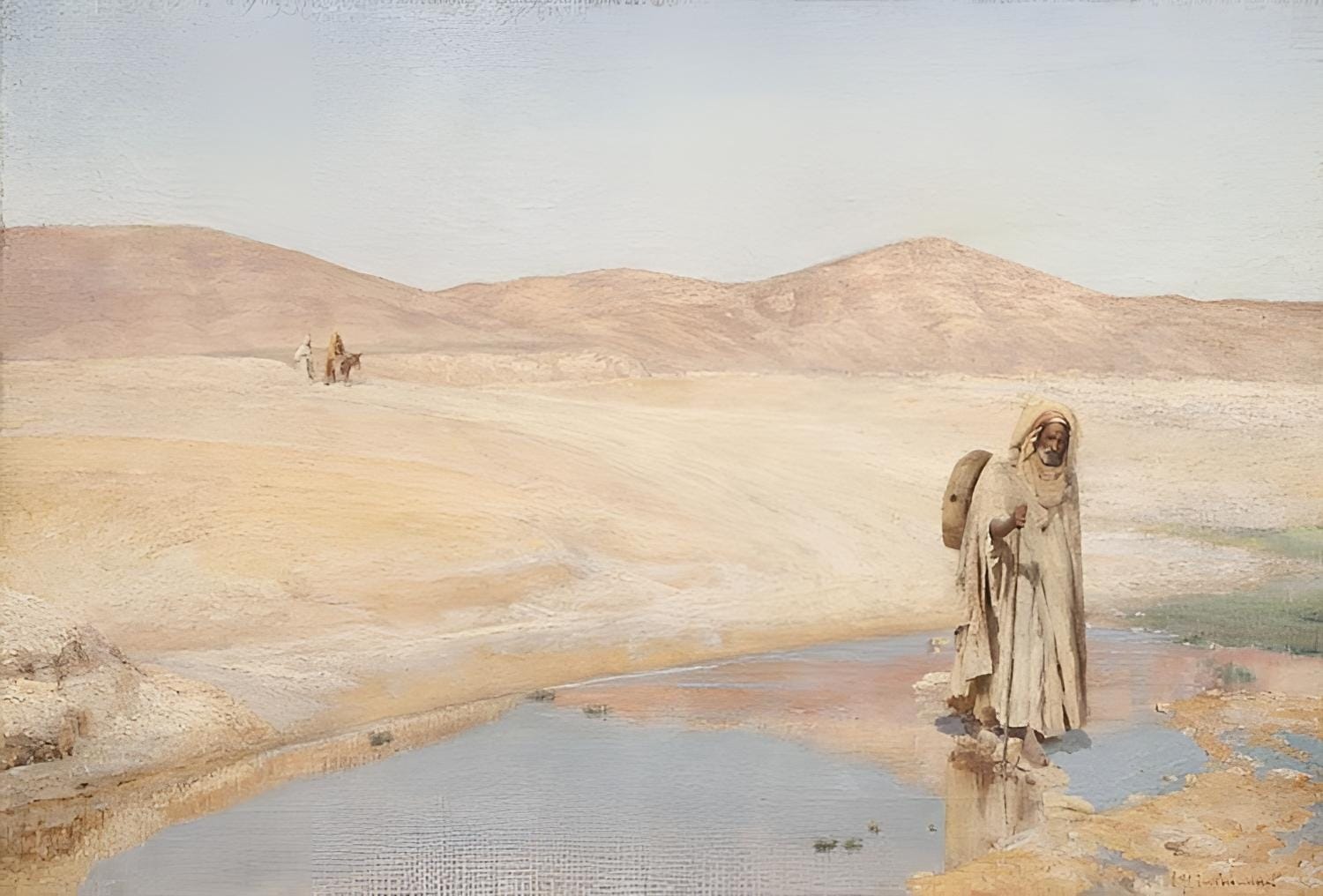
On the night I buried the antiquities, I camped on a hill overlooking the windswept Valley of the Nobles. From where I stood, I could see the fires and hear the murmured conversations of other camps, none of which worried me in the least. With Chandler’s passing, everyone who coveted the mummies and scrolls was dead. I could have buried the antiquities in any old hole between here and the Alps and no one would have known or cared. My allegiance to my call was the only reason I bothered. That, and I felt I owed it to the Kid to finish what we started. To be honest, I had ceased to care about the antiquities once they’d taken the life of my sidekick and friend.
I dug for half the night in an obscure corner of the valley. Not needing rest or water, I made quick progress. I had long since decided to bury the mummies and scrolls in the carpet bag. It made a good sarcophagus, and to be honest, I had no desire to see its contents again. It seemed unfair, after all, that these worthless treasures would receive a burial far better than the one the Kid had received. His body had spent three days in a Marseilles morgue before being dumped with other unclaimed bodies into a pauper’s grave. I had wanted better for the Kid, but I’d kept my distance and done what was best for the mission. The Kid would’ve understood.
When my burying hole was sufficiently deep, I looked up at the starry firmament and thought of Joseph’s Abraham, the young patriarch in flight. It was a profound piece of scripture, and I think the Prophet took a secret pride in it, despite the trouble it gave him. Like Abraham, he was always looking at the sky, searching for signs of better and brighter worlds.
One line from the translation had always resonated with me: eternity was our covering and our rock and our salvation. When my brothers and I changed, we were promised an eternity free from pain and sorrow save it be for the sins of the world. That covering had been a rock and a salvation for us in so many ways. Yet none of us had realized at the time how drenched in sin one world could be. Nor did we know how much everyday pains and sorrows had buffered us from the searing hell of godly pain and godly sorrow. How sore you know not, how exquisite you know not, yea, how hard to bear you know not. If we had heard these words the way Joseph had heard them, we all might have chosen a different path.
Knowing I needed out of the physical and spiritual hole I had dug for myself, I offered a short dedicatory prayer and placed the carpet bag at my feet. I then climbed out of the hole and sat down beside it. Nearby was a large haversack with some clothing and equipment. I pulled it toward me and retrieved a heavy linen package, which I unwrapped slowly and solemnly. Inside were Ephraim and Manasseh, the last relics of my young friend.
“So long, Kid,” I said. “Keep these dead Egyptian varmints safe for me.”
I dropped the pistols into the hole and heard a dull metallic thud as they landed on the carpet bag. The sound was strangely comforting, even peaceful. And I had not felt peace—real peace—in such a long time.
Scott Hales is a writer, historian, and literary critic living in Eagle Mountain, Utah. He is the author and illustrator of the graphic novel The Garden of Enid: Adventures of a Weird Mormon Girl (Greg Kofford Books, 2016, 2017), Hemingway in Paradise and Other Mormon Poems (Mormon Lit Lab, 2022), and Sacred Scar: Poems (Greg Kofford Books, 2026). When he isn’t writing, he’s running. When he isn’t running, he’s thinking about it. He and his wife, Sarah, have five children.
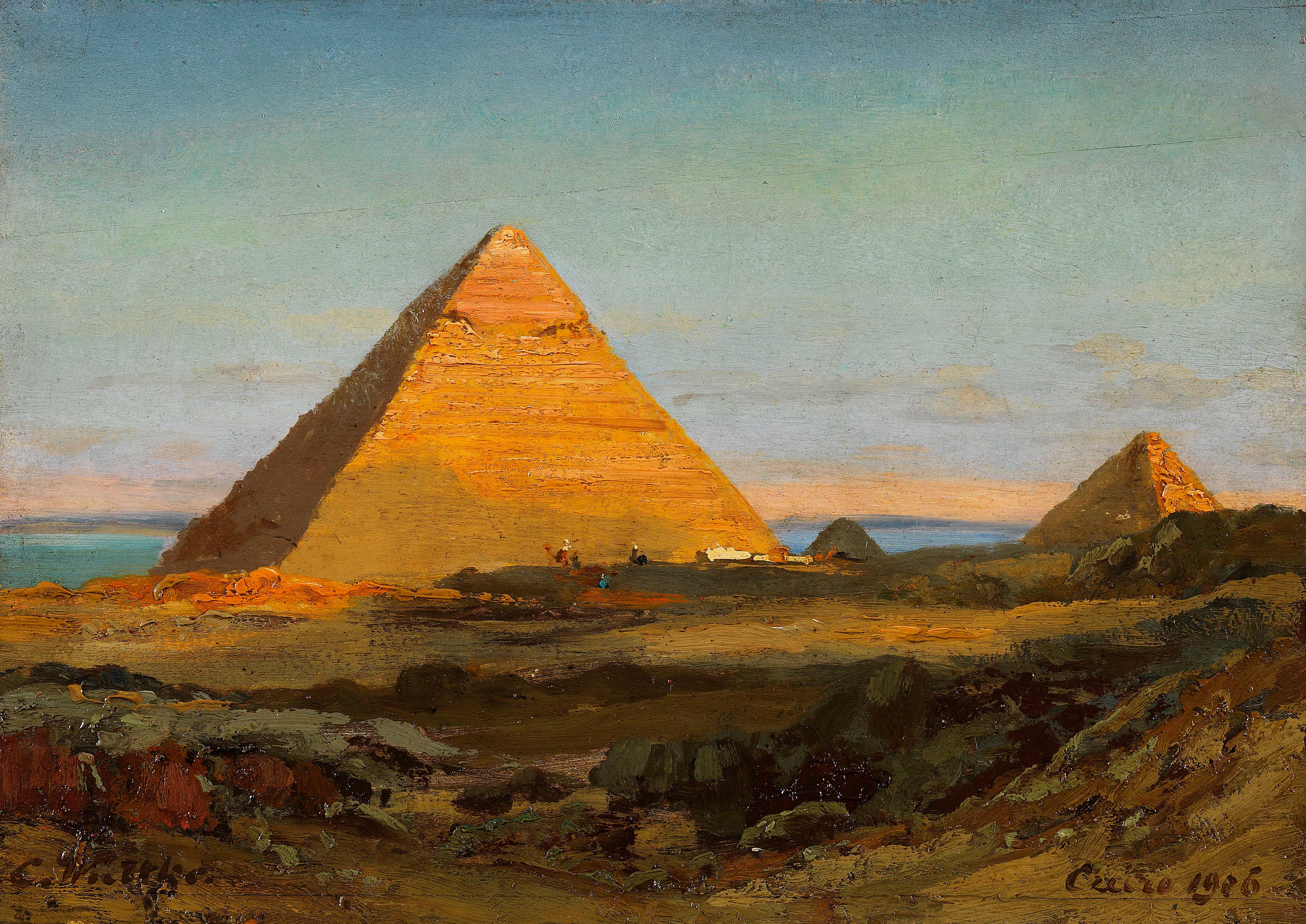
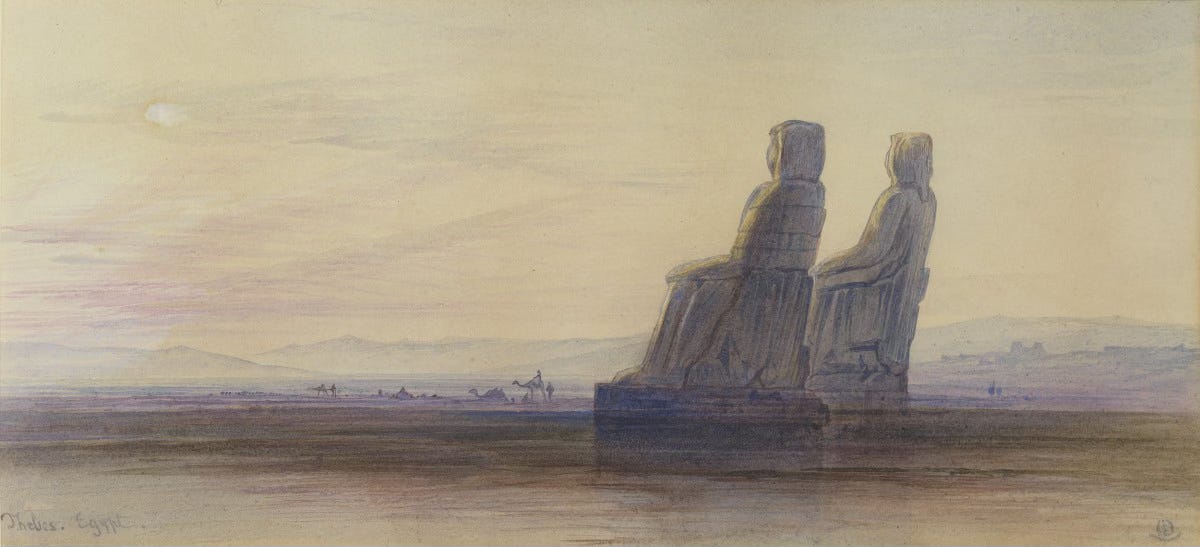
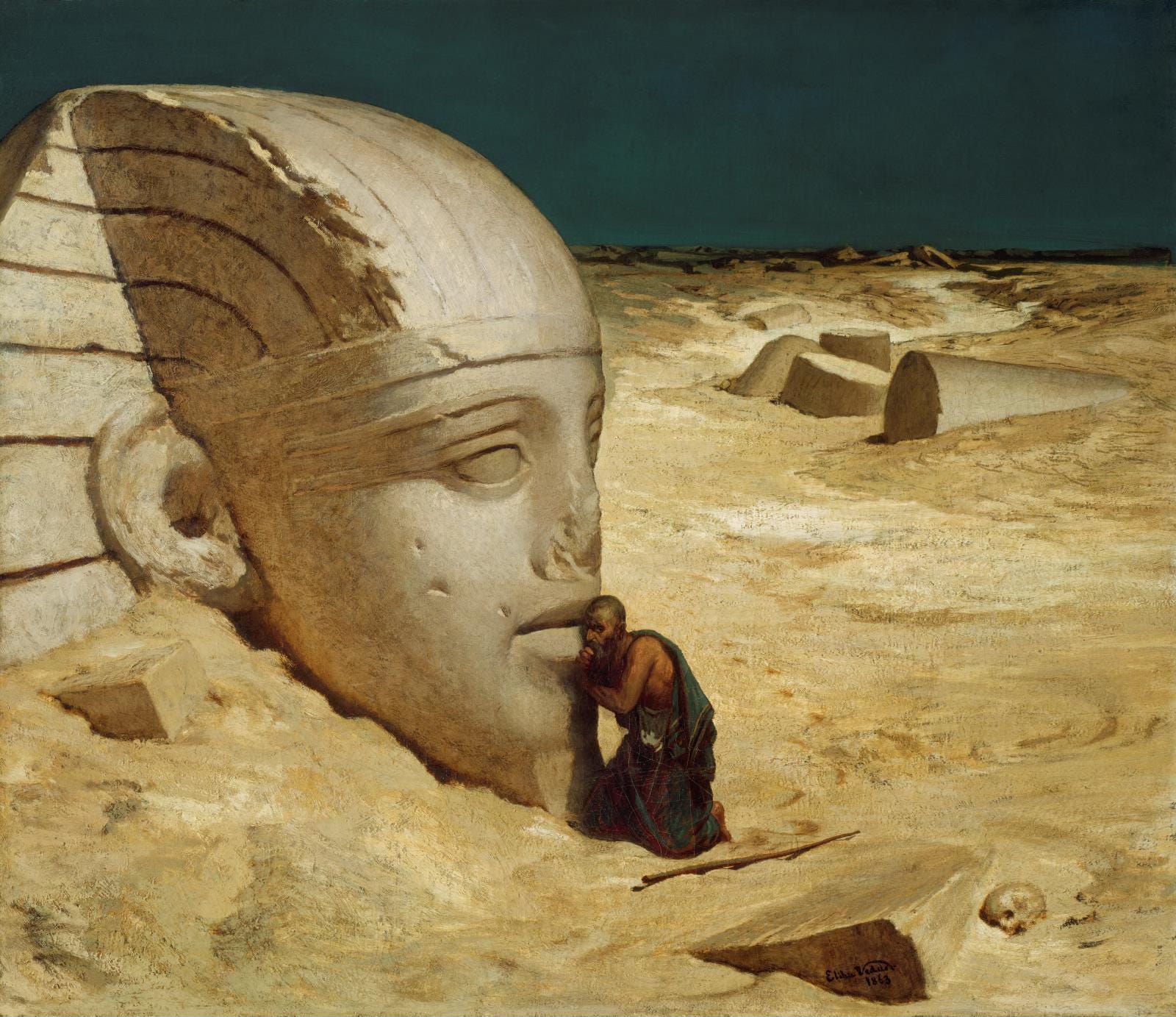
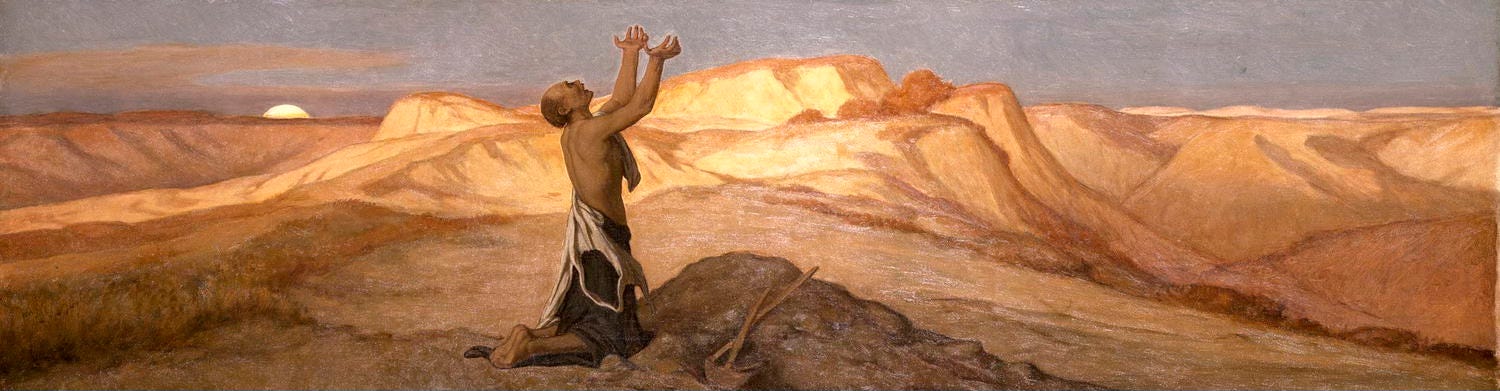
Art by Carl Wuttke (1849–1927), Edward Lear (1812–1888), Elihu Vedder (1836–1923), and Louis-Joseph Anthonissen (1849–1913).


