


The following piece responds to Tyler Johnson’s parable, “The Keepers of the Well.”
In Tyler’s parable, a desert city has forgotten that its existence depends on a well and its life-giving waters. The well’s guardian instructs his daughters in how to tend the well and keep its waters pure; he teaches them about the oracle with second sight who found the well, around which a cathedral and eventually their city was built.
Despite their family’s charge to look after the well, each daughter chooses her own path. The first daughter finds her place in life among the city’s merchants and material splendors. The second daughter, weary with the city’s pride and opulence, leaves the city and finds a new well of water. The third daughter attempts the same feat but is not led to water and finds only heat, sand, and scorching sun. The fourth daughter remains in the city and carries on the work of her father.
She sighed heavily as she closed the door behind her. The day had been long and hard. She dragged her tired body across the small room, lowered herself into a chair, and removed the sandals off her aching feet. Why did she feel more discouraged today? All days were long and hard and lonely. Why did the rejections feel so much more charged today?
There had been the large man who came out of his door carrying a hammer. From far down the narrow, winding lane she was on, he raised the hammer above his head and yelled, “Get off my street! Don’t knock on my door!”
There had been people in multiple homes, who opened the door just a crack, one allowing her a glimpse of bread baking on a flat stone, another releasing a waft of spices; all of them briskly slamming the door closed, saying, “No, sorry! The sandstorm is too strong!” or “No, I’m not interested. The heat is too intense” or “The desert sun is too cruel! I’m not opening the door!”
“Yes,” she thought when she heard these excuses for not opening the door to her, “I know. I’m outside in the storm, in the heat, under the sun.”
There were always the averted eyes and quickened footsteps that veered to the other side of the crowded streets. People did anything to avoid coming into her path—reversed direction, stopped to notice a vendor’s wares, called to a friend down the alley, dropped their gaze and hurried past her. No one wanted to make eye contact and give her the chance to introduce herself and explain what she was doing. Everyone treated her like a leper.
Today had been like almost every day of the last year since she left the city—since she set out as an emissary, trying to share water from the city’s well with those outside the city who did not know of the well’s existence. But, for some reason, today she felt the rejection and isolation more acutely than usual.
As she wiped her dirty feet with a cloth and replaced her worn-out clothes with her sleeping gown, she looked at the water satchels stacked against the back wall of the room. They were all empty but one, and that final one was only half full. She would need to journey back to the city soon to replenish her stores.
Where had it all gone?
She carried small vessels of the water with her when she went out each day, hoping someone would accept her offering and drink the life-giving water. Every day, she prayed someone would discover the water’s value—how refreshing it was compared to the water sold in the markets, how thirst-quenching it was compared to the water that generators pulled from the air, how healing it was compared to the mineral-deficient desalinated water, how pure it was compared to the juice, hard cider, or wines some people drank to sustain themselves.
But her humble offering—held out in a small flask bound in leather—was usually refused. People felt they had the hydration they needed; they didn’t need any more. And the outward appeal of her simple water flask couldn’t compete with the ornamented jugs in the market or the varied flavors of juices and wines; the well water seemed unimpressive in contrast.
Sometimes people refused politely, smiling uncomfortably as they walked around her extended arm. But sometimes people smacked her hand away, disturbing the flask and spilling the water on the sun-scorched stones. She often wished she could show up at the market with a cart full of gleaming jars, announced with trumpets, and presented by the oracle himself. Then people might pay attention. People just didn’t know that she was offering something of such great value.
She tore a piece of bread and scraped some lentils from an earthen bowl, hungry after a full day with only bread and dried fruit. She poured some of the water she reserved for herself from a jug on the table, eager to feel its cool touch going down her throat.
How much water had she wasted? How much of it had she lost?
But how much of it had she given to those who needed it? Perhaps she had given away more than she realized. There were a few who accepted the water from her, usually in hesitant ways.
There had been the young dancer, whose children were taken from her because she spent her days intoxicated or asleep, but who accepted the water in small doses because she felt it heal her for a short time.
There had been the dying blind man, who accepted the water as long as the emissary brought it to his home but who refused to leave his home to reach the water himself.
There had been the aged mother, with children no longer surrounding her, who drank the water eagerly until her angry husband took it away from her and refused to let her meet with the emissary again.
There had been the prisoner, jailed for years after killing a man in a fight, who came close to ending his own life until the emissary showed up at his door offering hope through the healing power of the water.
There were only a handful who had accepted the emissary’s offering. They tasted the water and understood that it offered nourishment and restoration. But in the end, most of them refused or could not make the journey to the well city where they could drink from the well freely. They changed their minds. Or someone in their family refused to let them go. Or they eventually forgot how good the water tasted.
But they had tasted the water. Perhaps there were more of them than she realized.
Little sparks of static flashed blue as the emissary pulled her flimsy and tattered blanket over her, its rough threads scraping against her dry legs. Yes, she thought, from day to day—from hour to hour—it felt that no one paid attention, but remembering the strangers who accepted the water and became friends for even a short time gave her hope—a hope she clung to and a hope that made her work feel worthwhile. The water had gone to them.
But today, that hope had felt weak. Perhaps it was because she had been away from the well city for so long. Perhaps she was becoming parched herself, unable to fully drink from the waters since she had to preserve her stores for sharing with others. Perhaps she was missing the rituals and festivals her home city created to celebrate the water. Perhaps she was missing the companionship of fellow drinkers who loved and cherished the water like she did.
Whatever it was, she let out another sigh as she closed her eyes and drifted off to sleep. Despite the discouragement and the hard mat that served as her bed, she slept soundly each night. Her legs had grown firm from days of walking. Her arms had become strong from carrying water vessels each day. Her spine was straight and tall from a year of mustering courage in the face of so much rejection. And her face had softened with compassion for those she had grown to love—the few who cherished her presence and valued her gift and those who turned their faces from her.
Tomorrow she would once again rise early and set out with her flask of water, trying to find those unknowingly gasping from dehydration and in need of the healing powers of the well’s water.
Sunny Grames Stimmler, mother of two daughters, is a writer and educator currently living in Ankara, Türkiye.
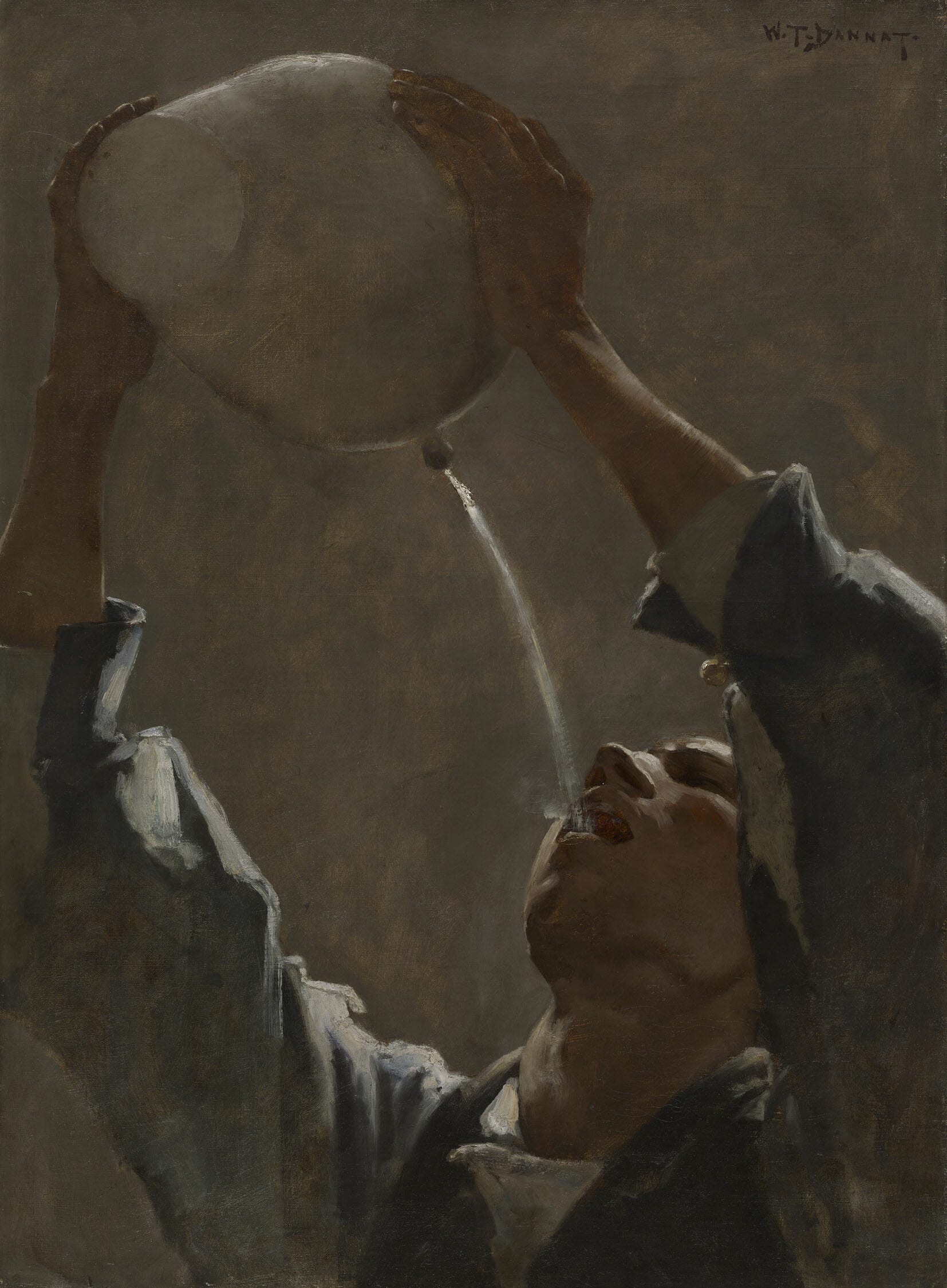
Art by William Turner Dannat (1853–1929).
To receive each new Tyler Johnson column by email, first subscribe to Wayfare and then click here to manage your subscription and select “On the Road to Jericho.”