


Some paid subscribers may have seen this essay as part of a collection sent out to general Wayfare readers a few days ago. We’re sending it again to all “On The Road to Jericho” subscribers. Happy Fourth!”
In his remarks accepting the 2024 Republican nomination to become the Vice President, JD Vance spoke of a small cemetery plot that his family owns in Kentucky. Describing the many generations of his family that are buried there—and after articulating how he hopes he and his children will one day be buried there, as well—Vance shifts from discussing personal family history to considering moral and political philosophy:
Now, [seven generations of relatives buried in a Kentucky cemetery] is not just an idea, my friends. That’s not just a set of principles. Even though the ideas and principles are great, that’s a homeland. That is our homeland. People will not fight and die for abstractions, but they will fight for their home. And if this movement of ours is going to succeed, and if this country is going to thrive, our leaders have to remember that America is a nation, and its citizens deserve leaders who put its interests first.
This quote has returned to me again and again over the last few weeks as I have contemplated the coming 250th anniversary of the signing of the Declaration of Independence, and as I have specifically thought about the charge Church leaders have given us to prepare for, think about, and express gratitude for that commemoration. To be clear: nothing in this essay suggests that voting for or against JD Vance (should he run in the future) is consistent with or contrary to gospel principles—all candidates represent and advocate for a whole host of positions and principles, and all of these must be considered carefully in the context of all a candidate’s beliefs, values, and policies as well as in the context of those promoted by other notable candidates. But it nonetheless matters that we consider, discuss, and debate the ideas major candidates advocate, and this idea can be considered in the context of gospel principles.
In this context, Vance’s words above catch my attention. He is asserting here a theory of what the US means and why we all should honor it—this is his version of American exceptionalism, a version based not on principle, but on the supposed superiority of a particular group of people and their ties to a particular place at a certain time. And the idea of US exceptionalism matters to us as Church members for at least two reasons.
First, we believe that something about America is supposed to be special. After all, both the Book of Mormon and the Doctrine and Covenants—two of our three planks of expanded canon—testify with striking specificity to the importance of the American founding. The special status of the American continent is spoken of in many places, including 1 Nephi 13, 2 Nephi 1:7, 2 Nephi 10: 19, Omni 1:6, Mosiah 2:22, Alma 9:13, Alma 37:28, Alma 45:16, Ether 2:8, and Ether 2:12. In the Doctrine and Covenants, the text speaks at length and in detail about the divine origin of US government in sections 98, 101, and 124. A verse from section 101 sums up the spirit of these verses:
According to the laws and constitution of [this] people, which I have suffered to be established, and should be maintained for the rights and protection of all flesh, according to just and holy principles; that every man may act in doctrine and principle pertaining to futurity, according to the moral agency which I have given unto him.
Unsurprisingly, modern Church leaders, including Brigham Young, George Q Cannon, Joseph F Smith, Spencer Kimball, Mark Petersen, Ezra Benson, and Dallin Oaks, have spoken with emphasis and eloquence to the importance of this idea.
Second, the election and re-election of Donald Trump have set in motion a realignment of political parties and partisan allegiances unlike anything we have seen in at least the last hundred years. In a time of such volatile politics, the very definitions of words and ideas are up for grabs. We may now be defining political terms in ways that will stick for decades. It matters that we get this right.
But as we think about the commemoration of the signing of the Declaration of Independence, and as we see a newly assertive US populism—and as JD Vance ponders a run for the presidency—I believe our theology and our understanding of history call us to reject Vance’s thesis that the United States is exceptional because of a mystical connection between the land and those who live here—especially those whose US roots stretch back many generations.
This rejection matters precisely because we assert such a robust respect and admiration for the founding of the United States of America. Rightly understood, that respect and admiration can inspire us to support and advance the principles that can make the US great. But understood wrongly, that same respect and admiration could turn us toward insularity and even a dangerous and corrosive form of nationalism.
My testimony is that there is greatness and divinity in the American founding—and it is vital for us to understand and support that greatness in meaningful ways. Doing this means rejecting Vance’s thesis, because the paradox of the American founding requires that we reject blood and soil nationalism in favor of embracing America as an idea, a set of principles that call us to return again and again to the better angels of our nature.
The Paradox of the Founding and the Founders
In the first place, there is no question that the governmental system that emerged from that handful of years in the late eighteenth century was nothing short of remarkable, even acknowledging deep-seated problems of various kinds. Despite imperfections, the democratic republic birthed into the world in 1776 (or 1787, choose your official starting date) has weathered challenges and even existential crises and has grown and thrived for 250 years. And this is an achievement both historic and world-changing. As Yale Constitutional Scholar Akhil Amar commented in a lecture at Stanford in 2024:
In most places, in most times, in the history of planet Earth, there are not self-governing societies. The history of the world is the history of kings, emperors, czars, sultans, [and] tribal chieftains—thugs all. And even the places that have self-governance, even if they had some form of organization or schema that could be called a constitution, even if they had a written constitution . . . [with] democratic constitution-making processes, these processes have never been voted on by those they purported to govern.
He then noted that nascent forms of self-government existed at the time of the founding, but none of them had anything like the self-forming, self-governing mechanisms put into place in the American founding. He concluded that for all of these reasons, the founding of the United States as instantiated in the US Constitution comprises the “big bang”—or the “hinge point of history”—that took us from a world where almost no one lived in a place where people organized themselves under self-rule as defined by written law to a place where most people in the world live in societies with at least some measure of just this type of government.
Similarly, President Dallin H Oaks has repeatedly voiced his respect and admiration for the US Constitution and other founding documents—as the prophet of a worldwide church, as an apostle of Jesus Christ, and as a former Utah Supreme Court Justice and University of Chicago Professor of Law. Specifically, while speaking at the University of Virginia, he said, “I love this country, which I believe was established with the blessings of God. I love its constitution, whose principles I believe were divinely inspired” (italics in the original). President Oaks later explained, while serving as a counselor in the first presidency, the constitutional principles he views as divinely inspired: 1) popular sovereignty; 2) federalism; 3) the separation of powers; 4) personal rights as enumerated in the Bill of Rights and later amendments; and 5) the formal enshrining of the rule of law. This is a powerful legal and spiritual articulation of just what it is about the US Founding and our foundational documents that demands respect.
And yet.
To the modern eye, there is a great deal about the founding of the United States that stands out as not only insufficient but outright hypocritical. Before exploring the inspiration inherent in the founding, it is important for us as Church members to turn our eyes toward and let them linger upon these difficult facts: Many of the men involved in the founding lived lives that stood in stark opposition to the principles they enshrined in our founding documents; indeed, even the documents themselves contained foundational contradictions that worked against the most important “just and holy principles” those documents articulate. In varying ways whose details lay beyond the scope of this essay, the founding of the United States itself—and the instantiation of US law in the government and cultural life of the United States—ran afoul of the very principles that made the US founding so important.
That contradiction is nowhere more evident than in the paradox defining the life, speaking, and writing of the man who was long revered as the beating heart of the American Founding: Thomas Jefferson. For generations, Jefferson was venerated as one of the geniuses most responsible for the success of the establishment of America as a nation. He was the principal author of the Declaration of Independence and worked in various capacities over decades to outlaw the importation of new slaves to the US. It is clear from his writing and some of his official governmental actions that he understood the moral problems associated with slavery.
But this recognition creates at least as many problems as it solves. Often, when considering the views of those from the past, we rely on the sense that the past is a “foreign country” to persuade us that problematic views, words, or actions from decades ago should not trouble us. But the very fact that Jefferson was aware of the moral problem of slavery—and the energy he put into pursuing slavery’s eventual eradication—make his own words and actions all the more troubling.
For example, in Notes on the State of Virginia, Jefferson pens a long passage regarding how Black people are inherently less attractive than white people. Then, he continues:
Comparing them by their faculties of memory, reason, and imagination, it appears to me that in memory they are equal to the whites; in reason much inferior, as I think one could scarcely be found capable of tracing and comprehending the investigations of Euclid: and that in imagination they are dull, tasteless, and anomalous.
It cannot but disturb our modern collective conscience to hear the author of The Declaration of Independence speaking in this way.
But more to the point are Jefferson’s actions with regard to the many human beings he kept in bondage. Even as he worked toward making importation of new enslaved persons illegal in the colonies and then the states, first as a founding thinker of the new republic, then as political leader in the new nation and, eventually, as the nation’s third president, he still kept many people enslaved on his property in Virginia.
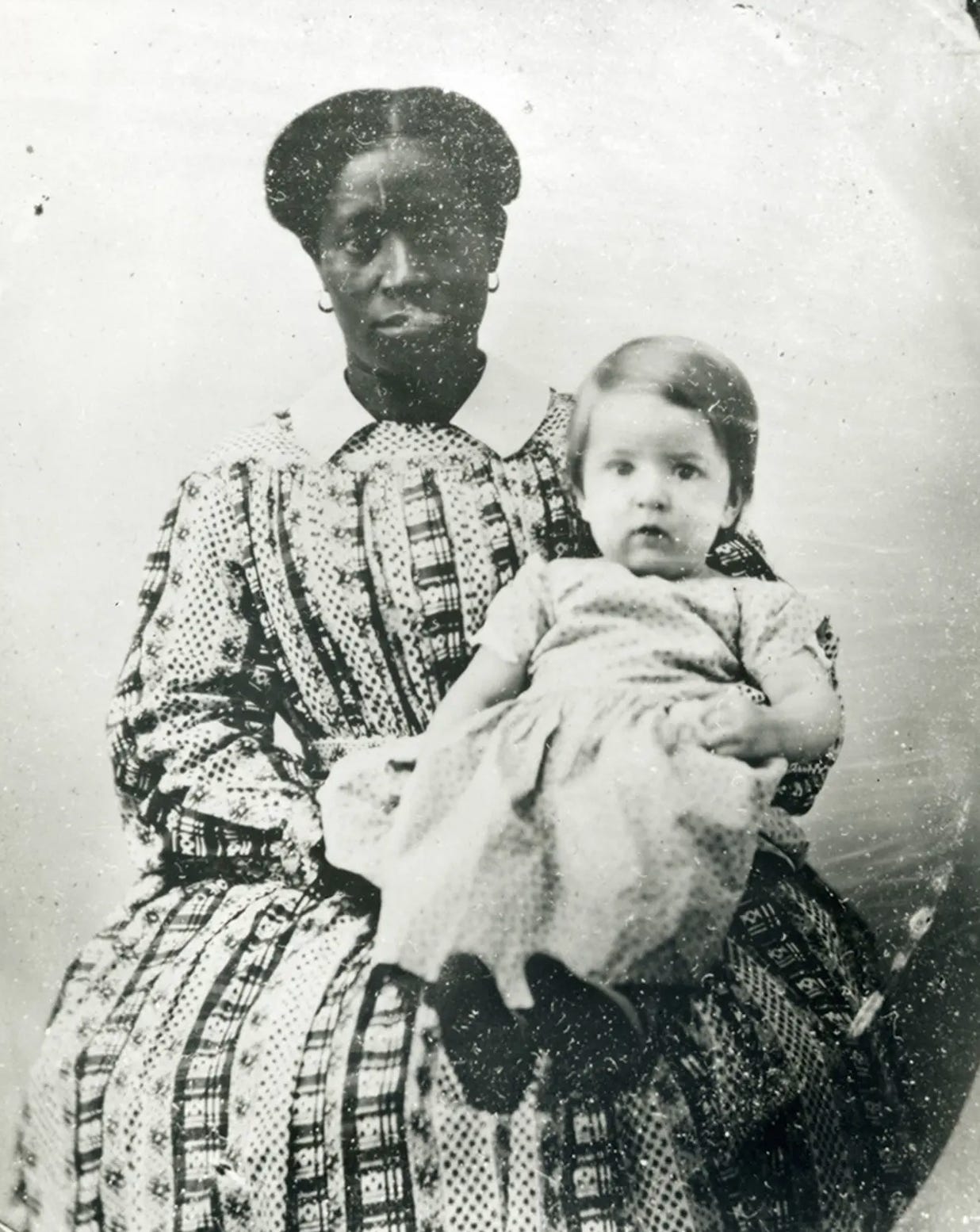
While the detailed dynamics of Jefferson’s enslavement practices were complex and varied, it’s important to look at some numbers and other raw facts. Over the course of his life, Jefferson enslaved around 610 men, women, and children. At any one time he kept from 130 to 200 people in bondage. Most of those were people who were born in the United States, though it is possible that some may have been brought from Africa during Jefferson’s lifetime. There is evidence that Jefferson both bought and sold other humans and employed other men as overseers who were known to be physically aggressive toward those whom he enslaved. In addition, significant evidence suggests that Jefferson had multiple children with Sally Hemmings, whom he enslaved on his property for many years. Finally, Jefferson never granted emancipation to any person enslaved on his properties, even at the time of his death, except to the individuals believed to be his children (details about Jefferson’s enslavement of other humans can be found here).
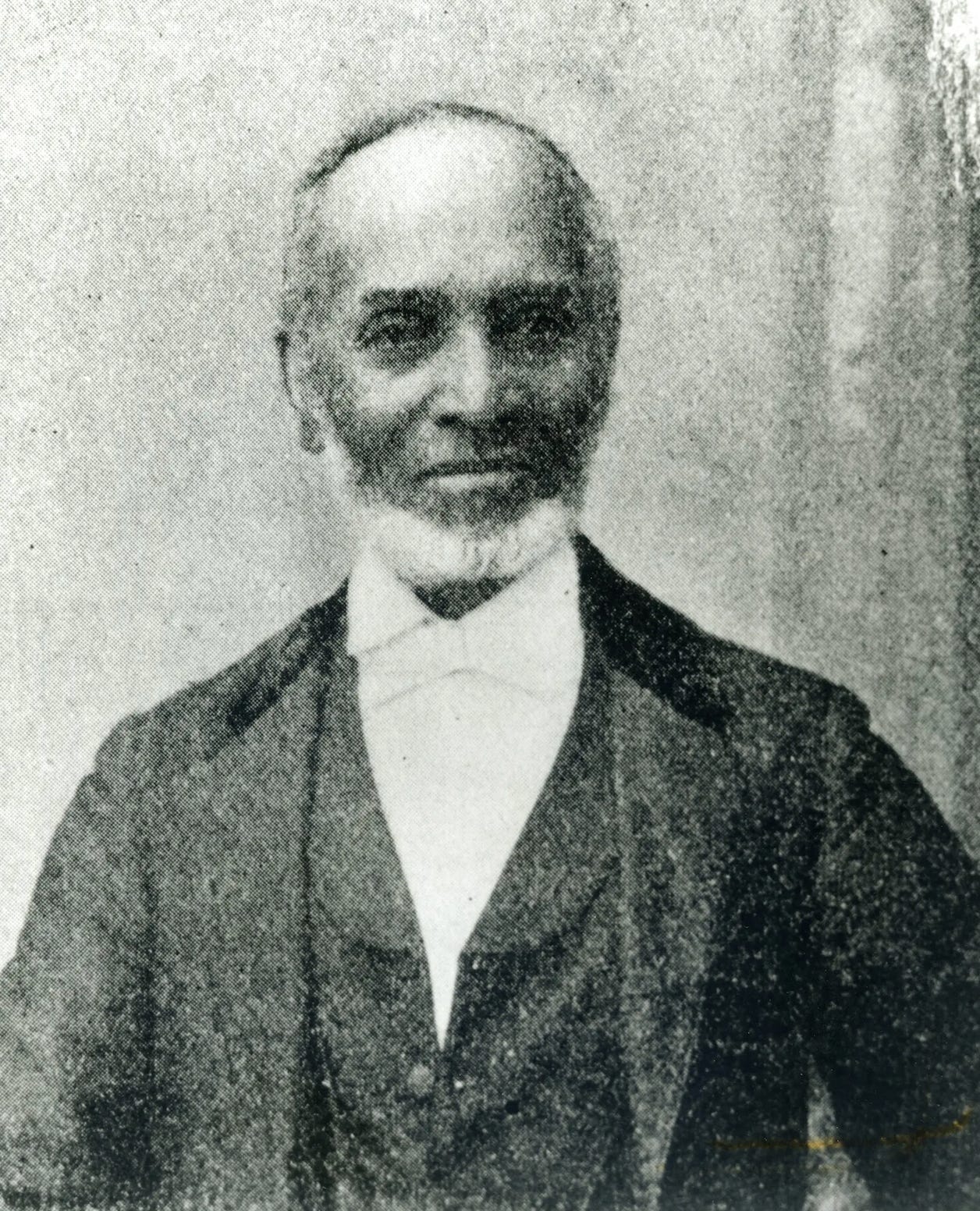
This contradiction does not appear only with Jefferson or only with regards to the American treatment of Black people. After all, when the Constitution was ratified, the franchise was extended only to white men who owned land and not even (at least functionally) to all of them. On a national level, women would have to wait until 1920 to be enfranchised, and that came only after a monumental campaign, culminating in the 19th amendment. Peoples native to the American continent were too often treated abusively, even treacherously. It would take a civil war to end slavery and, even then, the emancipation and enfranchisement of Black men after the Civil War (via the 14th and 15th amendments) was largely clawed back by revanchist forces who tried to limit the advancement of Black people by limiting their opportunities, keeping them in segregated ghettoes, ensuring they had access to fewer (and poorer) resources than their white counterparts, and physically brutalizing them. Many aspects of the history of America feature a consistent assault on the rights of those who were powerless in favor of the desires of the powerful.
So, What Do We Make of America?
All of this presents us with a deep quandary, as Americans, but especially as members of The Church of Jesus Christ of Latter-day Saints. After all, if the Book of Mormon looked forward to the founding of the United States as a signal event in modern history and as a divinely sanctioned prerequisite for the restoration of the full gospel and Church of Jesus Christ, and if the Doctrine and Covenants repeatedly reaffirms the divine origins of the republic and of the US Constitution—even as the early saints were effectively expelled again and again from within the confines of acceptable American society—then we are left to wrestle with the weight of contradiction inherent in the paradox outlined in the last section.
Given all of this, we are left wondering: How do we reclaim something of the Good or the Beautiful from what seems a significant degree of moral duplicity? Indeed, given the special condemnation Jesus reserved for those who feigned goodness while ignoring the weightier matters of the law, we might even suggest that all this evidence simply proves the overwhelming hypocrisy of the American project. Might it not be better to simply tear down the facade and admit that America is as corrupt and reprobate as any other country on Earth?
Yet it is at precisely this moment when we realize the great danger in the quote from JD Vance that began this essay. Vance is suggesting a dangerous idea: that there is something inherent in that Kentucky cemetery that makes it, de facto and forever, more hallowed than a similar plot in Nairobi, Tokyo, or Moscow. Of course, Vance might counter that he is not attempting to generalize anything special about that cemetery—it is special to him because his kin are buried there but other places (within or outside of America) are similarly special to others—but, if so, then he is not really framing a political theory at all, except perhaps one that would leave us all as warring tribes and soon land us in a place where life returns to being “solitary, poore, nasty, brutish, and short.”
But if he is attempting to articulate the foundation for a more nationalistic form of American exceptionalism, then it is crucial to scrutinize our troubled history, demonstrating as it does—in incontrovertible detail—why his thesis cannot be true. If US leaders and citizens had come close to embodying our own ideals over the last two and a half centuries, then we might reasonably consider the idea that our land or our people are imbued with divine favor. But given how clearly and often that has not been the case, we are left to see a different conclusion.
I still believe in the divine provenance of the American Founding and the American Dream, but for reasons that reject the Vance hypothesis. In my view, what matters about the American Founding is not alone the reality it immediately bequeathed to the world. Nor is it that I believe the founders were perfect.
Rather, what matters to me about the American Founding, and the reason I still accept it as having been divinely inspired, is the persistence and tenacity of the ideals those men enshrined in our founding documents and the way that subsequent generations have taken those ideals up, in a noble succession stretching out now over the course of more than two centuries—and across many countries and continents where those ideals continue to hold sway—in a way that redeems the American project and that invests the legacy of the founding with a moral luster it lacked in 1776.
It is not nothing, for example, that Lincoln—a profoundly spiritual man who articulated a metaphysical vision of the country better than perhaps any other leader the country has seen—appealed quite directly to those founding ideals in his most famous speech. As he arrived in the middle of 1863 to dedicate a battlefield cemetery at Gettysburg, Abraham Lincoln undoubtedly felt the enormous weight of the protracted and horrifically bloody conflict that was initially staged primarily to “preserve the union.” Perhaps sensing that the tide of the Civil War was finally beginning to turn, he used the dedication speech, in part, as a lever placed on the fulcrum of those founding ideals, one with enough power to turn the attention of the nation and the aims of the Union army away from merely restoring the pre-war detente that would nominally keep the nation together. With timeless prose, he pointed all eyes instead toward a future where slavery and the legal inferiority of one race would be banished to infamy and the precincts of receding memory.
To do so, Lincoln turned not to the idea of revolution, but, instead, to the matter of fulfilling the promise the nation had made to its citizens at its inception. Lincoln’s opening overture makes this explicit:
Four score and seven years ago our fathers brought forth on this continent a new nation, conceived in liberty, and dedicated to the proposition that all men are created equal. Now we are engaged in a great civil war, testing whether that nation, or any nation so conceived and dedicated, can long endure. We are met on a great battlefield of that war. We have come to dedicate a portion of that field as a final resting place for those who here gave their lives that that nation might live.
It matters a great deal what Lincoln is doing here, and what he is not doing. He is not repudiating the founding. He is not condemning the founders as hypocrites—even as he is helping to heal the moral wound they did not close. Rather, Lincoln is choosing to believe in the rightness of their cause, in spite of their failure to measure up to the standard they articulated. It is largely for this reason that Columbia University historian Andrew Delbanco wrote:
Immediately after his death Lincoln began to undergo the transformation into martyrdom . . . that made him the central figure in America’s historical understanding of itself. He became the key symbol of the idea of universal rights and the most eloquent witness to the tragedy of its betrayal, and thereby established himself at the center of our national story.1
But the pattern does not stop there. For all the progress brought about by the Union victory in the Civil War, the nation soon enough settled into a new and still decidedly unequal state of affairs, with lynching and Jim Crow as the de facto, if not explicit, law of the land. It would be another hundred years before a leader would rise to rally the American public to further right this lingering historical wrong.
In the rhetoric of Martin Luther King, Jr., what is riveting is the degree to which he appeals to—rather than distancing himself from—the ideals of the founding. King explicitly ties himself to the legacy of Lincoln and then, more distantly, to the lodestar of the founding ideals. Very near the beginning of his “I Have a Dream” speech, he writes:
Five score years ago a great American in whose symbolic shadow we stand today signed the Emancipation Proclamation. This momentous decree is a great beacon light of hope to millions of Negro slaves who had been seared in the flames of withering injustice. It came as a joyous daybreak to end the long night of their captivity. But 100 years later the Negro still is not free.
In a sense we’ve come to our nation’s capital to cash a check. When the architects of our Republic wrote the magnificent words of the Constitution and the Declaration of Independence, they were signing a promissory note to which every American was to fall heir. This note was a promise that all men—yes, black men as well as white men—would be guaranteed the unalienable rights of life, liberty and the pursuit of happiness.
At least in part, King may have been ingratiating himself to his audience by quoting from the thinkers whose words would have felt familiar and comfortable. Yet I am struck that, at the time of the speech’s delivery, a full 187 years after the issuing of the Declaration of Independence, King is still able to appeal to the poetry and moral substance of that document.
President Barack Obama would hearken back to the same legacy—and would trace a consistent moral arc across the sky of the American story—when he gave a speech to mark the fiftieth anniversary of the march across the Pettus Bridge in Selma, Alabama, as part of the Civil Rights movement decades before:
And yet, what could be more American than what happened in this place? What could more profoundly vindicate the idea of America than plain and humble people—unsung, the downtrodden, the dreamers not of high station, not born to wealth or privilege, not of one religious tradition but many, coming together to shape their country’s course?
What greater expression of faith in the American experiment than this, what greater form of patriotism is there than the belief that America is not yet finished, that we are strong enough to be self-critical, that each successive generation can look upon our imperfections and decide that it is in our power to remake this nation to more closely align with our highest ideals?
That’s why Selma is not some outlier in the American experience. That’s why it’s not a museum or a static monument to behold from a distance. It is instead the manifestation of a creed written into our founding documents: “We the People . . . in order to form a more perfect union.” “We hold these truths to be self-evident, that all men are created equal.”
An argument can be made, of course, that all of this says little about the actual founding of America. After all, what real significance can any speech given in the 1960s or the 2000s truly invest in the founding documents or the political philosophy of men who came some two hundred years or more before? But, in a sense, this criticism also gestures toward what makes America truly great. It is noteworthy that we have been debating the meaning of—and attempting to hew more closely to—the words of our founding charter for two and a half centuries. It might be easy to dismiss the founders as hypocrites. It could be more tempting to abandon their project and declare, instead, that we will begin a new nation or, anyway, an entirely new way of understanding our own history. But the American way has been different. We have insisted, over and over, both in the halls of power and in the precincts frequented by common citizens, that the most powerful moral move we can make comes not by abandoning but by striving to fulfill those founding ideals.
Part of what matters here is the dogged insistence—over generations and by comers from all walks of life—that Jefferson’s words matter. These things are also true: that Jefferson did not fully succeed in shaping his life to those words; that the nation as it was originally conceived looked nothing like what we understand those words should mean; that it would eventually take a Civil War to settle the question of slavery and then another hundred years of individuals, coalitions, and actors in government working together to bring Black people, specifically, and all members of minimalized groups, more generally, more fully into the arena of American equality; and, finally, it is true that America as constituted in 2026 still does not measure up to the ethos Jefferson articulated in those immortal lines.
But all of that notwithstanding, what staggers the imagination is that the words have woven themselves through generations of struggle, conflict, ascent, decline, wrestling, grappling, debate, change, turmoil, and even conflict. And the words still stand. In a nation this large, variegated, and tumultuous—and in a world where words, whatever romantic notions we often cultivate to the contrary, have too often been overwhelmed by the powers of the sword and spear—the persistence and endurance of those words as an animating force matters deeply.
But what most strikes me as I conclude this reflection is this: While it is easy enough to quote Lincoln, King, and Obama as they recognize the importance of these words, it is not, in fact, this recognition by our leaders that really matters. Or at least, it would matter very little if not for this: we, the people, very much care about the words too. And—over now twenty-five decades—we, the people, have driven the country toward more fully embodying the ideals enshrined in our founding documents. Together, we, the people, have worked to bend the arc of history toward justice.
Two centuries ago, when the republic was yet very young, a young French visitor observed this very thing. After touring America on a quest to discover what makes American democracy exceptional, Alexis de Tocqueville considered and rejected multiple hypotheses. In arguably the most important and prescient section of his book, Tocqueville attempted to discern what distinguished the success and durability of the American democratic project as compared to others that had floundered. Considering and then dismissing in turn the possibility that either the continent’s geography or the country’s laws and constitution are the explanation, he comes at last to this striking observation:
I am convinced that the most advantageous situation (e.g. geography) and the best possible laws cannot maintain a constitution in spite of the customs of a country; while the latter may turn to some advantage the most unfavorable position and the worst laws. The importance of customs is a common truth to which study and experience incessantly direct our attention. It may be regarded as a central point in the range of observation, and the common termination of all my inquiries. So seriously do I insist upon this head that, if I have hitherto failed in making the reader feel the important influence of the practical experience, the habits, the opinions, in short, the customs of the American upon the maintenance of their institutions, I have failed in the principle object of my work.2
In other words: American greatness does not flow from a divine investiture in the land. It does not flow, per se, from the Constitution or the Declaration of Independence. It does not even flow from the words of our most eloquent orators. Rather, what makes America great is the willingness of Americans to organize themselves as people—a body politic—willing to push our nation, in spite of its imperfect history, toward fulfilling the ideals we still hold dear, the ones written upon the fleshy tablets of our collective hearts 250 years ago.
Therefore, the degree to which the nation’s founding principles rise to a place of godliness depends entirely on what we the people make of those principles. Certainly, as members of The Church of Jesus Christ of Latter-day Saints, we see in the founding principles of the United States of America a type and shadow of the most fundamental theological truth we both learn and sing about in primary: that we are all God’s children and that, as such, we are called to come together as a religious community to build a politics—wherever we live, in the United States or not—that reflects what C. S. Lewis once called “the weight of glory.” We can and should have endless debates about policy details and political platforms. But we simply cannot participate, countenance, or even allow a politics that dehumanizes anyone, anywhere, for any reason. As followers of Jesus Christ, we carry the special weight and burden of ensuring that all we do personally and politically most especially treats fully as children of God those who are, for any of very many reasons, “the least of these” (Matt. 25:40).
It is with this foundational ideal very much in view, that we are brought to the words of Gordon Wood, an eminent historian of early America who died just a few weeks ago. In writing about the friendship between John Adams and Thomas Jefferson, Woods captures both the paradox and the promise of the American founding with this coda:
As Lincoln grasped better than anyone, Jefferson offered Americans a set of beliefs that through the generations have supplied a bond that holds together the most diverse nation that history has ever known. Since now the whole world is in the United States, nothing but Jefferson’s ideals can turn such an arrangement of different individuals into the “one people” that the Declaration says we are. To be an American is not to be someone, but to believe something. And that something is what Jefferson declared.3
Tyler Johnson is a medical oncologist and associate editor at Wayfare.
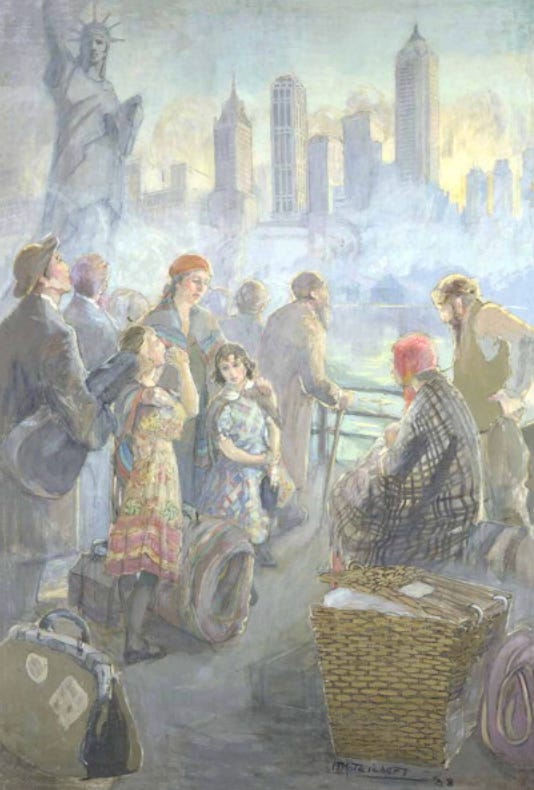
Art by Minerva Teichert (1888–1976).
Images of Lucy Cottrell (died c. 1855) and Peter Farley Fossett (1815–1901), individuals enslaved at Monticello from “Slavery at Monticello.”
Andrew Delbanco, The Real American Dream: A Meditation on Hope (Harvard UP, 2000), 79–80.
Alexis de Tocqueville, Democracy in America. Introduction by Alan Ryan (Knopf, Everyman’s Library, 1994), 322–323.
Gordon S. Wood, Friends Divided: John Adams and Thomas Jefferson (Penguin Press, 2017), 512.
Thank you for your essay. It helped clarify some of my own thoughts as I approach this Fourth of July weekend. I've been very negative about our currant leaders in the federal government and was not looking forward to this day. However, your essay changed my perspective, and isn't that what good writers strive to do - help us think more clearly about what is happening around us. Keep up the good work.