


Review of Samuel D. Brunson, Between the Temple and the Tax Collector: The Intersection of Mormonism and the State (Illinois University Press, 2025).
For some strange reason, there is a widespread belief among some nonlawyers that law is boring. Given that law is the place where politics, policy, philosophy, and history intersect and result in institutions and practices that shape our society, the law’s reputation for dullness is puzzling.
That said, even lawyers and law professors, tribes with an unusually high tolerance for the joys of legal technicality, regard tax lawyers and especially tax professors as a breed apart—high priests of a sea of legal arcana that causes even the most resolute eyeballs to glaze over. Given these realities, you, gentle reader, might be tempted to think that a book by such a high priest on Mormonism and taxes is not for you.
But you would be wrong.
In Between the Temple and the Tax Collector, Samuel D. Brunson, a professor of law at Loyola University Chicago, tells the story of taxes and the history of The Church of Jesus Christ of Latter-day Saints. Brunson’s central thesis is that tax law is one of the central ways that religion is regulated in the United States. Churches and certain religious actors have long enjoyed immunity, in whole or in part, from taxation. These immunities require both justification and a definition.
The political community must thus decide through its tax law what makes religion socially valuable and what kinds of people, activities, and institutions come within that category of civically acceptable religion. Looking at the issue from another point of view, taxes are a mechanism by which society generates resources for collective projects that aim (at least in hope and theory) at the public good. Accordingly, it’s very difficult—if not impossible—to articulate a vision of the just society that will not include implications for how we fund the public fisc.
Religion is the sort of thing that articulates a vision of a good life and just society, and it then works to realize it in the world. Given this dynamic during the two centuries of its history, Mormonism has both struggled with its place in Americans’ vision of good religion and promulgated its own aspirations for a good society. As Brunson’s book demonstrates, tax law has been a site where all these issues have converged and been negotiated.
Brunson begins his story by introducing the history of tax law in America. For denizens of the modern world, taxes above all mean income taxes. But before the Civil War, however, the United States had no income tax, and even its use as a wartime expedient proved constitutionally dubious. Instead, the government funded itself mainly through excise taxes and taxes on land. Churches, in turn, could claim tax exemptions for church buildings, parsonages, and glebes (income-producing properties used to pay ministers). Thus, in 1830, the Palmyra Reflector reported that Joseph Smith’s followers were seeking tax exemptions as ministers of the gospel.
As the Latter-day Saint movement expanded and the Church began pursuing more ambitious social projects—first through the law of consecration and stewardship and later through the establishment of Nauvoo—Mormonism’s religious activities spilled beyond the model of proper American religion, a model defined by reformed Protestantism. Latter-day Saints found themselves navigating the legal borderlands of American tax law. At the same time, the Saints needed revenue to support their collective projects.
First, they created tithing, a system of voluntary donations that mirrored certain aspects of secular taxation. Indeed, the very word “tithes” long referred to taxes levied by the state in support of the established church. Hence, under English law, taxpayers had to pay “tithes” to the established church until the Tithe Commutation Act of 1836. In addition to instituting tithing in the late 1830s, the Latter-day Saint city of Nauvoo, whose government was dominated by Joseph Smith and his associates in the highest echelons of the Church, levied taxes to fund its operation.
After the Latter-day Saint exodus to the Great Basin and the arrival of federal authority in the form of territorial officials, taxation became another front in the multifaceted legal crusade against the Mormons. Wielding the newly created income tax, federal officials sought to tax tithing revenues in either the hands of the Church or—because the corporate status of the Church was uncertain after 1862—Brigham Young. (The Church had been incorporated under Utah Territorial law, but in 1862 Congress repealed some of those territorial enactments. The precise consequences of this for Church property holdings were not finally resolved until the 1890s.)
The income tax was a radical innovation at the time, and its application was uncertain. Nevertheless, a church’s income was generally not subject to income taxes. Hence, the enforcement action against Brigham Young and the Church represented anti-Mormon hostility. Taxes had become a tool to be used in the federal crusade against Mormon polygamy, theocracy, and communitarianism.
In the twentieth and twenty-first centuries, Mormonism has had other confrontations with the taxman. As the Church expanded beyond the familiar legal environment of the Mormon corridor, running from Idaho to Arizona, Latter-day Saints found themselves entangled in the complexities of tax law. For example, the Church’s first effort to build a chapel on the East Coast involved a multiyear legal battle with the complexities of New York corporate and tax law.
By the 1970s and 1980s, the tax exemption for donations to the Church became an occasional flash point in cultural fights involving Mormonism and race, gender, or sexuality. In Brunson’s telling, such fights were largely symbolic, as he regards religious tax exemptions as both legally secure and of less practical significance than is often assumed in these debates. Rather, he argues, rhetorical fights over tax exemption were mainly about what gets to count as “good” religion and who gets to make that decision.
Brunson has other tax stories to tell, including the battles of fundamentalist polygamous sects with federal and Canadian authorities. Looking more broadly, Brunson’s book has some important insights for students of law, religion, and Mormonism. Americans in particular are primed to view the relationship of law and religion through the lens of the First Amendment and the Bill of Rights. We think in terms of the establishment or free exercise of religion and implicitly assume that the central actor in the drama of church and state will be the US Supreme Court, acting as constitutional adjudicator. Brunson’s book illustrates the poverty of this approach, providing vivid examples of conflicts and negotiations between religion and government occurring almost entirely outside the frame of constitutional law. This is an important corrective and an invitation to recognize that we will not understand the full relationship of law and religion unless we escape the gravitational pull of constitutional law.
For students of Mormonism, Brunson’s work belies the idea that law is external to the Latter-day Saint story. Law is not merely something that happens to the Latter-day Saints or an external challenge the Saints have weathered at various points in their history. Rather, law has been a formative influence on the Church itself. Mormonism, as it is experienced by contemporary Latter-day Saints, would be substantially different had our history flowed through different legal institutions. Not only has law shaped the Latter-day Saint tradition, but the Church and the Saints have influenced the law. Precisely because law shapes religious experiences, the Saints have sought to use and, when possible, shape the law for their own ends.
Brunson’s gem of a book reveals this process in an unlikely corner of the law and thus stands as a rebuke to those who might doubt the fascination and religious relevance of taxes.
Nathan B. Oman is a law professor at the College of William & Mary with thoughts on the world, mostly about law, politics, religion, and books.
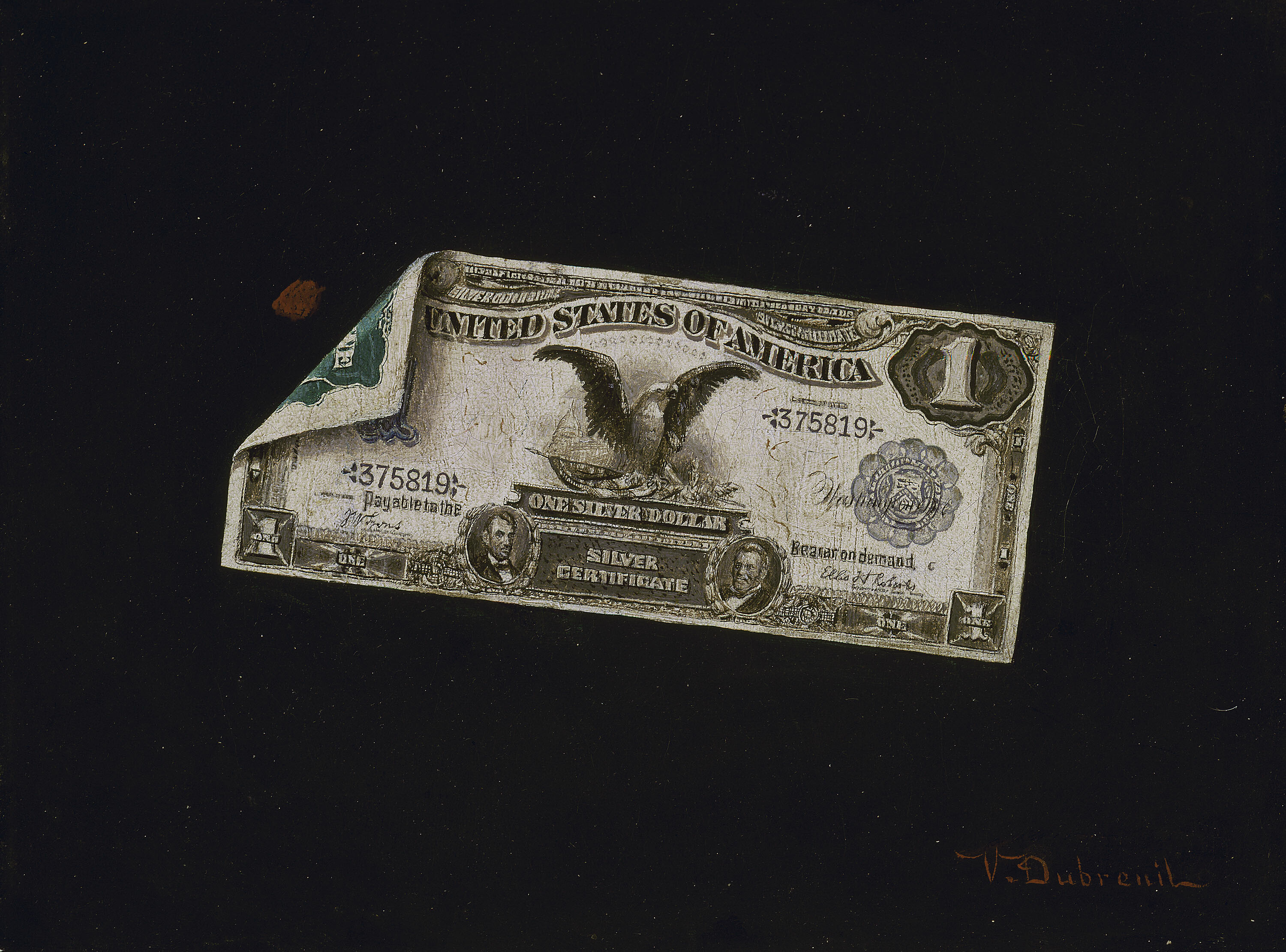
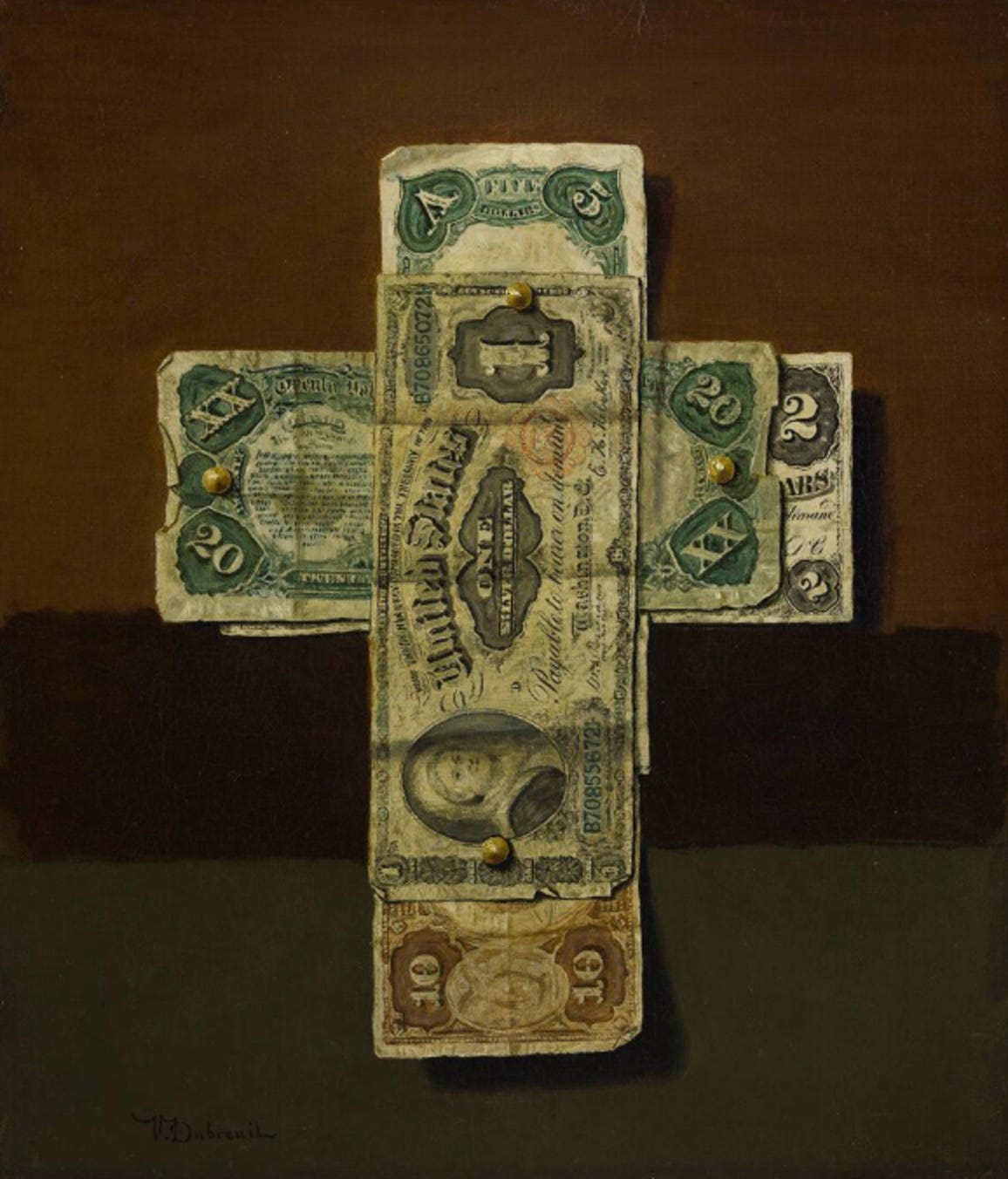
Art by Victor Dubreuil (born 1842).
