


In July of 2024, I was sitting in a cafe in Fes, Morocco, chatting with a Muslim acquaintance named Younes. As we discussed my ongoing research as an anthropologist of religion, Younes asked me why, after studying Islam and spending time with Muslims for so long, I had not yet converted.
I took a few moments to consider his question. It would be easy to simply say that I was a practicing Latter-day Saint, that I was deeply committed to my own faith tradition. That was true. But at the same time, through the months and years I had spent with my Muslim friends in their homes and mosques, I was developing an increasingly deep appreciation for Islam. I had come to love the embodied discipline of salat, ritual prayer. I had learned much from my friends’ discussions of akhlaq, the Islamic obligation to cultivating an ethical, virtuous character. And I had come to appreciate my friends’ deep commitments to surrendering themselves to the will of God, to saying alhamdulillah [praise be to God] no matter how difficult the circumstances. Most significantly for me, in living and worshiping alongside my Muslim friends, I had experienced moments of transcendent connection to the Divine.
With all this in my mind, I told Younes that despite my commitments to my own faith tradition, I had developed a deep appreciation for Islam’s ability to connect people, including me, to God. But I then added that I didn’t think I could know Islam was true in a way that would sincerely allow me to profess a belief in the unity of God and the prophethood of Muhammad. I told him that if I said the words of the shahadah, the Islamic profession of faith by which one enters Islam, I feared I would lack niyyah, the proper intentions that validate ritual acts, as the words wouldn’t feel true to me the way they are supposed to. I told him I was skeptical of my ability, as a mere human, to know anything was true in any kind of sure or absolute sense.
I had long considered doubts about my ability to know a major challenge in my Latter-day Saint experience. So much of what I heard in church seemed to insist that what mattered most was coming to know the truth of particular claims. I had certainly experienced what Latter-day Saints call “feeling the Spirit.” I had felt my bosom burn within me as I read scripture, as I listened to talks and testimonies, and as I sought divine comfort in moments of turmoil. But when I heard other people testify of similar experiences leading them to know, beyond a shadow of a doubt, of a surety, that a fairly robust list of claims was true, I often felt discouraged, deficient, and frustrated. How could anyone know that surely? My lack of commitment to knowing seemed to bother many of the Latter-day Saints with whom I had discussed it. So I figured it would bother Younes too.
But Younes’s response surprised me. He said that my incapacity to obtain a sure knowledge was not a problem because, according to his understanding, normal people do not necessarily have unbiased insight into the objective nature of reality. However, he insisted, the prophets that God had selected throughout human history could perceive and reveal God’s truth to mankind. For Younes, encountering the perfection of prophetic revelation was the means by which limited humans could come to know absolute truth.
At first, the way Younes seemed to brush off my concerns left me frustrated—yet another instance of someone insisting that objective knowledge was possible, despite my contradictory experience. But after reflection, Younes’s response led me to a realization: Many Muslims, and perhaps many Latter-day Saints too, might not have a problem accepting that most humans can’t perceive truth and reality objectively, that for most people, perception of truth is filtered through subjective human experience. But many of these same people are invested in the idea that throughout time there have been special people who have some kind of unfiltered access into the objective nature of reality, who can see and tell us what is really real and what is really true and what is really right. Thanks to Younes, I came to realize that my Muslim and Latter-day Saint friends who seemed so confident in their knowledge of the truth might not be doing so based on confidence in their own ability to know. Rather, they were likely acting based on their faith and confidence in the possibilities of revelation.
On the nature of prophetic knowledge, the fourteenth-century Muslim scholar Ibn Khaldun stated that “The knowledge that God gave [prophets], and the wonders he manifested through their statements, indicated that there exist things beyond the reach of man that can be learned only from God through the mediation of such individuals.”1 According to this line of thinking, prophets have the capacity to be the mediums through which divine communication is passed from God to humanity. For most of my Muslim friends, this prophetic mediation is perfect and pure. By the grace and mercy of God, it is unencumbered by the humanity of the prophet.
In contrast, Latter-day Saint teachings hold that even prophets are susceptible to the imperfections of a fallen world. Paul the Apostle troubles the surety of prophetic knowledge in this way: “Whether there be prophecies, they shall fail; whether there be tongues, they shall cease; whether there be knowledge, it shall vanish away. For we know in part, and we prophesy in part. . . . For now we see through a glass, darkly” (1 Corinthians 13:8–9, 12 KJV). Through an allegory of gazing into a cloudy mirror, Paul tells us that, even in the case of prophecy, mortal perceptions of reality are always imperfect.
Despite Paul’s teaching, throughout my Latter-day Saint experience I have often heard people voice a similar view of prophetic knowledge to the one put forward by Younes and Ibn Khaldun—that prophets provide a more or less direct, perfect reflection of the mind and will of God. In Latter-day Saint circles, I’ve sometimes heard a saying which captures the essence of the friction between Latter-day Saint teachings and practices related to prophets: “Catholics teach that the pope is infallible, but nobody believes it. Mormons teach that the prophet is fallible, but nobody believes it.”2
Regardless of how closely this comes to capturing the reality of Catholic or Latter-day Saint experiences, the circulation of this story in Latter-day Saint circles points to a tension many feel between teachings that claim prophets are fallible and a religious context where openly acknowledging that prophets are sometimes wrong will, at best, turn a few heads in Sunday school. At worst, it can lead to disciplinary action. Whatever the doctrine may say, in practice, many Latter-day Saints have the habit of treating the words of the living prophets as unquestionably true.
In this vein, throughout much of my Latter-day Saint experience, as I’ve struggled through feelings of inadequacy over the things I can’t seem to bring myself to know, I’ve found myself asking: what keeps so many Latter-day Saints from taking seriously their own doctrine about the fallibility of prophets? I don’t think I have all the answers to this question, but as I’ve spoken with many friends in my religious tradition and on its peripheries, I’ve begun to see how many Latter-day Saints feel caught in a way of knowing where things are either absolutely true or absolutely false. This binary allows many to find deep meaning in the confidence that they belong to a group that possesses objective knowledge of all the answers that count. But this binary also lays the groundwork for any perceived flaw in their faith tradition to cause their personal faith to crumble. This means that people who experience doubts about one aspect of their tradition might find themselves unable to find positive meaning in any aspect of it.
As someone with a deep appreciation of the ways the Latter-day Saint tradition has allowed me to make meaning in the world, I am saddened at the idea that if anything is wrong with my religion, everything is wrong. I’m deeply sympathetic to those who feel the need to step away, but I also wish that more people could find meaning in their faith tradition even when they can’t accept every claim as objective truth. I think it’s important for Latter-day Saints to consider what opportunities such a widening of the tent might afford. What possibilities might emerge from making space for people who take prophetic fallibility seriously? What prospects for radical love and empathy might emerge from a Latter-day tradition with more diverse ways of knowing?

Reconsidering our ways of knowing is an important step in opening up space to explore these possibilities. In my experience as a practicing Latter-day Saint, I’ve been taught a fairly straightforward method for coming to know the truth. As the Book of Mormon prophet Alma writes, one should accept certain premises on faith and then experiment on the word, by which one can arrive at “a perfect knowledge” (Alma 32). The image of experimentation in the Book of Mormon and elsewhere in Latter-day Saint tradition is interesting to me because it points to ways of knowing that are remarkably similar to the ones put forward by modernist science: Both Latter-day Saints and scientific moderns are taught to come to objective knowledge through a rational process of hypothesis, experimentation, and verifiability.
But like Paul writing to the Corinthians about the fallibility of religious knowledge, the objectivity of modern scientific knowledge has also been called into question. Much of philosophy over the last century has been intimately concerned with examining the ways scientific knowledge is made, created, constructed, and otherwise subjectively produced. For example, the twentieth-century American historian Thomas Kuhn framed science as a series of shifts between different paradigms or sets of assumptions rather than a unilinear march closer and closer to ultimate truth.3 Similarly, twentieth-century French philosopher Michel Foucault pointed to the ways that the various power structures of a given society influence what is considered true and false such that scientific knowledge reflects social worlds as much as it reflects the natural world.4
This kind of theorizing opened scholarly discussion to the ways modern societies can sometimes fetishize scientific knowledge to the point that science becomes scientism, what the late French philosopher Bruno Latour called “the modern cult of the factish gods.”5 Latour questioned a common assumption that, while the fetishes (that is, material objects invested with mystical powers) used in religious rituals around the world are fabricated by humans, facts are not fabricated—they just “are” out there in the world. In other words, he suggested that facts are made by human hands just like ritual objects. But while most who use material items in their religious rituals openly recognize their human origins, modernist science too often ignores the mortal provenance of its similarly manufactured knowledge. Thus, Latour pointed to the ways in which a misguided, scientistic devotion to the knowability of absolute truth can actually become a problematic form of idolatry.6
The essence of both Paul and Bruno Latour’s assertions is that an over-commitment to knowledge can be problematic. The hymn “Lead, Kindly Light” makes a similar argument, namely that when we pretend to see our path laid out clearly before us, our will is ruled by pride rather than by God. This is not to say that the pursuit of truth ought to be abandoned. Rather, it is a warning against becoming so sure of what we know that we miss opportunities to experience the Divine. In Robert Harris’s novel Conclave, Cardinal Lomeli (Cardinal Lawrence, played by Ralph Fiennes, in the 2024 film adaptation) puts it this way: “Our faith is a living thing precisely because it walks hand in hand with doubt. If there was only certainty, and if there was no doubt, there would be no mystery, and therefore no need for faith.”7 There is certainly a place for making meaning as we come to know truth, but there can also be a place for making meaning as we embrace the unknown.
Returning to Paul’s cloudy mirror metaphor, “For now we see through a glass, darkly; but then face to face: now I know in part; but then shall I know even as also I am known. And now abideth faith, hope, charity, these three; but the greatest of these is charity” (1 Corinthians 13:12–13). Here, Paul shares the promise of pure, unfiltered knowledge in the world to come. But he couples that promise with an injunction for love to be our mortal-world solution to our temporary lack of objective knowledge. In the Book of Mormon’s variation on 1 Corinthians 13, the prophet Mormon stated: “Cleave unto charity, which is the greatest of all, for all things must fail—But charity is the pure love of Christ, and it endureth forever” (Moroni 7:46–47). In the face of mortal limitations keeping us from pure knowledge, scripture calls on us to seek charity, the pure love of Christ. In the certainty of uncertainty, scripture calls on us to love, for “in the gift of his Son hath God prepared a more excellent way” (Ether 12:11).
But what is this more excellent way? How can we develop charity in the face of the ambiguity explored above? What might it look like to better practice the pure love of Christ? As I stated at the outset, I’m an anthropologist, and in what follows, I will discuss one aspect of anthropology called “cultural relativism” that has helped me, as a seeker of the pure love of Christ, to try to love the way Christ loves. I was initially attracted to anthropology because of the possibilities I found it afforded for living my faith, and my religious commitments have continued to inform my experience in the discipline. My hope is that my particularly Latter-day Saint approach to anthropology can be helpful to others who are similarly striving for more Christlike ways of living and loving.
Anthropologists often say they aim to understand others by “making the strange familiar, and the familiar strange.” In other words, they seek to understand people on their own terms, according to their own logics and experiences. Anthropologists call this effort to understand people from their own point of view “cultural relativism.” Put simply, a cultural relativist approach tries to empathize with others across differences.
The cultural relativist approach is based on the premise that people experience the world in different ways and that their particular perceptions of reality are filtered through varied assumptions and experiences. From this premise, cultural relativists hold that judging a person or group without first working to understand them is an ineffective and unethical way of encountering difference. This approach has allowed anthropologists to spend time all over the world trying to understand people’s experiences as they experience them, which in turn has allowed them to relate to others across cultural differences, including differences that some might find morally repugnant, in a more empathetic way.
Significantly, cultural relativism is very different from a much maligned “moral relativism” where nothing is real and anything goes. In recent decades, many scholars have criticized cultural relativism on the grounds that it offers too little space for critique or judgement of others’ lifeways, traditions, beliefs, and practices. Many in the academy have sought a framework that allows them to pursue a more explicit politics in which they can assert particular (often liberal secular) moral-ethical claims as broadly applicable across differences. With concerns that are remarkably similar to those of the scholars just discussed, some in the Latter-day Saint tradition have tended to interpret frameworks questioning the absolute authority and universality of their particular knowledge as a claim that there is no right or wrong.
I believe this critique is well intentioned but misguided. Cultural relativism is not moral relativism. The unilateral dismissal of all value judgements would indeed be deeply problematic for anyone working towards collective human flourishing. But in my view, cultural relativism need not prevent people from making value judgements. Indeed, it is difficult to imagine someone leading a meaningful life without operating on some sort of assumptions about what is real and what is right. Rather, I would argue that cultural relativism simply demands that before anyone asserts that their values apply to someone else, they first commit to questioning their own assumptions and to understanding the perspectives of those they might critique. This approach to cultural relativism, far from dismissing morality, becomes a moral project in its own right, a check on the human tendency to center one’s own values and assumptions to the detriment of others. Such a call for humility is part of what I understand in Jesus’s injunction to “judge not” (Matthew 7:1–5).
With this conception of cultural relativism in mind, I suggest that the subjective nature of knowledge described by Paul and Bruno Latour opens up space for us to step outside our own assumptions about what is real and what is right in order to step into the assumptions of others, to see the world from their perspective, to evaluate it based on their rationales, and by so doing, to understand, empathize, and love them. My suggestion is basically that instead of saying, “I know what is real and right and everyone else’s assumptions are wrong, or at least less true than mine,” we might consider saying, “I can suspend judgement at least long enough to empathize with a different person’s perspective.”
As I’ve studied anthropology alongside the gospel, I’ve come to realize that Jesus is the perfect example of relating to others in the empathetic way made possible by a cultural relativist approach. In Latter-day Saint teachings about atonement, Jesus Christ takes on the experiences of everyone who has ever lived, and that is why he is able to understand, comfort, and love us in a unique and perfect way. The Book of Mormon prophet Alma said that “he shall go forth, suffering pains and afflictions and temptations of every kind . . . that his bowels may be filled with mercy, according to the flesh, that he may know according to the flesh how to succor his people according to their infirmities” (Alma 7:11–12, emphasis added). In analyzing this passage of scripture, contemporary Latter-day Saint thinker Blaire Ostler suggested that “by sharing a consciousness of every gender, race, orientation, and ability, Jesus became exceptionally aware” of the full diversity of the human experience.8
If this is the Latter-day Saint understanding of atonement and if our tradition is invested in taking upon us the name of Christ and trying to be like Jesus, trying to love as he loves, then we must follow Christ in stepping outside of our own assumptions and experiences and into the assumptions and experiences of others. In this way, I am proposing that however imperfectly we may be able to understand and empathize with others, the pure love of Christ is the solution to relating to others across differences in a mortal realm mediated by subjective knowledge. For Latter-day Saints, such an approach has the potential to fundamentally shift our discourse and practice from an emphasis on the pursuit of knowledge to an emphasis on the pursuit of charity. It is an approach in which seekers of the Divine, instead of spending their time praying to know the truth, spend time praying for the pure love of Christ. To follow this approach, we need not let go of our unique beliefs and teachings. We just need to loosen our grip on the universality of those truths enough to shift our focus toward radical forms of love and empathy.
These radical ways of knowing, being, and relating to others are not easy for me. I often get fixated on truth and right, on dividing the world up into reality and unreality, good and bad. And that very frequently gets in the way of me loving people the way Jesus loves them. Sometimes, when members of my congregation speak about all the many truths they claim to know, I find myself feeling frustrated and angry. Similarly, when Younes dismissed my concerns about the possibility of absolute knowledge on that summer day in Fes, my initial reaction was something like indignation. But as I opened myself up to curiosity and surprise, as I tried to take seriously what Younes was telling me, I ended up coming to a better understanding of his religious experience as well as my own. I was able to appreciate the meaning he found in the perfection of prophetic revelation, even if it differed from my perspective. And that in turn has helped me in church. Now, when I find myself feeling frustrated by the talks and testimonies of my spiritual siblings, I try to step outside of my own ways of knowing and appreciate the beauty and meaning they find in objective truth, especially when their perspectives don’t reflect my own. In my life as an anthropologist and as a Latter-day Saint, as I have tried to practice cultural relativism, to enact the pure love of Christ, to step out of my own assumptions about truth and right and into the assumptions of others, I have found intense spiritual meaning in the diversity of spiritual meanings. I have experienced, by the grace and mercy of God, moments of transcendent love that have connected me to the people around me, to the earth, and to the Divine in powerful, indescribable ways.
Truly, charity never faileth.
Clayton Van Woerkom is a PhD candidate in anthropology at the University of Michigan. His scholarship focuses on the intersections of language, religion, and migration.
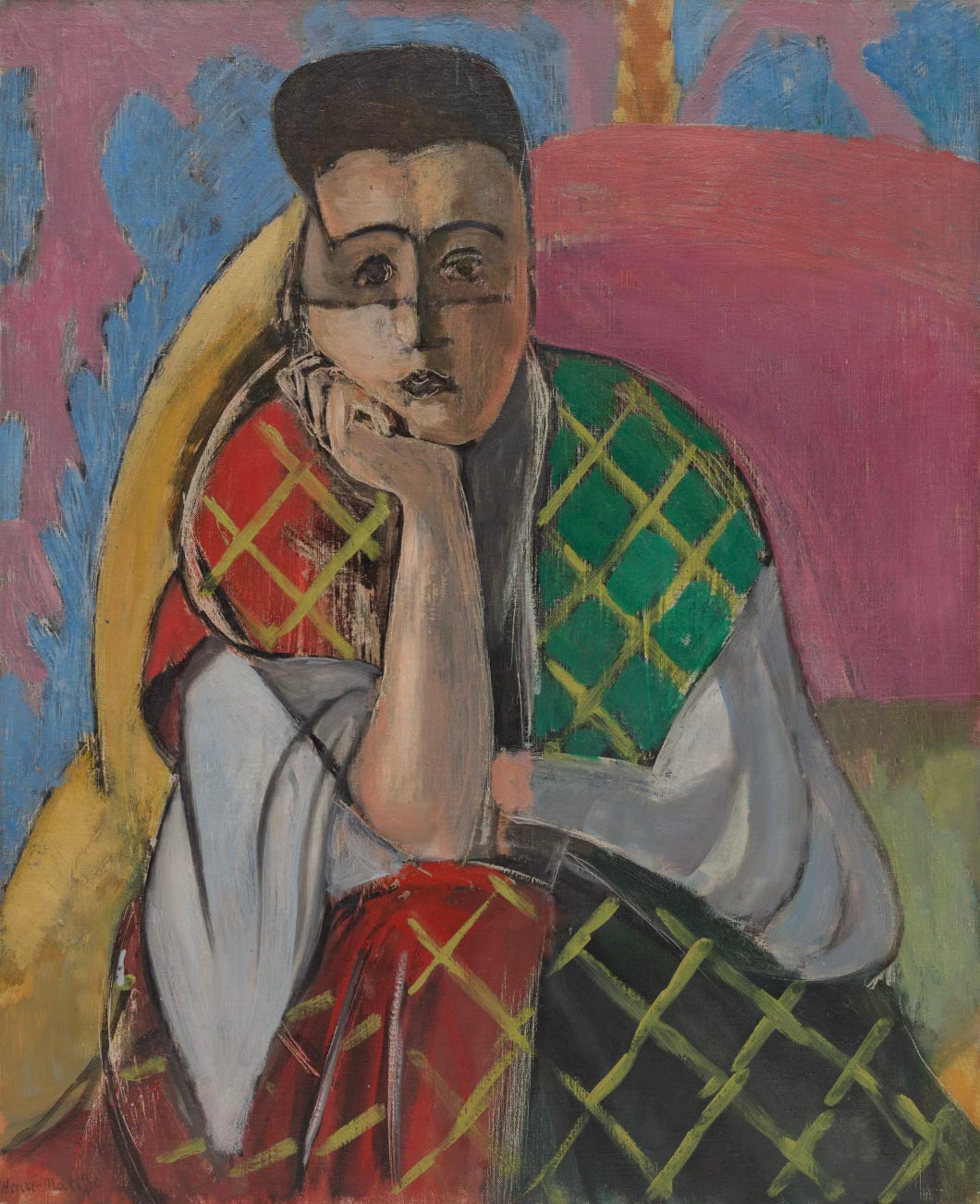
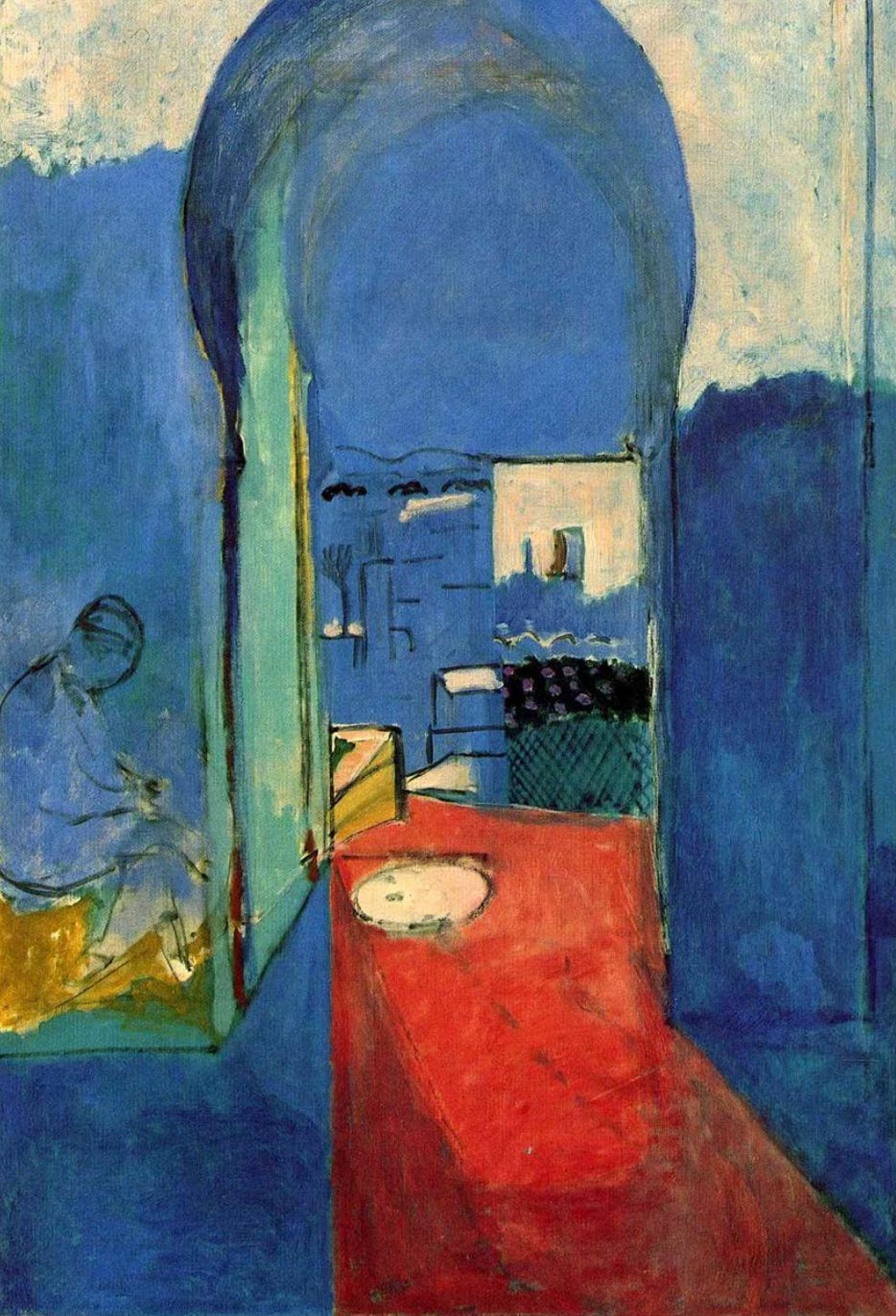
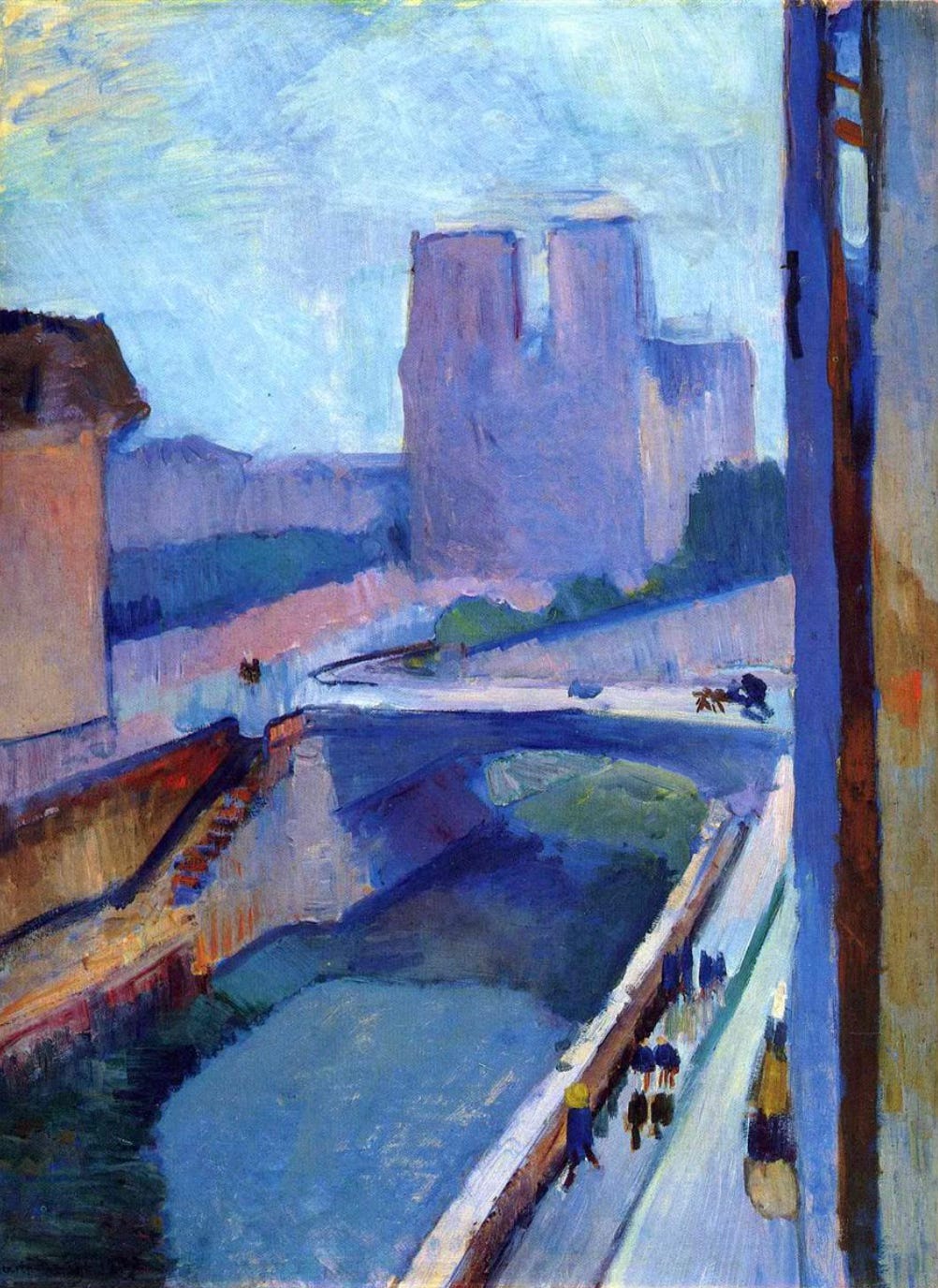
Art by Henri Matisse (1869–1954).
“The sixth prefatory discussion: on the various types of human beings who have supernatural perception.” Ibn Kahldun, The Muqaddimah: An Introduction to History, trans. Franz Rosenthal (Princeton University Press, 2015 [1377]) 70.
Included in Patrick Q. Mason, Planted: Belief and Belonging in an Age of Doubt (Maxwell Institute, 2015) 103.
Thomas S. Kuhn, The Structure of Scientific Revolutions (University of Chicago Press, 1962).
Michel Foucault, The History of Sexuality Volume 1: An Introduction, trans. Robert Hurley (Vintage, 1990 [1976]).
Bruno Latour, On the Modern Cult of the Factish Gods, trans. Heather MacLean and Cathy Porter, (Duke University Press, 2009).
This is not to condemn as idolatrous all people (including Latter-day Saints) who use human-fabricated material objects in religious rituals. Rather, Bruno Latour argues that idolatry becomes problematic when people ignore human contributions to the creation of ritual objects/scientific facts. See also Bruno Latour, “‘Thou Shall Not Freeze-Frame,’ Or, How Not to Misunderstand the Science and Religion Debate,” Science, Religion, and the Human Experience, ed. James D. Proctor (Oxford University Press, 2005) 27–48.
Robert Harris, Conclave (Knopf, 2016) 93–94.
Blaire Ostler, Queer Mormon Theology: An Introduction (By Common Consent, 2021) 39.
