


Several years ago, I overheard this exchange between a friend of mine and her son.
“But I don’t want to go to school!” the son said. “Why do I have to?”
I was impressed with my friend’s very matter-of-fact response: “Because we live in a democracy,” she said. “Or, to be precise, a federal constitutional representative democratic republic.”
I’ve thought a lot about this. The founding fathers and other leaders were united in the belief that a government of, for, and by the people was dependent upon an educated citizenry. “Wherever the people are well-informed,” wrote Jefferson, “they can be trusted with their own government.”
But it’s not enough just to be educated and informed; we must also be engaged. “Our obligations to our country never cease but with our lives,” wrote John Adams. “We ought to do all we can.”
Still, we’re tired. I get that. We’re downright exhausted. In the political sphere, the onslaught of unethical conduct, vitriol, tribalism, baseness, and cruelty has shocked, outraged, polarized, overwhelmed, and, in some cases, numbed or even paralyzed us. Rhetoric and behavior that once would have been completely unacceptable has, in too many cases, become commonplace. Impropriety has been normalized. The temptation to throw our hands in the air or just sigh and look away is strong.
But we must not.
We are called to be peacemakers. And peacemaking is an active endeavor, requiring real effort, true courage, and dogged persistence.
I believe with all my heart in being a peacemaker. For those of us who profess to be disciples of Jesus Christ, it is our vocation. I’ve dedicated my life to this pursuit. I even started an organization devoted to peacemaking. But I fear that sometimes peacemaking is misunderstood. Peacemaking is a compound word consisting of two free morphemes. “Peace” is the modifier or noun adjunct, while “making” is the headword that determines the primary meaning of the compound. Sometimes we focus so much on the “peace” part that we neglect the essential proactive “making” part.
There has been much talk recently about the need for peacemaking and some discussion about what peacemaking is, but I’m learning that it can be equally valuable to consider what peacemaking is not.
Peacemaking is not timid, nor is it lazy or apathetic. Peacemaking is not passive. It is not conflict-avoidant or risk-averse. It is not fearful.
Peacemaking seeks common ground, but it does not cede the immutable high ground. It rallies and lifts people around shared beliefs and values. Where possible, peacemakers should compromise (or “moderate and unify” as President Dallin H. Oaks puts it) while recognizing that there are some ethical lines that must not be crossed. Abuse, for example, is never okay; nor is corruption.
While offering unfailing compassion to individuals, recognizing that as humans we are all flawed and that there are many legitimate perspectives on most issues, peacemaking does not excuse cruelty, criminality, or depravity, and insists that everyone—especially our elected officials—rise above these behaviors.
Peacemaking does not ignore or turn away from suffering, and peacemakers are committed to enduring suffering themselves when necessary as they engage in their vital work. But peacemaking can never tolerate those in power deliberately inflicting suffering for entertainment, spite, political leverage, or spectacle.
Peacemaking chooses love instead of hate. Always. But peacemaking is not performative politeness. It is not tip-toeing around so that we don’t upset anyone. Peacemaking chooses the deep and disciplined work of loving all God’s children and refusing to allow our political and moral beliefs to foster in us contempt for those with whom we disagree.
Peacemaking is hopeful. Peacemakers rest when necessary, but they do not give up. Nor do they simply turn everything over to God, relinquishing their own responsibility as moral agents. Peacemaking is unwavering and relentless and does not allow corruption or abuse to become normalized.
As in all things, we can look to the great Exemplar when it comes to our peacemaking efforts. Jesus Christ, the greatest peacemaker of all, did not shrink from calling out evil. In concert with his beautiful teachings on mercy and love, he also spoke hard truths when necessary (“Woe unto you, scribes and Pharisees, hypocrites!” “ye are like unto whited sepulchers,” “ye generation of vipers”). Jesus’s harshest condemnations were for those who placed heavy, cumbersome burdens on the shoulders of others, who were motivated by power, money, and honor, and who neglected justice, mercy, and faithfulness (see Matthew 23).
Peacemaking demands that we speak up in the face of wrongdoing and injustice, even and especially when we know our truth-telling will likely not be received well. When we are more worried about keeping the peace, being loyal to our party, protecting our own reputations, being liked, or not losing funding than in calling out evil, then we have failed as peacemakers.
When clear ethical boundaries are breached—no matter the perpetrator, no matter the party—if we don’t speak up, we are not being peacemakers, we are being cowards. And we are complicit.
When, on the other hand, we find the moral courage to call out wrongdoing, we can be true makers of peace. We saw the results of this kind of courageous peacemaking just recently with the reversal of the decision to livestream the execution of the Fort Hood shooter in the face of strong bipartisan pushback from those who called the initial decision “barbaric,” “beyond disgusting,” and “something jihadist regimes do, not America.”
This is how we respond to the call to be peacemakers—with courage, moral clarity, and genuine concern for the well-being of all God’s children. And this is how we demonstrate our love and loyalty to our inspired democratic constitutional republic.
Blessed are the peacemakers.
Sharlee Mullins Glenn has published poetry, essays, short stories, and criticism in Women’s Studies, The Southern Literary Journal, BYU Studies, The New York Times, and more. She is also an award-winning author of children’s books.
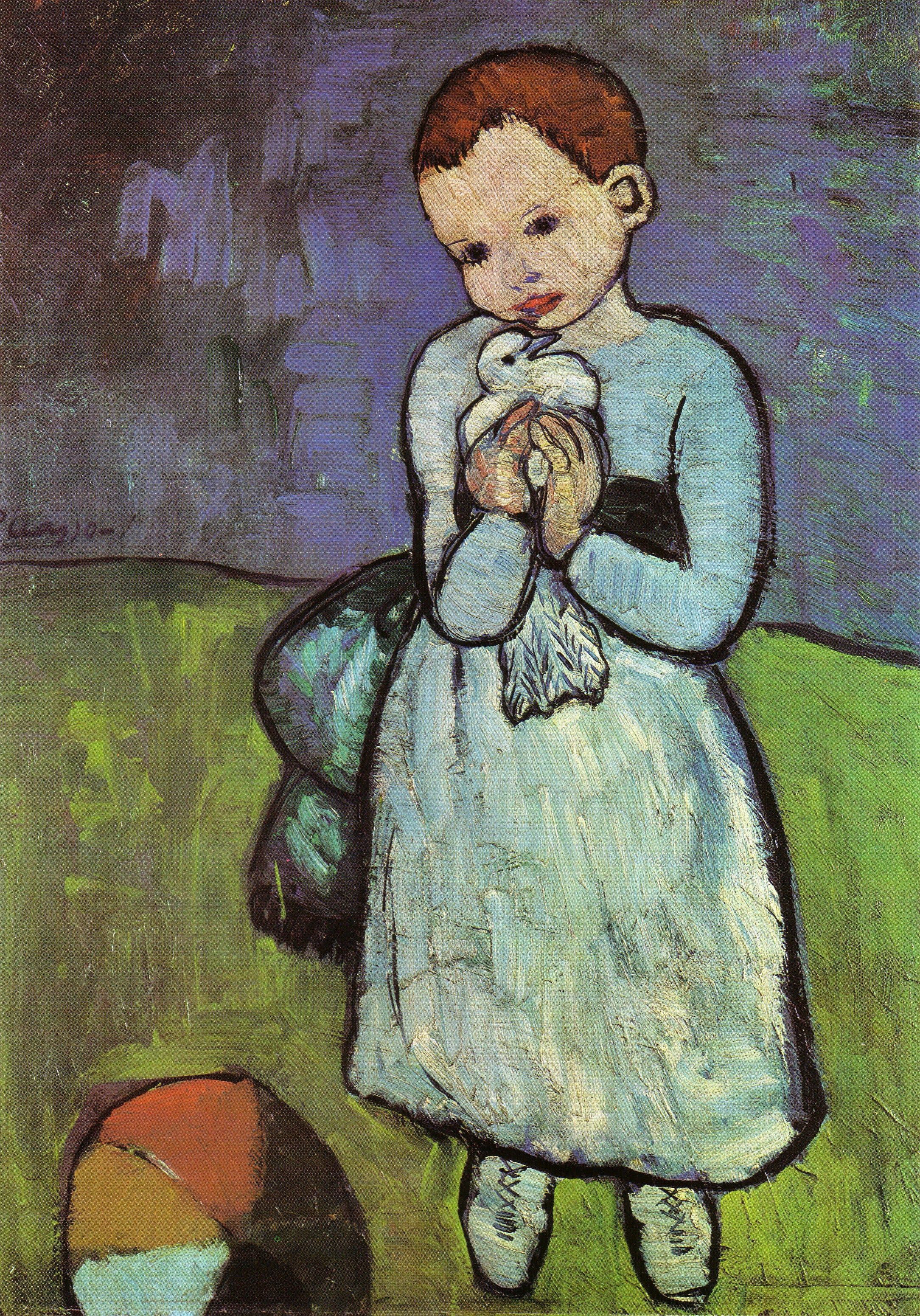
Art by Pablo Picasso (1881–1973).