


Adapted from Weathering Change by Courtney Ellis. ©2026 by Courtney Ellis. Used by permission of InterVarsity Press.
The Argentine ants are back, snaking their way in orderly lines through the infinitesimally small cracks between our window and door seals. Smaller than an eighth of an inch, these little pests plague the homes of Southern California residents at this time of year, when the heat turns from toasty to downright oppressive.
During my childhood summers in Wisconsin we faced pavement ants that would find their way inside searching for sugar and crumbs. But the Argentine ants don’t want food from our home—they’re on the hunt for water. I lay on my stomach and watch them march from the patio door across the floor of the playroom, undeterred by the few fluffy kernels of popcorn hiding beneath our coffee table. They keep to the grooves in the floorboards, a type of camouflage shielding them from obvious perception. They are headed for the kitchen sink, where the water is. They made this trek last year, too, and somehow they’ve remembered the path.
Ants don’t come in flocks, of course. Their collective noun is colony, a word with a decidedly invading tinge. To be a colonizer is not friendly to those already living in the place that will be overtaken. Yet Argentine ants display qualities we find in our friends the ducks: teamwork, collectivity, peacefulness, cooperation. In southern Europe, these insects have been observed forming “supercolonies,” massive collections of ants that are able to coexist well due to their lack of aggression toward one another. The authors of one study note, “Some ants have an extraordinary social organization, called unicoloniality, whereby individuals mix freely among physically separated nests.” This curious behavior is quite unusual among ants, the majority of which have evolved to recognize their own in-group and keep the out-groups—even if they are the same species—out.
Other species take these divisions to the extreme. Colobopsis saundersi, often referred to as the Malaysian exploding ant or even the suicide ant, will fiercely defend its own in-group. According to entomologists, “during territorial combat, workers of some species sacrifice themselves by rupturing their gaster and releasing sticky and irritant contents of their . . . gland reservoirs to kill or repel rivals.” The gaster is the enlarged part of an ant’s abdomen—the third part of an ant’s three segments, located behind its head and thorax. While there are over twelve thousand known species of ants on earth, luckily for the rest of the insect world, only fifteen of these are known to explode.
But back to our Argentine ant friends. They are still marching, marching, marching into our house, seeking hydration. Seeking survival. Argentine ants thrive in both rural and urban environments because of their resourcefulness. Poor diggers, they nest shallowly in sandy soil, the cracks of foundations or sidewalks, and under leaf litter. If another ant colony vacates a well-dug burrow, Argentines will quickly and happily fill it. They work cooperatively to find food, move eggs, and protect their queen, all while refusing to pick fights with other insects whenever they can help it. These qualities have helped them become established from their original habitat in northern Argentina, Uruguay, Bolivia, Paraguay, and eastern Brazil to their now worldwide spread from Australia to South Africa to Europe and southern North America. They now rank on the list of top one hundred worst invasive animal species—a feat, knowing that the list also includes the common malaria mosquito. We’ve been colonized, but by such a placid, friendly insect type. Pest species or no, we can learn quite a bit from them about strength in numbers and how to adapt to new locations by working together to make a home.
They’d almost be cute, if they weren’t taking over my kitchen sink.

The church I pastor today is not primarily red or blue, Republican or Democrat, though we have people who lean hard politically to both the left and the right. There are a good number of centrists in our midst, too, as well as the politically fed up. Still, we strive to find our unity in Christ, in paddling in the same direction toward the one who gives us life. Our diversity strengthens us rather than divides, though this often requires the practice of challenging Christian virtues like forbearance and patience. Nurturing it requires us to practice a healthy theology of change: everything from preparation to curiosity, adaptability to resilience. Curiosity in particular has become, for us, a spiritual discipline.
We don’t always nail it. We stumble about as often as we succeed. But there is grace even in the attempt. The apology after a misstep provides the opportunity to build new bridges, to form deeper bonds. And God graciously brings us, time and time again, to the realization that we aren’t home yet; that we all still have much to learn.

I’ll never forget a Presbytery meeting from years back that centered on radical welcome. We talked about how we could include those who were often unintentionally excluded from worship: the hard of hearing, the visually impaired, those whose primary language wasn’t English. At the end we were invited to stand in a circle around the spacious chancel in order to receive the Lord’s Supper together. The bread would be passed and then the cup.
“Is there a gluten-free option?” I whispered to one of the hosts. I’m one of a handful of severely gluten intolerant members of our Presbytery, and the team is usually good about offering us safe meals and snacks. But before I’d even finished my sentence, the host’s face paled.
“Oh no,” she said. “I’m really sorry.” It wasn’t a deep wound—I often visit churches where I am inadvertently left out of the sacrament. Many parishes are small, others believe that no one in their midst is in need of these types of elements. In fact, when I first began ministry at my current church in California, our elders suspected the same. It was awkward for me to ask for accommodations, especially as the only one we knew of who needed them. Yet when we began offering gluten-free Communion, more than half a dozen men and women came to me privately to say thanks.
“I haven’t taken Communion for years,” one told me. “I just didn’t want to be a bother.” What is Christian love other than the willingness to be “bothered”? To love a brother or sister deeply enough that their request becomes not a burden but an honor? A joy? To seek, as Saint Francis once wisely instructed, first to understand, not just to be understood? When a few of our political centrists expressed their discomfort to a man who commonly wore his red MAGA hat to worship, he left it at home. When we remodeled one of our worship spaces that had stairs to reach the chancel, we put in a ramp. The very week it was completed, a woman in a wheelchair pulled up to me in worship and gasped.
“There’s a ramp,” she said, putting a hand on my arm. “Thank you.”
We still have miles to go, of course. I have just as many gaps in knowledge and patience as the next person—too eager for expediency, sometimes at the expense of another’s unspoken needs. But God is good: New neighbors continue to arrive to teach us how to listen, to ask the right questions, to stay curious about what new changes God may be calling us to make. These friends teach us anew how to bend in the way of Christ, the suffering servant who kneels to wash our feet.
This flexibility does not mean we call sin holiness or leave all worship structure behind. Wisdom will be required as we learn when and how far to flex and when to hold firm. “All people are welcome,” my pastor-friend Anna is fond of saying, “but not all behaviors are welcome.” Biblical teaching, good order, and theological depth are important, after all. A church is a church, not a political rally or a dance party or a free for all.
A healthy tree will stand strong in the wind. It will bend but not break. But a wet noodle won’t stand at all. As a leadership coach I know likes to say when he’s tried to assist someone who has no interest in growth, You can’t push a rope.

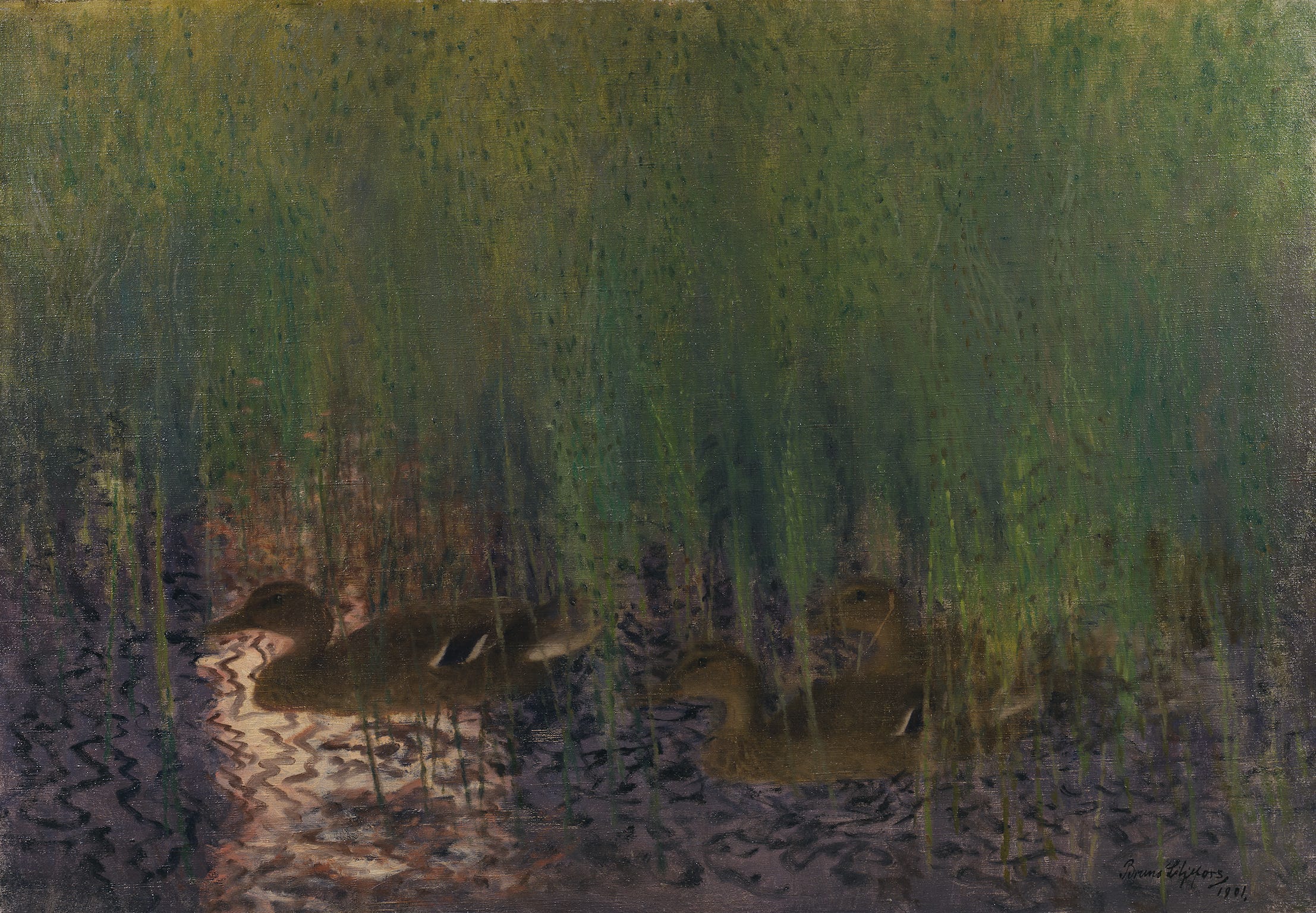
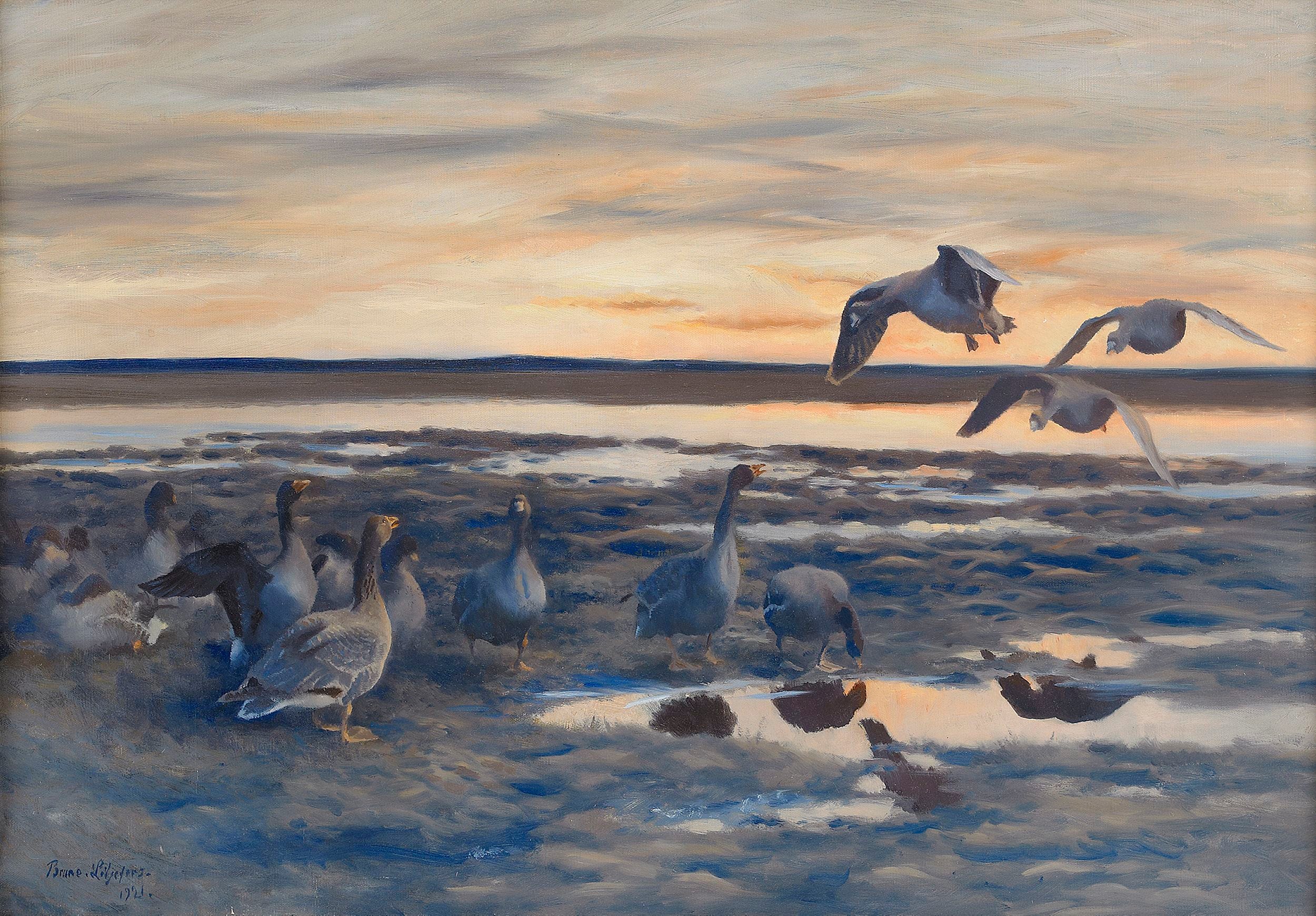
A group of ducks is called a raft, a team, or a paddling. Even their collective nouns nod to the group, to strength found in numbers. Ducks intuitively understand that we weather change better together, even though some feathers will inevitably get ruffled along the way.
One of my earliest ministry mentors told me often not to isolate. He’d seen my introversion and how prone I was to over-function. Why ask for help if I could just do things myself? After a pastoral sabbatical in 2022, when Jesus, friends, and therapists helped pull me back from the brink of burnout, I was determined to return to ministry in a different way. No longer would pastoring be primarily a solo project where I took all of the matters entrusted to me into my own hands. I wanted to learn to be a duck, not a raven, to lead and handle change collaboratively instead of all on my own.
This was—is—an uphill climb. I am prone to isolating. I come from a long line of hermit-adjacent folks, after all. Near the end of his life, my grandfather rarely even left his house except to go down to the lake just beyond and watch the wildlife. Going it alone is in my DNA. But there are times that each of us needs to flex against our natural way of bending, to grow new muscles and develop new skills. To change.
When transitions come to church or home, when Daryl and I face something new with the kids or within our marriage, we are learning to look to our flock. There is not only safety in numbers but wisdom too. Help and kindness and care, listening ears or a meal or a ride or an hour without our kids so that we can take time to work out a problem we’ve been too busy to address.
Being more like the ducks and the ants will require flexibility. Bearing with. It will mean not only receiving help and care but taking the time to offer it too. But if I’ve learned anything as I approach life’s halfway mark, with many changes yet to weather, it’s that being part of a flock is a gift well worth accepting.
Courtney Ellis is a pastor at Presbyterian Church of the Master in Mission Viejo, California. She is the author of six books, including Looking Up: A Birder’s Guide to Hope Through Grief and Weathering Change: Seeking Peace Amid Life’s Tough Transitions. Courtney hosts The Thing with Feathers, a podcast about birds and hope.
Art by Bruno Liljeflors (1860–1939).
