


. . . whoso believeth in God might with surety hope for a better world, yea, even a place at the right hand of God, which hope cometh of faith, maketh an anchor to the souls of men, which would make them sure and steadfast, always abounding in good works, being led to glorify God.
Ether 12:4, Book of Mormon, emphasis added
In Christmas 2005, I was serving as primary president in the New Delhi India District. As a Christmas activity for the children and their families, I decided to do a re-enactment of the nativity. One of the advantages of living in India is that you can give full reign to your imagination. Because things are relatively inexpensive, anything is for hire. One year, I rented an elephant to show up at a party to give rides to children. Another year, I sourced a camel to deliver presents to my children on Christmas morning.
For the primary party, I decided to hire two small donkeys. I recruited a couple from the branch to be Mary and Joseph. She was actually pregnant. They were to meet the donkeys at our doorstep and wait for the signal. Meanwhile, I would be inside telling the age-old story. They would ring the doorbell just as I arrived at the “Is there room in the inn?” part of the tale. I would send the children to the door. There would be our Mary and Joseph authentically riding donkeys asking: “Is there room for us?” We would say YES! We would invite them in, give them the best seat in the house, and serve them cookies and milk. We had treats for the donkeys. We would lovingly care for the parents of the Hope of Mankind and their animal transport.
The evening arrived. The house was packed. Children came with parents, grandparents, cousins and even a few neighbors. Chairs were filled. The floor was covered with people.
I gathered the children around me to begin the story of a travel-weary young couple searching for a place to stay.
They go door to door.
“Is there room?”
“No.”
“Do you have room?”
“Not for the likes of you.”
On cue the doorbell rings.
“Who could that be?” I ask.
The children rush in a mob to the door and there, standing at the threshold, are our Mary and Joseph riding two small donkeys.
“Is there room for us?” they ask.
I turn to the children. “Is there room? Shall we invite them in?”
In one voice, as if they had consulted and agreed beforehand, the children shout, “NO!!! NO!!! NO!!! There is no room!”
Object lesson gone terribly wrong.
I live my life with hopeful visions of myself. I imagine I’m a yes kind of person—the kind of person who does not turn away the needy, the naked, the hungry, the homeless. At Christmas I imagine I would be the innkeeper who opened my doors to the young couple. I would have taken them in, found room for them, given up my own bed for them. In my imaginative view of myself there is a lot of yes! Yes, I will help you. Yes, the future is bright. Yes, I will accept this trial with patience because, yes, there will be eternal life. Hope is all about imagining the YES!
You can imagine my shock and dismay at hearing NO!
I ignored the children. We brought our Mary and Joseph in. We gave them the best chairs. The children served them food. We took water and treats to the donkeys outside. We even let the donkeys poke their heads inside the house. Jesus was birthed. The angels danced. The children took rides on the donkeys. A great time was had by all.
But I was left wondering why the children in one united voice shouted “no.” The house was crowded, it is true, but these children were used to crowded homes. Perhaps they said no because they knew the story and thought they had been cast in the role of innkeepers who said no. Maybe they said no because, being literal-minded, they thought the donkeys would have to come in as well, and they were not willing to open their minds to the possibility of donkeys in the house.
I have found that I often shout “no” when I lack hope. My life feels too busy and I’m afraid to face the reality that God’s work is sometimes hard, and I am sometimes lazy. I have said no to God when I think I’m already doing enough, so why should I have to do more? A “no” can come from my deciding this is how the story is going to go, and I don’t want any edits or suggestions, thank you very much. Most commonly the “no” comes from not having the vision and trust to imagine how the unexpected, the unusual, or the difficult is going to play out.
But here is the point of hope. It is action into the unknown. As Wendell Berry says, “Hope must not depend on feeling good.” Hope must also not depend on feeling right, or easy, or comfortable. Mary embodies the definition of hope when she says the big “yes”: “I am the Lord’s servant, May your word to me be fulfilled” (Luke 1:30, NIV).
Hope opens our life to God. The yes of hope becomes a flashlight we carry into darkness and fear of the unknown.
May our hope in Christ be strengthened this season as we say “Yes, there is room in our inn.”
And may our hope help us imagine, and then celebrate, what the donkeys can bring.
Diane Tueller Pritchett likes walking with her Old English Sheepdog in the mountains around Provo, Utah, as well as teaching and playing the piano and reading Wayfare essays, especially ones by her nieces Emma Tueller Stone and Megan Armknecht.
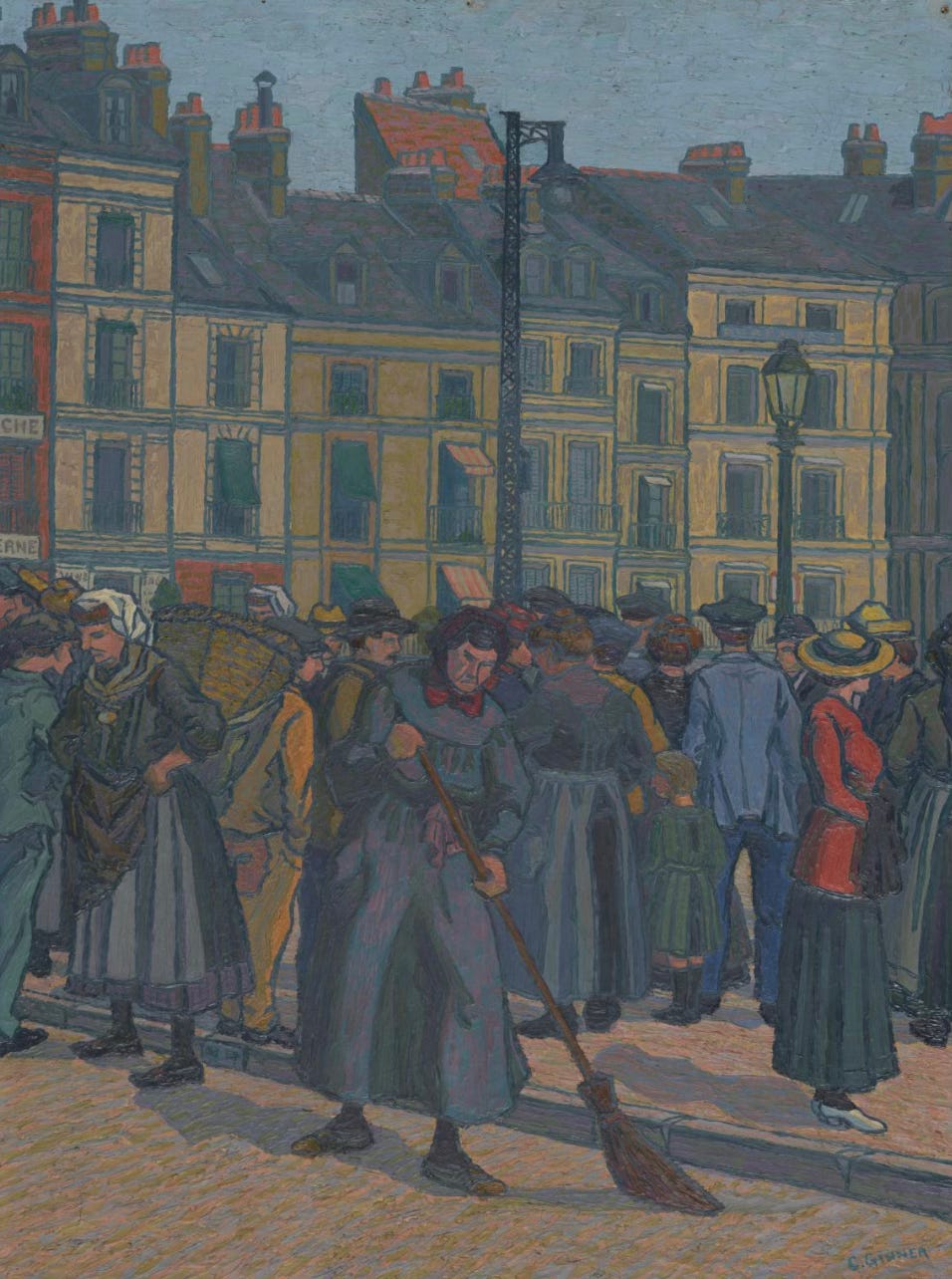
Art by Charles Ginner (1878–1952).

I loved this and can relate. Thank you.