


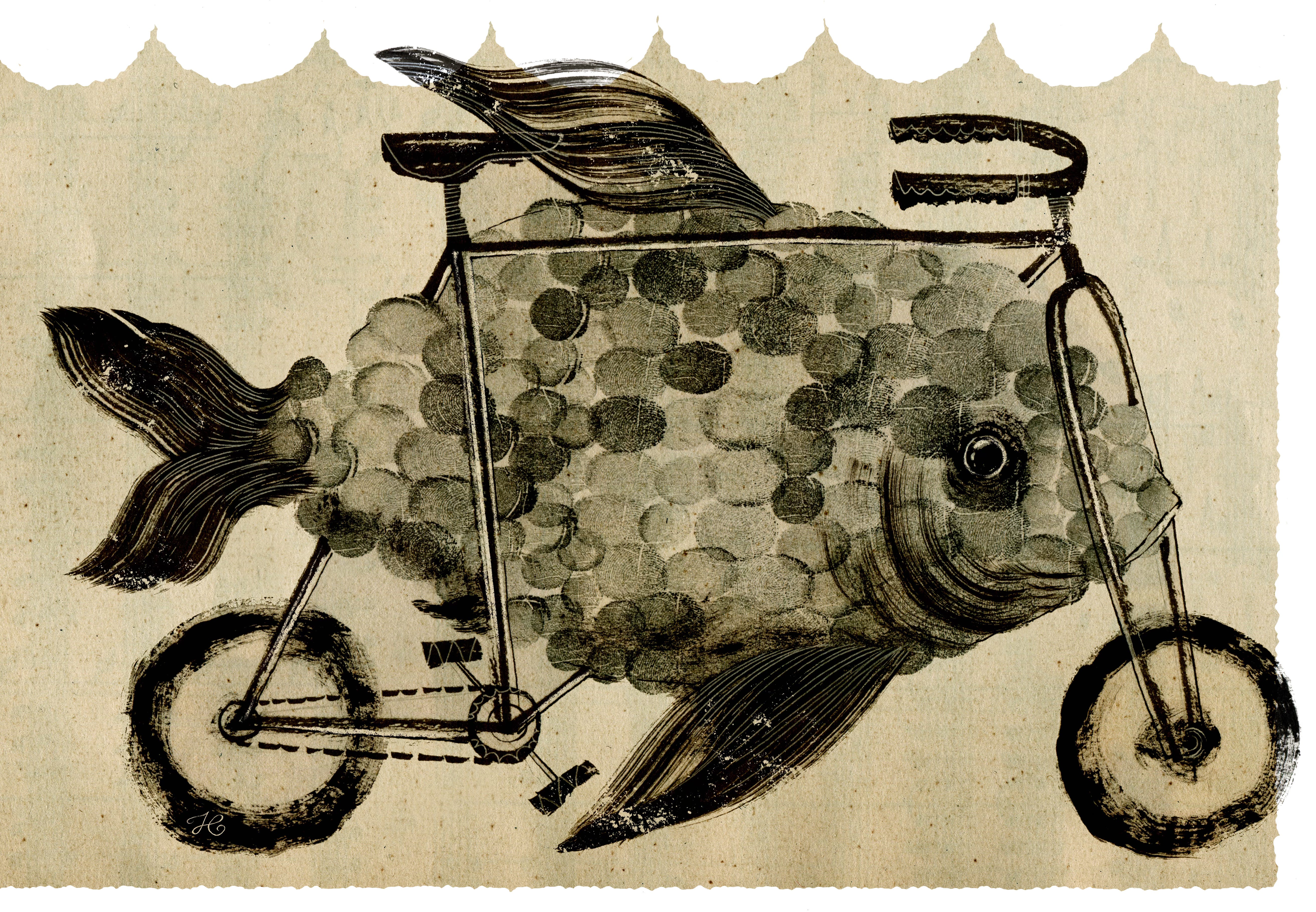
A while back we were on a family outing when the topic of men and women came up. Nothing says Cool Dad more than quoting ’90s rock songs, so I found myself saying, “It’s like the U2 lyric, ‘A woman needs a man like a fish needs a bicycle.’” Melissa stared at me in exasperation and exclaimed, “U2? It was Gloria Steinem who said that!” I sheepishly had to admit (at least to myself) I was that many years old before I learned that.
As a fifteen-year-old boy growing up in the very Mormon suburbs of Salt Lake City, I wasn’t reading much (any) Gloria Steinem, but I was listening to a lot of U2. So this 1970s feminist slogan—which, it turns out, originated with an Australian university student named Irina Dunn and then was popularized by Steinem—was transmitted to me through an all-male rock band. Does that matter?
I couldn’t control how or where I heard the idea; we all have limited inputs. But because there’s a long history of men getting credit for women’s ideas, it’s important to acknowledge—however belatedly I learned it—that this phrase about women’s self-authorship was first spoken and then popularized by women.
More than a chain-of-transmission question, this brings to the fore a truth that has only grown more weighty for me over time. Simply stated, women’s autonomy matters (and has always mattered) regardless of what I think or do about it. At the same time, what I think and do about it as a man does matter—quite a bit, in fact.

Even if the truth of women’s self-authorship and autonomy needs my testimonial about as much as a fish needs a bicycle, it’s still helpful—for me, if no one else—to excavate and articulate how and why I believe what I believe. There are lots of reasons why I believe in women’s inherent dignity and worth, but I’ll narrow it down to two.
The first reason is because I came of age in 1980s and 1990s America. By the time I was a semi-thinking human being, second-wave feminism had washed across our collective consciousness, even if the ground wasn’t fully saturated. The smartest kids at school were pretty equally divided between girls and boys. Shows on TV like Friends depicted men and women in more or less equal terms.
I shouldn’t exaggerate this as some kind of golden age. The fact is, my mom worked a full-time job and did all the housework while my brothers and I watched sports on TV with my dad. Yes, middle-class women could self-author by working outside the home more than had often been the case in previous generations. But for many, like my mom, it simply meant doing even more work.
It is hardly a novel insight to say that the main place in my life where it appeared that women didn’t have or express full sovereignty was at church. To claim that I spent a lot of time thinking about that or that I was really bothered by it would be giving my younger self too much credit. But it was impossible not to notice. “The priesthood” was in charge, and only men had the priesthood (I thought). The Relief Society did lots of nice things—I knew this, because it seemed my mom was always doing something to help other people in the ward. But men did “The Important Things,” like go to lots of Very Important Meetings and always be Importantly in Charge of those meetings.
Our twice-yearly ritual of gathering around TV sets to watch general conference reinforced the idea that women were good but men were Important. One of the seminal moments in my own consciousness-raising came when I was a student at BYU, living in an apartment with a bunch of friends. One of my roommates regularly spoke with a kind of soft misogyny, all part of a performative macho act. When he talked that way the rest of us would cringe and laugh nervously. We might even gently chide him, but none of us ever really challenged him on it. Once we were all watching general conference on our living room TV when a female speaker came to the pulpit. Suddenly my friend grabbed the remote control and changed the channel. He then picked up the phone to call an apartment of girls who lived across the courtyard from us and said, “Call us back and let us know when someone inspired is speaking.”
This was one of those ripping-off-the-bandaid moments for me. It felt so blatant, so crass, so wrong. It forced me to confront whether I also thought women’s voices were somehow secondary to men’s. Nervous laughter and gentle chiding weren’t good enough. We seized the remote control and flipped back to general conference while my friend walked out of the room.
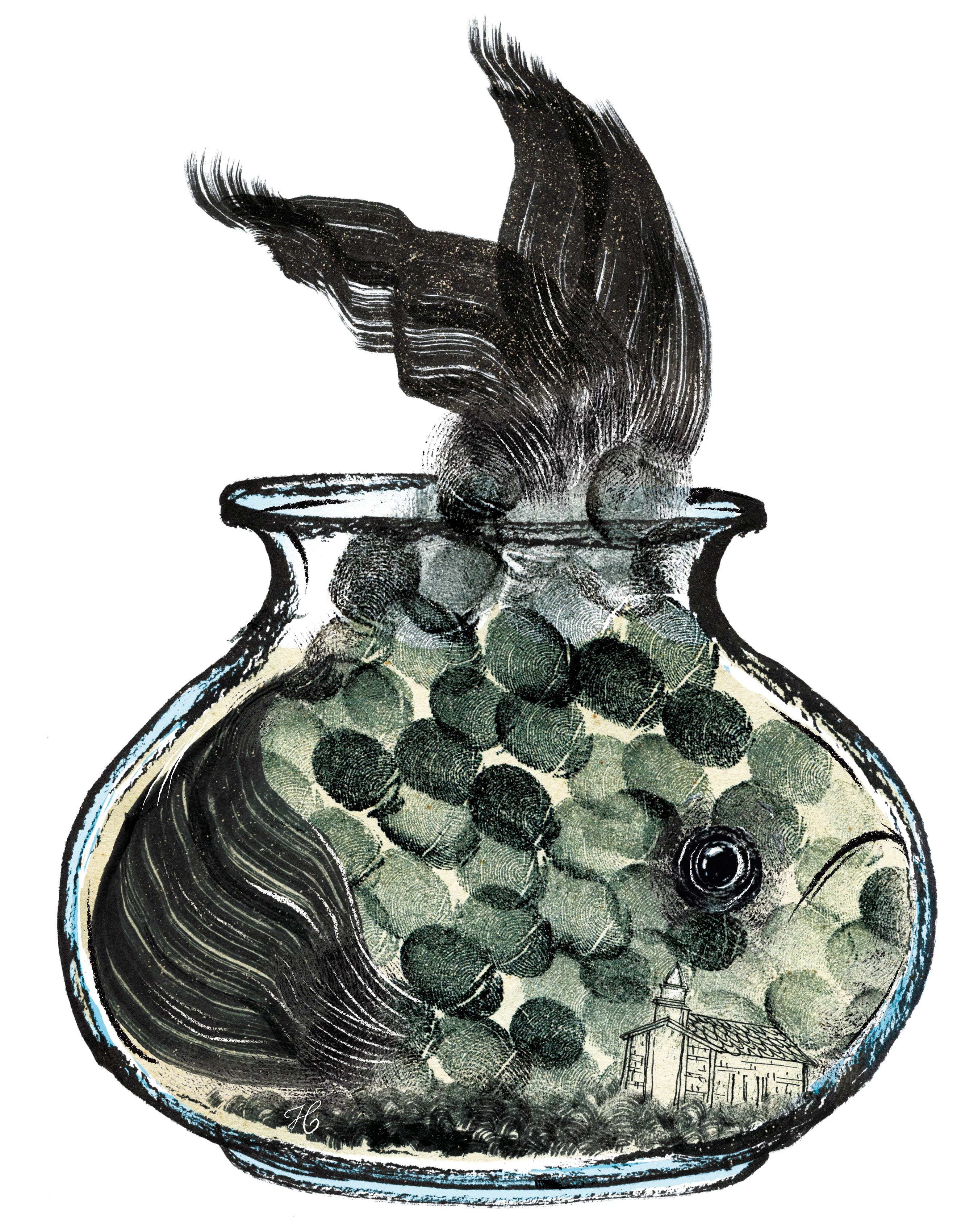
The remote control incident came at the same time that I was first starting to read the work of Mormon thinkers and experience my own adult intellectual and spiritual development. In addition to reading lots of Mormon history, I also dove into the writings of Maxine Hanks, Laurel Thatcher Ulrich, Claudia Bushman, Margaret Toscano, Janice Allred, and other Mormon feminists.
This period of reading and thinking helped crystallize in me the second reason why I am committed to women’s self-authorship and autonomy: because I am a Mormon.
Because I am a Mormon, I believe that the spirits or intelligences of women and men are co-eternal and co-equal. I believe that women and men are children of Heavenly Parents. I believe that God consists of a Heavenly Father and Mother. I believe that Eve’s partaking of the fruit in the Garden of Eden was a courageous, necessary act that advanced rather than set back God’s plan of redemption for humanity. I believe that women have equal access to God, to Jesus, to the Holy Spirit, to personal revelation, to exaltation. I believe that all are alike unto God, female and male. I believe that all women and men have distinctive spiritual gifts that they are intended to cultivate and share with everyone.
Because I am a Mormon, I believe the power of God—which we call priesthood—is generously bestowed on and exercised by women and men. I believe that in the temple women and men receive and exercise the same priesthood power, and in the Church, women form orders of priestesses in parallel to male quorums of priests. I believe that Melissa and I are fully equal partners in marriage and parenthood.
Because I am a Mormon, I believe in an ongoing restoration in which God is still revealing great and important truths about the divine relationship between women and men. I believe that Jesus will redeem all things, including a church that is still young and learning and hasn’t yet fully learned to recognize let alone empower women’s sovereignty.

Women don’t need men to grant them their sovereignty. Women don’t need men to validate their intrinsic self-worth or inherent dignity. Women don’t need men in order to be infinitely, unconditionally, and eternally beloved and empowered by God.

