


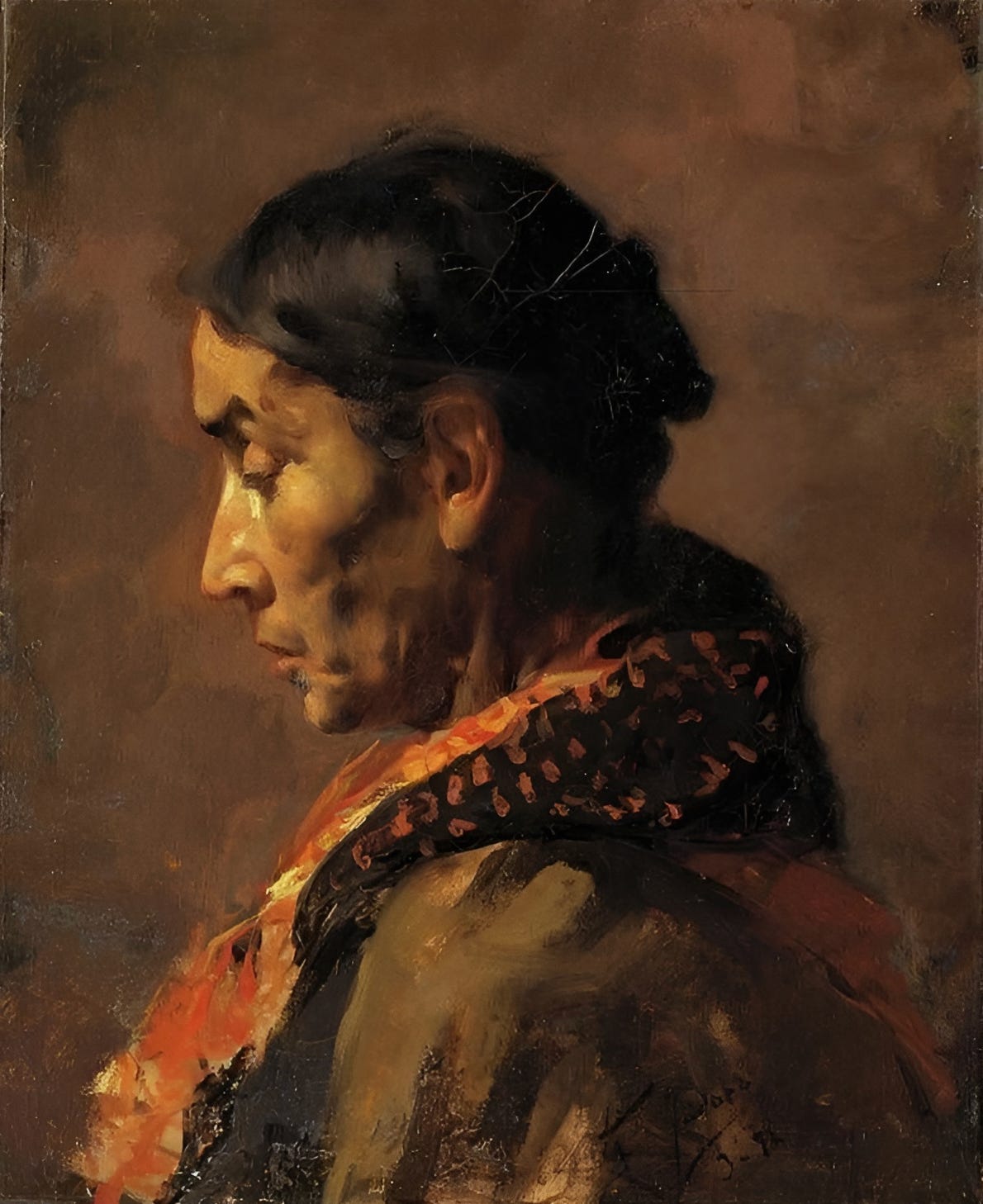
At 17, Pat was fed up with her father’s fits of rage. “The war did such terrible things to those men,” she later recalled, “and sadly they took it out on us.”
Unwilling to absorb the words and blows of an angry British army veteran any longer, Pat left a farewell note on her desk one night and climbed out of her second-story bedroom window with a meager bag of belongings, including her favorite lamp. She hopped to the ground where her boyfriend, Paul, was waiting for her. The pair sped off on bicycles toward a new life.
A constable stopped them at the edge of town. “We’re doomed,” Pat thought, as she eyed the lampshade hovering above her handlebars. She assumed her father had found the note prematurely and reported her to the police.
But the constable simply pointed to the taillight on Pat’s bicycle. “It’s broken,” he said. “That can be dangerous in the dark.” He fixed the light and sent the teenage runaways into the night.
Pat is now 81. Her life appears ordinary, even stereotypical. She is just one of many English widows who boils a kettle of tea each evening, sets a cat on her lap, and settles in for a cozy-crime thriller streamed on demand. But Pat’s own story is far from ordinary and likely more riveting than her Netflix shows.
I met Pat in Keswick, a beautiful mountain town in England’s Lake District. I had traveled there from London for an outdoor adventure but—thanks to a nagging cold—wound up reading in the library instead of hiking across fog-covered mountain peaks. Pat walked in to return two books and check out two more. She eased into an armchair near mine and asked me for a book recommendation.
“Well,” I said, “I’m reading Dickens if you want to check this out.”
“No,” she said, “I’ve read all of his books.”
I began asking questions about her life. The stories started flowing, and A Tale of Two Cities lay closed for the next two hours.
Pat and Paul got married shortly after their dramatic getaway. They headed for London and hoped to get a strong start to life in the promising postwar economy of 1960s England. Pat found work at a manufacturing company. Before her one-year mark on the job, a male colleague raped her.
“It was brutal,” she said, “and I felt ashamed.” She did not tell anyone—including her husband—about the attack, and for the next five years she refused sexual intimacy. When she finally told Paul, he sat in disbelief. “I thought I was the problem this whole time,” he said.
The couple leaned into their studies and eventually became professors at London South Bank University. Paul taught philosophy and Pat taught economics. When school was out of session they often traveled, crisscrossing the globe in their middle age.
It was likely on one of those adventures that Paul contracted Lyme disease. “We didn’t catch it soon enough, and he started showing signs of mental disturbance,” Pat said. He became increasingly irritable and mean as he grew older. “Why did you have to turn into an ugly old lady on me?” he sometimes asked Pat.
She tried to remind herself that “the real Paul would never say that.” She bit her tongue and avoided mirrors. But eventually she reached a breaking point.
“I told myself that I would go on holiday with Paul and then decide whether to stay with him or leave him,” she said. But she never got the chance to make that choice. As they traveled across the Indian Ocean on a cruise liner, Paul fell ill. He got sepsis, and the ship’s doctors told him he had only hours to live. As his time drew short, he asked Pat to sing the words of an old worship hymn:
O Lord, hear my prayer,
O Lord, hear my prayer;
When I call, answer me.

O Lord, hear my prayer,
O Lord, hear my prayer;
Come and listen to me.
She sang it repeatedly—dozens of times—until he died.
“Suddenly all the bad stuff faded, and he was just my Paul again. My husband. My teenage boyfriend, waiting below that window for me.”
The ship made an unplanned stop in Abu Dhabi where Pat was left alone to sort out the logistics of getting herself and Paul’s lifeless body back to England. She somehow managed to fill out a death certificate printed in Arabic and travel home.
After the funeral, Pat felt guilty and alone. She contemplated suicide and even drove to a bridge where she planned to hurl herself off. All the weight of her entire life, “the abuse, the trauma, the grief, it all bore down on me,” she said. “It was utter despair.”
But in that dark moment, Pat felt a small ray of light seep in. It was just enough to convince her that hope—if she chose to grasp it—was still within reach. She described the experience as a direct intervention from God. “There is no other explanation for it,” she said. “It stopped me from jumping that day.”
She backed away from the ledge and drove home, still in tears but with the growing resolve to resist despair. Nearly a decade later, that resolve persists.
“I buried the abuse for so long—the rape, the shame, and those years of being beaten as a little girl,” she said. “Now I’m working through it in my old age.”
I asked her why, in these golden years of life, she feels the need to unbury the trauma and face it head-on. “I suppose I’m just stubborn,” she said. “I don’t want to give up or let these things sink me, and if I leave them buried, they’ll sink me.”
Pat and I had dinner at a local Thai restaurant before she drove me thirty kilometers to the train station in Penrith. During the drive she pointed to the mountain peaks and told me the names of each one. The region is famous for its color palette—hills of deep green spotted with patches of purple heather. “You need to return one day for a proper hiking holiday,” she said.
I thanked her for her hospitality and for sharing her captivating life story, including the disturbing details.
“I don’t want to sound ungrateful,” she said, admitting that her life has seen many happy moments. She traveled, pursued education, and spent many evenings dancing with friends. “More than anything,” she said, “I’m grateful for that young man I ran away with.”
The painful parts of Pat’s life took her to a ledge but did not sink her. A ray of light and the choice to soldier on kept her in the fight. Now—despite her weakening knees and fading health—Pat shuffles stubbornly toward healing.
“It’s been a long and painful journey,” she said, “and I haven’t always liked myself. But at the moment, I quite like who I am.”
I boarded my train and Pat drove home through the green and purple hills—back to her cat and tea kettle.
Addison Graham studies public policy at the University of Utah.
Art by Enrique Jaraba y Jiménez (1872-1926).
