


We met Brother John not too long after moving to the little town we call home in west-central Utah. He was, as he called himself, an old cowboy. Too old anymore to ride the horses he had always loved, he draped a saddle blanket on his ATV, clapped a big white cowboy hat on his head, and went riding around town. He always had a big smile and encouraging words for us academic-refugees-turned-wannabe-farmers. It was the same at church. He was always glad to see us. For exhausted young parents who had been tossed here and there, his kindly demeanor felt like sunshine after a storm.
“I’ve got some chickens that I want you to have,” he told my husband one day soon after we’d moved in. Somebody had dropped off some chicks at his house that spring, but he said he was too old to keep chickens anymore. We’d never had chickens and didn’t even have a coop, but Brother John didn’t mind. He said he’d keep the chicks until we got things ready. He said he felt strongly that these chicks needed to go to us. He was pretty patient. Even after a neighbor in my husband’s parents’ ward offered us an old coop (and after those parents drove the coop down from Provo), it sat empty in our yard for a good while. Only after we awoke to crowing one morning when a neighbor pranked us by putting four bantam roosters in our empty coop the night before did we decide that we could manage chickens. Those chicks Brother John had kept for us finally came home. By this point, they were old enough to lay eggs.
While my husband was working on finishing the raw concrete floor in the basement of our little house so we could actually sleep in the bedroom instead of on the living room floor, I would take our young boys and go visit people. We liked to drop by Brother John’s. He and his wife were a lovely couple. I loved hearing stories from their lives as my boys played on the floor. Many times, as we were leaving, Brother John would urge me, “Bring your husband one of these times. There’s something I want to show you all together.” He’d make the same invitation after church. I’d nod and smile, but to be honest, it made me nervous.
That sounds ridiculous. How could I be nervous? But a year before we moved to the country, we were living in a dumpy rental in an interesting part of town, and we’d had a neighbor make a similar invitation. “Hey guys. It’s been a while,” this neighbor had said. “We need to get together. I want to show you something.” He was insistent that we all be there. My husband smelled a rat, so he told me to take the boys and run errands while he saw to whatever it was our neighbor had in mind. “That way we don’t both waste our time,” he told me. When my boys and I finally got home after the neighbor’s visit to our house, my husband looked spent. Our neighbor had eaten up the whole afternoon trying to sell my husband on a multilevel marketing scheme, even putting my husband on the phone with one of his higher-ups to talk him into it. It didn’t work. My husband stood firm. But he was drained. He was busy with job applications and teaching and writing his dissertation and cooking dinner, and he could ill afford to spend so much time or energy navigating a very awkward, fruitless interaction. We’d been through this before with Pampered Chef parties and Mary Kay makeovers and essential oils and yoga nights, but it still hurt. It felt like the only people interested in friendship had dollar signs in their eyes.
However icky our neighbor’s multilevel marketing pitch was, we understood that his high-pressure sales tactics were motivated by a desperate attempt to improve his family’s precarious financial situation. Our relationship survived. Besides, he was small fry compared to the far uglier face of naked, grasping greed and ambition I had encountered during my years in law school. To share one rather innocuous example, I remember sitting on a bench with a couple of friends at school one afternoon. One of the “cool” professors happened to walk by and started chatting with them. I’d never taken a class from this professor, so I was just listening, trying not to be awkward. As they were talking, another student walked over and plopped down next to me. This student had never gone out of her way to talk to me before, but she was suddenly putting a lot of energy into the conversation. I was pleasantly surprised and responded with genuine warmth. But then, the professor said goodbye to my friends, and my classmate’s demeanor visibly cooled. She wrapped up our conversation real fast and left. Stunned, it took me a moment to realize that she had only been talking to me because she was hoping to be part of the “cool” professor’s conversation.
While I wish I could say this was the only time this sort of thing happened or that it was just this one classmate, it wasn’t. My husband noticed it too; after one particularly fatuous evening with my classmates, he pled with me not to drag him to any more law school functions. It was too wearing to spend time with “the future leaders of the Church,” as we law students were so often called. Besides, he was afraid he would get trampled in the stampede for free pizza. Not all my classmates were this way—I went to school with some very lovely people—but there were plenty of status-hungry strivers ravenously pursuing people who had promise, and I clearly didn’t measure up. The offhand comments, the subtle (and not so subtle) body language, the getting overlooked or sidelined or flat-out ditched all made it hard not to second-guess people.
Happily for me, I became a mother shortly after graduating and was thus spared the horrors of actually working as a lawyer. I may have been a nobody at school, but I was everything to my baby. He certainly didn’t care where I’d worked over the summer or how well I could edit footnotes. In my baby I found someone I could trust completely, and I wanted with all my heart to return the favor. I wanted him to trust me too—that as he cried out in need he could count on me to answer, swiftly and generously. As source of nourishment and comfort, I had been given the incredible honor of teaching my child his first lessons in prayer. That is the gift of motherhood, and I drank it in deeply.
The irony is that while motherhood helped me begin to heal, it was motherhood that torpedoed any trust I had left in the modern machine world, starting with my son’s birth. The chain of absurdities is too long to do justice to here, but I have enough distance now that I can half-laugh about how stupid it all was—I mean, did I really end up giving birth on a freezing cold, hard stainless-steel table in the operating room, no painkillers, my baby presenting posterior? Really? It was ridiculous. And it haunted me. I relived it night after night, jolting awake when I was trying to catch some much-needed shut-eye. I had worked hard to prepare for labor, learning to trust my body and the process of birth, but as I stepped through the doors of the hospital, excited to finally meet the little angel snuggled up in my belly, I ceased to exist as a person. Nobody trusted me to do the job I was born to do. Instead, I was a container from which they were supposed to extract a baby. The experts, whom I had trusted, made that sacred moment where heaven touches earth into hell.
My son’s birth shattered my world. Why had things turned out the way they did? And why did nobody care? It’s not like I’m the only woman to have been brutalized in the delivery room, but all this brave talk of “my body, my choice” or “the sanctity of life” evaporates when it comes to women in labor. I was supposed to just shrug it all off, something that happens to many women. They have a nagging sense that what happened to them is wrong. As they struggle, mostly alone, to care for their little ones in the days that follow, they can feel in their bones that this isn’t how things are supposed to be—not just birth but the whole modern childrearing scheme, heck, the whole modern living scheme—but they don’t speak the language of obstetrics or Foucauldian biopolitical control or pediatric anthropology or Illichian iatrogenesis with any degree of proficiency, so they get dismissed by friends and family and experts—especially experts. Their intuition gets mocked as hysterics from silly, overly sensitive women. Their spiritual authority as matriarchs in embryo gets poisoned by venomous comments, stunted by withering glances. Just be happy that your baby arrived safe and sound! Why can’t you be grateful for the miracles of modernity? What, you want to go back and live in a cave? You want people to die? Your baby’s fine. Stop making a fuss and get in line. But I couldn’t get in line. I had caught a glimpse of the human meat grinder at the heart of the modern world, and I couldn’t unsee it. And praise the Lord, I had a husband who couldn’t either. The scales had been ripped from both of our eyes.
But like the blind man whom Jesus healed, we couldn’t immediately understand what we were seeing. We needed further divine assistance. (We still do.) It came in the person of our little son. In his baby blessing, I kid you not, my husband blessed our son that he would “teach [his] parents their weaknesses.” And oh, how painfully and beautifully that blessing has been fulfilled. The wordless voice of a baby forced us to reconsider everything we’d based our lives on, everything we’d been taught. The only things that came out unscathed were heaven and earth. Of course, in a world that worships the workmanship of mankind and trusts in the arm of the flesh, not too many people were excited to hear about that. But by then, even if we’d wanted to bandage our eyes and shove cotton in our ears, we were in too deep. Our son had already taught us the knowledge most dangerous to the underpinnings of modernity: the knowledge of the physiological needs of babies and that they have the ability to communicate those needs. If you choose to trust the little ones—that they can and are communicating what they need—you cannot move comfortably through the modern world. You cannot trust it. We felt this acutely. So the first open window we found, we climbed through, leaving behind our old lives and trusting heaven that things would work out. And that is how we ended up making our first tentative steps into chicken farming, courtesy of Brother John.
We did finally accept Brother John’s invitation. He was persistent, in his sweet and gentle way, so despite the battering and bruising and disillusionment we had suffered at the hands of so many careless, callous people, I rounded up my husband and set a time to go over and get whatever it was over with. “What does he have in mind?” we both wondered. “Does he want to sell us something?” Nobody was this kind or friendly without there being some catch. Not in this world. We arrived at Brother John’s house, and he ushered us into the living room with a big wave, offering us a seat. Then he scooted a chair up just across from us and fumbled in a bag for something, pulling out a dog-eared spiral-bound notebook and a puzzle box with a portrait of Jesus Christ on the cover. We looked at him expectantly, wondering what it was all about. He motioned to the picture on the box. “This puzzle represents all of us,” he said. “We’re all a piece of this puzzle, and it’s not complete without all thousand of its pieces. That means your piece matters just as much as any other piece. We need you to be part of this full tapestry of Christ.” Of course, he said it much better than that, with the same gentle warmth that had finally persuaded us to come in the first place. Then he handed us a plastic bag with puzzle pieces in it. “Take a piece,” he said. “Write your name on it.” We each wrote our name on a separate piece, and then Brother John gave us another bag to put them in. There were quite a few puzzle pieces already in it. Then he handed us the dog-eared notebook and asked us to write our names in it. I don’t remember how many pages we had to turn before finding a blank line, but this notebook had clearly been handled hundreds of times. I wondered at all the hours Brother John had spent sharing God’s love, all the effort spent rounding up recalcitrant, nervous people like me. As we learned later, Brother John had been through some pretty hard things in life. His heart had been broken open, and love gushed forth. He lived that old scripture, “There is no fear in love” (1 John 4:18).
As we walked home that afternoon, I was stunned. It was so beautiful, so simple, and it went straight to my heart. How could I have doubted Brother John’s love? How could I have not felt the genuineness in his generous friendship? It was only then that I understood just how skittish I’d become, how the scars on my heart had hardened into a protective shell. Part of growing up is learning that you can’t trust everyone, but the goal is being able to discern whom to trust, not to live without trust. Brother John gave me a precious gift that afternoon. He taught me that yes, even in this world where it seems everyone wants to use or manipulate or abuse you, there are still people that will just love you, no agenda, no scheme. You can trust them. Brother John didn’t mind that we took our sweet time in accepting that gift either, just as he never complained that it took us so long to pick up those chickens he felt inspired to give us. Perhaps he saw in us the high-strung, nervous horse whom he had once helped into a trailer with several hours of patient coaxing. It didn’t matter how long it took to get that horse in the trailer. And it didn’t matter how long we took to accept his offer. What mattered was that we came.
This essay appeared in Wayfare issue 7.
Rebecca Skabelund lives and works with her family on a small farm in central Utah. She and her husband write a joint substack called Worthless Thoughts.
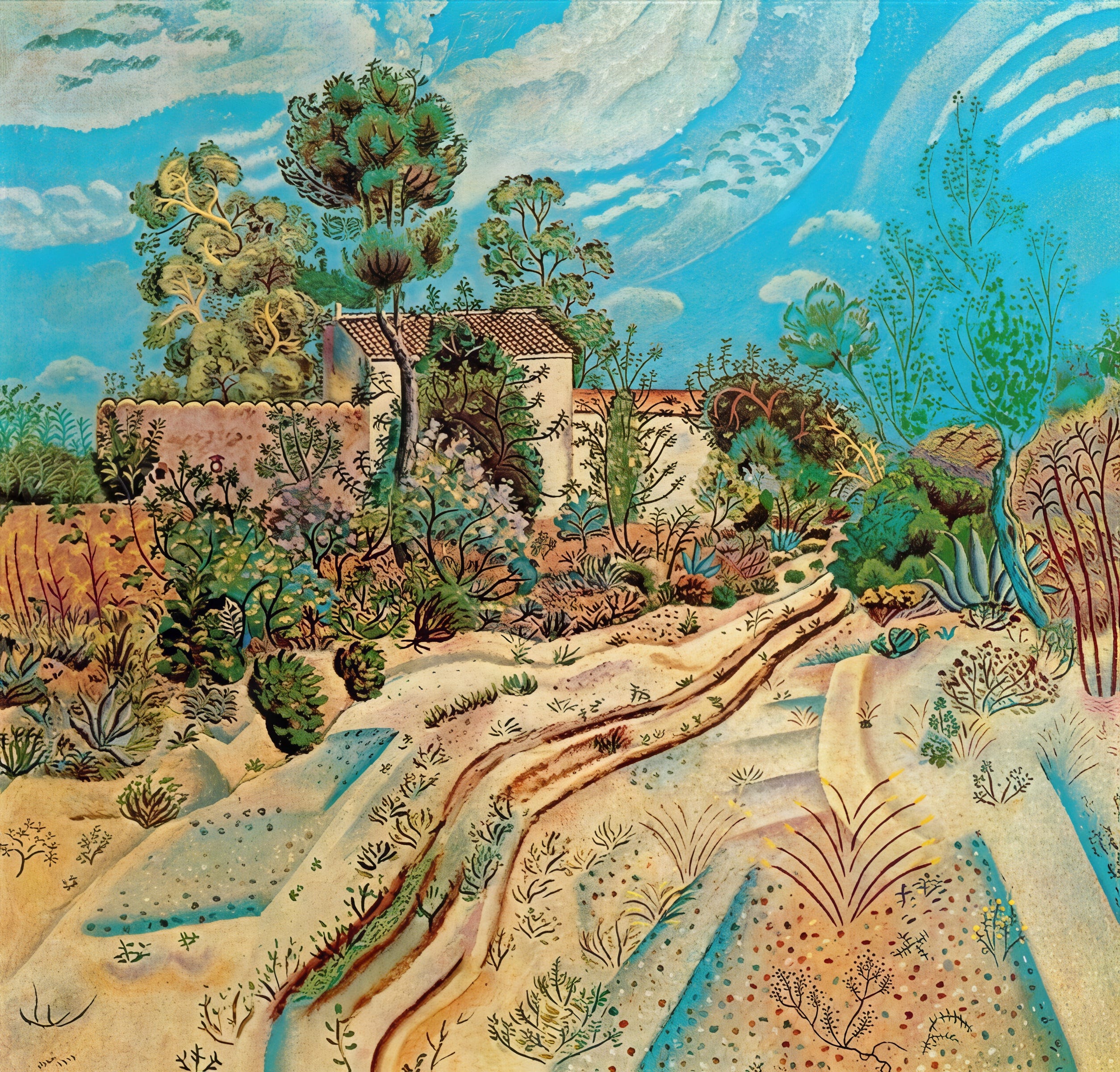
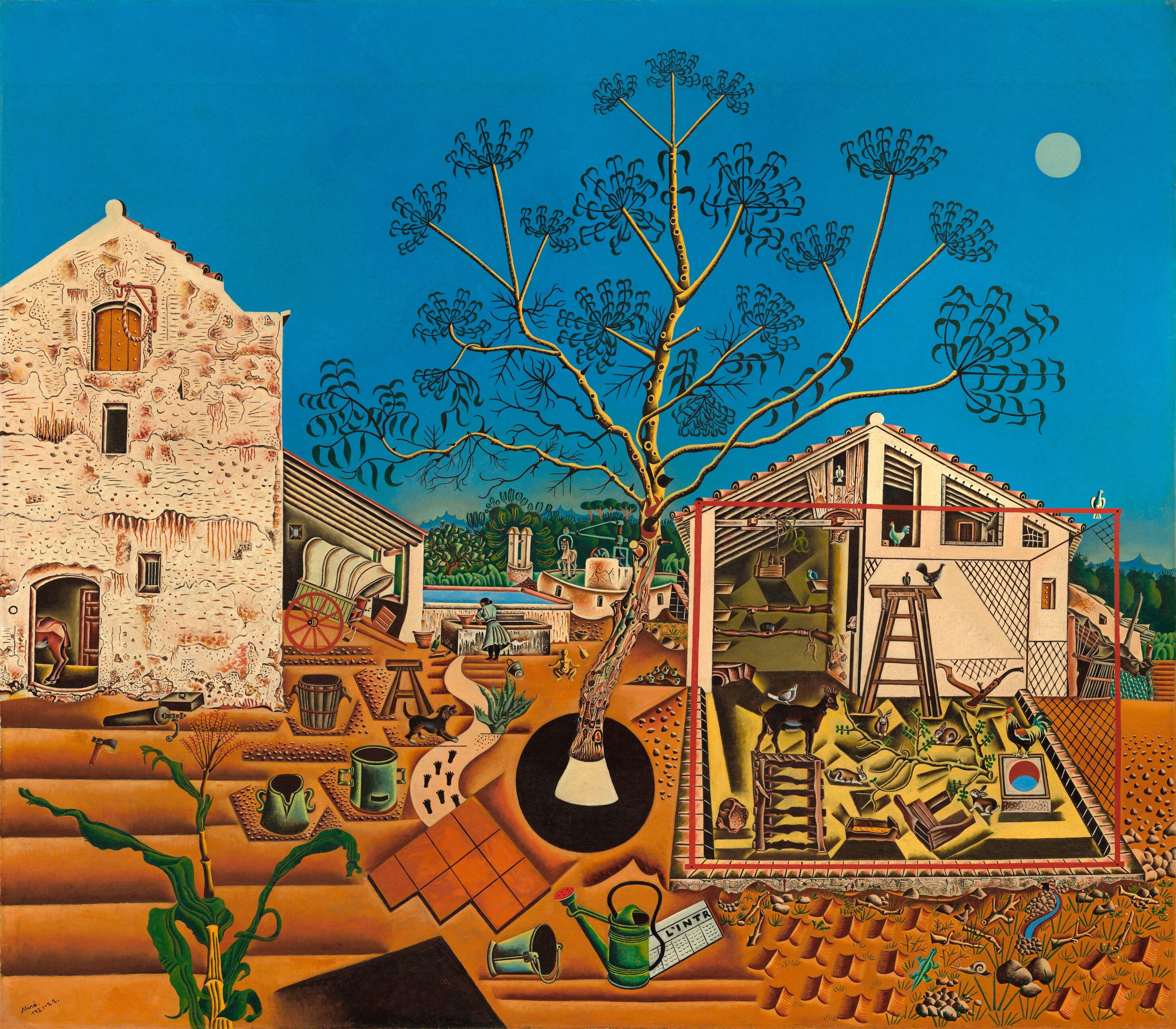
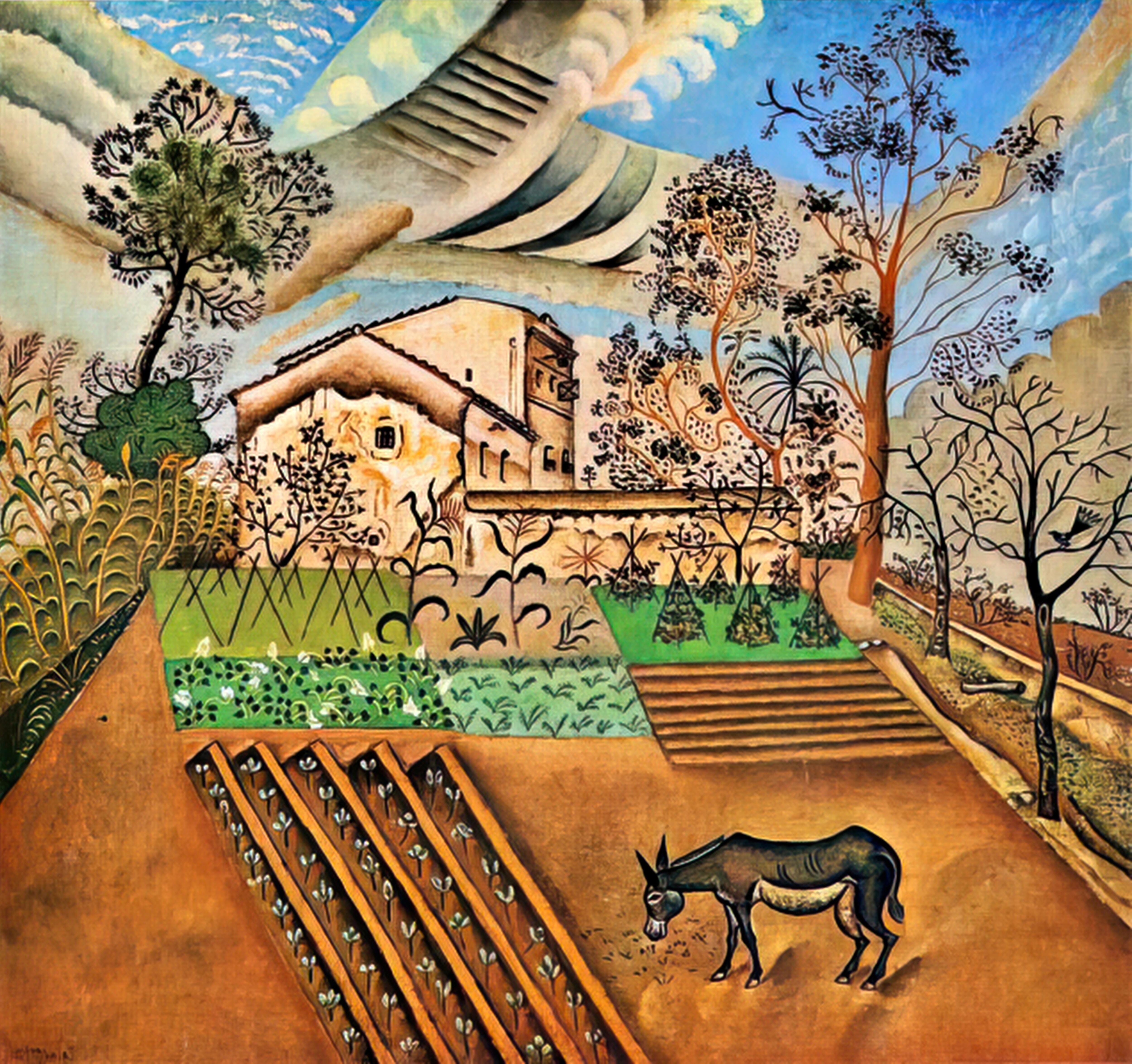
Art by Joan Miró (1893–1983).
