


I.
It was almost too easy to go from twelve brothers to eleven, thought Judah, son of Leah.
Step One: Take Joseph to the pit.
The pit was at the bottom of the mountain, next to the long trading road. When ten of the brothers had first arrived with their flocks a week ago, the pit had been an annoyance. They’d had to station Zebulun, Judah’s younger brother, at its side to prevent the baby goats from falling in. But now that Father had sent Joseph—their little seventeen-year-old half-brother—to “supervise them,” the pit was an opportunity.
Step Two: Remove Joseph’s coat—the coat of many colors, crafted with the finest fabric that Canaan and its traders had to offer.
Sad fact: Father only really loved two of his children, the sons he’d had by his favorite wife, Rachel. So Joseph and Benjamin—numbers eleven and twelve in the pecking order—got treated better than the rest of them, especially after their mother died. Benjamin was too little to be annoying about it, but Joseph liked to lord it over them. “Look at this beautiful coat Father gave me,” Joseph would brag, spinning in circles so its colors twirled around him, while Judah—the fourth oldest son—trudged around in limp hand-me-downs. But at least after today, Judah would still have his coat, while Joseph would not.
Step Three: Throw Joseph into the pit.
Judah tried to not feel too guilty upon hearing Joseph’s yelp of pain when he hit the bottom. He peered down into the pit. It didn’t appear that Joseph had broken any bones in the fall, which was good. Not that a few broken bones would matter—they planned to let him die here, after all.
Step Four: Kill a baby goat.
They had baby goats in abundance, which made this particularly easy, though it made Judah a little sad that his brothers insisted on one of the baby goats from his flock. They ripped up Joseph’s coat and spread the goat’s blood on it. Poor goat—didn’t even live to see its first birthday.
Step Five: Go home and be a happy band of eleven brothers instead of twelve.
The fifth step ended up being a problem: Reuben’s flocks had wandered off on the other side of the mountain, so he had to find them. Reuben told them to start toward home without him, but Judah and the other brothers were really hungry. It made sense to eat lunch before they left.
Their meal—roasted baby goat—was a little spoiled by Joseph’s cries from the pit, repeated phrases like, “This isn’t funny anymore!” and “I’m sorry for telling you about my dreams, but that doesn’t mean they’re not going to happen.” This shifted to “Please, just let me out.” There was also “Dad’s going to be so upset” and “What would your mothers say?”
Good riddance, that’s what their mothers would say. At least that’s what Judah liked to think.
However, as they started eating dessert—dried dates on crackers, Joseph’s favorite—Judah began to reconsider. Before they had thrown Joseph in the pit, they had considered outright killing him, but Reuben had convinced them that murder was bad and that the pit would be a much more elegant solution to their problems. But really, was this actually any better from a moral standpoint? True, starvation or dehydration would be the immediate cause of Joseph’s death, but it would still count as murder. The Cain and Abel story made it pretty clear that God had a major problem with killing your own brother. Joseph was only their half-brother, but even if they only got half of Cain’s punishment, it would still be pretty bad.
“I was thinking,” said Judah, “that instead of letting Joseph die, we could sell him.”
“That’s not the plan,” growled Dan, Bilhah’s oldest.
As Judah looked around at his eight other brothers sitting around the lunch circle, he realized that if he was not careful, he could end up in the pit with Joseph.
“Yes, we had a plan,” said Judah. “But do we really want our brother’s blood on our hands? Who knows what God would do to punish us. If we sell Joseph—say to some traders—then we achieve the same result, but without any murder. And Joseph would probably fetch a good price. He’s young and strong and healthy.”
It took some additional persuasion, but Judah managed to convince them.
Then Simeon asked the million-shekel question. “Where are we going to find slave traders?”
As they debated, they saw a dust cloud in the distance.
It was a caravan of Midianite slave traders.
Truly, this was almost too easy.
II.
The hard part was getting Joseph out of the pit. It took the better part of an hour, and way too much rope. Judah acquired several new callouses and a rope burn on his arm.
The other hard part was the look of betrayal on Joseph’s face as they handed him over to the traders.
III.
As dusk fell, Reuben returned with his sheep.
“I’m surprised you’re still here,” he observed.
“Just thought we should wait for you, big brother,” said Judah. Judah had always looked up to Reuben—not only was Reuben the oldest of all twelve brothers, but they also shared the same mother.
“Thanks,” said Reuben, and then, lantern in hand, he walked casually over to the pit and peered down.
Reuben turned around, aghast. “What have you done with Joseph?”
None of the brothers said anything.
“What have you done?” Reuben repeated. And this time, his eyes landed on Judah.
“We, uh, well, we sold him to the Midianites,” said Judah. “As a slave.”
Reuben let out an awful wail, and he started ripping—yes, ripping—his clothes. Seams split, fabric tore. In a few moments, apparel that had taken Reuben’s wife weeks to weave and sew turned to rags.
“How can I return to my father without the child?” Reuben asked.
As a group, they lowered their eyes to the dirt.
Reuben was right. Even at seventeen, Joseph was still a child.
“Mark my words,” said Reuben. “His blood will be on our hands.”
Judah pushed at some grass with his foot. He’d felt very righteous, selling Joseph instead of letting him die. But Reuben had planned to actually save Joseph, and now that was impossible.
IV.
They presented Joseph’s coat to Father, telling their story: On their way back from shepherding, they had found these fragments. Fearing, they had collected them. “Did these belong to Joseph?” they asked.
Father picked up the pieces one at a time, pressing them against his face as he wept.
“Yes, these belong to my son. He has been torn apart by wild beasts.”
Father did not speak again for three weeks. Judah’s mom, Leah, alternated between tears and rage. She looked at them—Judah and his five full brothers—as if they were to blame.
It’s true, thought Judah. We are the wild beasts. We tore Joseph apart.
V.
Not long after, Judah married. His wife was a Canaanite named Shuah. Judah decided that he would not be like his father, marrying multiple women to whom he felt varying degrees of fondness. No, he would devote himself fully to Shuah, giving her his whole heart.
And then his heart expanded when Shuah bore children—first Er, then Onan, then Shelah.
One afternoon, Er and Onan played on the floor of their tent. A warm breeze tousled Shuah’s hair as she held baby Shelah.
These four, thought Judah. They mean everything to me.
Shuah seemed to sense his thoughts, as she always did.
“I can’t imagine losing any of them,” she said. “How your father must feel, to lose a son. No wonder he is still broken by your brother’s death.”
Judah joined his sons on the floor, helping them play with their carved wooden goats. Perhaps, thought Judah, Joseph is still alive, working somewhere for the Midianites. Perhaps, perhaps, perhaps. Perhaps I have not done the unimaginable.
VI.
Sometimes, when visiting Canaanite cities, Judah saw slaves. Judah always looked for Joseph’s face. He would sell his best livestock to bring his brother back.
But he never found Joseph.
Once, in Shechem, Judah watched in horror as a slave died. Whip lashes covered the man’s back. His ribs were visible beneath his skin, his face sallow. He was young, but he looked old.
So often—so very often—the slaves were mistreated. They expended their lives in bursts. Flames of potential put out so quickly, so soon.
Why do I pretend that Joseph could still be alive? thought Judah. We all know he is dead.
And Judah awaited the punishment that would come from God, as swift and as sure as a desert storm.
VII.
Er’s death was not Judah’s fault. Er was a grown man and had made his own choices. The signs were clear: God had struck down Er for his personal wickedness.
But as Judah wept by his son’s body, he could not help but wonder: What could I have done differently? Is there more I could have taught? Could I have been a better example?
Maybe not, Judah concluded. Maybe not after what I did to Joseph.
Judah’s loss was an endless pit. If you threw in a stone, it would fall for minutes, hours, days, and it might never reach the bottom.
But Er’s death was not the end. Er left a young widow, Tamar, and since Er had not given Tamar seed, Judah’s second son, Onan, was obligated to do so.
Onan acted as if he would do his duty to Tamar, but did not.
He too was struck down by God.
Once again, Judah wept at the body of his son.
Why would God do such a thing?
Just yesterday evening, Onan’s eyes had sparkled by the light of a lantern as he told a funny story about goats scaring a camel. And now his skin was cold, his eyes unseeing.
Why? Judah asked God, but he heard no response. After all, what could one hear from the bottom of a pit? Just your own labored breathing. Just your own unheard yells for help.
It was not fair, but Judah had poured out unfairness on his own brother, so he could not complain.
The next week, Tamar came to Judah, uncertain. If she had seed, she would have a permanent place in the household. Judah felt for her, but Judah did not want to give Shelah to her. Shelah was the only son he had left.
“Shelah is not of age,” said Judah. “Go, return to your father’s house and live as a widow until the time comes.”
Tamar was not happy with the arrangement, but Judah could not help but blame her for the loss of his sons. He did not want to see her every day in his household.
Besides, he did not know if he actually planned to force Shelah to do his duty to Tamar.
What if God struck down Shelah as well?
Judah could not survive another loss.
VIII.
Another loss.
This time his darling wife Shuah.
Shuah, Judah’s everything and all.
Gone.
IX.
Was it immoral to indulge in an afternoon with a harlot?
Yes.
Did it dull the pain of his losses?
No.
If Judah was going to visit a harlot, should he have gone home and gotten the baby goat for payment first, rather than giving up his staff, his signet, and his bracelets as a pledge?
Yes. But if he had done that, it would have given him time to think and he would never have gone through with it.
Was it a problem that now he couldn’t find the harlot to pay her?
Yes.
Was it a problem that everyone said that this harlot did not exist?
Yes.
Did he know what the harlot looked like?
Of course not. She’d kept her face covered with a harlot’s veil.
Did he need his staff, his signet, and his bracelets back?
Also yes. It had been three months, and only God knew if he’d ever get them back at this point.
It was a bad situation all around, and then Judah heard about the scandal.
His daughter-in-law, Tamar, was pregnant. Out of wedlock. It was a shame to the entire extended family. And since she was officially part of his household, it was his problem.
Now, per the law, it was up to Judah to have his daughter-in-law burnt.
He was not looking forward to this. He liked Tamar. She was a good girl, and a good wife to Er, even though Er had been a bad husband.
“Bring her to me,” said Judah with a sigh. “And she will be burnt.”
They brought Tamar to him. The burning couldn’t happen immediately—they needed to have a conversation first. He’d prepared what he planned to say, questions and admonishments, farewells and justifications. But immediately Tamar forced everything off script.
With a defiance he did not expect of a Canaanite woman, Tamar jutted up her chin and thrust forward a large cloth-wrapped bundle.
“I’m sure you want to know who the father is,” she said. “Well, you can see for yourself. The man gave me his signet, his staff, and his bracelets. Do you happen to know who they belong to?”
Dread sinking in his stomach, Judah opened the bundle and found his missing items.
The situation was suddenly much more awkward. Not meeting Tamar’s eyes, Judah twiddled with one of his bracelets. He suspected God was watching from the heavens, laughing at the cosmic irony.
Judah tried to find something to say, but struggled.
He certainly couldn’t burn Tamar when it was his own fault. He’d have to tell everyone that he was the father. His brothers would mock him for weeks, and his own father—well, there would be disappointment and disapproval. Hopefully this didn’t become part of the permanent family record, but with his father’s emphasis on record keeping . . . well, it probably would. People would be talking about this for decades, maybe even centuries.
On the positive side, at least he had his missing items back.
After a few minutes, he finally managed a single word.
“Why?”
“Shelah has been of age for an entire year, yet you did not send for me. My marriage contract was clear about what you and your sons owe me: posterity. A place in your household. The ability to worship your God and be part of your family.”
“I put you in a precarious situation by sending you to your parents,” admitted Judah.
“Yes,” Tamar agreed. “I decided that if you were not going to act to fulfill the contract, I would see it fulfilled.”
“You have been more righteous than I have,” said Judah wryly.
In good news, his action was no longer immoral. However, the intentions of his heart—which an all-seeing God could see—had been.
Judah picked up his signet and slid it onto his finger. “Well, welcome back to the family.”
“Thank you, sir.”
“Assuming the baby is born healthy and strong, will you consider my contribution of seed sufficient for our contract?”
“Yes,” said Tamar, her cheeks reddening. “I am not interested in doing that with you ever again.”
Judah felt his own cheeks burn. “Good. Good. Well, that’s settled then.”
Six months later, Tamar gave birth not to a single child, but to twin boys. Judah and Tamar named them Pharez and Zarah.
Once again, Judah’s heart grew. He loved his infant sons with everything he possessed.
They did not replace the sons he had lost, and in no way did Tamar replace his dear Shuah. He still felt the pain and the sorrow. But a bit of light made its way to the bottom of the pit. Maybe God saw Judah with some kindness, after all.
X.
Never before had Judah known hunger.
Worse than the gnawing in his own stomach was watching the pains of his adult son, Shelah, his just-barely-walking sons, Pharez and Zarah, and his daughter-in-law Tamar.
He gave most of the remaining food to Tamar, for if she did not eat, how could she give their sons suck?
Months passed, but still the famine continued.
Perhaps this is our punishment for what we did to Joseph, thought Judah. All of us brothers, slowly starving together.
Word came that there was food in Egypt, and his father instructed Judah and nine of his brothers to travel and purchase supplies for their families. Father would not send Benjamin—“Something could harm him!”—though he was willing to risk any of the rest of them. Decades ago, Judah would have begrudged his father this favoritism, but now that Judah had lost his wife and two sons, he thought he understood.
Still, Judah hesitated to take the trip. Pharez and Zarah were still so very small.
“Go,” Tamar told Judah. “I will take care of things while you are gone.”
And so Judah went. As they made the long journey, Judah wondered why God would help the Egyptians through the famine, but not his covenant people in Canaan.
Their arrival in Egypt was like any arrival in a strange land where one did not speak the language: confusions, misdirections, misunderstandings, and the overwhelm of new sights and people and sounds. Also, Egyptian men and women wore very little clothing compared to the Canaanites. But even if they were light on clothing, none of the Egyptians appeared to be light on food.
An Egyptian guard seemed to follow them through the city, but there was not much they could do about that. Judah remembered that his great-grandfather, Abraham, had had run-ins with the Egyptians. Hopefully Egypt did not have a long memory.
Eventually, Judah and his brothers learned that in addition to a pharaoh, Egypt had a governor. Anyone wishing to purchase Egyptian grain had to make the request directly to him.
They stood in line outside of a palace for several hours, waiting. The ten brothers stayed relatively silent—many people watched them now. Judah studied the strange carvings outside the building—carvings of animals, of gods, and of men. There was nothing like this grandeur or artistry in any of the cities he had visited, and his family’s tents—well, sometimes it was best not to make comparisons.
Then, when it was finally their turn, they were let in to a large entrance hall, with pillars that felt as tall as mountains.
They approached the elaborately carved throne where the governor sat. His face was chiseled like the statues in the city, his skin was a golden bronze, and he wore an elaborate headdress made of fabric and gold. This was a man who, on a whim, could save or skewer them.
When they were about twenty feet before the governor, a man at the side of the room hissed in Hebrew, “Kneel if you value your life.” Judah was impressed that they had their interpreters ready for anyone—these Egyptians were observant and prepared.
Judah and his brothers kneeled on the hard stone—not just an ordinary kneel, but with their faces touching the ground. There was a slight residue of sand from the shoes of those who had petitioned previously, and it itched at Judah’s nose. But if he had to prostrate himself before a foreign ruler to gain food for those he loved, he would do it.
“Do not raise your faces, unless you are instructed to do so,” instructed the translator.
Sandals thumped against the stone. The governor had descended and now walked in a slow circle around them.
He said something in Egyptian, gruffly.
“Where are you from?” asked the interpreter.
“We come from Canaan, Lord, to buy food for our family,” said Reuben.
The interpreter translated Reuben’s words.
“I don’t believe it.” The translator matched the governor’s gruffness. “You are spies, come to see the nakedness of our land, to analyze our fortifications, to bring your own ruler down upon us.”
“No, we are not spies. We are brothers,” said Simeon.
“Ten brothers?” said the governor. “That seems unlikely. Have you other family?”
Even with the pause for translation, the governor seemed shrewd. He was the type of person who could draw everything from you, see all of your lies, see all of Egypt at once.
“We have a father, of course,” said Reuben.
“You are all grown. Your father must be quite old. Is he still alive?” This the governor asked with a bit less harshness.
“Yes, alive and well,” said Reuben. “But hungry.”
“I still do not believe you,” said the governor. “Ten brothers—it would be an unlucky number. A man would be better to have more or less, but not ten.”
“We are ten before you,” volunteered Judah, speaking into the earth. “But we are twelve brothers. One was lost, many years ago. The youngest stays with our father.”
The governor laughed. “What an unconvincing lie.” And then he raised his voice, and it seemed to shake not just the building, but all of Egypt. “I was right—you are spies.”
“We tell the truth, my lord,” said Simeon.
“Then prove your story. One of you can go and fetch your youngest brother. Only then will I believe you.”
The ten brothers stole glances at each other. Their father would never let Benjamin go.
“We can’t do that,” said Simeon.
Before they knew it, they were swarmed by Egyptian guards and thrown into prison.
Conditions in the prison were better than they could have been. They shared a large room. They were fed well, and given plenty of water to drink. But it was still a prison. And there was always someone watching and listening.
Judah talked a little with his brothers, and he prayed with them, but most of the time, he thought of his family. His wife Shuah. His lost sons. The three sons that remained. Tamar. His mother Leah. His father. His half-brother Benjamin. He tried to remember his brother Joseph’s face, but it flitted from his memory, replaced by images of Egyptians: the guards, the prison warden, the translator, the governor.
Why can I not even remember my brother’s face?
After three days they were brought again before the governor. They still knelt, but this time the interpreter instructed them to raise their faces so the governor could see them.
“I am a God-fearing man,” said the governor through his interpreter, his voice measured. “If you tell the truth, then your families are hungry. I will allow you to purchase food for a time. I will send back nine of you, with the food, and keep one of you here. Then, you will return with your youngest brother. That is how you will prove that you are not spies. That is how you will get more food.”
The brothers looked at each other. Nine of them returning to Canaan was much better than only one. But would their father agree to send back Benjamin?
“Or, if you are spies, by the word of Pharaoh you shall die,” said the governor casually, as if he were discussing the night’s dinner. “You may discuss with each other and make your decision.”
The governor sat on his throne and sent the interpreter away, giving them a bit of privacy.
“We must accept the governor’s offer,” said Simeon. “We have no other choice.”
They all agreed.
“One of us doesn’t get to go home,” said Judah, thinking of his children.
No one volunteered for further imprisonment in Egypt. “We brought this on ourselves,” one brother said. “This is our fault,” the others agreed. “God’s justice, for how we treated Joseph.” “He pled with us from the pit, and we did not listen.” “We should never have done it.”
“I told you we shouldn’t harm the boy,” said Reuben. “Now God holds his blood against us.”
The governor left, and Judah worried that something even worse would befall them.
A few minutes later, the governor returned with his interpreter. “Have you chosen a brother to remain?”
They shook their heads.
“Then I will do so.”
The governor’s eyes lingered on Judah’s for a moment, but then he pointed at Simeon.
“You. I will keep you.”
Judah was flooded with relief that he had not been chosen, followed shortly by guilt at his relief. His brother—his full brother—would remain trapped in Egypt so the rest of them could go free.
Things got worse after they began their journey home. At the first inn, they discovered their money in their bags of food. The governor was already suspicious, and now they had paid him nothing for their food.
When they made it back to Canaan, their families shouted with joy at their wealth of grain. But then they learned of Simeon’s fate.
Simeon’s wife and children were inconsolable. Judah and Simeon’s mother, Leah, collapsed on the ground, tearing out her hair.
Father wept bitterly. “Now I have lost two of my sons. I am undone.”
Judah had only seen his father this broken once before: when he had lost Joseph.
Maybe the rest of the brothers mattered, after all.
XI.
“Please, Father, we’re dying,” said Shelah. Judah’s grown son—the only remaining son who had been born by his dear Shuah—could barely stand, barely walk.
“There’s nothing I can do,” said Judah. “If we return to Egypt without Benjamin, the governor will kill us. And my father will not let Benjamin go, no matter what arguments my brothers make.”
Tamar tried to console their children—their children who were now almost three—holding them both in her lap, but they would not be consoled.
“We believe in you, Judah,” said Tamar over their children’s wails. “Turn to God, and He will provide a way.”
Yet Judah had already prayed. Judah already knew what it seemed God wanted him to do.
“What if God expects too much?” asked Judah, raising his voice above the din. “What if the cost is too high?”
The young boys quieted for a moment.
Tamar spoke into the stillness. “Then you must decide who you are, and who you want to be.”
XII.
As they made the weary journey to Egypt, Judah watched over Benjamin the same way you would watch a toddler who at any moment might both find and fall off a cliff. There were so many dangers on the road: bandits and slave traders. And so many more dangers in Egypt.
Benjamin seemed unaware of the danger. Or maybe just unafraid. He was grown, and had children of his own, but still their father treated him like a child. They all did, in a way.
Could Judah actually give up everything for Benjamin? For his half-brother?
He had given up a brother to get rid of an annoyance in his life. It had been so easy. And it had not made his life any better.
Now, Judah had promised his father his own life for that of Benjamin. Judah had committed that Benjamin would return home, even if he had to sacrifice his own life to make it possible.
Judah was afraid he could not do it, that he would not do it, should the need arise. And so he worried and watched, watched and worried.
As soon as they entered the borders of Egypt, they were joined by Egyptian guards, and as soon as they entered the borders of the city, they were greeted by the same interpreter as before, with a message from the governor inviting them to eat dinner at his home.
It sounded more like an invitation to a private slaughter than to a feast. But they were in no position to turn it down.
As they waited in the governor’s mansion, Judah stayed as close to Benjamin as he could. They had brought double the coin, gifts from Canaan, and Benjamin. But would it be enough?
After a long time, Simeon was led in. They each embraced him.
“How were you treated?” asked Judah.
“I can’t complain,” said Simeon, then looked at the ground. “I started to think that you wouldn’t come for me.”
“Of course we came,” said Judah. But it had been a near thing. If they hadn’t come, Simeon would have died in prison. Of course, he still might—they all could die.
Finally, the governor entered. They prostrated themselves on the floor.
“Stand,” said the governor through his interpreter. “You are my guests, in my home, and I want you to feel welcome.”
He led them into a room where they were to eat. In any other circumstance, Judah would have felt welcome: the cushions, the food, the gold goblets, the music.
But all Judah could feel was a trap closing tight, especially when the governor asked after their father, especially as the governor talked and talked to Benjamin, and especially as the Egyptians gave Benjamin a double portion of the meal.
The question was this: had the governor set the trap, or had God?
Judah only managed to eat a few bites.
Finally, dinner ended. Finally, they negotiated for more food for their families. Finally, the governor’s servants loaded them with supplies for their families. Finally, they left the city. Only then did Judah breathe easily.
But then, a sound.
Soldiers.
They were surrounded.
Accused of stealing the governor’s goblet.
“If one of us brothers stole the goblet,” they said, “then that brother will die. And the rest of us will serve the governor as his servants.” For surely none of them would have done such a thing, not with so much at stake.
The steward opened their sacks, one by one, starting with the oldest and moving to the youngest. With each sack, Judah’s dread increased.
And then, Benjamin’s sack.
At the top: the goblet.
Benjamin’s face was overcome by surprise and horror.
Judah ripped his clothes, Reuben ripped his clothes—they all ripped their clothes, for if any moment deserved it, it was this one.
They returned to the house of the governor and fell, as one, on the ground before him.
“What have you done to me?” asked the governor through the translator, his anger like the crack of thunder. “I, who have done only good to you.”
Judah raised his head, stood, and stepped forward.
Now that the moment had come, he had no hesitation. He was doing this for Benjamin. He was doing this for his father. For his sons. For Tamar. He was doing this for himself—so he could be at peace with his soul. He was doing this for Joseph, what he should have done many years ago.
“There’s nothing we can say or do to fix this,” said Judah. “There’s nothing we can do to clear our names. For this is the judgment of God, for our past sins. And so we will be thy servants, to atone for all our wrongs. But please, whatever you decide to do, don’t kill Benjamin.”
It took a minute, but the interpreter translated Judah’s words.
“You’re right,” said the governor. “Why inflict death? Servants are much more useful than dead men.” The governor let his eyes wander across them, before resting again on Judah. “But why should you suffer for the acts of your brother? I will take only the youngest, he who has wronged me. The rest of you can go home to your father.”
Ignoring the guards, ignoring the peril, Judah stepped closer to the governor. “Please, my lord. I know you have all the power of Pharaoh, but I must ask more of you.”
The governor was silent, and Judah took his silence as permission.
And so, at first slowly, but then in a rush, Judah told their story, the story of their family. Their father and his four wives; the twelve brothers; how their father had favored Joseph and Benjamin; how, in jealousy, they had turned against Joseph.
“Because of our actions, that brother was lost. He must be dead now. And that is our fault—our great sin. Because of us, Benjamin is all our father has left of his wife Rachel. Our father’s life is entwined with his, wrapped together like two strands of a single rope. If Benjamin does not return, then he will die. I know it to be true.
“But we need the food—our families are starving. So I promised my father that if it came to it, I would give my life for Benjamin’s, so that Benjamin could return. And that is what I do today.”
Judah knelt before the governor, bowing his head. This is who I am, he thought. Not my past mistakes. Not my regrets and failings. But this: A man who would climb into the pit for his brother.
“Please, my lord,” said Judah. “I plead of you. Take me as a servant instead. Let Benjamin go back with the others to my father, so my father may live.”
There was silence after the interpreter finished with Judah’s words. With a gesture, the governor sent away the interpreter, and the steward, and the guards, and all the others, until only the governor and the eleven brothers remained.
The governor began to cry.
Judah looked back at his brothers, but they seemed as confused as him.
“I am Joseph,” the governor said in perfect Hebrew.
Judah shook his head. The governor spoke in Hebrew, but Judah could not understand him.
“I am your brother Joseph,” said the governor. “You sold me to the Midianites, and they brought me to Egypt. I am your brother.”
Judah blinked rapidly. Joseph? Could it be? It was impossible.
Yet as Judah looked past the bronzed skin and the Egyptian clothing, he could see his brother’s face. He looked like Benjamin, but older and with deep creases in his face, tired eyes, and a scar beneath his ear. Oh, the suffering that Joseph must have seen.
“Don’t be upset,” said Joseph. “Don’t be sad. Don’t be angry with yourselves any longer for selling me as a slave. It was God who sent me here, to Egypt, so that I could save your lives. You’ve seen two years of famine, but there will be five more, and without me, being here, in this position, all of our families would die.
“This is God’s great deliverance. God sent me here. God made me like a father to Pharaoh. God made me lord of Pharaoh’s house and a ruler throughout the land.”
Could it be possible? wondered Judah. Could God have taken our evil—such a great evil—and turned it into a force for good?
“Brother, my brother,” whispered Benjamin, stepping forward.
Joseph and Benjamin embraced, their tears running down each other like rain in the promised land.
When they stepped apart, Joseph wiped tears from his eyes. “I want you to send for our father, and all your families. All of you must come, and I will nourish you in Egypt.”
“Thank you,” said Benjamin. “Thank you.” And all the brothers added their thanks. If Joseph meant it, they were saved.
Joseph embraced one brother after another, until Judah was the only one left.
Judah wanted to embrace Joseph, but he was afraid. The last time he had touched Joseph was decades before, when he had gripped Joseph’s arms and pulled him from the pit. But Judah had not steadied Joseph; he had not wiped the dirt from his face; he had not offered him water. Instead, Judah had shoved Joseph into the arms of the Midianites.
“No matter how much I apologize,” said Judah, “it will never be enough.”
“Judah, my dear Judah,” said Joseph, and then Joseph pulled him close.
In Joseph’s embrace, Judah felt no animosity. He felt no anger, no bitterness, no resentment. He felt only love from his brother.
How could this be possible?
As they stood, their arms tight around each other, Judah’s tears mixed with Joseph’s. And as they stood there, in a land far from their own, the walls of the pit crumbled, collapsing until they stood on solid ground.
Katherine Cowley is the Mary Higgins Clark Award nominated author of The Secret Life of Miss Mary Bennet. She has also published two other novels and numerous short stories and essays. Her LDS-themed works have appeared in Irreantum, Segullah, Dialogue, the Mormon Lit Blitz, and Wayfare. She lives in Kalamazoo, Michigan with her husband and three daughters.
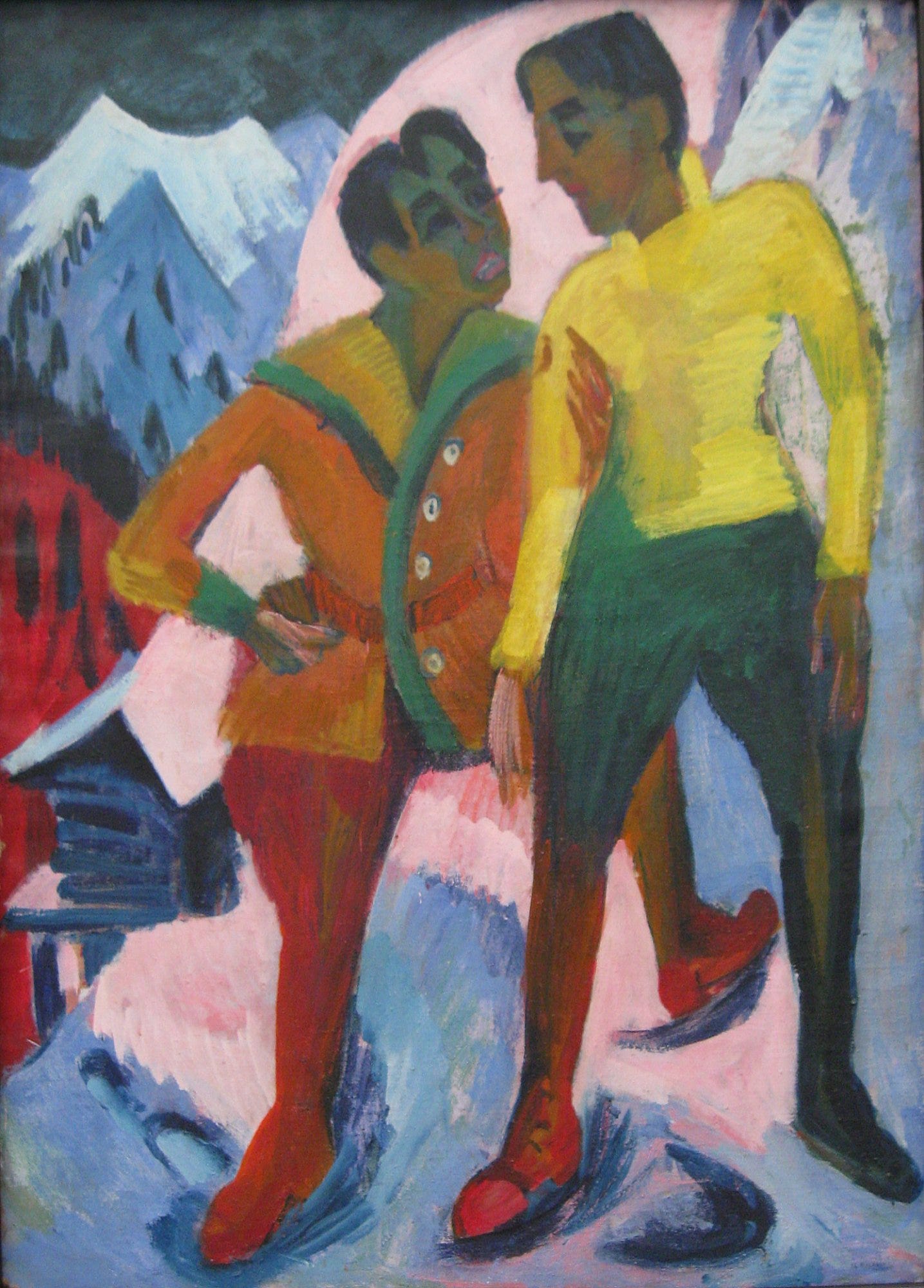
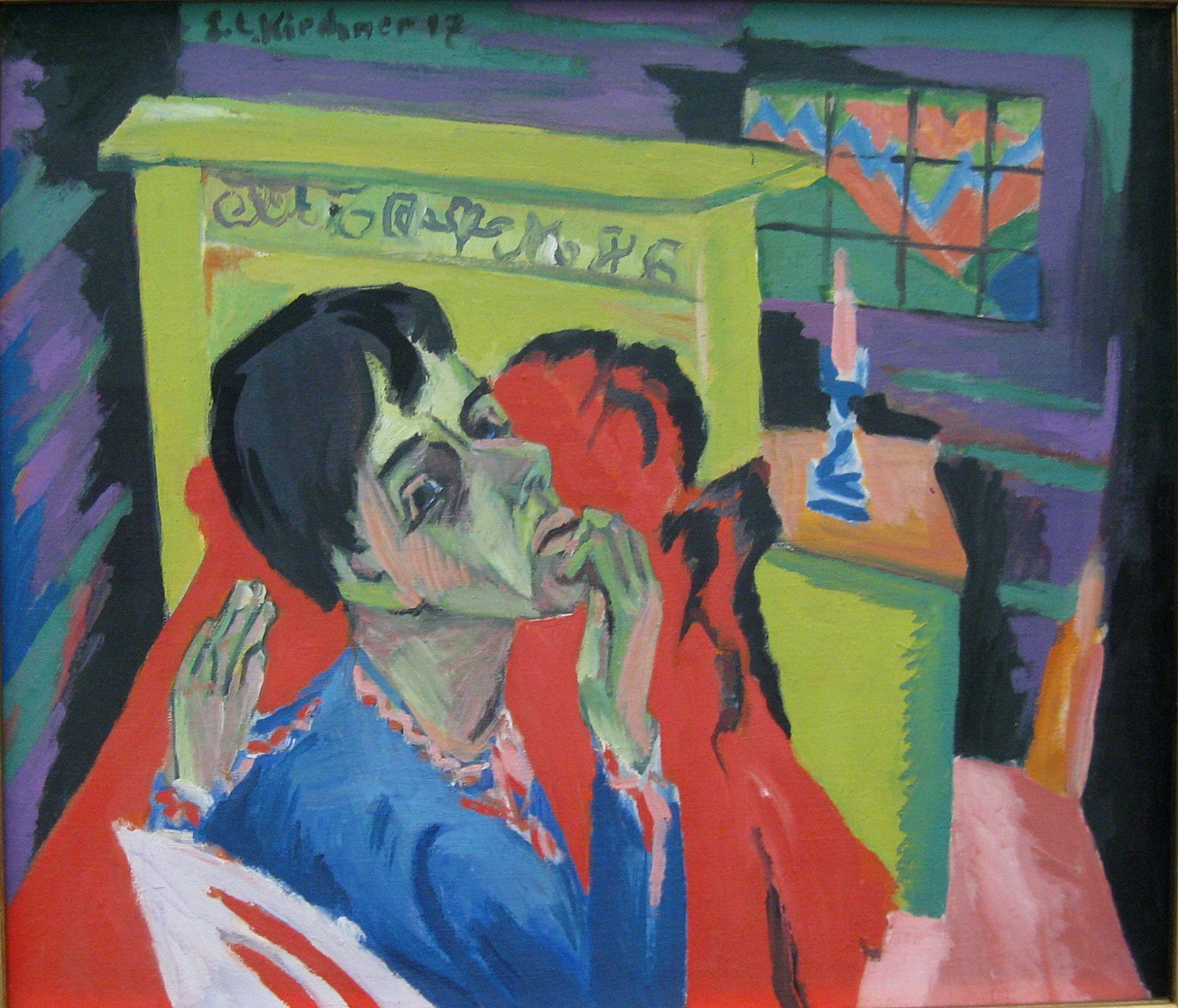
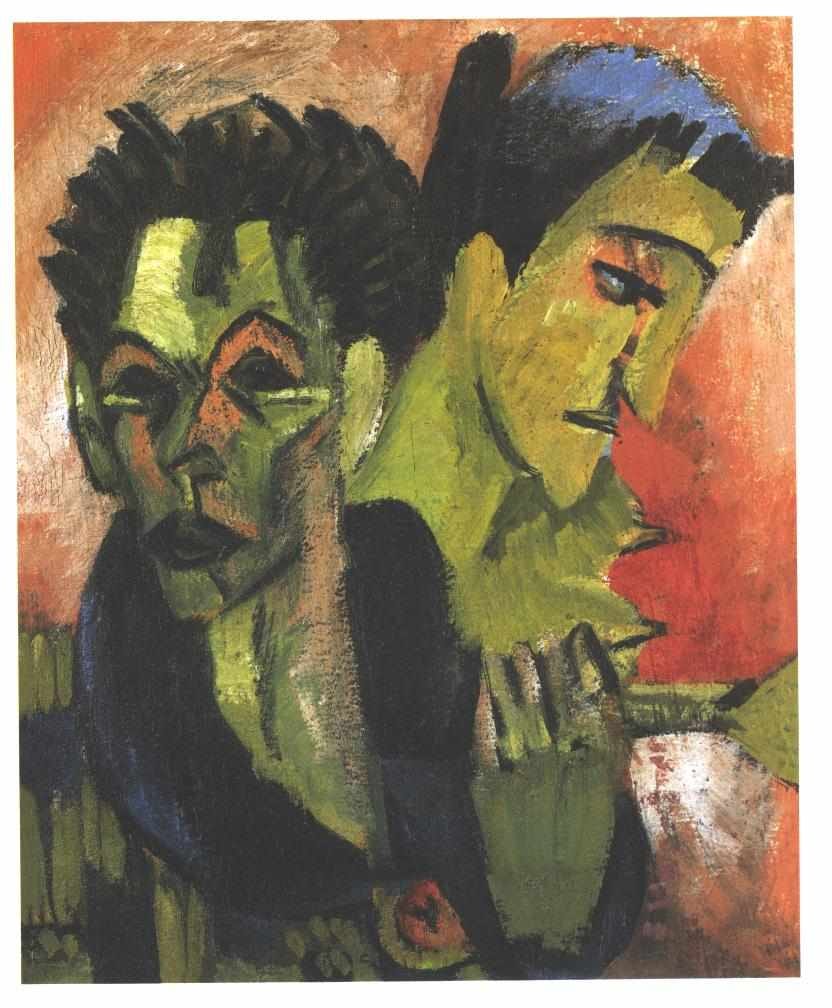
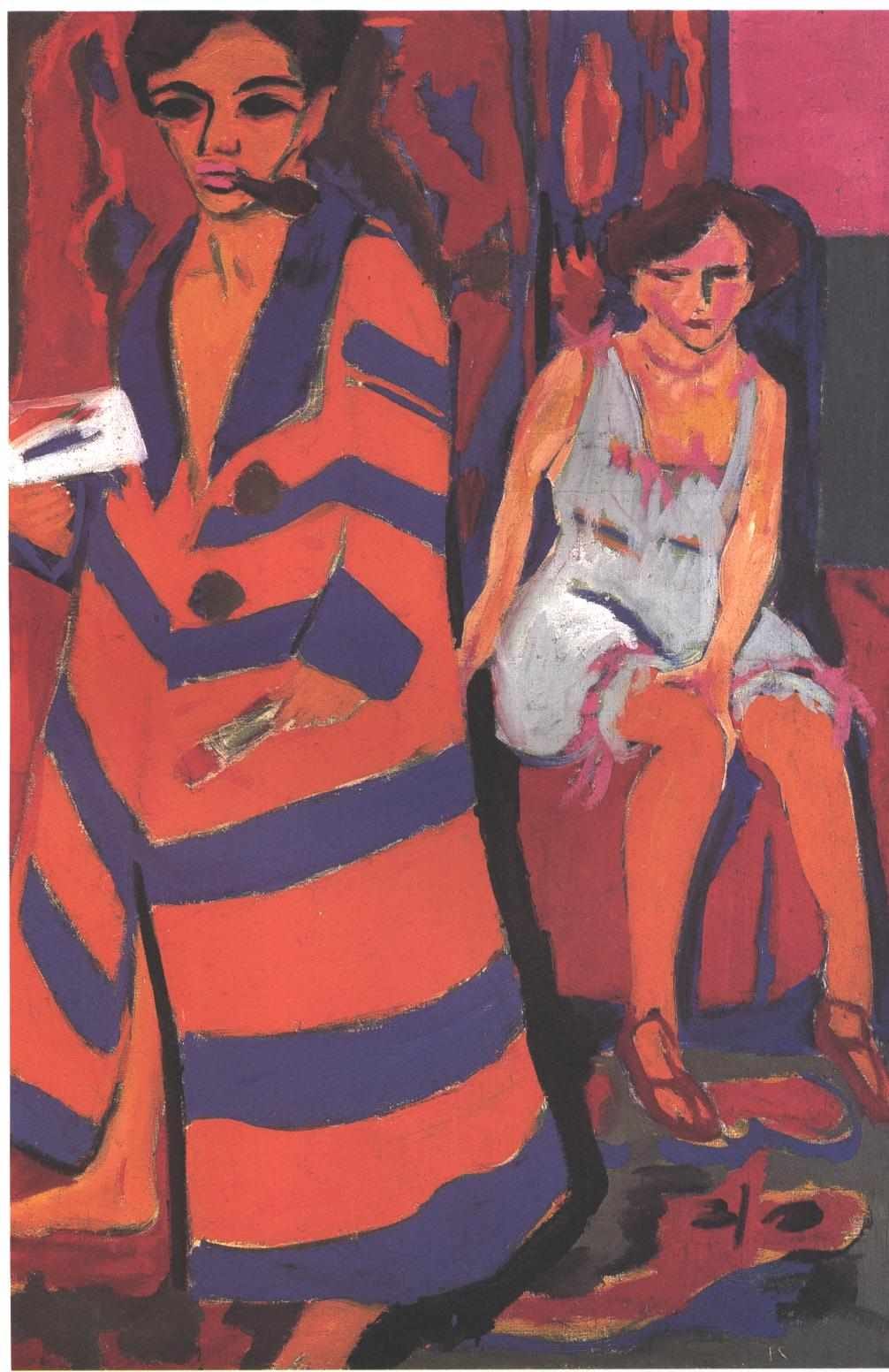
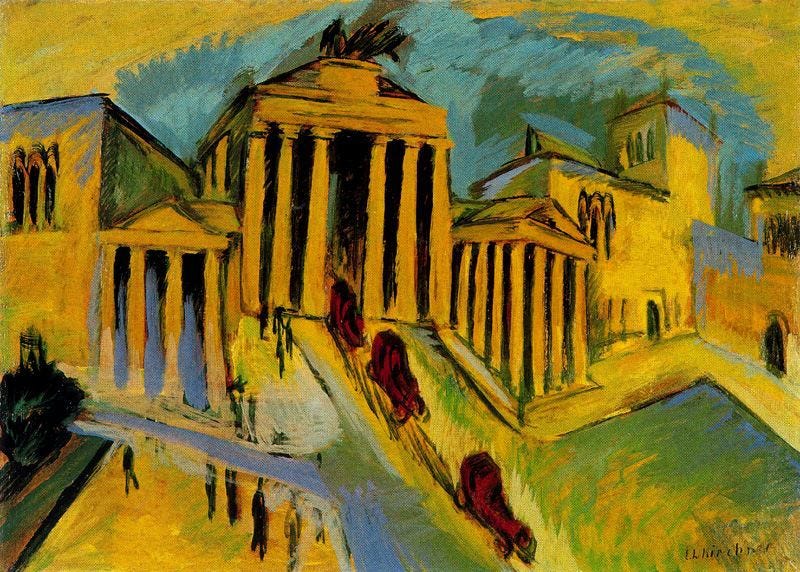
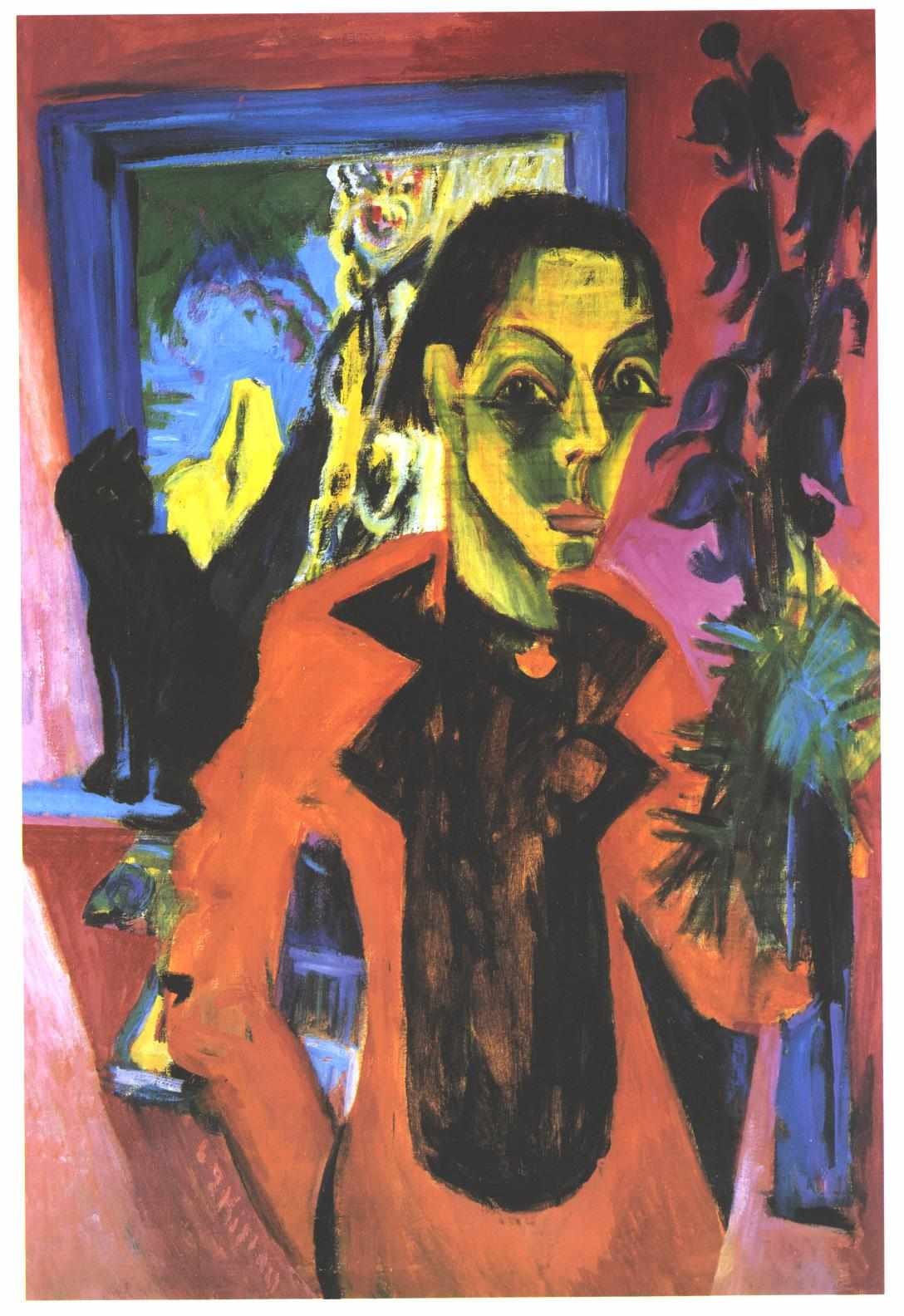
Art by Ernst Ludwig Kirchner.

Good thing all my students are busy writing or they might see me in the back of the room with tears on my cheeks.