


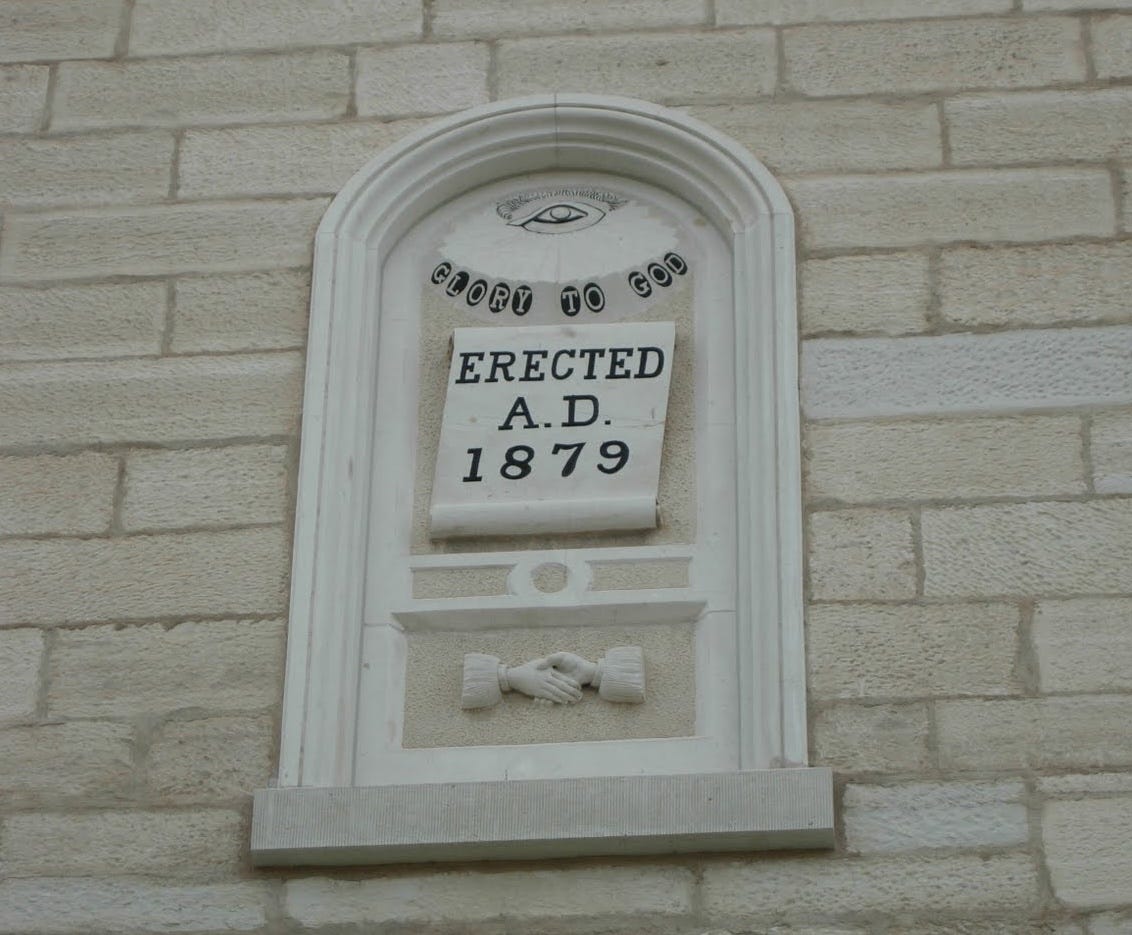
On the east façade of the old Manti Tabernacle is a sculpted pair of clasped hands. Their grip appears firm if not a little too stiff to be lifelike. The hands extend from an identical set of short cuffs and billowy sleeves. On a Sunday morning, they might be the hands of two friends meeting before church. Neither has anything to prove. Theirs is an easygoing greeting built on trust and mutual respect.
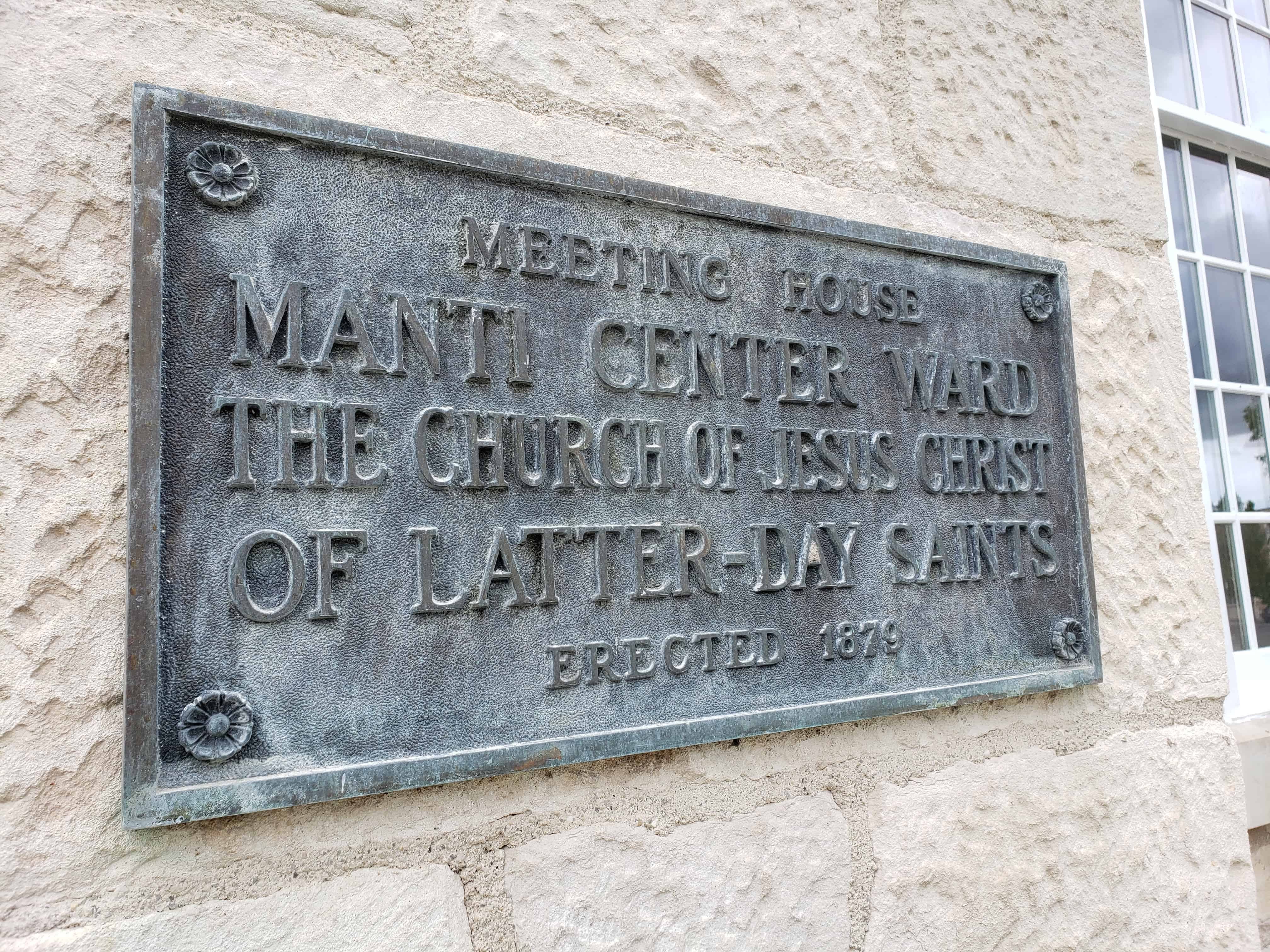
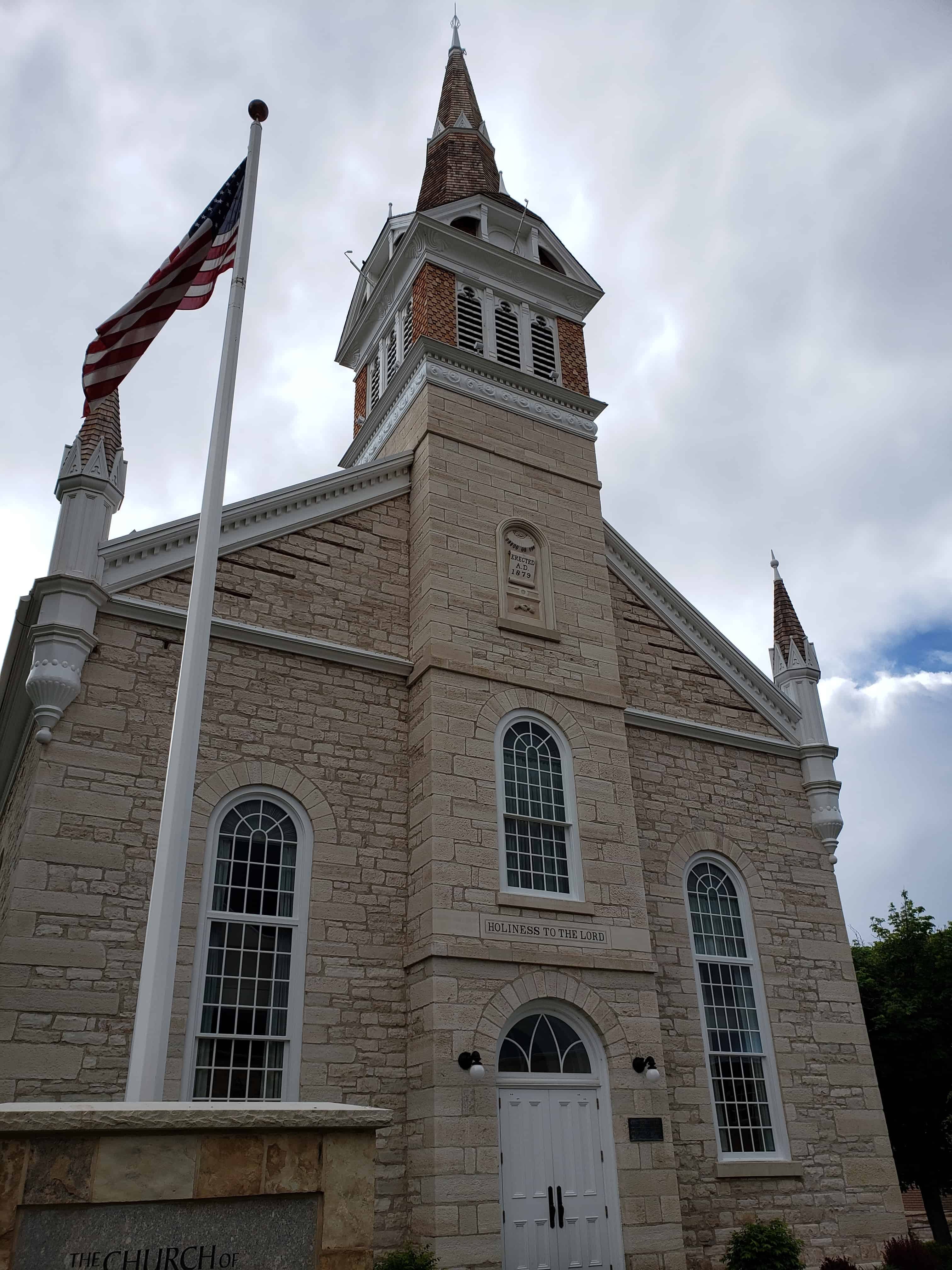
I saw these hands a few weeks ago while on an early morning run through Manti. I had just descended 200 East from the temple when I noticed a steeple peeking over the buildings around me. I changed my route to investigate and came to a full stop when the whole tabernacle came into view. I had been to Manti several times over the past twenty years, but never once had I seen this building. And with the sun just rising over the mountains to the east, it looked beautiful.
Like Latter-day Saint temples, the Manti Tabernacle has “Holiness to the Lord” carved in stone above its entrance. But just above these words are relief sculptures of clasped hands and the all-seeing eye of God, both symbols of an earlier era when nearly every community in Utah bore the visual imprint of Mormonism. The tabernacle was finished in 1879, at the height of this era, and every Latter-day Saint who passed through its doors would have recognized the clasped hands as a sacred emblem of fellowship.
Today, Latter-day Saints typically associate clasped hands with the Salt Lake Temple, where the symbol is again paired with the all-seeing eye on the building’s central tower. Both symbols have roots outside of Mormonism, and it’s likely our forebears adopted them so ubiquitously because they helped to bind our faith to more ancient times. The clasped hands, after all, evoke the imagery of Paul’s account of his visit to Jerusalem, when Peter, James, and John gave him and Barnabas “the right hand of fellowship.”
Within our Mormon tradition, the clasped hands have been the more enduring of the two symbols, although both have all but disappeared from our modern institutional iconography. In early Utah, the Church minted gold coins with clasped hands on the reverse, suggesting not only fellowship but also cooperation amid the scarcity of the Saints’ first years in the West. The beehive, of course, quickly became the dominant symbol of Mormonism’s cooperative spirit, and it remains so today. But the clasped hands on the Salt Lake Temple remind us—when we chance to see them—that we are part of a spiritual cooperative. We are fellow members of a household of faith, and wherever Saints are gathered, we expect someone to be there to take our hand.
Of course, the imagery of clasped hands also points us back to the temple, where we still offer our hand as a sign of our fellowship with each other and with God. In temple ordinances, we commit to living consecrated lives of human connection, free of the selfishness and self-interest that turn us away from our brothers and sisters. The endowment especially invites us to make the stone symbol flesh as we covenant to obey the law of the gospel of Jesus Christ, which points us ever outward—and ultimately to eternal fellowship with God. The endowment’s crowning experience, after all, occurs when we symbolically take God’s hand and see him as we are seen. At that instant, we receive all that he has, including his fellowship. We no longer wander this life as “a lonesome and solemn people” through a strange land. We become his friends and heirs, his heavenly household.
On my way out of Manti, I ran through the city cemetery, where at least one weathered gravestone likewise bears the carved image of clasped hands. Since this marker sits in the temple’s shadow, it’s tempting to assume a direct correlation between its hands and the hands we associate with temples and our covenant fellowships. But the clasped hands motif is not unique to Latter-day Saints’ gravestones. The motif was immensely popular among Christians in nineteenth-century America, and it carried a range of meanings for the bereaved. For some, it represented a final farewell. For others, it was an expression of hope, an expectation of joyful reunion with the deceased.
But in a place like Manti, where Mormonism is so imprinted on the landscape, one cannot help but see this gravestone through a Mormon lens. Temples, like grave markers, are as much for the living as they are for the dead. Indeed, when death takes those we love, temples and gravestones provide space where we can continue to forge, nurture, and preserve fellowship across the veil. And clasped hands—whether they are on tabernacles, temples, or graves—teach us that fellowship matters. It is not something time and space can interrupt or erase.
Scott Hales is the author of Hemingway in Paradise and Other Mormon Poems and The Garden of Enid: Adventures of a Weird Mormon Girl. His work has been published in Wayfare, Irreantum, BYU Studies, Inscape, Vita Poetica, The Under Review, and a few other places. He lives in Eagle Mountain, Utah.
