


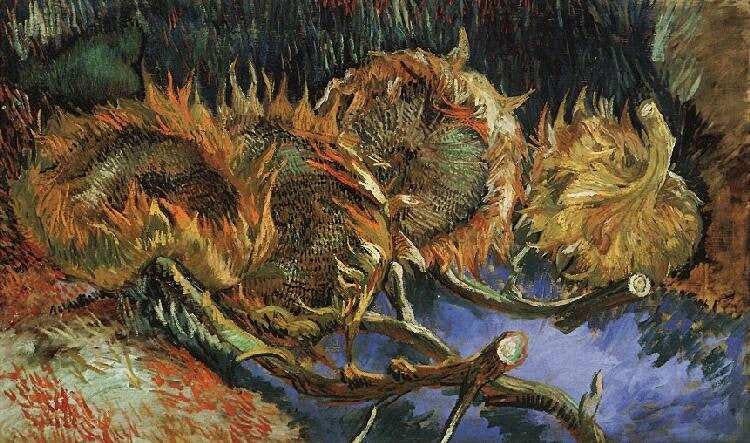
Late in the Spring of 2025, my parents got divorced. I didn’t necessarily want my parents to be together, but I also didn’t want their marriage to have failed, and my thoughts were often preoccupied with the ephemeral nature of everything in this life—specifically, the temporary nature of progress. Because of my family situation, I had a first-person view of the ways relationships can atrophy, and by the time I turned twenty-two, I was thinking often about the things in my life that I thought would be more permanent, but were nonetheless fleeting.
I began to lose interest in the things that had previously compelled me to approach life with eagerness and passion. What would be the point in studying for a test, if half of what I learned would be forgotten by next month? What would be the value in making a new friend if our friendship was bound to fade when we no longer had a class together? I craved a permanence in both the knowledge I gained and the progress I made—a permanence not possible in this life. Absent that security, many aspects of life felt pointless. My apathy soon extended beyond my everyday surroundings and began to pollute my attitude about the world at large. It occurred to me that whenever suffering was alleviated, more would venture in to fill its place. I noticed many attempts throughout history to remedy tragedy; these attempts never lasted long. I felt, as Emily Dickinson once stated, that a “flood” had been “served to [me] in [a bowl],” and hopelessness abounded in the face of so much degeneration and decay.
Throughout this time, I was beginning to understand that the fabric of the world, according to the apostle Paul, was “sown in corruption” (1 Corinthians 15:42). Death, whether literally or metaphorically, is our byword; human beings in this life deal in the currency of temporality. We marry, have children, make friends, go to school, and build careers, all with the understanding that anything we do is subject to decay.
As I learned so personally in these months of lethargy, the reigning condition of existence for each of us is one of entropy. In the study of physics, entropy refers to a measure of disorderliness or randomness within a specific system. The second law of thermodynamics states that if we see the universe as an isolated system, the entropy within that system can only increase; it can never decrease. In other words, as time moves forward, a system will always become more disordered, not less—your room will not clean itself, ice will melt at room temperature, certain parts of your car when left outside will oxidize over time, and the food in your fridge will inevitably go bad. Arthur Eddington, an English astronomer and physicist who was key in proving Einstein’s theory of relativity, said this about entropy: “the law that entropy always increases, holds, I think, the supreme position among the laws of Nature.”
Prophets in scripture lament this pattern of entropy as well. The prophet Helaman wrote of the Nephites and their propensity to turn away from God after a period of faithfulness. “Thus we see,” he said, “how quick the children of men do forget the Lord their God, yea, how quick to do iniquity, and to be led away by the evil one” (Alma 46:8). Paul knew well the uphill battle against entropy that accompanied a mortal existence, declaring that he had a “thorn in the flesh” (2 Cor. 12:7–10)—a mortal failing—that God had given him to prevent him from being conceited. When Paul wrote to the Christian community in Rome, he spoke more broadly about the entropy of the universe, proclaiming that “the whole creation groaneth and travaileth in pain together,” and that we as children of God also “groan within ourselves, waiting for the adoption . . . the redemption of our body” (Rom. 8:22).
It is in the very next verse that Paul proposes a solution to the entropy we face in this fallen world—that we are “saved by hope.” Utilizing his messengers—prophets—God communicates with his people what they need to know, something he has done since the world began (Luke 1:70). Jehovah appeared unto Moses, for example, and told him that he would deliver the Israelites from the bondage of the Egyptians and bring them to a promised land, which would be their inheritance (Ex. 33:1). The Israelites were given reason to hope—something to look to beyond their present circumstances. The prophet Ether from the Book of Mormon proclaimed that those who believed in God could hope for a better world (Ether 12:4). In a world so inclined to regression and transience, a world that tries to move backwards more than it moves forwards, it sometimes can feel bold to hope for the future. Perhaps this is why God asks us to adhere to prophecy so often—because hope for the future gives us strength to endure. As was made clear in Proverbs, “Where there is no vision, the people perish” (Prov. 29:18).
I came to understand that the role of prophets, the “vision” they prophesied of, was Jesus Christ. Put in a more succinct way in Revelation 19:10, “the testimony of Jesus is the spirit of prophecy” (emphasis added). Despite the entreaties of prophets through the ages, I still felt unsure of what hope in Christ meant to me. I felt personally connected to Christ, and I understood that he was my Savior, but I had difficulty following his teachings in the way that I felt had been asked of me. The more I thought about the law of entropy, the more it seemed to me that the laws of the universe were at odds with the demands that Christianity required of its adherents. As I attempted to move forward, I made progress towards a specific goal, only to slide back in that same goal soon afterwards. I consistently fell short in my efforts, and being “like Jesus Christ” seemed an unreachable objective. How could Jesus Christ be my Savior if following him felt so unfeasible? I did not believe that the steady progress described by leaders in my faith was legitimate. I was more discouraged when I began to understand that those I looked up to were equally flawed and fallible as I was. Grandparents, for example, were still imperfect, and they had many more years of life experience than I did.
I often forgot that Christ had also experienced a fallen, entropic world. In fact, the significance of the gospel of Jesus Christ is his condescension from his God-like premortal state to a temporary, fallible, human existence. He chose to live in an imperfect, impermanent world with an imperfect, impermanent body. During his mortal ministry, the Savior knew the pains of entropy well—his friends were sick and died; his apostles didn’t always understand his teachings; and he himself suffered temptation, pain, anger, and affliction (Alma 7:11–12). Like us, his life was sown in corruption. His condescension and subsequent understanding of the human experience is full. Because Jesus experienced an entropic world, suffered, and broke free from decay through his subsequent resurrection from death, we have reason to believe that despite the current prevalence of entropy in our lives, we can hope for a different kind of existence. The prophet Moroni wrote, “And what is it that ye shall hope for? Behold I say unto you that ye shall have hope through the Atonement of Christ and the power of his resurrection, to be raised unto life eternal” (Moro. 7:41). Christ understood that the nature of the world itself—with its inequality and struggle—would not change until his Resurrection.

It was in this period of pondering after my parents’ divorce that I began to see how all-encompassing this resurrection really was, and 1 Corinthians 15 began to mean something different to me than it had before. Paul states that our resurrection is sown in corruption, but raised in incorruption, that it is sown in dishonour and yet raised in glory, sown in weakness, and raised in power. It wasn’t that becoming like Jesus Christ is the goal, though it is; the point, rather, was that through incorruption, Jesus Christ made the goal possible, for incorruption is the opposite of stagnation and decay. Where before becoming more like Jesus Christ seemed an impossible task, when I understood his role as my Savior, it felt hopeful. For in our resurrection, not only are our sins and weaknesses made whole but the resurrection of Jesus Christ marks a transfiguration in the fabric of our world (Rev. 21:1)—progress became real and possible, the anatomy of creation itself is changed, and a formerly corruptible world is no longer subject to the same rules. As he told Mary and Martha so explicitly, Jesus Christ is resurrection itself (John 11:25).
First Corinthians acknowledges both corruption and incorruption, dishonor and glory, weakness and power. The apparent paradoxes in these verses remind us that both states are necessary in order for progression to occur. If there were no dishonor, there would be no such thing as glory; if there were no weakness, there would be no power. There is only victory over death if death exists at all.
When I read these verses, I understood that Jesus Christ’s resurrection is all-encompassing. While we are yet sown in corruption, a time will come when our world is transfigured, and we will no longer have to fight the stumbling block of decay; we will enter a different kind of existence, and entropy will end. I often try to imagine what an incorruptible world might look like. What would it be like for life to be my byword, rather than death? Would trees never die? Would I always remember the things I read? Would people still get sick? Would my progress towards certain goals stay consistent? As corruptible beings we fail, forget, and struggle; but in an incorruptible world, new life is consistent. Death has no sting, the grave, no victory (1 Cor. 15:55).
This spirit of prophecy is not just a vague hope of a better life, of a lost dream returning, or a general insufficiency being filled. It is a hope in Jesus Christ, and even more specifically, it is an understanding of what Christ told the woman of Samaria, that “whosoever drinketh of the water that I shall give him shall never thirst; but the water that I shall give him shall be in him a well of water springing up into everlasting life” (John 4:14, emphasis added). As the Creator, the life and light of the world (John 1:1–3, John 8:12, John 1:4) and the first to be resurrected, Jesus Christ represents the force of life itself—a living being to combat the pervasive death and decay that we inevitably face in mortality. He came and was “the first fruits of them that slept” (1 Cor. 15:20) so that “[we] might have life” and that “[we] might have it more abundantly” (John 10:10). A testimony of Jesus is a firm understanding that the future is good, and that life now can be abundant.
I am now confident that God, who has begun a good work in me, will carry it on to completion until the day of Jesus Christ (Philippians 1:6, NIV), when corruption will turn to incorruption, dishonor will turn to glory, weakness will turn to power, death will turn to life, and the law of entropy in our world will become one of order.
Sophie West is a Junior at Brigham Young University majoring in English Literature.
Art by Vincent VanGogh (1853-1890)
