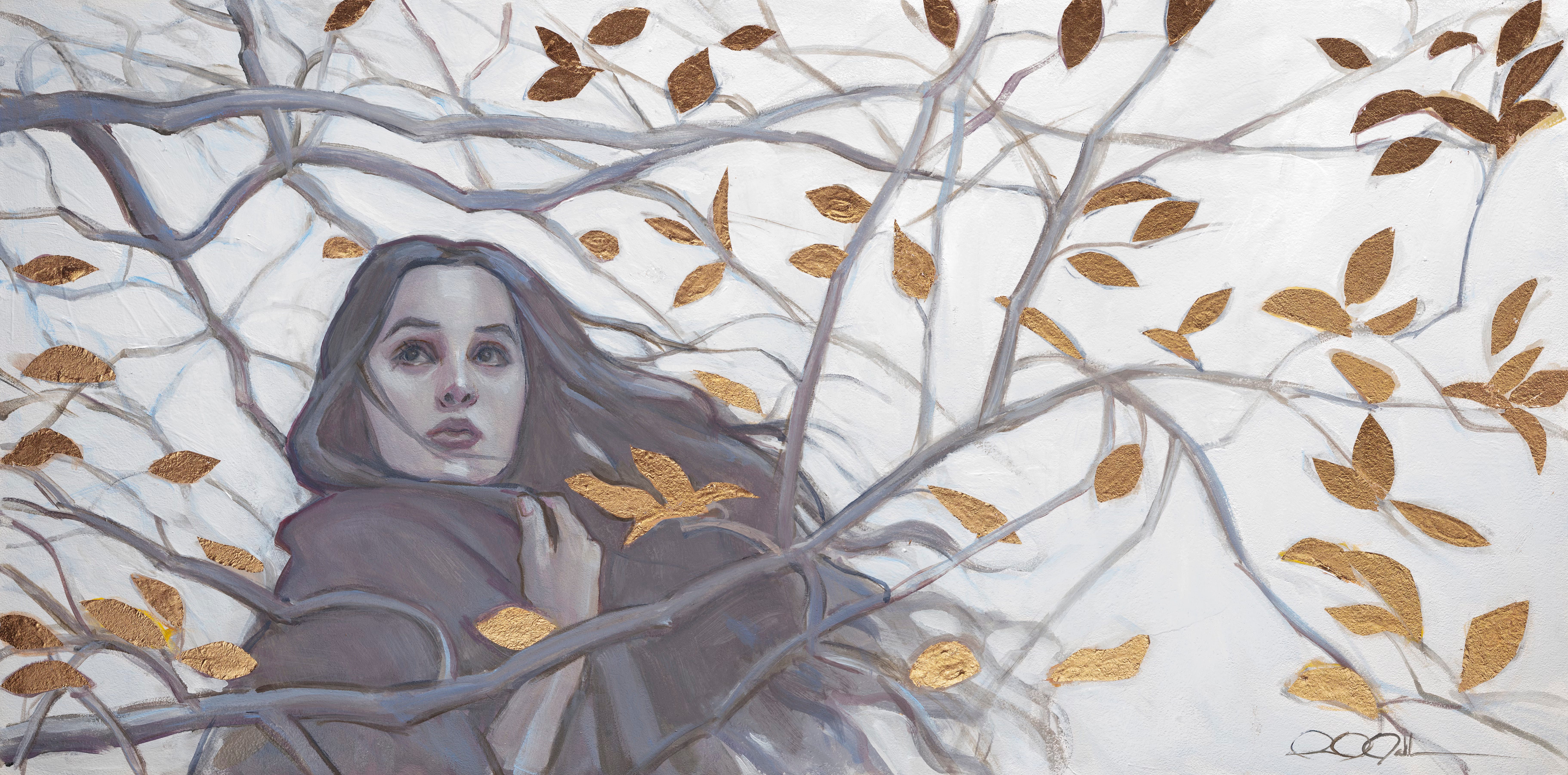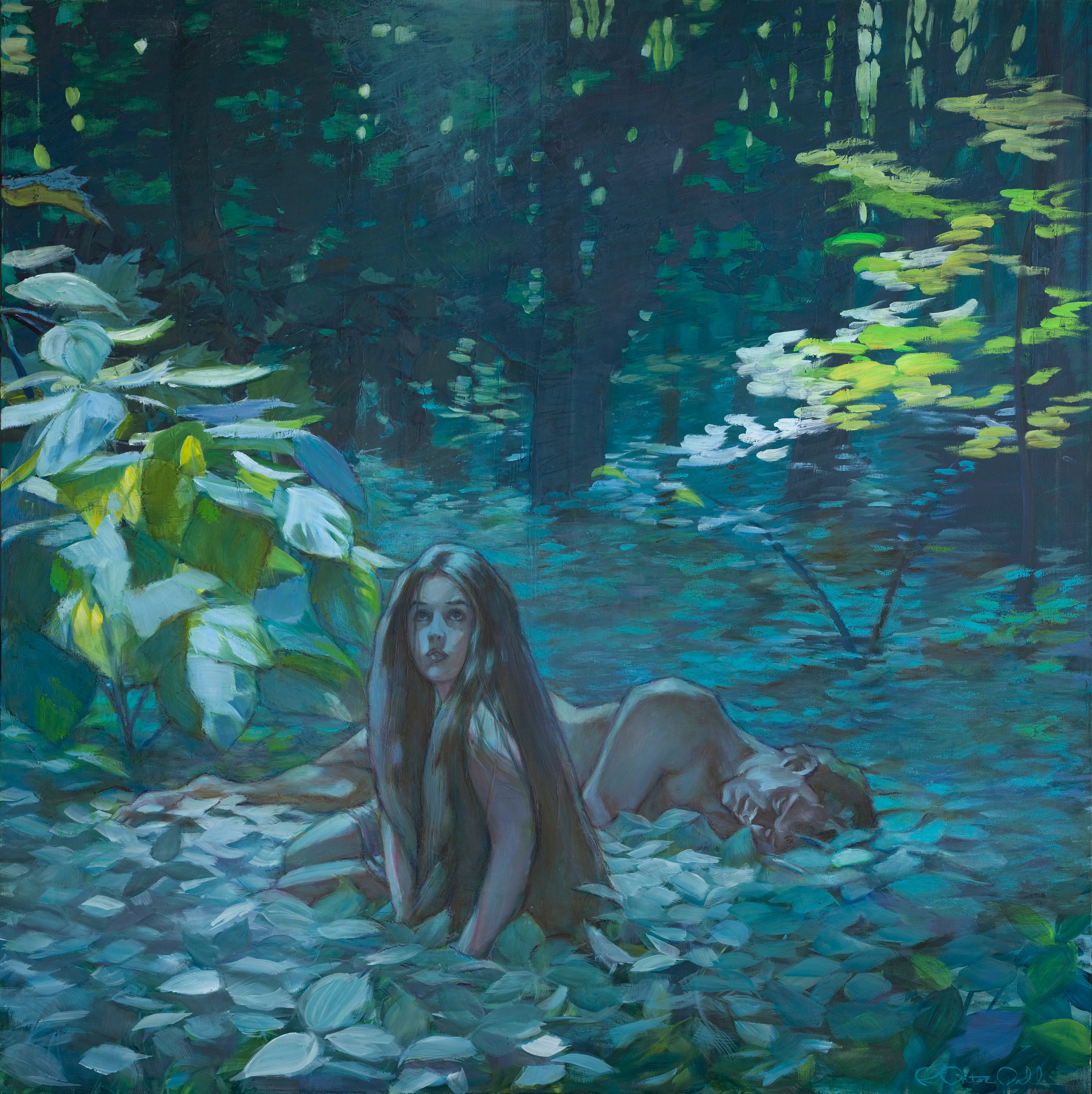
During the nights of the full moon, look up at the sky and you’ll see the same pattern of light and dark on its surface month after month. I see a mother curved over a child. Perhaps you see a face, or a frog, or a rabbit. But each month the moon shows the same face.
Long ago, the moon showed a changing face to the world. But the relationship between Earth and Moon is a dance of change and stasis. Slowly, over time, the gravity at work between the two inexorably pulled the moon’s cold dry bulk into a precisely synchronized rotation relative to Earth’s rotation in a phenomenon known as tidal locking. The moon also stabilized Earth’s tilted axis so that we can enjoy lovely seasons without burning or freezing to death. Earth responds to the moon’s steady presence by offering a splashy libation, the rising tide that follows the moon’s course.
My children and I were recently at the beach at high tide. The strength of the rising ocean surprised me. One of my children lost her footing in the strong pull of a receding wave. The sucking water dragged her quickly toward the crest of the next rising swell. She screamed, I ran, and just before the wave broke, she regained her balance and scampered up the shore into my arms.
A changing tide exposes our vulnerabilities, not only because its changeability produces waves of surprising strength, but because it forces upon us an environment for which we are very ill-suited. Dolphins get stranded on sandy shores. Shoes and sandals and maybe children disappear into watery shadows. When the tide turns, features that once were clever adaptations, such as lungs that breathe air, become a vulnerability.
Our time is one of shifting tides. This is true at the scale of geopolitical events, but ask yourself if it isn’t also true at the scale of an individual human life. It’s a time of change, and therefore a time of vulnerability.
What does a human do when the tide turns? Some might respond to rising waves as my adolescent son does—joyfully running into the water, ready to test his strength against the sea. He loves life, my son, but he doesn’t yet know how precious it is. Another familiar response is to exert our formidable powers to control our material and psychological lives. We follow schedules and build algorithms; we set boundaries and curate our media diet; we ask our institutions to play an ever-expanding role in creating homogenizing environments of protection and pre-fabricated meaning. This calculated response is a losing proposition from the start. Despite all the protective measures we take, bodies change, people change. Life, at least as we know it, will end. Any attempt to avoid that fact is just a fig leaf.
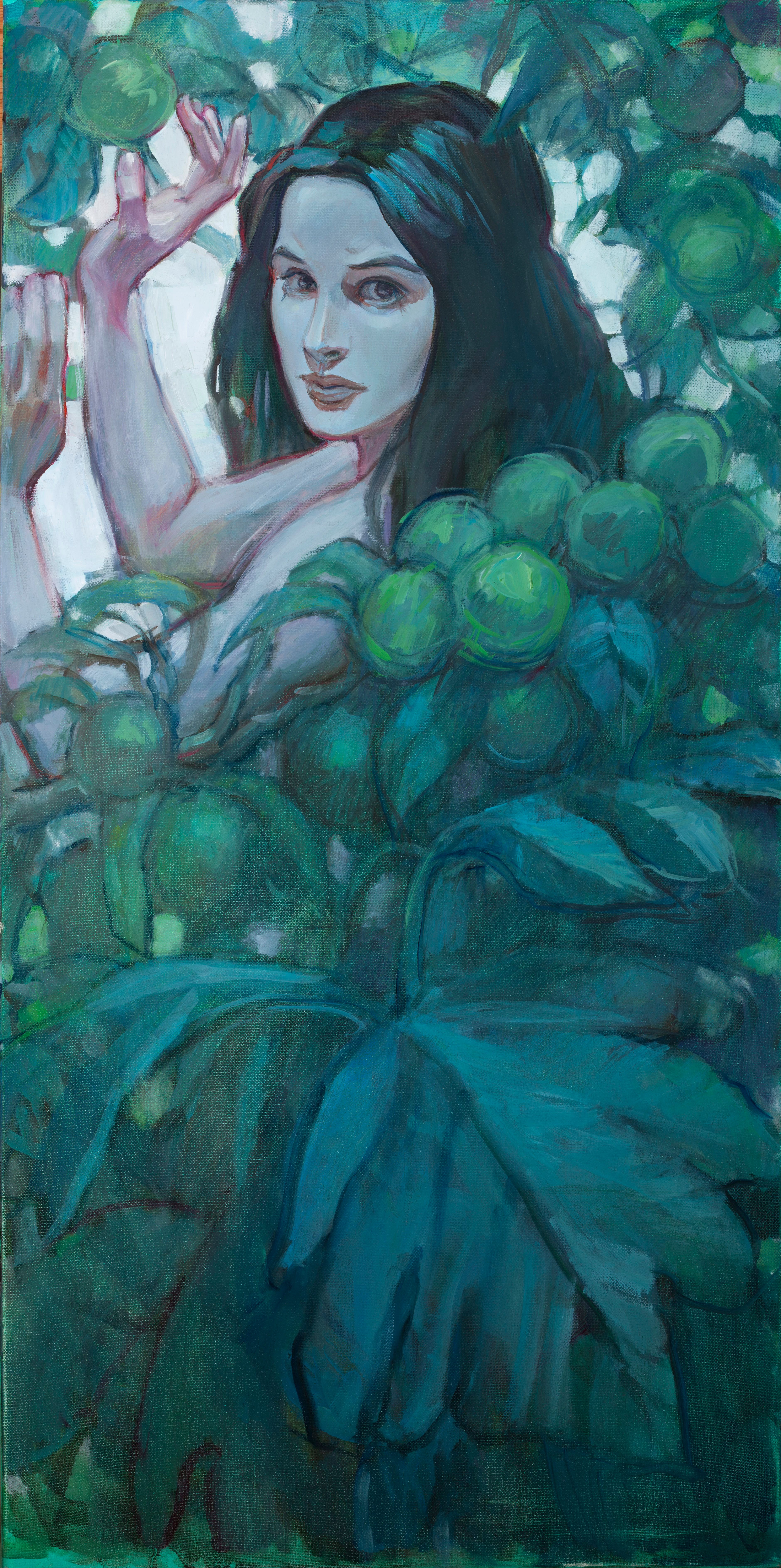
Eve in the Garden knew something about fig leaves, and her story shows us a better way. Eve taught us how to meet our time not with calculation but with trust.
At first glance, Eve’s story might seem a cautionary tale of misplaced trust, much like the stories of Little Red Riding Hood or Hansel and Gretel. The Latter-day Saint understanding of Eve’s story hints at much more. In the garden, Eve showed us that to trust is to love life more than to fear death.
In the garden, Eve occupies an elusive space vis-a-vis God’s word. At times she is nearly invisible, like the new moon in the daytime sky. In the scriptural account, only Adam directly receives God’s command not to eat the fruit. And if Eve was present, was she firmly within the ambit of God’s directive, or did she occupy some other space? What did she make of God’s trailing clause of “nevertheless thou mayest choose . . . ” (Moses 3:17). Did Eve’s response to the vibrations of those words set the world in motion, each choice adding energy and direction like the resonance of a swing, until creation was full of the movement of choice? Like the moon, her position is changeable, strangely patterned to those of us who don’t know her ways, though clearly centered on God. This gives Eve a unique kind of freedom in her moral choice. When Satan irrupted into Eve’s predictable life in the garden, Eve could wonder.
Kierkegaard, that Christian philosopher who delights in ambiguity, paradox, and complexity, calls this kind of choice, one that defies logical argument and inevitability, an act of passion. For Kierkegaard, such passion is the essence of life, faith, and self. Passion stands in stark contrast to the kind of prediction-making, comfort-seeking posture that so many of us occupy in our uncertain time. But to passionately act within this uncertainty is the practice of living.
So there was Eve, serpent at her side, not so much listening to his slippery words as gazing at the possibilities inherent in a choice like so many seeds inside a fruit. Deciding whether or not to live. It’s strange to think of Eve’s choice in those terms. After all, wasn’t she choosing whether or not to die? But here is a critical truth from Eve’s story: One cannot choose life without also choosing death.
Philosopher Annette Baier recognizes that to trust is to willingly make oneself vulnerable. In other words, vulnerability offers us an invitation to enter into trusting relationships. What implications does this have for Eve? Maybe Eve’s story is not one of innocence, fall, and redemption, but of ever-expanding boundaries of trust. Eve knows that God loves her inside the garden—but will God love her outside of it? Yes, Eve says, I trust that God’s love will attend me even there.
Does that mean that we should put ourselves into risky situations so that we may act with trust? Or worse, pretend that risk doesn’t exist? I have made such mistakes, and it doesn’t feel like courage or faith; it feels like foolishness.
The philosopher Sissela Bok wrote, “Whatever matters to a human being, trust is the atmosphere in which it thrives.” Baier playfully responds to this assertion by pointing out that a great number of things that humans would like to avoid—like exploitation, deceit, and treachery—also thrive in relationships of trust. Trust does not call us to foolishness or self-deception. Indeed it requires that we know what is at stake. Because risk is exactly the point: To trust is to willingly remove our protection and reveal what lies beneath, whether that be our desires, our otherness, or our insufficiencies. One might receive the love and care of others, but the possibility—no, the inevitability—remains that instead of love, one might receive injury, rejection, cruelty, or death.