


This essay is part of Wayfare’s Emerging Voices program, where previously unpublished writers work in small groups with Wayfare editors to develop a piece of writing. Please enjoy!
I’ve spent almost thirty years returning to a single sentence that Jesus spoke about a woman who loses a coin. To be lost, I thought, was not about circumstance but a reflection of my own disbelief and unworthiness. Then one day I heard a line that completely dismantled my thinking: “It wasn’t the coin’s fault that it was lost. It was just lost.” I was just beginning the return to church after feeling far away from religion for many years. As my testimony grew, a heavy feeling of guilt about my past actions grew along with it. When I heard about the lost coin parable, also called the parable of the piece of silver found in Luke 15, and the lack of blame in the story, the words helped to release the shame I was feeling inside. They also let me know that a loving Heavenly Father and Mother understood the forces that shaped me but also wanted me found.
Since then, I have studied the lost coin parable, turned it over, looked at the original Greek, traced every detail, and tried to uncover the hidden context. Put at its simplest, I have found the story is about a woman who becomes a seeker when something precious falls beyond the edges of her knowing, and in response, she lights a candle. The woman’s actions seem to be a guide about how to respond to complicated situations and the people we love caught inside of them. The wider context of the parable is about inclusion, worth, and the movement towards those who are living outside of our current understanding. This simple story, the heart of which is told in one single verse, would one day teach me how to respond to the most complex challenge of my life.
I didn’t realize that I was about to begin my own search as I drove down the road on an ordinary afternoon with my youngest child, then fourteen. The atmosphere was tense as they fidgeted next to me, pulling at the sleeve of their ripped black hoodie. Then, with a mixture of fear and hope, they began the most surprising conversation we’ve ever had. “I feel like a boy inside. I want to be a boy.” I want to be a boy and not a girl. The words hung heavy in the air. I could feel my child’s gaze on me, waiting for a reaction. I waited too long, worried about saying the wrong thing. What do you say to a teenager who is experiencing gender dysphoria? Inside, I whispered a silent prayer, please help me, and the world outside the car window blurred into insignificance.
Finally breaking the silence, my teenager asked this overriding question: “Does it matter, Mom?” They were asking if my love was at risk. Does it matter? I was filled with uncertainty, and I didn’t fully comprehend what was happening, but I could see that my child needed love and warmth. “No,” I said softly, my voice finding some conviction. “It doesn’t matter. My love is so much bigger than that.” My love is bigger than your gender.
The announcement came at a time when I was already completely overwhelmed, and our family was in chaos. My husband was starting a new business, our two oldest children were both battling severe cases of depression, and my work was busy and stressful. My teenager in the car had started on a path of self-harm and was experiencing a lot of pain. That pain often showed itself in the form of outbursts: at the Church, our family, his school, and directly at me. I heard the words “I hate you” many times, in many different ways. Some nights, the pain and despair I felt became unbearable. I tried so desperately to be the kind of mother I never had, but it felt like I was an utter failure. I wondered why I hadn’t seen this coming.
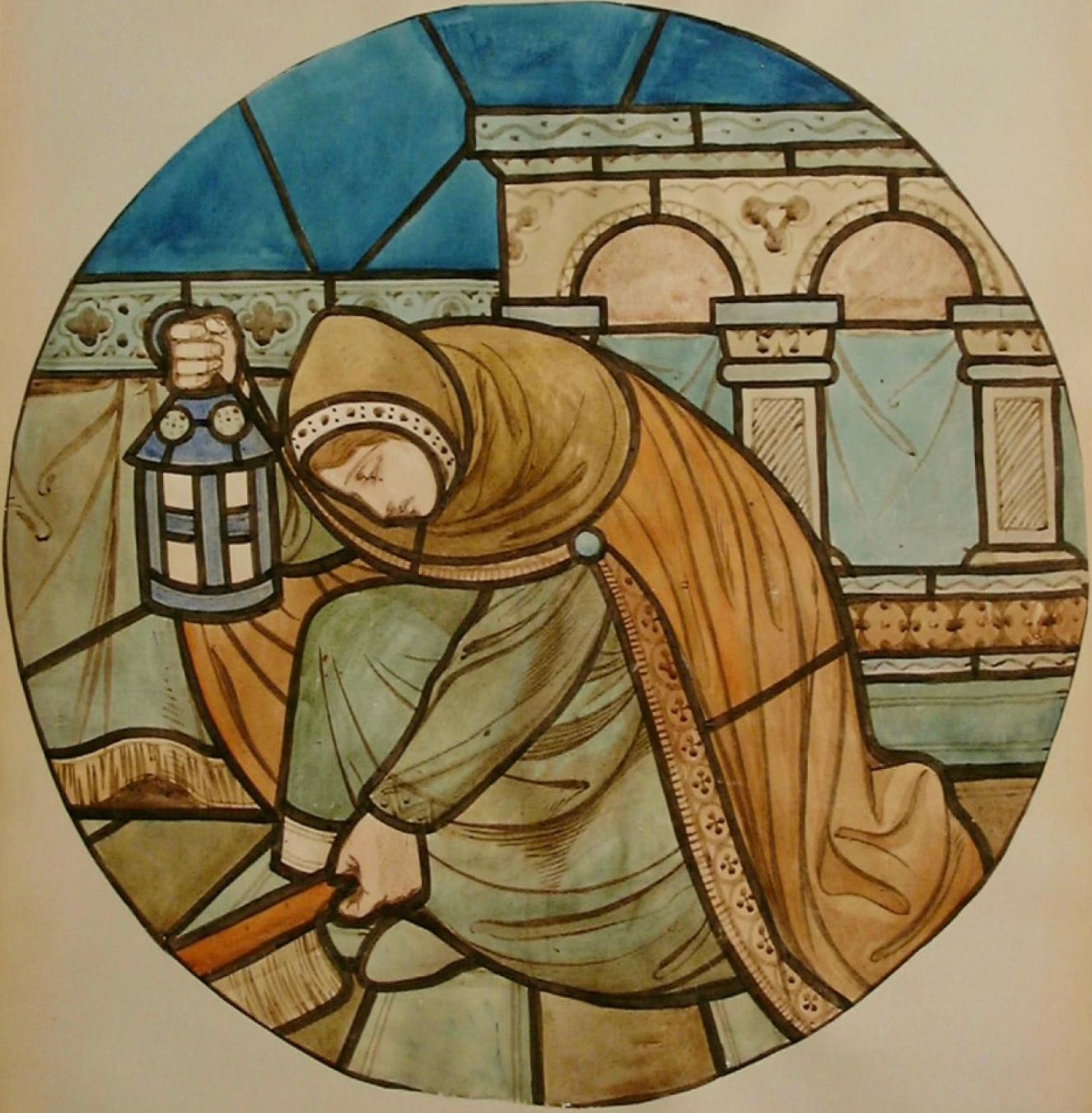
After the gender revelation in the car, the emotional turmoil I felt inside made it hard to see my teenager or their future clearly. The child I thought I knew seemed to vanish unexpectedly, replaced by someone I didn’t fully understand. I tried to hold things together by enforcing church attendance, demanding schoolwork, and making new rules. But just like the woman in Jesus’s story of the lost coin, I couldn’t force my child into being found by me. The confusion I felt and the walls I was constructing only made us feel further apart. When the woman in the parable can’t see clearly, she lights a candle. That small flicker changes what’s visible and anchors her to continue. The light doesn’t change the coin, but it has a profound impact on the ability of the one who is searching.
My efforts to “fix” the situation not only didn’t bring light, they didn’t even strike a match, so I opened up to my trusted therapist. Her suggestion floored me but lit a path forward. For thirty days straight, she said to deliberately hit every love language I could think of, every single day for my angry teenager. I was exhausted, and some days at a breaking point, but I started by cooking their favorite meals. I got a treat at the store and left it on their bed with a note. I asked questions and then listened to the answers, keeping my own opinions to myself. I learned new terms, read books on how to validate feelings, cleaned their messy room, and served with them at local LGBT community events. Together, we shopped for boys’ clothing, and they got a new short haircut that we both loved.
When one of my children was in pain or felt lost to me, it was my job to get closer to them. If the parable of the lost coin was a representation of how Christ wanted me to react to someone who feels out of reach, then I needed to be an agent of radical compassion and be the one to move first. Then keep moving; the woman in the story uses multiple methods to find her coin. She gives it proper attention, always giving herself the tasks of reaching and never pushing them off onto someone else. She lights the candle and then also does the messy work of sweeping and searching every corner, slowly bridging the distance between her and the coin. This was the work I was called to do.
Jesus’s audience for his parable, the Pharisees, were not accepting of those on the margins of society, using the law to distance themselves. The parable of the lost coin was told in response to their discomfort with Christ’s inclusion of those who were “othered.” He shifted the focus from boundaries to action by telling the story of a woman in search. Consistently moving toward the misplaced and misunderstood, he didn’t seem to care about difference or discomfort. Those whom the Pharisees viewed with contempt are the same people Jesus tells his followers to spend their time actively reaching out to.
We were at an orthodontist appointment the first time I used the new he/him pronouns in public. Every time the older, kind-faced receptionist referred to my teenager as a “she,” a little jolt of anxiety went through me. My heart started to race as I worked up the nerve to speak out. “Uhm. Actually . . . he’s a boy now.” The receptionist looked up, obviously confused. “Excuse me?” she questioned. I looked over at my teen, who was watching me with wide eyes. I took a deep breath. This was my moment to advocate. “My child is a boy. He uses he/him pronouns.” I waited, letting it sink in. Her expression told me that she still didn’t understand. “He’s transgender,” I clarified, trying to sound cheery. The woman was still confused, and I did my best to walk her through it. It was new and unfamiliar to me too. I was still learning the new pronouns myself, still slipping up and saying “she.”
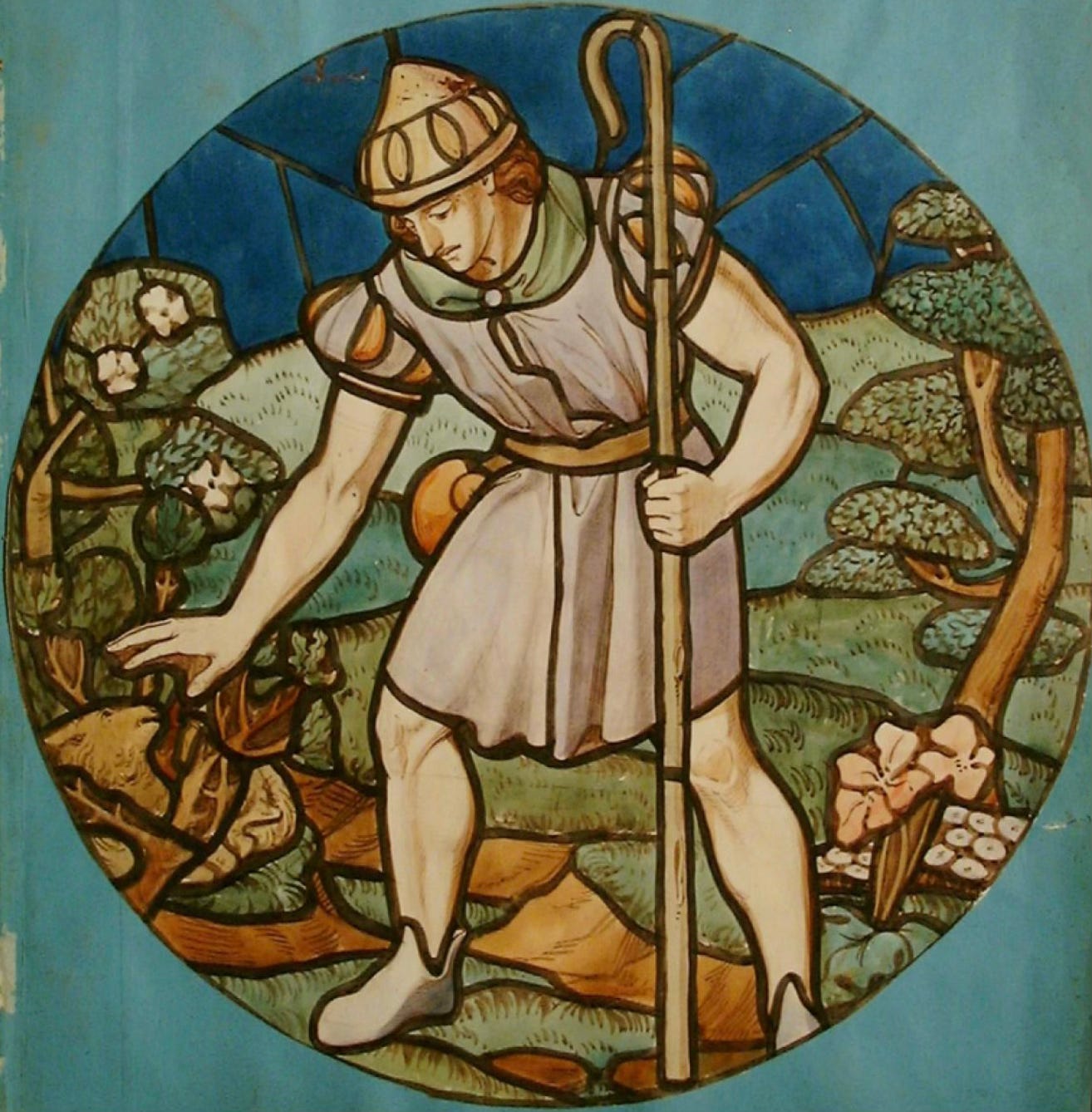
Just like the lost sheep in a field and the son that finds himself in a muddy pigsty, the coin is lying somewhere on the woman’s dirt floor. Not because the coin is worthless, but because that’s where life sometimes drops precious things. But coins have intrinsic worth, and losing sight of them somewhere on the messy floors of life does not change their value. Parents, families, and even religious communities can all feel that they have lost someone who transitions to a different gender or identifies in a way that challenges their prior assumptions. Christlike love, for me, started to look a lot less like certainty and a lot more like getting on my knees in the dirt with my hands outstretched, feeling for what I could not yet see. This time and effort in search have a message underneath the actions: You are known, and you are worth this care.
As we loved and accepted, the outbursts started to settle in our home, and we began to have conversations about what my son needed. It became clear that he felt uncomfortable and triggered at church, so he stayed home. We changed schools to one that was welcoming and accommodating to transgender students. I still had fears and sometimes felt like backing away. I found it best to take my uncertainties to the Lord instead of taking my worries to my son or others. On my knees, often searching for answers about what to say or do, the promptings I received gave me the spiritual fortification and courage to stand up for my child.
When he asked me to attend a transgender rights march, it was a big step in our relationship. It was to be a “glow march” at night through the streets of downtown. I knew what it meant to attend as an LDS mother, but I wasn’t there to make a statement. I was there to show love and support to a child who desperately needed it. My son often felt alone and rejected by a community that treats transgender people as outcasts.
The night came, and as my son and I crested the steep hill on State Street to the beginning of the march at the Utah State Capitol Building, we both stopped in awe. There were thousands of people there waving flags, wearing buttons, and standing in support, ready to march. Almost everyone carried some sort of light. I was filled with a sense of community and inclusion and turned to my son, whispering through my tears, “The next time you feel all alone, I want you to remember this moment and these people.” I grabbed his hand, and we joined the crowd of supporters.
At the end of the lost coin parable, the woman celebrates with her friends, coin in hand, rejoicing. That night at the march, this beautiful community and I accepted one another. A huge flag was lifted high, and a large arch of balloons led the way. As we marched, we danced. We hugged. I told strangers how much I loved them. It was one of my first big steps into being an ally. People thanked me for being there as I handed out glow sticks and we lit them together. A teenage girl expressed how much she needed to feel the love of a mother because her own hadn’t accepted her. We cried, then hugged, and held our lights high.
I had started my search in the dark, panicked that my child was lost. Now there we were together, surrounded by colorful lights in every direction. The lessons of the simple parable that I had studied for so long seemed hidden in context and theology, but were illuminated in my real life, on a city street, hand in hand with my transgender son.
Candice Bithell is a writing student, devoted wife, and mother of three—including one brave transgender son. She reads the Bible every day and finds God in unexpected places.
Art by James Tennant Lyon (1836–1872), “The Lost Money” and “The Lost Sheep.”

Wow! Thank you for this. It moved me to tears. I learned more about more expansive and inclusive love.❤️